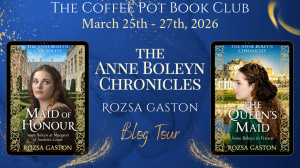
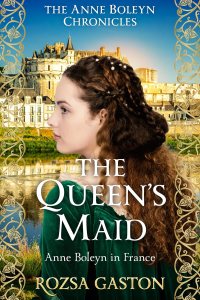
Today, I am pleased to welcome Rozsa Gaston to my blog to share a spotlight for her book series “The Anne Boleyn Chronicles” and her latest novel, “The Queen’s Maid.” I would like to thank Rozsa Gaston and The Coffee Pot Book Club for allowing me to participate in this blog tour.
Blurb:
The Tudor series continues! For fans of Philippa Gregory, Elizabeth Chadwick, Carol McGrath, and Anne O’Brien. A new adventure begins for Anne… France, 1514 After an enlightening period of training as a lady’s maid at Margaret of Austria’s court, Anne Boleyn has been sent to France. She arrives at the Palace of Tournelles, home of ageing King Louis and his new English wife, Mary Tudor, sister of King Henry VIII. As Anne speaks French, her main role is to serve as translator for Queen Mary. Anne’s sister Mary is also at the French court, and Anne soon learns that not everyone is pleased about the union between the French king and his young queen. The king’s cousin-in-law, Louise of Savoy, is desperate for Queen Mary not to fall pregnant, so that her son, Francis, will ascend the throne. And with Louise and the English queen pulling Anne in two different directions, it will not be possible to appease everyone. Can Anne successfully navigate the familial politics at the French royal court? Will she make her mark as one of the queen’s maids? Or could her divided loyalties prove to be her undoing…? THE QUEEN’S MAID is a thoroughly researched, fascinating historical novel set during the 16th century in Europe. It is the second book in the Anne Boleyn Chronicles series. ‘Wonderfully detailed and entirely enjoyable. This is a young Anne in whom I absolutely believe, and who does much to explain the woman she’d become.’ – Sarah Gristwood, author of Game of Queens. THE ANNE BOLEYN CHRONICLES SERIES: Book One: Maid of Honour Book Two: The Queen’s Maid Book Three: Queen of Diamonds
This series is available to read on #KindleUnlimited.
Author Bio:
Rozsa Gaston is a historical fiction author who writes books on women who reach for what they want out of life.
She is the author of Maid of Honour: Anne Boleyn at Margaret of Austria’s Court, 𝗚𝗿𝗮𝗻𝗱𝗣𝗿𝗶𝘇𝗲𝗪𝗶𝗻𝗻𝗲𝗿 of the 𝟮𝟬𝟮𝟰𝗖𝗛𝗔𝗨𝗖𝗘𝗥𝗕𝗼𝗼𝗸𝗔𝘄𝗮𝗿𝗱 for Early Historical Fiction, The Queen’s Maid: Anne Boleyn in France, Queen of Diamonds: The French Royal Court, Margaret of Austria, 𝗙𝗶𝗿𝘀𝘁𝗣𝗹𝗮𝗰𝗲𝗪𝗶𝗻𝗻𝗲𝗿 of the 𝟮𝟬𝟮𝟯𝗖𝗛𝗔𝗨𝗖𝗘𝗥𝗕𝗼𝗼𝗸𝗔𝘄𝗮𝗿𝗱 for Early Historical Fiction, the four-book Anne of Brittany Series: Anne and Charles; Anne and Louis, 𝗚𝗲𝗻𝗲𝗿𝗮𝗹𝗙𝗶𝗰𝘁𝗶𝗼𝗻𝗪𝗶𝗻𝗻𝗲𝗿 of the 𝟮𝟬𝟭𝟴𝗣𝗨𝗕𝗟𝗜𝗦𝗛𝗘𝗥𝗦𝗪𝗘𝗘𝗞𝗟𝗬𝗕𝗼𝗼𝗸𝗟𝗶𝗳𝗲𝗣𝗿𝗶𝘇𝗲; Anne and Louis: Rulers and Lovers; and Anne and Louis Forever Bound, 𝗙𝗶𝗿𝘀𝘁𝗣𝗹𝗮𝗰𝗲𝗪𝗶𝗻𝗻𝗲𝗿 of the 𝟮𝟬𝟮𝟮𝗖𝗛𝗔𝗨𝗖𝗘𝗥𝗕𝗼𝗼𝗸𝗔𝘄𝗮𝗿𝗱 for Early Historical Fiction.
Other works include Sense of Touch, Marguerite and Gaston, The Least Foolish Woman in France, Paris Adieu, and Budapest Romance.
Gaston studied European history at Yale and received her master’s degree in international affairs from Columbia. She worked at Institutional Investor, WR Capital, and as a columnist for The Westchester Guardian before becoming a novelist.
She is currently working on Book Four of The Anne Boleyn Chronicles, covering Anne Boleyn’s time at the 1520 Field of Cloth of Gold. She lives in Bronxville, New York, with her family.
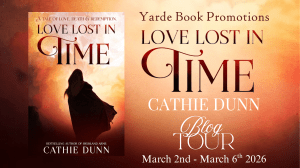
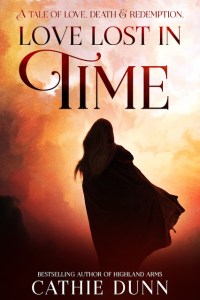
Today, I am pleased to welcome Cathie Dunn to my blog to share an excerpt from her novel, “Love Lost in Time.” I would like to thank Yarde Book Promotion and Cathie Dunn for allowing me to participate in this blog tour.
Excerpt:
From Chapter 2:
The feast of Easter, AD 777
Carisiacum, Neustria, Kingdom of the Franks
Shaking off her thoughts, her gaze drifted to her father, a close adviser to the king. Although older than Charles by a score years, Milo, count of Vaulun, could hold his own, looking resplendent in a fine silk tunic, a simple, yet beautifully carved leather belt, and his aristocratic face with a slightly long nose and dark-blue eyes.
Bursting with pride, Hilda regarded her father, now talking at ease with a young man of a darker hue, clearly of Visigoth heritage, with his black hair falling over strong shoulders, bright eyes, and a moustache reaching to his chin. There was something uncivilised about him. Shivers ran down her spine when he laughed at something her father said and patted him on the back. They raised their cups and took deep draughts of wine. Her father’s complexion reddened as the spirit took effect. She smiled.
“Lady…”
Rolling her eyes in mock annoyance, Hilda jumped out of the maid’s way again. This time, the girl carried a tray bearing two large bowls and several loaves of freshly baked bread, which she deposited in front of King Charles and other strategic places on the grand table, before she rushed back past Hilda with an apologetic smile.
“Nanthild! Daughter!” Father’s voice reached her. He waved her over. Disappointment hit her briefly, as she had enjoyed watching the preparations from the side. Hilda did not crave the attention that other girls here present cherished.
As she crossed the room to join him, the eyes of the young man by her father’s side never left her. It unnerved her a little – she was unused to male attention – and her heart beat a solid drum in her ears.
“My dear daughter, come,” her father said affectionately, his eyes full of joy, as he bid her sit on a stool beside him. Turning to the young man who was on Hilda’s other side, he added, “I will be lost without her. She has been looking after me well since my wife, her mother, passed away.”
A frown shrouded his features briefly at the memory, and she wanted to reach out to him, but refrained. Eight years earlier, her mother had died giving birth to her only brother, who himself had only survived for a sennight. Both Hilda and her father had felt their loss strongly, and the count had thrown himself even more into diplomacy and warfare for the king.
“I’m sorry to hear,” the young man responded solemnly, his voice a low hum. “We have seen so much death and sadness, too, including the loss of my parents last summer.”
Nodding, Hilda kept staring at the table, uncertain how to react.
“Here, let me…” The stranger filled a goblet with wine and handed it to her.
She looked at him from under her lashes. “I thank you, lord.” She raised it and took a small sip. The pungent scent of berries and grapes blurred her senses, and the full taste of even the one sip made her head spin.
“’Tis strong, this wine they brought up from Septimania.” Her father laughed. “But you will get used to it, daughter.”
She carefully placed the goblet onto the table, trying not to reveal her trembling hand, and pulled her brows together before risking a glance at him. What did he mean? Father was overly cheerful, his demeanour jovial. She saw contentment in his features as he gazed at her. And relief.
Her heart froze. Had he not said earlier he ‘would be lost’ without her?
Blurb:
A reluctant daughter. A dutiful wife. A mystery of the ages.
Languedoc, France, 2018
Historian Madeleine Winters would rather research her next project than rehash the strained relationship she had with her late mother. However, to claim her inheritance, she reluctantly agrees to stay the one year required in her late mother’s French home and begins renovations. But when she’s haunted by a female voice inside the house and tremors emanating from beneath her kitchen floorboards, she’s shocked to discover ancient human bones.
The Mediterranean coast, AD 777
Seventeen-year-old Nanthild is wise enough to know her place. Hiding her Pagan wisdom and dutifully accepting her political marriage, she’s surprised when she falls for her Christian husband, the Count of Carcassonne. But she struggles to keep her forbidden religious beliefs and her healing skills secret while her spouse goes off to fight in a terrible, bloody war.
As Maddie settles into her rustic village life, she becomes obsessed with unraveling the mysterious history buried in her new home. And when Nanthild is caught in the snare of an envious man, she’s terrified she’ll never embrace her beloved again.
Can two women torn apart by centuries help each other finally find peace?
Love Lost in Time is a vivid standalone historical fiction novel for fans of epoch-spanning enigmas. If you like dark mysteries, romantic connections, and hints of the paranormal, then you’ll adore Cathie Dunn’s tale of redemption and self-discovery.
Praise
“From the richness of Charlemagne’s court and the regret of a daughter, as she stands over her mother’s grave, to the realisation of an enemy and a skeleton under the kitchen floor, Love Lost in Time: A Tale of Love, Death and Redemption by Cathie Dunn is the unforgettable story that traverses two very different times.”
The Coffee Pot Book Club, 5* Editorial Review
“The narrative is ripe with emotions as two independent women are pulled in unexpected directions… Both landscapes are beautifully penned for readers to easily get lost in. Additionally, the storylines are engaging, and each helped bring a satisfying conclusion to the other. An enjoyable tale about love, sacrifice, and self-discovery.”
Historical Novel Society
“The historical details are beautiful, and a book which could easily feel oppressively sad is cleverly lightened with the use of romance and a satisfying ending. Well written and easy to read, the historical side may be a little more compelling, but the contemporary details add a layer that cannot be ignored!”
In’DTale Magazine
“In Love Lost in Time, Ms Dunn creates a fascinating balance between a tragic love story set in the Visigoth empire of the eighth century, and a very modern historian on a quest to find her own personal history in picturesque Languedoc…
Thoroughly researched and beautifully told, both stories complement each other in narrative power and colourful scene-setting; and in the dual narrative, the main characters are compelling – each a product of destiny and following their fate, regardless of the cost. Fans of Kate Mosse will relish this book…”
Cathie is an Amazon-bestselling author of historical fiction, dual-timeline, mystery, and romance. She loves to infuse her stories with a strong sense of place and time, combined with a dark secret or mystery – and a touch of romance. Often, you can find her deep down the rabbit hole of historical research…
In addition, she is also a historical fiction book promoter with The Coffee Pot Book Club, a novel-writing tutor, and a keen reviewer on her blog, Ruins & Reading.
After having lived in Scotland for almost two decades, Cathie is now enjoying the sunshine in the south of France with her husband, and her rescued pets, Ellie Dog & Charlie Cat.
She is a member of the Historical Novel Society, the Richard III Society, the Alliance of Independent Authors, and the Romantic Novelists’ Association.
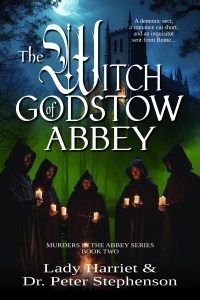
I am pleased to welcome Lady Harriet and Dr. Peter Stephenson to my blog to share an excerpt from their novel, The Witch of Godstow Abbey. I would like to thank Lady Harriet, Dr. Peter Stephenson, and The Coffee Pot Book Club for allowing me participate in this blog tour.
Excerpt
From Chapter 2 – A Garden’s Secret
The abbess sat in her chambers, reviewing the abbey’s ledgers. Sister Agnes entered without waiting for the novice outside to announce her.
“My child! What urgency drives you to burst in so?”
“I must tell you what I’ve found, Mother. It is deeply troubling.”
“Then speak, Sister.”
“The piglets did not die by the blade alone. They were prepared first with a potion—I suspect monkshood, judging by the blue tint of their lips and tongues. Before death took them, the executioner drew their vital essence through a small puncture wound near one of the great vessels. Finally, he cut their throats — not as a killing blow, but to bleed them wholly, leaving not a drop of life-humour behind.”
“A sacrifice to the Devil, then?”
“Yes, Mother. I believe that this is the work of those who serve the Enemy.”
Blurb:
A widowed academic investigating strange historical practices gets drawn back in time and into the year 1299 in Oxford. Join a cast of compelling characters-nuns, novices, and outsiders-as they battle the forces of darkness. Enter their struggle against evil, clandestine organizations. Join their life-threatening fight to protect each other, be willing to die for each other, and occasionally fall in love.
Will heroic love and righteous pursuit of justice triumph? Will the horror-inducing villain be found out and overthrown? Or will the courageous troop of those fighting for what is good be overpowered and taken captive?
Set in Oxford, England, in the year 1299, a struggle takes place between the sisters of the local convent and a strange, terrifying local evil society. They discover a secret organization of men who perform unspeakable deeds. The lives of several sisters are in danger.
Join Mother Alice, Sister Agnes, and Isabel, along with Lady Beatrix and Lady Harriet, as they confront and do battle with an evil, secret society intent on attacking them, taking over the convent, and sacrificing a young woman.
If you love stories that keep you turning pages while imparting fascinating accounts of the past, this latest mystery in the “Murders in the Abbey” series will tingle your spine.
Praise for The Witch of Godstow Abbey:
‘Richly atmospheric and quietly gripping, “The Witch of Godstow Abbey” is a worthy addition to your bookshelf.’
~ Yarde Book Promotion, 5* Editorial Review
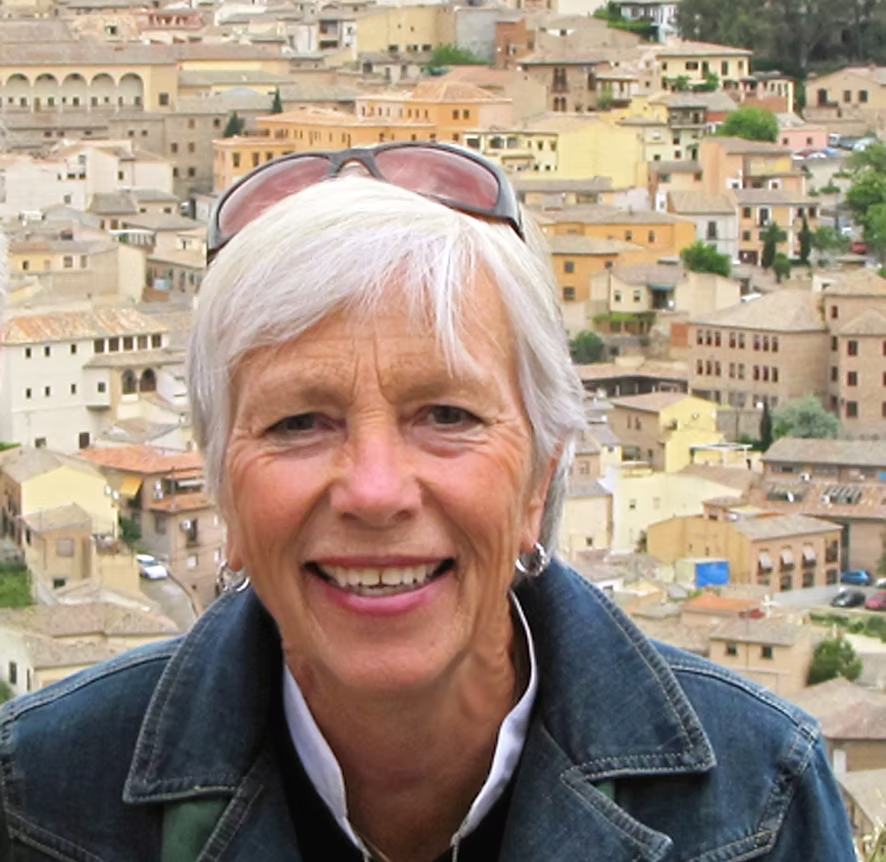
Lady Harriet holds the legal title “Lady of the Manor,” as defined under English law, and traces her ancestry to Charlemagne’s royal line.
A lifelong reader and devoted genealogist for nearly fifty years, Harriet has always had a passion for stories, whether they are buried in the past or found in the pages of a good book. She is the co-author of We Are Manx, a self-published family saga that explores her Manx heritage and the history of the Isle of Man in rich detail.
She’s also a photographer who prefers being behind the lens, a word lover addicted to word games, and a fan of wooden jigsaw puzzles. She has traveled extensively, with a deep appreciation for history, diverse cultures, and the unexpected joys that can be found away from home. Her career spanned volunteerism, real estate, and systems administration, but now she happily devotes her time to more creative pursuits.
As she puts it: “I’m old enough for Medicare, but not quite old enough to get a birthday card from King Charles—were I a Brit.”
The Witch of Godstow Abbey, written in partnership with Dr. Peter Stephenson, marks her first (but certainly not last) foray into historical fiction. With photography, she creates books of images; with storytelling, she creates images made of words.
Dr. Peter Stephenson has written or contributed to over twenty books, all but one of which are non-fiction technical books. He has published over 1,000 papers in technical journals, technical trade journals, and peer-reviewed legal journals. One of his peer-reviewed papers has over 15,400 downloads.
In addition to writing, Dr. Stephenson has been playing blues and Americana music for 70 years. It is through that performing, and after earning a PhD from Oxford Brookes University, that he was given the appellation “Doc” by the owner of one of his performance venues.
Having visited Oxford several times and being employed by a UK company in nearby Malvern, it was only natural that he would set his tales in Oxfordshire. His academic experience in Oxford town sealed the deal and resulted in his first historical novel, The Whispering Dead of Rewley Abbey—Book 1 in the “Murders in the Abbey” series—which reached the Amazon Kindle bestseller list and won a Pencraft award for literary excellence in the winter of 2025. He now writes with his collaborator and writing partner, Lady Harriet.
Dr. Stephenson lives with two Savannah cats on a pond in Auburn Hills, Michigan. Starting a “new” career at the age of 80, Doc reckons that he has only about the next 20 years to finish the series and retire – again – perhaps this time to Oxford.
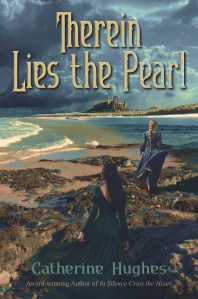
I am pleased to welcome Catherine Hughes to my blog today to share an excerpt from her latest novel, “Therein Lies the Pearl.” I would like to thank The Coffee Pot Book Club and Catherine Hughes for allowing me to participate in this blog tour.
Excerpt
Her voice lifted in confusion. “Father?”
Margaret had been breathing in the musky smell of the woodlands and the flowering anemone that lined their path when she saw her father’s body, as it was positioned in the saddle, tilt further and further toward the side.
That morning, the family had left the inn and began traveling toward Favreshant, following a path made fragrant by the flowers and plants newly opened for spring. The weather did much to improve Margaret’s spirits as the sun shone brightly upon them from a clear, blue-domed sky. An occasional puffy cloud floated across the heavens, but never did it linger long enough to diminish the warmth that embraced her. Walking with a bemused smile upon her face, Margaret surrendered to the charms of the countryside, relishing in the way the light accentuated the many shades of green that colored the leaves, the bushes, and the flower stems. A random look toward the front of the cavalcade snapped her pleasant daydream when she noticed the rider near the head of the train—her father—was about to fall.
Abandoning her usual sauntering walk, she broke into enormous strides, trying to close the gap between her father and herself. The rapid turnover of her feet upon the soil alarmed the flock of yellowhammers who had been flitting about the blossoms. To escape the disruption, they rose higher and hovered above, waiting for the
tumult to settle.
“Father!”
Her shout coincided with the loud thud of his body landing on solid ground, his head coming to rest in a patch of wildflowers.
Before Margaret reached him, she could see Gerhard was already there. He had carefully removed young Edgar from the saddle and then ran toward Edward, dropping to his knees for closer inspection.
Margaret skidded to a halt and took the same posture on the other side of her father’s fallen body. Hesitantly, she repeated again, “Father…?”
His lips parted, but no sound issued forth.
After a quick glance in her direction, Gerhard moved closer to Edward, placing one hand beneath his master’s neck and bringing his own closer. “Edward! Edward, can you hear me?” Nothing. “Blink your eyes if you can hear me.” Gerhard’s voice cracked with worry, his usual composure gone. Because Gerhard had leaned so closely over her father’s head, Margaret had to slide further up toward his shoulder to be able to see whether or not her father had comprehended Gerhard’s words.
To her relief, she saw his eyelashes flutter—he understood! He was still there, he was still with them!
Gerhard continued. “Can you move your legs, my lord? Your arms? Just blink to let me know if you still have some control over your limbs.”
The words hung in the air as other people soon gathered around the group of three upon the ground. Margaret heard Edgar sniffling somewhere outside the circle and felt Harold, the priest, and his two brothers glaring down upon them from their seats. None of them had dismounted; instead, they surrounded the trio like a band of
highwaymen waiting to pounce on an unsuspecting victim. To Margaret’s dismay, her father’s eyelids did not flicker.
She studied Gerhard and watched the changing color of emotion move across his face—from confusion to concern, from fear to speculation, from suspicion to anger. When they both noticed the parting of her father’s lips, their hopes lifted. Together, she and Gerhard leaned in closer.
Her father’s eyes remained open but unfocused, and he whispered gently, more so to the air than to them. “No … feeling …my legs. My feet… cannot feel them… cannot move them… nothing there.”
Gerhard was about to respond, but stopped when he saw Edward gather his breath once more. Unable to inhale deeply, he spoke in shallow exchanges. “Dizzy … since morn…could not get… legs…to keep hold … of the horse… chest feels … full… crushed.” He paused here for a lengthier break.
Margaret could feel her eyes welling up, her lashes wet with moisture.
“Cannot… take …. in … air.” With his gaze still focused at some point in the far distance, he whispered in a hushed tone, “Twas… foul… play.” Silence, and he moved no more.
Margaret felt tears stinging her eyes. They burned her skin as they tumbled down her face until they left small, individual droplets of water on her father’s tunic. She watched as Gerhard placed his hand over Edward’s face, his fingers gently extending to close each eyelid.
Tiny bright-blue flowers with yellow centers formed a soft, decorative pillow where his sleeping head lay. Reminded of Jesus’ promise when he created these delicate blossoms, Margaret trusted that the Blessed Virgin would watch over her father’s soul. And she also knew that her father—like the flower itself—was urging her to “forget-me-not.”
Blurb:
Normandy, 1064
Celia Campion, a girl of humble background, finds herself caught in a web of intrigue when Duke William commands her to work as his spy, holding her younger sister hostage. Her mission: to sail across the sea to Wilton Abbey and convince Margaret, daughter of Edward the Exile, to take final vows rather than form a marriage alliance with the newly crowned king to the North, Malcolm III of Scotland. Preventing a union between the Saxons and Scots is critical to the success of the Duke’s plan to take England, and more importantly for Celia, it is the only way to keep her sister alive.
In this sweeping epic that spans the years before and after the Conquest, two women from opposite sides of the English Channel whisper across the chasm of time to tell their story of the tumultuous days that eventually changed the course of history. As they struggle to survive in a world marked by danger, loss, and betrayal, their lives intersect, and they soon come to realize they are both searching for the same thing–someone they can trust amidst the treachery that surrounds them.
Together, their voices form a narrative never before told.
Award-winning writer Catherine Hughes is a first-time author who, from her earliest years, immersed herself in reading. Historical fiction is her genre of choice, and her bookshelves are stocked with selections from ancient, Medieval, and Renaissance Europe as well as those involving New England settlements and pioneer life in America. After double-majoring in English and business management on the undergraduate level, Catherine completed her Master’s degree in British literature at Drew University and then entered the classroom, where she has been teaching American, British, and World Literature at the high school level for the last thirty years.
Aside from teaching and reading, Catherine can often be found outdoors, drawing beauty and inspiration from the world of nature. Taking the words of Thoreau to heart, “It is the marriage of the soul with nature that makes the intellect fruitful,” Catherine sets aside time every day to lace up her sneakers and run with her dog in pre-dawn or late afternoon hours on the beaches of Long Island. When her furry companion isn’t busy chasing seagulls or digging up remnants of dead fish, she soaks in the tranquility of the ocean setting, freeing her mind to tap into its deepest recesses where creativity and imagination preside.
In Silence Cries the Heart, Hughes’s first book, received the Gold Medal in Romance for the Feathered Quill 2024 Book of the Year contest, the Gold Medal for Fiction in the 2024 Literary Titan competition, and the 2024 International Impact Book Award for Historical Fiction. In addition, the Historical Fiction Company gave it a five-star rating and a Silver Medal in the category of Historical Fiction Romance. The book was also featured in the February 2024 Issue 31 of the Historical Times magazine and was listed as one of the Best Historical Fiction Books of 2024 by the History Bards Podcast. Therein Lies the Pearl is her second venture into the world of historical fiction.
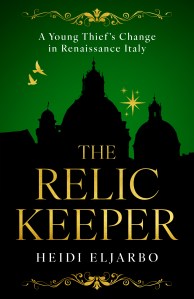
I am pleased to welcome Heidi Eljarbo back to my blog to share a spotlight for her latest novel, “The Relic Keeper.” I would like to thank Heidi Eljarbo and The Coffee Pot Book Club for allowing me to participate in this blog tour.
Blurb:
Inspired by Gerrit van Honthorst’s masterpiece, The Adoration of the Child, and the novel Oliver Twist by Charles Dickens.
Italy, 1620.
Angelo is an orphan, lonely and forgotten. Having been passed on from one family to the next, he ends up as a common thief, subject to and under the thumb of a ruthless robber called Tozzo.
Angelo knows no other life and has lost hope that any chance of providence will ever replace his lonely, misfortunate existence. When he loses his master, his livelihood is shaken. Tozzo’s plunder is hidden in a safe place, but what will happen if someone comes after Angelo to get their hands on the stolen relics? More than that, he feels threatened by words he’s heard too many times; that he’ll always remain unforgiven and doomed.
One day, a priest invites Angelo to help with chores around the church and rectory and, in exchange, offers him room and board. Padre Benedetto’s kindness and respect are unfamiliar and confusing, but Angelo’s safety is still a grave concern. Two older robbers have heard rumors about the hidden treasures and will stop at nothing to attain them.
With literary depictions and imagery, Angelo’s story is a gripping and emotional journey of faint hope and truth in seventeenth-century Italy—an artistic and audacious tale that crosses paths with art collector Vincenzo Giustiniani and the powerful Medici family.
Using invisible threads, Heidi Eljarbo weaves together her fictional stories with historical figures and real events.
This title is available to read on #KindleUnlimited.
Author Bio:
HEIDI ELJARBO grew up in a home full of books, artwork, and happy creativity. She is the author of historical novels filled with courage, hope, mystery, adventure, and sweet romance during challenging times. She’s been named a master of dual timelines and often writes about strong-willed women of past centuries. After living in Canada, six US states, Japan, Switzerland, and Austria, Heidi now calls Norway home. She lives with her husband on a charming island and enjoys walking in any kind of weather, hugging her grandchildren, and has a passion for art and history. Her family’s chosen retreat is a mountain cabin, where they hike in the summer and ski the vast white terrain during winter. Heidi’s favorites are her family, God’s beautiful nature, and the word whimsical.
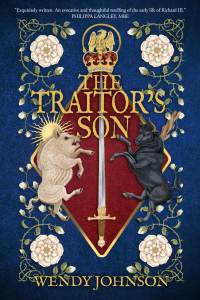
I am pleased to welcome Wendy Johnson to my blog today to share information about her research for her novel, “The Traitor’s Son.” I would like to thank Wendy Johnson and The Coffee Pot Book Club for allowing me to participate in this blog tour.
I’ve been fascinated by the period known retrospectively as the Wars of the Roses since childhood, so when I came to write ‘The Traitor’s Son’ I already had a grounding in the history. Over the years, I’ve amassed a number of secondary sources: biographies of the principal figures, battlefield histories, political commentaries, and so on, and these have proved invaluable in forming the backbone of the novel. These days, a great deal of primary sources are digitally transcribed, and can be a valuable means of verifying details which would be more difficult to access.
My intention was always to underpin my fiction with fact. I didn’t want to invent things for the sake of the story—for me, the events of the fifteenth century are in themselves dramatic and exciting enough without the need for fabrication. But of course, the duty of a historical novelist is to add flesh to the bones, to bring the past to life, and this is essential as the reader has to be able to empathise with the characters and understand their motivation. So, how did I go about researching the lives of Edward IV, Richard Neville, earl of Warwick— and of course, my protagonist, young Richard Plantagenet, the future Richard III?
I do feel as though I’ve grown up with these figures—the first castle I ever visited as a child was Raby Castle, in County Durham, home to the dynamic Neville family, and a fascination for this remarkable dynasty was formed. My lifelong interest in Richard III himself was kindled during a visit to Middleham Castle, Yorkshire, at the age of eight and has remained with me ever since. I’ve always had a sense of what I feel my characters were really like, but of course, that wasn’t enough: to write a believable novel, I needed to fully research their lives and the events which formed them, before I could consider recreating them on paper. Biographies proved extremely helpful, most providing a clear background to the lives of each individual and helping to form a realistic picture of that particular person, what their personalities may have been, and, in particular, who and what may have influenced them. This was significantly important when it came to Richard himself.
The frustrating thing about the study of the fifteenth century is that, although some primary sources do survive, they are fewer in number than those of the following century, and those that do survive are mostly official documents. It would be wonderful if we could consult, for example, a greater number of personal letters from those concerned. We do have some, but once again, these tend to be letters composed in an official capacity. Those which remain, however, can help cast small rays of light on the people as individuals, for example, the letter sent by a youthful Edward IV, and his brother Edmund, to the Duke of York, thanking him for the gowns he has sent them and requesting him to deal with ‘the odious rule’ of Richard Croft and his brother, fellow trainee knights, who appear to have been bullying them. Although my novel does not cover this earlier period, the letter is illustrative of the comfortable relationship the sons of York had with their father. Likewise, Richard’s letter to his mother, written as king and signed ‘your most humble son’, requesting her ‘daly blessing to my synguler comfort’ offers a small insight into the affection and respect he bore for her. Although such correspondence is rare, many documents having been destroyed in the following century, letters like these do provide a glimpse of both Edward and Richard’s closeness to their parents.
The relationships of the York family, one to another, are the focus of ‘The Traitor’s Son’. Rather than a sweeping saga, I very much wanted to keep the action close, concentrating on Richard and his brothers, Edward IV and George, duke of Clarence, their sister, Margaret, mother, Cecily—and the man, whom I believe played a huge part in young Richard’s upbringing, his cousin and mentor, Richard Neville, earl of Warwick. Research into the life of Richard III indicates a deep reverence for the memory of his father, the Duke of York. York’s death in battle, when Richard was only eight years old, and the danger in which the family was placed thereafter, must have had a devastating effect on the boy. According to the Centre for Male Psychology…research shows the father-child relationship is an important one. In fact, it can be more influential than the mother-child relationship. This is especially true for the 8-12 year old child as they try to make sense of the outside world…’ i This observation helped confirm my theory that following the death of the Duke of York, it would have been natural for Richard to have searched for a father figure in his life, and that this figure could well have been his cousin, Warwick.
Regarding locations, I found I could call on personal experience for some, but had to research others. Having grown up close to Middleham, I know the castle inside and out, so it was very easy to imagine the scenes set within its walls. The city of York, which was very familiar to Richard, remains in part unchanged, and again, it was an easy matter to reimagine his time there. Warwick Castle is another fortress I’ve visited in person, although naturally there have been additions since the days of Richard Neville. London needed to be researched carefully, as very little remains from the medieval period. I found an amazing resource on the Internet entitled the Agas Map of Early Modern London, which uses the Civitas Londinium, a detailed woodcut created in 1561. This incredible, interactive tool allows the user to search for particular streets, churches, parishes, gates, and so on. Highlighting these on the map, it becomes possible to visualise the city at a time not too distant from the period in which my novel is set. For Richard’s exile in the Low Countries, both at the age of eight and again at eighteen, I had to rely on published histories and on images and information I found online. A visual recreation of the Bishop’s Palace at Utrecht (where Richard and his brother, George, resided following their father’s defeat) was extremely useful, as was a delightful video I found of the adjacent tower, the Dom Toren, which actually featured the sound of its bells—so different in their melody from the chimes which would have been a constant accompaniment to life in London.
My favourite element of the writing process will always be the creative part—seeing the characters in my mind’s eye, imagining their emotions and bringing them to life—but my greatest desire with the novel was to create an authentic narrative, and that meant remaining true to the facts and to the people who populate its pages. These were, after all, real people, and I felt I had a duty to portray them with respect and in the most accurate way I could. Therefore, research and facts remain twin components of ‘The Traitor’s Son’.
Blurb:
Caught between a king and a kingmaker, young Richard Plantagenet knows he’ll have to choose…
1461: Richard, Duke of York, King by Right, has been branded a traitor and slain by his Lancastrian foes. For his eight-year-old son—Richard Plantagenet—England has become a dangerous place.
As the boy grapples with grief and uncertainty, his elder brother, Edward, defeats the enemy and claims the throne. Dazzled by his glorious sibling, young Richard soon discovers that imperfections lurk beneath his brother’s majestic façade. Enter Richard Neville, Earl of Warwick—cousin, tutor, luminary—whose life has given him everything but that which he truly craves: a son. A filial bond forms between man and boy as they fill the void in each other’s lives. Yet, when treachery tears their world asunder, Richard faces an agonizing dilemma: pledge allegiance to Edward—his blood brother and anointed king—or to Warwick, the father figure who has shaped his life and affections.
Painfully trapped between duty and devotion, Richard faces a grim reality: whatever he decides will mean a fight to the death.
In “The Traitor’s Son”, Wendy Johnson weaves a tapestry of loyalty, love, and sacrifice against the backdrop of England’s turbulent history. Through the eyes of a young Richard III, readers are transported into a world where every choice is fraught with peril, and the bonds of kinship are tested to their limits.
Perfect for fans of Hilary Mantel, Annie Garthwaite, and Sharon K. Penman.
Praise for The Traitor’s Son:
“Exquisitely written. An evocative and thoughtful retelling of the early life of Richard III.”
~ Philippa Langley, MBE
“Sometimes the perfect use of the written word takes my breath away. Not very often, but this book is it. A wonderful story written so beautifully that I shall not forget it for a long time. Everything to my mind is perfect. The language, the story, the pacing. Just wonderful.”
~ Kindle Customer, 5* Amazon Review
“Wonderfully woven story of a young Richard III. Woven with a sure knowledge of the history and a realistic telling of a story about a young boy finding his way through tragedy and triumph, uncertainty, and a legacy he cannot escape. Brilliant debut which promises more and more.”
~ Cris, 5* Amazon Review
“I loved this novel, it was beautifully written, extremely atmospheric, the characters’ personalities came through perfectly, can’t wait for the next instalment.”
~ Linda Hayward, 5* Amazon Review
“Really enjoyed this book. Holds the reader enthralled from the first paragraph to the last. The next volume can’t be released soon enough.”
This title is available to read on #KindleUnlimited.
OLYMPUS DIGITAL CAMERA
Author Bio:
Wendy Johnson has a lifelong passion for medieval history, its people, and for bringing their incredible stories to life. Her specific areas of interest are the fifteenth century, the Wars of the Roses, and Richard III in particular. She enjoys narratives that immerse the reader in the past and tries faithfully to recreate the later Middle Ages within her own writing. She has contributed to a number of historical anthologies and was a runner-up in the Woman and Home Short Story Competition 2008.
Wendy is also a founder member of Philippa Langley’s Looking for Richard Project, which located the king’s lost grave in 2012. She co-authored Finding Richard III: the Official Accountof Research by the Retrieval and Reburial Project in 2014, and in 2019 received the Richard III Society’s Robert Hamblin Award.
THE TRAITOR’S SON, volume one in a Richard III trilogy, is Wendy’s debut novel, and she is currently working on the sequel.
I am pleased to welcome Deborah Swift back to my blog today to share information about the real-life locations for her latest novel, “The Cameo Keeper.” I would like to thank Deborah Swift and The Coffee Pot Book Club for allowing me to participate in this blog tour.
Santo Spirito Hospital
One of my characters, Jacopo Vanelli, is a surgeon, so he spends his time at the Santo Spirito Hospital in Rome. The ‘Holy Spirit’ hospital was founded in the Middle Ages and was recognised as one of Europe’s oldest and most advanced hospitals. Its remit included not only tending to the sick and the poor, but also taking in unwanted babies, abandoned children, and travellers who fell ill within the bustling heart of Rome.
Within its grand Renaissance walls, was a museum, an apothecary shop, a public operating theatre and an orphanage run by nuns. The operating theatre became an influential centre for medical education — hosting lectures, dissections, and practical training sessions that drew aspiring doctors from across Italy and Europe.
Here is the octagonal tower of the main building, below.
The architecture of the hospital was striking, with vast wards, airy cloisters, and a famous spiral staircase designed to allow for the swift transfer of patients. Ornate chapels and frescoes adorned the interior, along with stained glass windows. It was seen as an extension of the Church, in what was considered the holiest city in the Western world.
The Ruined Roman Baths
By the 17th century, the once-magnificent Roman baths of the city stood as haunting reminders of Rome’s imperial past. Structures such as the Baths of Caracalla and the Baths of Diocletian, though partially collapsed and overgrown, continued to inspire awe with their towering arches and crumbling mosaics. Locals and visitors alike wandered amidst these grand ruins, imagining the bustling social life and sophisticated engineering that had filled these halls centuries before.
This was an ideal place for lovers to meet, and two of my characters meet at the Baths of Caracalla. Mostly in decay, the stone was pillaged to build new buildings, but there was also a market in trinkets and souvenirs that went on there amongst the ruins. Artists and antiquarians flocked to the baths, sketching their weathered columns and broken statues, and imagining the naked bathers of centuries before.
The Vatican Apartments
One of my characters is the Pope’s sister-in-law, Donna Olimpia Maidalchini, a powerful and wealthy woman who dominated Roman life. Many of my scenes take place in the Vatican Apartments, which represent the heart of papal authority and splendour. These lavish chambers were home to the Pope and his closest advisors, serving as both living quarters but also the centre of Rome’s governance. The apartments showcased the best artistry of Renaissance and Baroque craftsmen. Daily life within the Vatican Apartments was a blend of solemn ritual and political intrigue, with cardinals, diplomats, and foreign dignitaries as regular visitors.
The most celebrated rooms, such as the Raphael Rooms and the Sistine Chapel—already famed for Michelangelo’s ceiling—were objects of wonder and inspiration for all who visited. The Vatican Apartments thus stood not only as the spiritual and administrative core of the Catholic world, but also as a testament to Rome’s enduring patronage of the arts and its pivotal role in shaping the cultural legacy of the 17th century.
Rome is a fabulous place to set a novel with many beautiful and atmospheric locations, and I hope I’ve used them all to advantage in The Cameo Keeper.
Blurb:
Rome 1644: A Novel of Love, Power, and Poison
Remember tonight… for it is the beginning of always ― Dante Alighieri
In the heart of Rome, the conclave is choosing a new Pope, and whoever wins will determine the fate of the Eternal City.
Astrologer Mia and her fiancé Jacopo, a physician at the Santo Spirito Hospital, plan to marry, but the election result is a shock and changes everything.
As Pope Innocent X takes the throne, he brings along his sister-in-law, the formidable Donna Olimpia Maidalchini, known as La Papessa – the female Pope. When Mia is offered a position as her personal astrologer, she and Jacopo find themselves on opposite sides of the most powerful family in Rome.
Mia is determined to protect her mother, Giulia Tofana, a renowned poisoner. But with La Papessa obsessed with bringing Giulia to justice, Mia and Jacopo’s love is put to the ultimate test.
As the new dawn of Renaissance medicine emerges, Mia must navigate the dangerous political landscape of Rome while trying to protect her family and her heart. Will she be able to save her mother, or will she lose everything she holds dear?
For fans of “The Borgias” and “The Crown,” this gripping tale of love, power, and poison will keep you on the edge of your seat until the very end.
Praise:
‘historical fiction that is brisk, fresh and bristling with intrigue’ ~ Bookmarked Reviews ★★★★★
Deborah Swift is the author of twenty novels of historical fiction.
Her Renaissance novel in this series, The Poison Keeper, was recently voted Best Book of the Decade by the Wishing Shelf Readers Award. Her WW2 novel Past Encounters was the winner of the BookViral Millennium Award, and is one of seven books set in the WW2 era.
Deborah lives in the North of England close to the mountains and the sea.
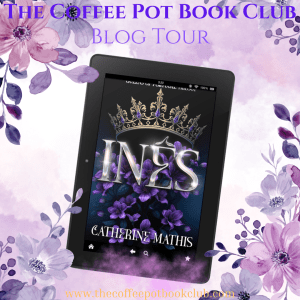
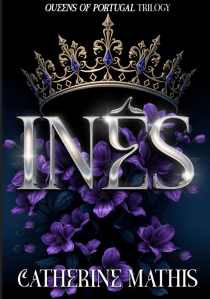
Today, I am pleased to welcome Catherine Mathis to my blog to discuss Ines de Castro, the main protagonist of her novel, “Ines,” the first book in her Queens of Portugal trilogy. I would like to thank The Coffee Pot Book Club and Catherine Mathis for allowing me to participate in this blog tour.
Inês resides more in our imaginations than in fact. She lived, had children, and died.
Her family came from Galicia, in the northwest of Spain, where the famous city of Santiago de Compostela is located. Her father was a powerful noble, Pedro Fernãndez de Castro. Her mother, a noblewoman of Portuguese antecedents, was the mistress of her father. Her birth was illegitimate, which narrowed many of the choices available in her social class. She had kings in her lineage. Her parents also had a son, Alvaro. It is recorded that Alvaro became a good friend of the Pedro in this tale.
Some accounts say she was raised in Portugal, and others in Castile. Inés could have been a young woman serving in the court of Portugal. But the legend says she came from Castile with Constanza, who married Portugal’s Infante Pedro. Coming with Constanza feels more probable because they were cousins and knew each other. If the legend is true that she and Pedro fell in love quickly, then the odds fall on the side to say their first knowledge of each other was a sudden arrival at court, not her growing up there.
What comes down in the legend is her blonde hair and long neck, neither particular markers of great beauty in medieval Portugal. Yet, she is held out as a beauty. In those days, a high forehead was greatly prized, so women plucked their hair to make their foreheads taller. Did Inês? Probably – what young woman does not follow current fashion?
There are no paintings or drawings for most people at this time. Pedro did leave us with an incredible gift, their sarcophagi. He was instrumental in their design. This is how Pedro remembers Inês.
My underlying belief for Inês is that her beauty stems partly from appearance and partly from personality. I see her as easy to talk with, an attentive listener, and someone who gives you her full attention. She is loyal. She is determined.
Most of all, Inês is true to herself. She is likely just 14- or 15-years old when she arrives on the scene. We know nothing of her years beforehand. I expect she could read and write as well as stitch and hunt, all skills of a medieval noblewoman. I believe that having suffered the shame of her birth, she desired the life of a legitimately married woman. She would eschew being mistress of any man, even the heir to the throne. Combine her marriage goal with her loyalty to her cousin Constanza, Pedro’s wife, and just sleeping with Pedro was out of the question. When you are marked young with an unfortunate circumstance, the power of motivation to alter the course of your life is strong. She will suffer for her choices, losing the trust of the king and being exiled. Repeatedly, the crown of Portugal throws obstacles in her way, and she perseveres.
Then comes the day when Pedro plays his part. A widower, he holds out the promise of marriage. No one sees her as fit to be a queen. Of course, there is political intrigue involving her brothers. Life is never simple when you are in the orbit of the royal family. She loves children. She cares for her cousin’s children and her own with recorded affection.
She is the glue of the story. In the novel, she is caught between two men, one whom she is unworthy to wed and one who repels her. When she rejects the king’s trusted adviser, Gonçalves, his hurt turns to jealous anger. “If I cannot have her, then no man can.” Who will the king trust, his son or his adviser? The choices she makes have dire consequences for our protagonist and antagonist.
Blurb:
An heir to the throne, a gorgeous blonde lady-in-waiting, the king’s trusted advisor. When a father and son don’t understand each other, the son pays an outrageous price.
Love, jealousy, loyalty, and revenge roil the court of 14th-century Portugal.
In this engrossing launch to the Queens of Portugal trilogy, Catherine Mathis gives a fresh take on the tale of Pedro and Inês, Portugal’s real-life Romeo and Juliet. Pedro’s father would not have been king if not for his trusted advisor, Gonçalves. Once king, he wants no part in neighboring Castile’s royal convulsions, though his son, Pedro, befriends powerful Castilians.
The all-consuming drive of the king is to ensure his line rules Portugal for centuries to come. He needs legitimate, strong heirs. The Infante Pedro loves a woman not deemed worthy to wear the crown as queen. Between father and son is Gonçalves, the king’s powerful, unquestioned counselor, who is a mentor to the son. Both Gonçalves and Pedro seek the attention of Inês.
There is a horrific cost to winning the love of Inês. She will not release her grip on Pedro until he keeps the two sworn oaths he made to her. Can Pedro do the impossible to satisfy Inês?
Inês is based on real people and events, exploring a cultural touchstone of Portuguese history.
Praise for Inês:
“Mathis masterfully weaves emotional depth into the narrative, creating a deeply engaging experience that leaves a lasting impression and invites readers on an unforgettable journey through the grandeur and intrigue of Portugal’s past.” ~ Mary Anne Yarde, The Coffee Pot Book Club 5* Review
“This exciting start to the Queens of Portugal trilogy describes the legendary love story of Pedro and Inês, and I was amazed at the excellent storytelling and how the author brings the courts to life. There is a lot of drama and intrigue, and the characters’ emotions are beautifully captured in this engrossing tale.” ~ Readers’ Favorite 5* Review
Catherine Mathis was born in Berlin, the daughter of an American spy. As she grew up in Washington, D.C., her spy father turned into a drug enforcement agent. His career change wrecked any chance at high school popularity. She graduated from Sewanee | The University of the South with a degree in history focused on the medieval period. After a career in finance, she returned to her first love of medieval history to ‘Share Iberian Tales.’ Outside of writing, spare time joys are family, friends, reading, collecting folk/outsider art, and travel.
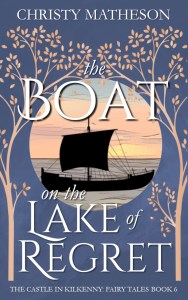
I am pleased to welcome Christy Matheson to my blog today to share a snippet from her novel, “The Boat on the Lake of Regret.” I would like to thank The Coffee Pot Book Club and Christy Matheson for allowing me to be part of this blog tour.
Snippet
Conversation with Morálta:
But Morálta just shakes her head. “How should I know? I told you, I just work here.”
“What has happened to Mór and Nuala?” The words burst out of me.
She shrugs again. “I’m not in contact with the giants, so I don’t really have details. Last I saw, Red-beard was hoisting Nuala onto his pillion, and Mór was in Black-beard’s cart.”
“Are they safe?”
She gives me a strange look. “Safety is an illusion, Hannah.”
“But”—I wave my hands around this room—“any more danger than we are in, here?” Which might be considerable.
Morálta rolls her eyes. “It’s not like they are man-eating giants or anything. Black-beard really doesn’t care for those who don’t do their fair share of the work, so I dare say that Mór is going to be doing some scrubbing, and from what I’ve seen of her she’s not going to enjoy it. But hopefully you all have some true loves signed up to come and fetch you home again, right?”
“Maybe…”
Morálta does a double-take. “Three princes, three princesses, et cetera, and you couldn’t even fall in love?”
“We didn’t have enough time,” I protest. “They just arrived last night.” Except me.
Morálta sighs, sounding put-upon. “And you couldn’t manage it in one evening? Young people these days. I don’t know why the Seven-Inch-Man didn’t give you three days, which would have fit better anyhow. I’ll put it in my Exit Survey when I finish up here. Now, did you want tea or did you not?”
We both murmur politely that we would like tea, thank you, and Morálta whisks away again.
That was possibly the strangest conversation I’ve ever had. Exit Survey?
Blurb:
He has one last chance to be a fairy tale hero.
But she didn’t agree to be the damsel in distress.
When her longtime boyfriend unexpectedly slides a ring on her finger, Hannah is whisked from her everyday bedroom to a medieval ball. Hannah knew that Dylan would do anything to prove to her parents that he’s husband material, including going into the Fae world—but she never agreed to go through the Veil herself.
Now one of three princess sisters, Hannah is paired with now-Prince Dylan. But, homesick and blindsided, she pretends the Veil has wiped him from her memory.
As her prince scrambles in vain to be the right kind of hero, Hannah ignores her instincts and follows her new sisters onto a mysterious boat—which promptly sails them into a land of giants, magical traps, and enchanted pianos…and away from Dylan.
Read now to journey back to medieval Ireland, complete with the Fae and mythological monsters, in this fairy tale adventure and sweet “it was always you” romance.
Characters you connect with. Adventure. Love. Family… And endings that are more than a sugar rush.
When Christy Matheson is not throwing ordinary characters into fairy tales, she is busy raising five children. (Very busy.) She writes character-driven historical fiction with and without fantasy elements, and her “fresh, smart, and totally charming” stories have won multiple awards.
Christy is also an embroidery artist, classically trained pianist, and sews all of her own clothes. She lives in Oregon, on a country property that fondly reminds her of a Regency estate (except with a swing set instead of faux Greek ruins), with her husband, five children, three Shelties, one bunny, and an improbable quantity of art supplies.
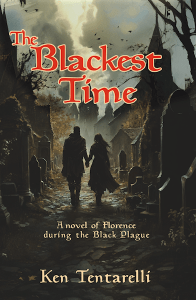
Today, I am pleased to welcome Ken Tentarelli to share information about his research into Renaissance Italy for his novel, “The Blackest Time.” I would like to thank The Coffee Pot Book Club and Ken Tentarelli for allowing me to participate in this blog tour.
Readers expect historical fiction to be authentic, and that aligns well with my passion for research. Often, I spend more time doing research than writing. The fun comes in discovering little-known bits of history. As an example, when you look at maps of Renaissance Italy, you’ll find brightly colored drawings showing the Republic of Florence, the Duchy of Milan, and the other major city-states, but those simplifications ignore the small independent jurisdictions.
Prepping for my fourth book, Conspiracy in Bologna, I came upon an item describing how the border was established between the Papal States and the Republic of Florence. Both agreed to use the course of a stream as their border, and both sent out teams of surveyors to create maps. As luck would have it, the two teams of surveyors identified different streams, leaving land and a town between the two streams unclaimed by either side. The land and the town became the Republic of Cospaia, which remained an independent republic for four hundred years. You’d be hard pressed to find a map of Renaissance Europe showing that tiny republic or the many other independent jurisdictions sprinkled throughout Italy.
We are blessed today with the internet, where we can find copies of original source documents written a thousand years ago. Many have been translated into English. I’m fortunate that I can read the ones that are still available only in Italian. One helpful resource for my latest book, The Blackest Time, was a journal written by Giorgio Villani, a banker in Florence. He wrote about life in Florence at the time of the Black Plague until he finally succumbed to the plague. His writings are available on the Internet in Italian.
Though extensive, the internet is not all-encompassing. In one of my books, a group of men was following an ancient Roman road through central Italy. The road ran alongside the Tiber River—the same river that flows through the center of Rome, but the story is set close to its source in the Apennine Mountains. The men wanted to cross the river to a town on the opposite bank, and for them to get across, I needed to know how they could cross the river. Today, a bridge spans the river, but nowhere on the internet could I find whether a bridge or a ferry was used during the Renaissance, so I emailed the town’s historical society asking whether their records held the answer. They kindly responded with information saying that not only was there a bridge during the Renaissance, but the Romans had built the first bridge at that site nearly two thousand years ago. I could have just picked one of the possibilities, bridge or ferry; after all, the book is fiction, but I felt better knowing the story accurately reflected the history.
Tidbits I found while doing research for a book in my Renaissance mystery series are what led me to write a book set during the time of the Black Plague. Although the mysteries are set during the 1400s, I got carried away at one point, looked further back in time, and came upon three significant events: a triple conjunction of planets, which was taken as an ill omen by astrologers, two years of incessant rain that destroyed farm crops and caused famine in the cities, and the Black Plague. Those three events happening within a brief span of time convinced me there had to be a story worth telling.
Blurb:
Set in the 1300s during the devastating black plague, The Blackest Time is a powerful tale of compassion, love, and the human spirit’s ability to endure immense adversity.
Gino, the central character, is a young man who leaves his family’s farm to find work in a pharmacy in Florence. His experiences show us how people coped in the most horrific time in history.
Shortly after Gino arrived in the city, two years of incessant rain destroyed crops in the countryside, leading to famine and despair in the city. Gino offers hope and help to the suffering— he secures shelter for a woman forced to leave her flooded farm, rescues a young girl orphaned by the plague, and aids others who have lost everything.
The rains had barely ended when the plague hit the city, exposing the true character of its people. While some blamed others for the devastation, the story focuses on the compassionate acts of neighbors helping each other overcome fear and suffering. Doctors bravely risk infection to care for their patients. A woman healer, wrongly accused of witchcraft and driven from the city, finds a new beginning in a village where her skills are appreciated.
Despite the hardships, love blossoms between Gino and a young woman he met at the apothecary. Together they survive, finding strength in each other and hope in a world teetering on the edge.
The Blackest Time is a testament to the strength of the human spirit in overcoming unimaginable tragedy.
Ken Tentarelli is a frequent visitor to Italy. In travels from the Alps to the southern coast of Sicily, he developed a love for its history and its people.
He has studied Italian culture and language in Rome and Perugia, a background he used in his award-winning series of historical thrillers set in the Italian Renaissance. He has taught courses in Italian history spanning time from the Etruscans to the Renaissance, and he’s a strong advocate of libraries and has served as a trustee of his local library and officer of the library foundation.
When not traveling, Ken and his wife live in beautiful New Hampshire.

 Today, I am pleased to welcome Rozsa Gaston to my blog to share a spotlight for her book series “The Anne Boleyn Chronicles” and her latest novel, “The Queen’s Maid.” I would like to thank Rozsa Gaston and The Coffee Pot Book Club for allowing me to participate in this blog tour.
 Blurb:
  Author Bio:
  Today, I am pleased to welcome Cathie Dunn to my blog to share an excerpt from her novel, “Love Lost in Time.” I would like to thank Yarde Book Promotion and Cathie Dunn for allowing me to participate in this blog tour.
 Blurb:
 Cathie Dunn
 I am pleased to welcome Lady Harriet and Dr. Peter Stephenson to my blog to share an excerpt from their novel, The Witch of Godstow Abbey. I would like to thank Lady Harriet, Dr. Peter Stephenson, and The Coffee Pot Book Club for allowing me participate in this blog tour.
 Blurb:
 Lady Harriet holds the legal title “Lady of the Manor,” as defined under English law, and traces her ancestry to Charlemagne’s royal line.
 Dr. Peter Stephenson has written or contributed to over twenty books, all but one of which are non-fiction technical books. He has published over 1,000 papers in technical journals, technical trade journals, and peer-reviewed legal journals. One of his peer-reviewed papers has over 15,400 downloads.
 I am pleased to welcome Catherine Hughes to my blog today to share an excerpt from her latest novel, “Therein Lies the Pearl.” I would like to thank The Coffee Pot Book Club and Catherine Hughes for allowing me to participate in this blog tour.
  Blurb:
 Author Bio
 I am pleased to welcome Heidi Eljarbo back to my blog to share a spotlight for her latest novel, “The Relic Keeper.” I would like to thank Heidi Eljarbo and The Coffee Pot Book Club for allowing me to participate in this blog tour.
 Blurb:
  Author Bio:
  I am pleased to welcome Wendy Johnson to my blog today to share information about her research for her novel, “The Traitor’s Son.” I would like to thank Wendy Johnson and The Coffee Pot Book Club for allowing me to participate in this blog tour.
 Blurb:
 I am pleased to welcome Deborah Swift back to my blog today to share information about the real-life locations for her latest novel, “The Cameo Keeper.” I would like to thank Deborah Swift and The Coffee Pot Book Club for allowing me to participate in this blog tour.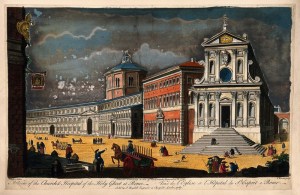


 Blurb:
 Author Bio
 Today, I am pleased to welcome Catherine Mathis to my blog to discuss Ines de Castro, the main protagonist of her novel, “Ines,” the first book in her Queens of Portugal trilogy. I would like to thank The Coffee Pot Book Club and Catherine Mathis for allowing me to participate in this blog tour.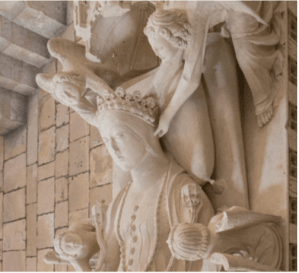
 Blurb:
  Author Bio
 I am pleased to welcome Christy Matheson to my blog today to share a snippet from her novel, “The Boat on the Lake of Regret.” I would like to thank The Coffee Pot Book Club and Christy Matheson for allowing me to be part of this blog tour.
 Blurb:
 Author Bio
 Today, I am pleased to welcome Ken Tentarelli to share information about his research into Renaissance Italy for his novel, “The Blackest Time.” I would like to thank The Coffee Pot Book Club and Ken Tentarelli for allowing me to participate in this blog tour.
 Blurb:
  Author Bio
 Adventures of a Tudor Nerd