
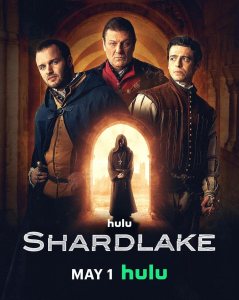
 The year is 1536 and England is amid great religious change. King Henry VIII and his top advisor Thomas Cromwell wanted to close the top monasteries in the country so they initiated the dissolution of the monasteries. One such religious house is St. Donatus monastery in Scarnsea, so Cromwell sends one of his commissioners, Robin Singleton, to investigate the monastery and persuade the monks to leave their home. However, things do not go to plan and Singleton is brutally murdered. Now, Cromwell must rely on a lawyer named Matthew Shardlake and Jack Barak to solve the murder case and close the monastery once and for all. With a house full of secrets, suspicion, and monks fearful of the future, can Shardlake and Barak solve the case before they become the next victim?
This is the premise of the latest Tudor drama on Disney +, called Shardlake, based on the first book in the Matthew Shardlake series by C.J. Sansom, titled “Dissolution.” I remember falling in love with this book series when I first read it about four years ago and I did hope that one day, it would be turned into a television series because Sansom’s writing style was so vivid and his characters leaped off the pages. When it was first announced that Disney + was going to produce this show, it was exciting to know that it was finally going to be adapted for television, but it was also nerve-wracking because since it is one of my favorite Tudor book series, I was hoping that it would do the book justice.
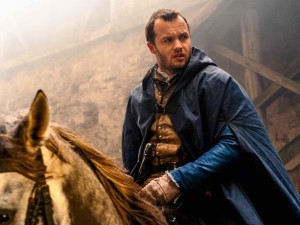
I decided that before the show was due to release, I was going to reread “Dissolution” as I forgot the story and how it played out in the book. This was a joy as Sansom’s writing style is still vibrant and filled with many twists and turns. I was hoping that the show could capture the sense of excitement and danger and how he recreated the Tudor world that Sansom in his books for his readers, especially after it was announced that CJ Sansom passed away two days before the show premiered. I wanted the show to honor Sansom’s legacy and craft as a wonderful storyteller and extremely passionate about the Tudor dynasty.
As I have recently read “Dissolution” right before watching “Shardlake”, I feel like I cannot keep this review as spoiler-free as I would have liked, so this is your warning, I will be spoiling some things in the show and the book.
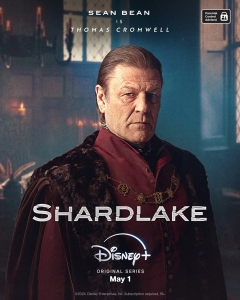
Before we dive into the story, we have to set out our cast of characters, starting with Matthew Shardlake, played brilliantly by Arthur Hughes. Hughes can present Shardlake in such a believable way that it feels like he jumped off the pages. We also have Jack Barak, the funny playboy who adds some light notes to the story, played by Anthony Boyle. I am not going to lie, I was shocked that they decided to replace Mark Poer with Jack Barak, but once I saw the interactions between Shardlake and Barak on set, it made sense. Wrapping up the main actors is Thomas Cromwell played masterfully by Sean Bean. When the casting was announced about Bean being Cromwell, it was hard to picture the historical figure, but when I saw him on the screen having his first scene with Shardlake about the relics, my doubts vanished. He does an excellent portrayal of Thomas Cromwell.
I must applaud the casting crew for creating such a diverse cast, just as diverse as the book that it is inspired by. Some of my standouts include Ruby Ashbourne Serkis as Alice, Irfan Shamji as Brother Guy, and Joe Barber as Simon Whelplay. Regarding the casting of Babou Ceesay as Abbot Fabian, I did not have a problem with it because I think he did a great job portraying a character in a fictional drama based on a historical fiction novel. The one character that I was a bit confused about was the inclusion of Norfolk played by Peter Firth, as he was not in the original story and didn’t add much to the story as a whole.
I think as a whole, the costumes did look relatively decent. However, a few, especially Dr. Goodhap’s outfit, looked synthetic and threw off the illusion of it being a Tudor period drama. I also wanted to see more head coverings for the male characters and for Alice, although the clothing colors were not as dark as I feared. I liked the addition of the relics, the parrot, and the manuscripts to add depth to the drama, and the use of candles instead of torches, always a major plus for history nerds when watching historical dramas.
One of my big issues was the monastery of St. Donatus itself. It has been reported that they filmed in Hungary, Romania, and Austria, primarily at Hunedoara Castle and Kruezenstein Castle. That is a big red flag for authenticity. They may be beautiful locations, but they were not an English monastery during the 16th century when monasteries were dissolved. You can tell that it was not filmed in England and it does take away from the illusion that is so important when it comes to historical dramas; you want to be transported to the location that the author had in mind, especially when Sansom included a map on the monastery in his book.
Now let’s address the elephant in the room, the story of the “Shardlake” series. For the most part, the Shardlake television series stays pretty close to the story, except for a few glaring exceptions. When they mentioned the holy relic went missing, they did not mention the beheaded bird on the altar, which is probably for the best because it is a rather disturbing image. We also have the scenes with Simon Whelplay, who is portrayed as a nervous youth who is constantly getting into trouble. His death plays out a little differently in the book, as he slips and falls in the bathhouse, whereas in the show, he plummets from a tower. In both cases, it is revealed that he was drugged with belladonna. I did feel a bit sad that they didn’t flesh out the relationship between Brother Guy and Shardlake as that was my favorite friendship in the book series. They could have easily had a scene where we could see the potential for their friendship to grow past the monastery.

The two major issues I had were inclusions to the plot of the story. I did not like the addition of Norfolk as a big-name villain for Shardlake because, in the book series, the major historical figures took a back seat to the original characters Sansom created. My biggest issue with this show was Barak’s character arc. At first, I thought it was an odd choice to include him over Mark Poer in the series, but then they decided to combine character traits, like Barak falling for Alice which felt so wrong, luckily he does not run away with her. And then Barak randomly killed Goodhap and got away with it. He admitted to Shardlake that he killed Goodhap and it felt like Shardlake ignored the entire issue, which feels completely off for Shardlake. If they do make another season and they have the actors playing Shardlake and Barak back, it is just going to feel a bit awkward between them.
Overall, I thought the “Shardlake” series was a decent adaptation of the Matthew Shardlake series by C.J. Sansom, but the books will always be superior. If you want to jump into the Tudor world with a murder mystery filled with twists and turns, you should check out “Shardlake” on Disney +, and if you want to read the book series, check out the Matthew Shardlake series by CJ Sansom.
What are your opinions about the “Shardlake” series on Disney + and what is your favorite book written by CJ Sansom?
If you are curious about my views about the Matthew Shardlake book series by CJ Sansom, you can find my review here: https://adventuresofatudornerd.com/2020/09/27/book-series-review-the-matthew-shardlake-series-by-c-j-sansom/
Sources for Images and Cast Information:
https://www.imdb.com/title/tt27390563/fullcredits/?ref_=tt_cl_sm
 The year is 1547, and the infamous King Henry VIII is dead. The throne is left to his young son Edward VI while his half-sisters Mary and Elizabeth wait in the wing. Without their powerful father to look after their well-being, his children must navigate the tumultuous Tudor court with powerful men who desire to use them as mere pawns in their game to influence how England is ruled. Throw in some romantic drama and the ever-changing religious landscape with the clash between Protestants and Catholics. This is the premise of the latest Tudor drama on Starz, “Becoming Elizabeth,” which follows the titular Princess Elizabeth Tudor during the reign of the third Tudor king.
 The cast of “Becoming Elizabeth” is a plethora of talented actors and actresses who remarkably bring the treacherous Tudor court to life. The titular role of Princess Elizabeth was played by Alicia von Rittberg, who portrays the young woman’s naivety and eventual strength in love and court politics. Oliver Zetterstrom is the young King Edward VI who struggles to find his identity as a reformer king while navigating the drama of his court and Lord Protectors. Finally, we have Romola Garai, who revolutionized how Princess Mary Tudor was portrayed on television. Garai gives the audience a more sympathetic and vibrant woman trying to hold her family together while defiantly standing up for her Catholic faith in a Protestant court.
 While most of the storylines are engaging, and I found them rather enjoyable, one got under my skin: the intimate relationship between Princess Elizabeth and Thomas Seymour. Now I know it was the central storyline for the first half of this show, but it made my skin crawl. I know that Tom Cullen has discussed this issue with fans, and I think his portrayal of Thomas is spectacular. My problem is with Princess Elizabeth and how she goes along with the relationship to the point of no return. I feel like Princess Elizabeth was much stronger than how she was portrayed during those moments in the show, and she would have turned Thomas down, knowing the false allegations against her mother, Anne Boleyn. I do not think she slept with Thomas Seymour, but I do believe there were elements of flirting between the two, which could have been seen as them having an intimate relationship.
 Adventures of a Tudor Nerd