 Today, I am pleased to welcome Cathie Dunn to my blog to share an excerpt from her novel, “Love Lost in Time.” I would like to thank Yarde Book Promotion and Cathie Dunn for allowing me to participate in this blog tour.
Excerpt:
From Chapter 2:
The feast of Easter, AD 777
Carisiacum, Neustria, Kingdom of the Franks
Shaking off her thoughts, her gaze drifted to her father, a close adviser to the king. Although older than Charles by a score years, Milo, count of Vaulun, could hold his own, looking resplendent in a fine silk tunic, a simple, yet beautifully carved leather belt, and his aristocratic face with a slightly long nose and dark-blue eyes.
Bursting with pride, Hilda regarded her father, now talking at ease with a young man of a darker hue, clearly of Visigoth heritage, with his black hair falling over strong shoulders, bright eyes, and a moustache reaching to his chin. There was something uncivilised about him. Shivers ran down her spine when he laughed at something her father said and patted him on the back. They raised their cups and took deep draughts of wine. Her father’s complexion reddened as the spirit took effect. She smiled.
“Lady…”
Rolling her eyes in mock annoyance, Hilda jumped out of the maid’s way again. This time, the girl carried a tray bearing two large bowls and several loaves of freshly baked bread, which she deposited in front of King Charles and other strategic places on the grand table, before she rushed back past Hilda with an apologetic smile.
“Nanthild! Daughter!” Father’s voice reached her. He waved her over. Disappointment hit her briefly, as she had enjoyed watching the preparations from the side. Hilda did not crave the attention that other girls here present cherished.
As she crossed the room to join him, the eyes of the young man by her father’s side never left her. It unnerved her a little – she was unused to male attention – and her heart beat a solid drum in her ears.
“My dear daughter, come,” her father said affectionately, his eyes full of joy, as he bid her sit on a stool beside him. Turning to the young man who was on Hilda’s other side, he added, “I will be lost without her. She has been looking after me well since my wife, her mother, passed away.”
A frown shrouded his features briefly at the memory, and she wanted to reach out to him, but refrained. Eight years earlier, her mother had died giving birth to her only brother, who himself had only survived for a sennight. Both Hilda and her father had felt their loss strongly, and the count had thrown himself even more into diplomacy and warfare for the king.
“I’m sorry to hear,” the young man responded solemnly, his voice a low hum. “We have seen so much death and sadness, too, including the loss of my parents last summer.”
Nodding, Hilda kept staring at the table, uncertain how to react.
“Here, let me…” The stranger filled a goblet with wine and handed it to her.
She looked at him from under her lashes. “I thank you, lord.” She raised it and took a small sip. The pungent scent of berries and grapes blurred her senses, and the full taste of even the one sip made her head spin.
“’Tis strong, this wine they brought up from Septimania.” Her father laughed. “But you will get used to it, daughter.”
She carefully placed the goblet onto the table, trying not to reveal her trembling hand, and pulled her brows together before risking a glance at him. What did he mean? Father was overly cheerful, his demeanour jovial. She saw contentment in his features as he gazed at her. And relief.
Her heart froze. Had he not said earlier he ‘would be lost’ without her?
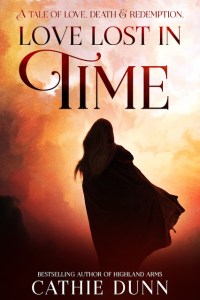 Blurb:
A reluctant daughter. A dutiful wife. A mystery of the ages.
Languedoc, France, 2018
Historian Madeleine Winters would rather research her next project than rehash the strained relationship she had with her late mother. However, to claim her inheritance, she reluctantly agrees to stay the one year required in her late mother’s French home and begins renovations. But when she’s haunted by a female voice inside the house and tremors emanating from beneath her kitchen floorboards, she’s shocked to discover ancient human bones.
The Mediterranean coast, AD 777
Seventeen-year-old Nanthild is wise enough to know her place. Hiding her Pagan wisdom and dutifully accepting her political marriage, she’s surprised when she falls for her Christian husband, the Count of Carcassonne. But she struggles to keep her forbidden religious beliefs and her healing skills secret while her spouse goes off to fight in a terrible, bloody war.
As Maddie settles into her rustic village life, she becomes obsessed with unraveling the mysterious history buried in her new home. And when Nanthild is caught in the snare of an envious man, she’s terrified she’ll never embrace her beloved again.
Can two women torn apart by centuries help each other finally find peace?
Love Lost in Time is a vivid standalone historical fiction novel for fans of epoch-spanning enigmas. If you like dark mysteries, romantic connections, and hints of the paranormal, then you’ll adore Cathie Dunn’s tale of redemption and self-discovery.
Praise
“From the richness of Charlemagne’s court and the regret of a daughter, as she stands over her mother’s grave, to the realisation of an enemy and a skeleton under the kitchen floor, Love Lost in Time: A Tale of Love, Death and Redemption by Cathie Dunn is the unforgettable story that traverses two very different times.”
The Coffee Pot Book Club, 5* Editorial Review
“The narrative is ripe with emotions as two independent women are pulled in unexpected directions… Both landscapes are beautifully penned for readers to easily get lost in. Additionally, the storylines are engaging, and each helped bring a satisfying conclusion to the other. An enjoyable tale about love, sacrifice, and self-discovery.”
Historical Novel Society
“The historical details are beautiful, and a book which could easily feel oppressively sad is cleverly lightened with the use of romance and a satisfying ending. Well written and easy to read, the historical side may be a little more compelling, but the contemporary details add a layer that cannot be ignored!”
In’DTale Magazine
“In Love Lost in Time, Ms Dunn creates a fascinating balance between a tragic love story set in the Visigoth empire of the eighth century, and a very modern historian on a quest to find her own personal history in picturesque Languedoc…
Thoroughly researched and beautifully told, both stories complement each other in narrative power and colourful scene-setting; and in the dual narrative, the main characters are compelling – each a product of destiny and following their fate, regardless of the cost.
Fans of Kate Mosse will relish this book…”
Discovering Diamonds Reviews
Buy Link:
Universal Buy Link: https://books2read.com/u/mq7DM9
https://mybook.to/LoveLostTime
This book is available on #KindleUnlimited.
Author Bio:
 Cathie Dunn
Cathie is an Amazon-bestselling author of historical fiction, dual-timeline, mystery, and romance. She loves to infuse her stories with a strong sense of place and time, combined with a dark secret or mystery – and a touch of romance. Often, you can find her deep down the rabbit hole of historical research…
In addition, she is also a historical fiction book promoter with The Coffee Pot Book Club, a novel-writing tutor, and a keen reviewer on her blog, Ruins & Reading.
After having lived in Scotland for almost two decades, Cathie is now enjoying the sunshine in the south of France with her husband, and her rescued pets, Ellie Dog & Charlie Cat.
She is a member of the Historical Novel Society, the Richard III Society, the Alliance of Independent Authors, and the Romantic Novelists’ Association.
Social Media Links:
Website: https://www.cathiedunn.com
Instagram: https://www.instagram.com/cathiedunnwrites
Twitter / X: https://x.com/cathiedunn
Facebook: https://www.facebook.com/cathie.dunn1
Bluesky: https://bsky.app/profile/cathiedunn.bsky.social
BookBub: https://www.bookbub.com/authors/cathie-dunn
Amazon Author Page: https://www.amazon.com/stores/Cathie-Dunn/author/B005IHAXH0
Goodreads: https://www.goodreads.com/author/show/5066224.Cathie_Dunn

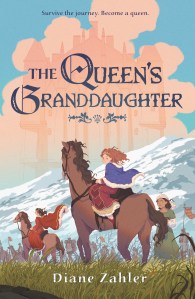 When a medieval princess married, most of the time, she had to take an arduous journey to their new country. For many of these royal ladies, they had an idea that this would be their fate at a young age, but for others, it would come as a complete surprise. Take, for example, Blanca (Blanche) of Castile. She was the granddaughter of the indomitable Eleanor of Aquitaine. When it is time to create a marriage alliance between Castile and France, Blanca believes that her sister Urraca will be the one who will become Queen of France. However, Eleanor has other plans. How will the journey change Blanca and get her ready to rule a nation? Diane Zahler tells the tale of Blanca’s journey to the throne in her middle grade novel, “The Queen’s Granddaughter.”
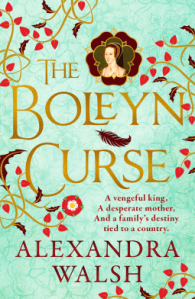 The court of Henry VIII was a treacherous place for anyone, but especially for the Boleyn family. We all know the stories of Anne, Mary, George, and Thomas, but one figure from this illustrious family does not get enough attention: Elizabeth Boleyn, the mother of Anne, Mary, and George. What was her relationship like with her family, her husband, and most importantly, King Henry VIII? And what does a Chaucer manuscript recently discovered at Cerensthorpe Abbey have to do with Elizabeth and the Boleyns? Alxandra Walsh explores the life of Elizabeth Boleyn and the mystery of the missing Chaucer in her latest dual-timeline novel, “The Boleyn Curse.”
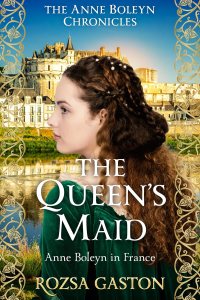
 Today, I am pleased to welcome Rozsa Gaston to my blog to share a spotlight for her book series “The Anne Boleyn Chronicles” and her latest novel, “The Queen’s Maid.” I would like to thank Rozsa Gaston and The Coffee Pot Book Club for allowing me to participate in this blog tour.
 Blurb:
  Author Bio
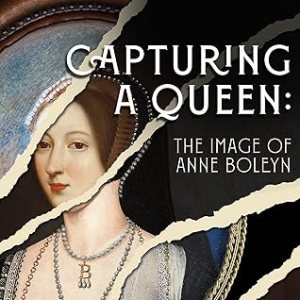 Have you ever stared at a portrait of a historical figure and wondered if that’s what they really looked like? Anne Boleyn is one of the most famous queens in all of English history. Her image of a woman with dark hair, wearing a dark gown with a French hood, and a B initial necklace. For many people, this is what Anne Boleyn looked like, but is that accurate? What did Anne Boleyn look like, and why does it matter? The most recent exhibit at Hever Castle explores these questions, and the book that accompanies this exhibit goes deeper into the research behind this exhibit. The book shares the same name as the exhibit, “Capturing a Queen: The Image of Anne Boleyn” by Owen Emmerson and Kate McCaffrey.
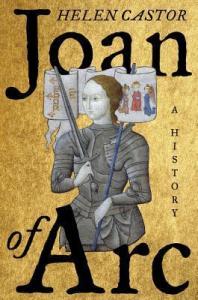 We all believe we know the story of Joan of Arc, one of the patron Saints of France. A young peasant woman who God called to lead the dauphin to the altar to be crowned King Charles VII of France in a time of civil war between the Armagnacs and the Burgundians, as well as the continuation of the war between England and France. It was a political quagmire, but somehow, as the story goes, Joan of Arc resolved the civil war and gave France a fighting chance against the English. But what did Joan of Arc actually accomplish during her short life? Helen Castor examines the life of this extraordinary young woman in her book “Joan of Arc: A History.”
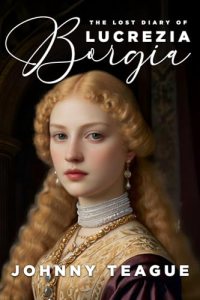 Have you ever wondered what it might be like to discover a long-lost diary of a historical figure by accident? Archaeologist Giuseppe Campise has already found a diary of Mary Magdalene. Now, the Vatican wants Giuseppe to uncover the tomb of Alexander the Great. However, while on the search for the tomb, Giuseppe finds something even more precious, the diary of Lucrezia Borgia. What secrets does the diary hold? Johnny Teague tells the tale of Lucrezia Borgia through her diary in his latest novel, “The Lost Diary of Lucrezia Borgia.”
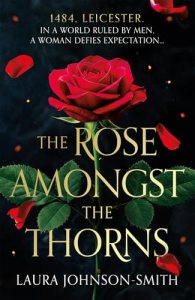 Lady Katherine Turner was never meant to be the Countess of Leicester, but when her brother William dies suddenly, she must take on the mantle of power. Unfortunately, with power comes responsibility, and in medieval England, women in power could not hold onto that power unless they married. That does not sit well with Katherine, who is a very independent woman. However, a choice must be made between two suitors, Lord Henry Tyrell, Earl of Dornton, and Lord James Stanford. Who will Lady Katherine Turner choose, and can she maintain her independent spirit while falling in love? Laura Johnson-Smith explores Lady Katherine’s love story in her debut novel, “The Rose Amongst the Thorns.”
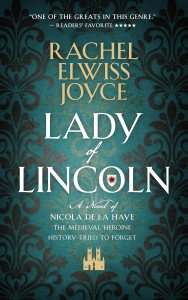 Medieval England, under the reign of Henry II and Eleanor of Aquitaine, was a turbulent time. The focus tends to be on the rebellion of Henry’s sons against their father and how Eleanor sided with her sons. This story has been told, but there is a story of another woman who was caught directly in the middle of the entire ordeal. Her story is most known for her role during the reign of King John and the Magna Carta, but that was when she was an older woman. The story of Nicola de la Haye and Lincoln Castle has been told in biographies and nonfiction books, but not really in historical fiction novels. Rachel Elwiss Joyce hopes to change that with her novel, “Lady of Lincoln.”
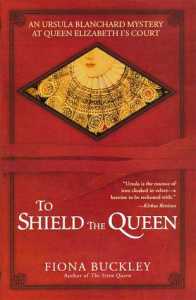 Queen Elizabeth I has a not-so-secret infatuation with her Master of the Horse, Robert Dudley. However, there is a problem. Dudley is married to Amy Robsart Dudley, a woman who is extremely ill. She suspects that her husband wants her dead, so Elizabeth sends one of her servants, Ursula Blanchard, to reassure Amy. However, disaster strikes, and it is up to Ursula to figure out what happened to Amy Dudley and foil a plot against the queen. Can Ursula solve the case, or will she be forced to lose those she holds dear for the sake of the queen? Fiona Buckley introduces Ursula Blanchard and her Tudor world to the modern audience in her first book in the Ursula Blanchard Mystery series, “To Shield the Queen.”
 Adventures of a Tudor Nerd