Guest Post: “Excerpt from ‘The Royal Women Who Made England’ by MJ Porter

I am pleased to welcome MJ Porter to my blog to share an excerpt from her nonfiction book, “The Royal Women Who Made England.” I would like to thank MJ Porter and The Coffee Pot Book Club for allowing me to be part of this blog tour.

Ælfthryth, the daughter of King Alfred and Lady Ealhswith – The Continental Connection

The union between Ælfthryth and Count Baldwin II is believed to have taken place sometime between Asser’s writing [of Alfred’s life] and the death of Alfred in 899. As Æthelweard’s Chronicon informs, Ælfthryth was married to Count Baldwin II of Flanders (879–918). Count Baldwin II was the son of Alfred’s stepmother, Judith, through her third marriage to Baldwin, Count of Flanders, with whom she eloped in 860, against her father’s wishes. Perhaps this was a love match that had been denied her before. Judith had previously been married to Æthelwulf, King of Wessex, Alfred’s father, and also to Æthelbald, King of Wessex, Alfred’s brother. There is no record of children born to these unions.

Judith was a daughter of Charles the Bald (823–877), who in turn was the son of Louis the Pious (773–840), a son of Charlemagne (c.742–814). Charles the Bald was king of the Franks from 840–877 and emperor from 875–877.

Blurb:

Throughout the tenth century, England, as it would be recognized today, formed. No longer many Saxon kingdoms, but rather, just England. Yet, this development masks much in the century in which the Viking raiders were seemingly driven from England’s shores by Alfred, his children, and grandchildren, only to return during the reign of his great, great-grandson, the much-maligned Æthelred II.

Not one but two kings would be murdered, others would die at a young age, and a child would be named king on four occasions. Two kings would never marry, and a third would be forcefully divorced from his wife. Yet, the development of ‘England’ did not stop. At no point did it truly fracture back into its constituent parts. Who then ensured this stability? To whom did the witan turn when kings died, and children were raised to the kingship?

The royal woman of the House of Wessex came into prominence during the century, perhaps the most well-known being Æthelflæd, daughter of King Alfred. Perhaps the most maligned being Ælfthryth (Elfrida), accused of murdering her stepson to clear the path to the kingdom for her son, Æthelred II, but there were many more women, rich and powerful in their own right, where their names and landholdings can be traced in the scant historical record.

Using contemporary source material, The Royal Women Who Made England can be plucked from the obscurity that has seen their names and deeds lost, even within a generation of their own lives.

Buy Links:

Universal Buy Link: https://books2read.com/TheRoyalWomenWhoMadeEngland

Publisher Link: https://www.pen-and-sword.co.uk/The-Royal-Women-Who-Made-England-Hardback/p/24395

Author Bio:

MJ Porter is the author of over fifty fiction titles set in Saxon England and the era before the tumultuous events 1066. Raised in the shadow of a strange little building and told from a young age that it housed the long-dead bones of Saxon kings, it’s little wonder that the study of the era was undertaken at both undergraduate and graduate levels.

The Royal Women of the Tenth Century is the first non-fiction title. It explores this period’s ‘lost’ women through the surviving contemporary source material. It stemmed from a frustration with how difficult it was to find a single volume dedicated to these ‘lost’ women and hopes to make it much easier for others to understand the prestige, wealth, and influence of the women of the royal House of Wessex.

Author Links:

Website: www.mjporterauthor.com/ or www.mjporterauthor.blog

Twitter: www.twitter.com/coloursofunison

Facebook: https://www.facebook.com/MJPorterauthor/

LinkedIn: https://www.linkedin.com/in/mj-porterauthor/

Instagram: instagram.com/m_j_porter/

Threads: https://www.threads.net/@m_j_porter

Bluesky: mjporterauthor.bsky.social

Pinterest: https://www.pinterest.co.uk/coloursofunison/

Book Bub: https://www.bookbub.com/authors/mj-porter

Amazon Author Page: www.amazon.com/MJ-Porter/e/B006N8K6X4

Goodreads: https://www.goodreads.com/author/show/7163404.M_J_Porter

TikTok: tiktok.com/@mjporterauthor

LinkTree: https://linktr.ee/MJPorterauthor
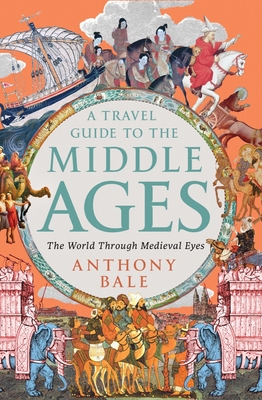
Book Review: “A Travel Guide to the Middle Ages: The World Through Medieval Eyes” by Anthony Bale

A travel guide to the middle agesWhen we think about travel in the Middle Ages, we often think of wealthy nobles or those who went to war fighting in foreign lands. However, that is merely a misconception. Travel was open to everyone, from the wealthy, the poor, the pious pilgrims, and the merchants. Each group had their reasons for traveling to different countries. Still, they all wrote down their experiences to tell future generations about their encounters and encourage others to explore the world, both the known and unknown parts. Anthony Bale has compiled many of these accounts into one comprehensive book called, “A Travel Guide to the Middle Ages: The World Through Medieval Eyes.”

I want to thank W. W. Norton & Company and Net Galley for sending me a copy of this book. I am always looking for a new element to study about the past, especially the Middle Ages. When I saw this title and the concept that it was going to explore beyond Europe, it intrigued me as I tend to focus on medieval Europe and I wanted to expand my knowledge of the medieval world as a whole.

Bale begins by giving his readers a bit of a foundation for understanding the travel guide genre’s origins, the directions as they were understood by those living in the medieval world, and how medieval Europeans understood the layout of the world through the mappae mundi. He also explains the origins of one of the first globes, the Behaim Globe( also known as the Erdapfel), which was created by Martin Behaim who came from a family of merchants.

Every good travel saga needs a starting point and this one happens to begin in England where pilgrims set out for a journey to Rome and Jerusalem. Along the way, Bale introduces his readers to the main cities of Europe, sites of pilgrimage, dangerous passes, and tips like how to understand foreign languages and exchange rates between the different currencies. Once we reach Italy and later Jerusalem, our focus moves away from pilgrimage to exploration and trade. Bale tends to focus on testimonies from pilgrims, merchants, and diplomats to paint a picture of the Western world heading to the East, as far as Japan (Cipangu) and Ethiopia in Africa. He does show some Eastern travelers coming to the West towards the end, but I wish we could see more of those interactions and more female voices in this book.

Overall, I found this book informative and a fascinating read to see how people in the Middle Ages saw the world around them. There were some dry spots along the way, but I think for those who want an introductory book to how medieval Europeans viewed the world through their travels, it would be a great book. If this sounds like you, check out, “A Travel Guide to the Middle Ages: The World Through Medieval Eyes” by Anthony Bale.

Guest Post: “Excerpt and Recipe from the ‘Chateau de Verzat Series’ by Debra Borchert”

Chateau de Verzat Series BannerToday, I am pleased to welcome Debra Borchert to share an excerpt and a recipe from her series, “The Chateau de Verzat Series.” I want to thank Debra Borchert and The Coffee Pot Book Club for allowing me to be part of this tour. 

Her Own Legacy, Versailles, December 13, 1788

Joliette Meets Guillaume

Maman guided me toward a man so old, he could be my grandpapa. My arms tensed. She could not possibly think that old man appropriate. 

Papa strode toward us. “May I have your first dance, ma princesse?” 

Relief washed through me.

Maman frowned. “Bring her right back. She has many introductions.”

He took my hand and led me toward a group of dancers. 

“Merci, Papa,” I whispered.

He winked, led me to the lead position, and danced me about the Galerie. As the lead couple, we whirled with and between the dancers. Papa’s warm smile and strong leading steps relaxed me, and I enjoyed myself. He led me to greet the last couple. I turned to offer my hand to the next gentleman and his green eyes—bright as grapevines during bud break—startled me. 

I forgot the movement and faltered. I searched to locate Maman. Had she seen? She would have me dancing twelve hours a day after this. 

Without missing a beat, he rescued my wayward hand and adroitly led it to its next position. My hands grew moist inside my gloves. His steps and arms were strong, like Papa’s, but dancing with Papa had not made me breathless. The mirrors spun shards of light as he led me through the twisting rosettes. I dizzied as he returned me to Papa. Perspiration coated my face, and I fluttered my fan to dry it. 

The man wore a frock coat and breeches of pale lavender silk with tiny bouquets of violets—so delicate and fine I expected them to have a scent—embroidered along his cuffs and hem. His ensemble resembled that of our King, yet the silk puckered beneath the embroidery—the fabric was inferior. He was working hard to fit in at Court, yet every courtier would notice his black shoes—without red heels. He had not been presented. 

The allemande at an end, he turned to my father and bowed deeply. He unfurled from his bow and straightened to Papa’s height. “Comte de Verzat, I believe you are acquainted with my father, the Baron Pricaud?” 

Papa’s eyebrow rose. “Ah…oh, yes, you are…?”

“Guillaume Pricaud.” He bowed, again. “It is an honor to meet the man who produces the finest wines in France, if not the world, Monsieur le Comte.”

Finest in the world? I leaned closer. The sounds of conversations, laughter, music all faded. His eau de Cologne smelled woodsy with a hint of lime. 

Papa gave a tight smile. “May I present my daughter, Mademoiselle Joliette de Verzat?”

He bowed. My hand, of its own accord, sought his. As he held my fingers, his lips brushed my hand ever so gently. Damned protocol requiring gloves.

“Your mother’s beauty shines from within you, Mademoiselle.”

Words sat in my mouth like melting chocolate. I was supposed to thank him, but I could not summon a word. I held the fingers his lips had caressed.

“You remember my father, Comte?”

“We knew each other many years ago, when we were your age.”

Pricaud reached into his frock coat and withdrew a thick blue leather purse. “He asked me to deliver this.” With both his hands, he held it out to Papa. “My father wishes me to express his humble gratitude for your patience.”

Papa put up his hands. “Eh…that was so long ago. All is forgotten.”

“Not by my father.” He continued to present the purse.

Why did Papa refuse him? Pricaud’s demeanor, his manners, his tenacity, all impeccable. Neither of my parents could find fault with Pricaud. Nor could I. He never glanced at the emeralds at my neck. He knew of the Verzat legacy. Why had I not seen him at Court before?

“There is no need.” Papa shook his head.

Maman’s skirts brushed against mine. “Pardon, Monsieur.” 

Pricaud withdrew the purse and dropped into a deep bow.

Maman inserted herself between me and Monsieur Pricaud, but she did not extend her hand. “My daughter and I have been summoned by the Queen.” She held my elbow and drew me away. “Forgive us, please.”

Joliette’s Chilled Fresh Pea Soup

While living in France, Joliette never cooked—she was far too busy fermenting wine. But when she and Henri arrived in America, she longed for dishes made by her beloved Cook. Joliette remembered afternoons, sitting at Cook’s battered wooden table, shelling peas for Cook’s sweet and velvety Chilled Fresh Pea Soup. This recipe is based on Joliette’s memories and my experimentations. 

Serves 6–8 

Ingredients

2 cups fresh or frozen peas sea salt (optional)

1 cup water fruity white balsamic vinegar (optional)*

a few sprigs of fresh mint

Process 

  1. Simmer peas in water until peas are tender. 
  2. Keeping the broth, drain peas and allow to cool. 
  3. Using an immersion blender, blitz the peas with enough of the cooking liquid for a consistency and thickness you like.
  4. Add salt to taste. Chill. 
  5. Serve with a mint spear and a drizzle of a fruity white balsamic vinegar. 

Notes

  1. *My favorite fruity white balsamic vinegar is OMG!’s D’Anjou Pear White Balsamic Vinegar. See the Resources page.
  2. This soup freezes well.

Blurb:

HER_OWN_LEGACY_COVERHer Own Legacy:

A Woman Fights for Her Legacy as the French Revolution Erupts

Determined to inherit her family’s vineyard, Countess Joliette de Verzat defies society’s rules, only to learn of her illegitimate half-brother, the rightful heir. 

Her Own Revolution:HER_OWN_Revolution__FINAL_COVER

A Woman Forges a Treacherous Path to Save Hundreds from the Guillotine

If Geneviève Fouquier-Tinville had the same rights as a man, she wouldn’t have to dress like one. A suspenseful page-turner led by a renegade heroine whose compassion for innocent people leads to both loss and love.

Buy Links:

*Her Own Legacy will be only 0.99 in the UK, CA, and AU stores from March 5th – 15th, 2024!*

Universal Buy Links:  

Her Own Legacy: https://books2read.com/u/bWYod1 

Her Own Revolution: https://books2read.com/u/m0aJVl 

Series Buy Links:

US: https://www.amazon.com/gp/product/B0B9KN1536 

UK: https://www.amazon.co.uk/gp/product/B0B9KN1536 

Debra Borchert 1Author Bio:

Debra is the author of the Château de Verzat series that follows headstrong and independent women and the four hundred loyal families who protect a Loire Valley château and vineyard, and its legacy of producing the finest wines in France during the French Revolution. Her Own Legacy published in 2022, Her Own Revolution published in 2023, and Her Own War will be published in 2024. A passionate cook, she also wrote a companion cookbook to the series: Soups of Château de Verzat, A Culinary Tribute to the French Revolution, 2023.

A graduate of the Fashion Institute of Technology, she weaves her knowledge of textiles and clothing design throughout her historical fiction. She lives in the Pacific Northwest with her family and standard poodle, named after a fine French Champagne. 

Author Links:

Website: https://debraborchert.com/ 

Twitter: https://twitter.com/debraborchert 

Facebook: https://www.facebook.com/DebraBorchertAuthor/

LinkedIn: https://www.linkedin.com/in/debra-borchert-10b8305/

Instagram: https://www.instagram.com/debraborchertauthor/

Pinterest: https://www.pinterest.com/debraborchert/ 

Book Bub: https://www.bookbub.com/authors/debra-borchert

Amazon Author Page: https://www.amazon.com/stores/Debra-Borchert/author/B00CSW9MH0 

Goodreads: https://www.goodreads.com/author/show/7787729.Debra_Borchert

Guest Post: “Snippet from ‘A Matter of Time’ by Judith Arnopp”

A Matter of Time Tour BannerI am pleased to welcome Judith Arnopp back to my blog to share a snippet from her latest novel. “A Matter of Time.” I would like to thank Judith Arnopp and The Coffee Pot Book Club for allowing me to be part of this blog tour.

June 1541 Henry and Katherine Howard on royal progress

Brandon is not with us this night, having ridden ahead to make preparation for our stay with him at Grimsthorpe, but I am content with Katherine beside me, a few musicians, and her favourite ladies and my closest gentlemen. We grow merry, the youngest members of the party dancing into the early hours. The music rises and falls, the fire crackles, while I sit and eat and watch, with my foot resting on a stool. 

When they form up for the next dance, Katherine is partnered by Culpepper, and they make an elegant pairing. I look on enviously as the steps of the dance take them close together. Their elbows hook, and then they part again, Katherine’s hand reluctantly extended toward him as the dance dictates. Surrounded by the gaiety of the company, yet not part of it, I grow bored, longing for my bed. I’ve admitted to nobody how the journey is taking its toll, on both my health and my spirits. I close my eyes, rest my head on the back of my chair and thank God for the good company. The words of a song I wrote long ago jangle in my mind.

Pastime with good company

I love and shall until I die;

A Matter of Time CoverBlurb:

With youth now far behind him, King Henry VIII has only produced one infant son and two bastard daughters. More sons are essential to secure the Tudor line and with his third wife, Jane Seymour dead, Henry hunts for a suitable replacement.

After the break from Rome, trouble is brewing with France and Scotland. Thomas Cromwell arranges a diplomatic marriage with the sister of the Duke of Cleves but when it comes to women, Henry is fastidious, and the new bride does not please him. The increasingly unpredictable king sets his sights instead upon Katherine Howard and instructs Cromwell to free him from the match with Cleves.

Failure to rid the king of his unloved wife could cost Cromwell his head.

Henry, now ailing and aging, is invigorated by his flighty new bride but despite the favours he heaps upon her, he cannot win Katherine’s heart. A little over a year later, broken by her infidelity, she becomes the second of his wives to die on the scaffold, leaving Henry friendless and alone.

But his stout heart will not surrender and leaving his sixth wife, Katheryn Parr, installed as regent over England, Henry embarks on a final war to win back territories lost to the French more than a century before. Hungry for glory, the king is determined that the name Henry VIII will shine brighter and longer than that of his hero, Henry V.

Told from the king’s perspective, A Matter of Time: Henry VIII: the Dying of the Light shines a torch into the heart and mind of England’s most tyrannical king.

Buy Links:

Universal Buy Links to the three titles in the series:

 A Matter of Conscience: https://mybook.to/amoc

A Matter of Faith: https://mybook.to/amofaith 

A Matter of Time: https://mybook.to/amot

Judith Arnopp PembrokeAuthor Bio:

A lifelong history enthusiast and avid reader, Judith holds a BA in English/Creative writing and an MA in Medieval Studies. She lives on the coast of West Wales where she writes both fiction and non-fiction. She is best known for her novels set in the Medieval and Tudor period, focusing on the perspective of historical women but recently she has been writing from the perspective of Henry VIII himself.

Judith is also a founder member of a re-enactment group called The Fyne Companye of Cambria which is when she began to experiment with sewing historical garments. She now makes clothes and accessories both for the group and others. She is not a professionally trained sewer but through trial, error and determination has learned how to make authentic-looking, if not strictly historically accurate clothing. Her non-fiction book, How to Dress like a Tudor was published by Pen and Sword in 2023.

Her novels include:

A Song of Sixpence: The Story of Elizabeth of York

The Beaufort Chronicle: The Life of Lady Margaret Beaufort (three-book series)

A Matter of Conscience: Henry VIII, the Aragon Years (Book One of The Henrician Chronicle)

A Matter of Faith: Henry VIII, the Days of the Phoenix (Book Two of The Henrician Chronicle)

A Matter of Time: Henry VIII, the Dying of the Light (Book Three, Coming soon)

The Kiss of the Concubine: A Story of Anne Boleyn

The Winchester Goose: at the court of Henry VIII

Intractable Heart: The Story of Katheryn Parr

Sisters of Arden: on the Pilgrimage of Grace

The Heretic Wind: The Life of Mary Tudor, Queen of England

Peaceweaver

The Forest Dwellers

The Song of Heledd

Previously published under the pen name – J M Ruddock.

The Book of Thornhold

A Daughter of Warwick: The Story of Anne Neville, Queen of Richard III

Author Links:

Website: www.judithmarnopp.com

Blog: http://www.juditharnoppnovelist.blogspot.co.uk/

Twitter: https://twitter.com/JudithArnopp

Facebook: https://www.facebook.com/thetudorworldofjuditharnopp

LinkedIn: www.linkedin.com/in/judith-arnopp-ba999025

Instagram: https://www.instagram.com/tudor_juditharnopp/

Threads: tudor_juditharnopp@threads.net

Bluesky: https://bsky.app/profile/jarnopp.bsky.social

Pinterest: https://www.pinterest.co.uk/jarnopp/

Book Bub: https://www.bookbub.com/profile/judith-arnopp

Amazon Author Page: https://author.to/juditharnoppbooks

Goodreads: https://www.goodreads.com/author/show/4088659.Judith_Arnopp

Book Review: “Disobedient” by Elizabeth Fremantle

Disobedient“I’ll show you what a woman can do.”

A young Renaissance woman artist is attacked by her art teacher. He claimed that she was lying. For most, this would be the end of a career and a black mark left on their reputation for the rest of their lives. Not in this case. Artemisia Gentileschi is not a woman who will stand by and let men control her or her art. In the 21st century, she is seen as an artistic genius, but in her time, she was seen as an odd woman who refused to follow the rules. Artemisia’s harrowing tale of turning tragedy into inspiration for her art, showing what a woman could do, is masterfully told in Elizabeth Fremantle’s latest novel, “Disobedient.”

This is the second novel that I have read by Elizabeth Fremantle, the first being “Queen’s Gambit.” I was thoroughly enthralled by “Queen’s Gambit,” so when I heard she wrote a new novel about Artemisia Gentileschi, I knew I wanted to read it. Before I read this novel, I did not know much about Artemisia’s story, so I was excited to learn about her struggles and triumphs.

Rome in 1611 was not a kind place for a female artist. Artemisia is the eldest daughter of Orazio Gentileschi, an artist himself. Her mother died when she was but a child and after her death, her father has become an abusive drunkard. He controls his family through fear, but Artemisia is not afraid to stand up for her siblings and her artworks, no matter the consequences. To keep his headstrong daughter in line, Orazio turns to Zita to watch over her, but Zita is not the virtuous woman that Orazio believes she is as she is a thief. Artemisia has only one friend in the world who seems to understand her, the apprentice Piero, someone who truly cares for her and wants to see her talents develop, but it is conflicted when it comes to his feelings towards other men. Finally, there is the art teacher, Tassi, who may seem like a kind soul who simply wants to teach Artemisia how to paint, but he has darker plans in mind.

Everything takes a dramatic turn for the worse when Zita leaves Artemisia alone with Tassi and he attacks her. Instead of becoming timid and accepting the marriage proposal, Tassi presents her soon after the incident, Artemisia digs into her art and paints her hatred and pain into her most famous work, Judith Slaying Holofernes. The piece is full of emotions in a bloody scene that seems rather inappropriate for a woman artist during the Renaissance, but Artemisia does not care about the criticism. She is showing the world exactly what a woman can do, and her next step, taking Tassi to court, will define her strength and determination to fight for what she believes is right. Artemisia is a survivor who thrived under unimaginable circumstances.

This book left such an impact on me. I was heartbroken, angry, and devastated for Artemisia as the events unfolded. By the end, I had to catch my breath and realize that it was a fictional retelling of her life. It is a story that will stay with me for a long time and it makes me want to study Artemisia’s life and times. If you want a heartbreaking tale full of sorrow and strength set during the Italian Renaissance, you must check out “Disobedient” by Elizabeth Fremantle.

Book Review: “The Other Gwyn Girl” by Nicola Cornick

the other gwyn girlThe year is 1671 and England is slowly recovering from the horrors of the English Civil War. King Charles II lives lavishly with his many mistresses, including the famous beauty Nell Gwyn. On the other side of London, Nell’s eldest sister Rose Gwyn is caught in the middle of a high-profile robbery that could cost her her life. In the present day, Jess Yates, a librarian and history lover, is dealing with her family’s struggles. When Jess enters Fortune Hall to help her sister Tavy, with a project, Jess begins to follow the clues to discover the connection between the great house and the Gwyn sisters. What secrets does this great hall hold and can the reputation of the Gwyn family be saved in time? The mystery of the past and the present collide in Nicola Cornick’s latest novel, “The Other Gwyn Girl.”
I would like to thank Boldwood Books and Net Galley for sending me a copy of this novel. I have read two other novels by Cornick, “The Forgotten Sister” and “The Last Daughter of York,” and I thoroughly enjoyed both dual-timeline novels. When I heard about this novel, it was a compelling premise to me as I know very little about Nell and Rose Gwyn.

Nell and Rose Gwyn were the daughters of Captain Thomas Gwyn and Helena Smith Gwyn. When their father died, Helena had to raise her daughters to survive the cruel world, but we soon find out that Helena’s favorite is her youngest daughter Nell. The sisters may have started as simple orange sellers, but Nell’s star was on the rise as she became an actress and then the favorite mistress of King Charles II. Rose was less fortunate as she married John Cassells and now finds herself in prison for a third time, this time for the theft of the Crown Jewels, a scheme orchestrated by Colonel Thomas Blood. Now, Rose must team up with the officer who arrested her, Guy Forster, to clear her name and save her sister Nell’s reputation by finding the Crown Jewels before it is too late.

The lives of the Yates sisters mirror that of the Gwyn sisters. Jess is down on her luck after her ex-boyfriend ends up in prison and the whole scandal is splashed on every newspaper and tabloid due to her sister’s fame. Jess thinks that she is going to Fortune Hall for a reunion of sorts with her mother and sister, but that is not the case at all. Tavy, the younger sister, is a style influencer/ TV star who needs her nerdy older sister’s help with a project. Tavy has agreed to renovate Fortune Hall because of its alleged connections to Nell Gwyn and she has asked her sister Jess for help. As Jess hunts down clues to the history of Fortune Hall, alongside Ethan Sterling whose family has a connection to the home, she discovers shocking truths about the Gwyn sisters.

This novel was such a wild ride from the start and I could not put it down. The English Civil War is not usually an area of study for me, but there was just something about the way Cornick wrote this novel that I want to learn more about Nell and Rose Gwyn as well as King Charles II and his many mistresses. If you are a fan of dual-timeline novels or Nell Gwyn, you must check out, “The Other Gwyn Girl” by Nicola Cornick.

Book Review: “The Summer Queen” by Elizabeth Chadwick

The Summer QueenA legendary Queen of both France and England. A wife who went on the Crusades with her first husband and chose her second husband. A fierce mother who defended her Plantagenet children no matter the cost. Eleanor of Aquitaine has been revered and reviled for centuries, some saying she was a powerful woman ahead of her time while others considered her someone who could manipulate those around her by having affairs, including supposedly with her uncle in Antioch. Her story has been told in numerous ways through different mediums throughout the centuries, but now Elizabeth Chadwick has decided to write her interpretation of Eleanor of Aquitaine’s life in a trilogy of historical fiction novels. The first in the series, “The Summer Queen,” explores Eleanor’s early years, her marriage to a young French king, and the man destined to become King of England.

I have always been drawn to Eleanor of Aquitaine’s story since I first learned about her and the origins of the Plantagenet dynasty. I remember watching “The Lion in Winter” in college and I enjoyed the film, so I decided to study more about Eleanor and Henry II. When I heard that Elizabeth Chadwick had written a trilogy about the legendary queen, I knew I wanted to read it to see how she felt about Eleanor.

We begin our journey into the past when Eleanor (in this novel, Alienor) and her sister Petronella are getting ready to bid their father, William X Duke of Aquitaine, is about to set off on a pilgrimage, leaving the control of the duchy to Eleanor as his heiress. Her father’s final wish for his heiress was that she would marry the heir to the French throne, the soon-to-be King Louis VII. Eleanor reluctantly agrees and at first, the marriage seems to be successful, but after a miscarriage of a boy, Louis’ extreme piety, and his meddling mother Adelaide of Maurienne, Eleanor is at her wits end.

After giving birth to a daughter named Marie, Louis has decided to join the Crusades and Eleanor must tag along, although she would rather have an annulment. The journey that the two embark on drives even more of a wedge between the couple as it is rumored that she was close to her uncle Raymond of Poitiers, Prince of Antioch and one Geoffrey de Rancon. In 1152, Louis and Eleanor receive their divorce; Eleanor may return to Aquitaine and remarry, but she must leave her two daughters, Marie and Alix, with their father in France. Eleanor does not stay single for long as Geoffrey of Anjou convinces the former queen to marry his young, hotheaded, handsome son who would become King Henry II of England by birthright thanks to his mother Empress Matilda.

I have read both historical fiction and nonfiction accounts of Eleanor of Aquitaine’s life, but this novel truly made her feel alive, as well as the men and women that surrounded her at court. Even though I knew what was going to happen, it was still thrilling to read the story from multiple perspectives. I cannot wait to read the rest of this trilogy to see the birth of the Plantagenet dynasty. If you are a fan of the life and times of Eleanor of Aquitaine, you must check out, “The Summer Queen” by Elizabeth Chadwick.

Book Review: “Queen, King, Ace” by Olivia Hayfield

Queen King AceEngland is in desperate need of a hero. After the Covid pandemic and the Brexit debacle, England is in despair, and only one man can save the day. He does not wield a sword, but a tennis racket and his fair maiden is the badass CEO of the Rose Corp. Ace Penhelagon and Eliza Rose seem like a picture-perfect pair, but every rose has thorns that protect it from a dark past. What dark secrets do these two hide away from the flashes of the paparazzi and can love endure over fate? Olivia Hayfield’s latest novel, “Queen, King, Ace,” is a modern love story that combines the elements of the Arthurian myths with the Tudor dynasty to answer the question of what might King Arthur and Queen Elizabeth be like in the 21st century.

I would like to thank Sue Copsey/ Olivia Hayfield for sending me a copy of this novel. I have seen Hayfield’s previous modern historical retellings, “Notorious”, “Wife After Wife,” and “Sister to Sister” online on social media, and they have looked intriguing, but I have yet to read one. When I heard the premise of this novel, it intrigued me as I was not sure how a modern story with the Tudors and the court of King Arthur would work out.

We begin our modern Tudor/ Arthurian adventure with Eliza Rose, the new CEO of Rose Corp, discussing with Terri Robbins-More about a new tennis phenom named Ace Penhelagon and their planned interview with him for their magazine, The Rack. Eliza agrees to the interview and asks her right-hand man, best friend, and writer extraordinaire, Will Bardington, to write the article. A chance encounter blossoms into a romance between Eliza and Ace, but obstacles get in the way.

Eliza is dealing with the aftermath of the murder of someone whom she considered a soul mate, Kit Marley, who was also very close to Will. Ace is on track to complete the Golden Slam, which is when a tennis player wins the Australian Open, the French Open, Wimbledon, the US Open, and the Olympic gold medal, which is a tall order for any athlete. From the meddling press to stalkers and parents questioning their intentions, it seems like fate is throwing everything it has at this young couple. The final twist in this tale was something I was not expecting and kept me on the edge of my seat. When I finished reading this novel, I wanted to read Hayfield’s other modern historical retellings.

This book may have not been a book that I thought I would enjoy in the concept alone, being a modern retelling of the Tudors and the Arthurian myths, but by the end, I was engrossed in the tale and a bit sad that it ended. I am a fan of modern tales from time to time, but the fact that Hayfield added a Tudor/Arthurian twist was a bit of fun searching for those little Easter eggs. If you are a fan of contemporary fiction, the Tudors, and the Arthurian legend, you should check out, “Queen, King, Ace” by Olivia Hayfield.

Book Review: “Normal Women: Nine Hundred Years of Making History” by Philippa Gregory

Normal WomenThe field of history for centuries has been focused on men and the struggles that mankind has had to endure for society to survive. We tend to get only a mere glimpse at the lives of women when they are next to powerful men. Some will write about women, mostly royal women, who lead extraordinary lives and left an imprint on the past. But what about those who lived ordinary lives? What about the women who lived daily, fighting to survive every obstacle? What can we learn about history through the eyes of ordinary women? Philippa Gregory has taken on the mammoth task of trying to answer these questions and more with her tome, “Normal Women: Nine Hundred Years of Making History.”
I would like to thank Harper Collins and Net Galley for sending me a copy of this book. I have had an interesting background regarding Philippa Gregory’s books. When I was in middle school/ high school, I started reading novels by Gregory and I became fascinated with the stories that she was weaving. It was only when I read other books that disproved some of the things that Gregory had included in her novels that I stopped reading them. When I saw this book and its praise, I decided to give Gregory another shot because, in the end, I enjoyed her writing style.

As the title suggests, Gregory covers over nine hundred years of English women’s history, from the Norman Conquest to the modern day. It is a daunting undertaking, but the way Gregory presents the information is so easy to follow that it allows the depth of the subject material to sink in without it being too overwhelming. Each part of this book focuses on a different era in the history of England and has segments that highlight important developments during the era when it comes to women’s roles in society. As readers, we can see changes in society like how the church accepted women, how society accepted women, what kind of rights women had, what jobs women could do for money, how women viewed relationships with men as well as other women, and how men viewed women’s nature.

Unlike Gregory’s previous books and novels, the focus of this book is not the women who wore crowns, but women who lived everyday lives and survived whatever life handed them. Mothers, wives, daughters, soldiers, protesters, doctors, factory workers, Suffragettes, guild widows, pirates, highwaywomen, and women husbands are all represented in this book. By including small snippets of stories from women of every walk of life over centuries, Gregory allows her readers to discover more about these women for themselves, which is an exciting prospect.

I am so glad I read this book and gave Philippa Gregory a second chance. This book was fresh, innovative, challenging at times, and overall a fascinating read. By letting the facts and the stories of these women speak for themselves, Gregory presents the past in a way that is both inspirational and heartbreaking, raw and real. If you want to learn more about English women’s history or you are a fan of Philippa Gregory, I highly suggest you read, “Normal Women: Nine Hundred Years of Making History” by Philippa Gregory.

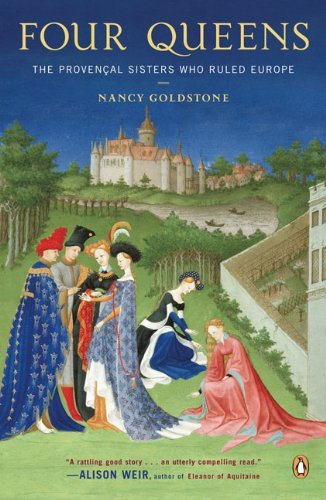
Book Review: “Four Queens: The Provencal Sisters Who Ruled Europe” by Nancy Goldstone

Four QueensIn southeastern France, there is a region called Provence, known today for its lavender fields and its vineyards. In 13th-century France, Provence would be known as the birthplace of four queens who dominated European politics. The daughters, Marguerite, Eleanor, Sanchia, and Beatrice were the daughters of Raymond Berenger V Count of Provence, and his wife Beatrice of Savoy. They would become the queens of France, England, Germany, and Sicily. While the sisters were known for their beauty, how they acted as queen consorts for their husbands cemented their legacies in history. Nancy Goldstone tells the tale of these remarkable siblings and how they changed European history in her book, “Four Queens: The Provencal Sisters Who Ruled Europe.”

I am always looking for a new history story to familiarize myself with to read and grow as a history nerd. I was familiar with Eleanor of Provence as she is mentioned in biographies about Henry III, but her sisters were a complete mystery to me and so when I heard about this book and its exploration into the sister queens and 13th-century European history, it intrigued me.

Goldstone begins with a story of how the English King Henry III met with the French King Louis IX in Paris during Christmas 1254, and this extraordinary meeting was orchestrated by two sisters, Eleanor and Marguerite of Provence. We then jump back in time to the childhood of the four sisters in Provence, full of wine and songs of the troubadours. At the heart of this glamorous court was Raymond Berenger V and Beatrice of Savoy, Count and Countess of Provence, along with their four daughters; Marguerite, Eleanor, Sanchia, and Beatrice. All around Provence, wars raged, and without a male heir, Raymond Berenger V and his beloved Provence risked the wars coming into his home and taking everything he loved. What is a father to do, but make exceptional matches for his daughters?

Marguerite, the oldest daughter, was married to the young Louis IX of France, thanks to the deal made by her father and her new mother-in-law, the formidable Blanche of Castile, the White Queen. Guillaume of Savoy, the sisters’ uncle, decided to arrange the next marriage, which was between Eleanor of Provence and the King of England, Henry III, who had been ruling a turbulent nation for over 20 years. The two eldest sisters would help weather civil wars and crusades to allow the dynasties that they married to survive.

The younger sisters, Sanchia and Beatrice, married men who were also younger siblings and were fighting for their rights to rule in Europe. Sanchia married Richard, Earl of Cornwall, the younger brother of Henry III. They would become King and Queen of Germany for only a brief time, but they would pave the way for the Habsburgs. Finally, Beatrice married the younger brother of Louis IX, Charles Count of Anjou; they would soon become the King and Queen of Sicily.

In the world of 13th-century Europe which was dominated by kings and popes fighting crusades and civil wars, it was the women at home and their husbands’ sides that helped stabilize nations. Marguerite, Eleanor, Sanchia, and Beatrice were fierce women who were loyal to their own families even if that meant that they had to step in the way of their sister’s glory. Goldstone can weave together a narrative of all four siblings that is compelling, engaging, and academically fascinating. If you want a book that explores the familial bonds of four sisters and the lengths that they had to go to to protect what they loved the most, I highly suggest you read, “Four Queens: The Provencal Sisters Who Ruled Europe” by Nancy Goldstone.