Book Review: “The Stolen Crown: Treachery, Deceit and the Death of the Tudor Dynasty” by Tracy Borman

It is March 1603, and the Virgin Queen is dying. She has no children to inherit her throne directly, so she must choose a successor. She chooses the son of Mary Queen of Scots, the queen who had been executed a few years before. James VI of Scotland will become James I of England, but was it as easy as William Camden makes it in his account? What does a recent discovery about Camden’s original manuscript of Annales tell us about James’ succession to the throne of England? Tracy explores the messy conflict to find an heir to the English throne in her latest book, “The Stolen Crown: Treachery, Deceit and the Death of the Tudor Dynasty.”

I would like to thank Grove Atlantic and Net Galley for sending me a copy of this book. I have been a fan of Tracy Borman’s books for a few years now because of how she is able to present new information about stories from the past that I already know and give them a fresh look. When I heard that James might have stolen the crown from Elizabeth I, that thought intrigued me so much that I knew I wanted to read this book.

So how did the Stuarts come into power, and why did Elizabeth have James as her successor? To understand that question, we have to explore briefly the origins of the Tudor dynasty and how Elizabeth I came to the throne. After we are firmly established in the reign of Elizabeth I, Borman goes through why Elizabeth needed to elect a successor and the nominees. Those up for Elizabeth’s throne were: James VI, Arbella Stuart, Lady Katherine Grey, Mary Grey, and Henry Hastings, Earl of Huntingdon. We get to see how Elizabeth handled each of her potential choices as the next ruler of England, but the two that are highlighted significantly in this book are Arbella Stuart, the daughter of Charles Stuart, 5th Earl of Lennox, and Elizabeth Cavendish, and the man who would become King James VI of Scotland.

Borman shows her readers the complex relationship between Elizabeth and James, a tumultuous relationship, especially after the death of James’ mother, Mary Queen of Scots. It was not the most cordial relationship that has been shown in history, including the Annales written by William Camden. However, due to extraordinary research that was revealed in 2023, it was shown that Camden’s writing had serious revisions to paint James in a better light during the fight for succession. In fact, there were attempts on Elizabeth’s life that James knew about, including one incident where he might have been directly involved. Just because James became King of England after Elizabeth’s death does not mean that he had an easier time in England. In fact, the Stuarts lasted less than a hundred years before the monarchy was dissolved with the execution of James’s son Charles I in 1649.

This is another spectacular book by Borman, one that changed how I viewed the relationship between Elizabeth and James in the final years. It reads like a political thriller and offers a deeper appreciation for Elizabeth’s fight for the English throne, while also highlighting how the Stuarts employed similar tactics to the Tudors in securing their right to rule England. Suppose you want an extremely well-researched book that provides great insight into the end of Elizabeth’s reign and provides new information about this period. In that case, I highly recommend you read “The Stolen Crown: Treachery, Deceit and the Death of the Tudor Dynasty” by Tracy Borman.

Book Review: “Daughter of the Otherworld” by Shauna Lawless

When we think about the Norman Conquest, we often think about how it impacted England, Wales, and Scotland, but we tend to forget about Ireland. Early medieval Ireland  do not get a whole lot of attention in historical fiction. That is, until Shauna Lawless’s Gael Song trilogy. Now, fifty years after the events of the original trilogy, Lawless has brought in a new cast of characters, as well as old characters, into the fight between the Descendants of the Tuatha De Danann and the Fomorians. When a child of prophecy is introduced into the mix that is said to be able to defeat the Fomorians, the race is on to protect the child or to kill her. Will the Descendants survive, or will the Fomorians torch the land and the Descendants’ hope? Shauna Lawless jumps back into this work with the Gael Song Era 2 book 1, “Daughter of the Otherworld.”

I would like to thank Bloomsbury USA and Net Galley for sending me a copy of this novel. I am new to this series, but I wanted to read it because I have never read a book about medieval Ireland or about Irish mythology, so when I saw this book available, I decided to give it a shot, especially with such a stunning cover.

We pick up fifty years after the Battle of Clontarf, and a man named Donnchad is on the run from Broccan of the Tuatha De Danann. Donnchad is a Fomorian, which means he can use fire magic and is the mortal enemy of those descendants of the Tuatha De Danann. Donnchad can reunite with his mother, Gormflaith, in Rome. Meanwhile, Broccan has a dream that tells him that he must go back to Rathlin Island and protect the daughter of Fodla, who has been in the Otherworld for a long time. The daughter, Isolde, is destined to defeat the fire, which might be a reference to the Fomorians.

Broccan raises Isolde as his own daughter until she is 17, but he never tells her who she is or her purpose in this giant conflict. But that all changes when the Fomorians find out about Isolde and decide to attack Rathlin Island. They believe that the threat has been neutralized, but Isolde lives and must travel to the mainland to find her cousin Colmon in Seir Kieran. While Isolde is searching for family and to figure out who she is, the Fomorians seek to control Ireland with the Norman lords of England.

This is a novel full of conflict, both magical and mortal, romance and heartbreak. Lawless does a great job of not only balancing numerous perspectives but also balancing mythology with historical battles and figures to create an original story. While I did enjoy the story, it did take me a while to figure out who the characters were and the overall conflict. I think after reading this particular book, I want to read the previous books in the series before I jump into the latest one. If you have read the previous books in the Gael Song trilogy, I think you will enjoy “Daughter of the Otherworld” by Shauna Lawless.

Book Review: “Queen Isabella: Treachery, Adultery, and Murder in Medieval England” by Alison Weir

Throughout medieval English history, there have been some famous queens who left their marks. Empress Matilda, Eleanor of Aquitaine, Eleanor of Castile, Philippa of Hainault, and Margaret of Anjou each left an impression on English history, either good or bad. However, there was one queen whose negative reputation came with the nickname “She-Wolf of France,” and her name was Queen Isabella of France. The wife of Edward II and mother of Edward III, she left her husband for Roger Mortimer and overthrew her husband in favor of her son. For centuries, she has been viewed as a horrible villainess, but is that a fair assessment of her life? Alison Weir dives into the archives to find the truth about Isabella of France, and she presents her findings in her biography, “Queen Isabella: Treachery, Adultery, and Murder in Medieval England.”

As a fan of Alison Weir, I am trying to read every book she has written so far, so when I saw this book in a used book store, I jumped at the chance to read it. I have read books that have featured Isabella of France, but I have never read a biography about her until now. I wanted to see if this book would change how I feel about her.

Isabella of France was the daughter of Philip IV, King of France, and Jeanne I, Queen of Navarre, born in 1295. As the only surviving daughter of Philip and Jeanne, she was expected to make a match that would create an alliance, which she did when she married Edward II of England. On paper, it should have been an ideal match, but Edward II had his favorites. The first was Piers Gaveston, whom Edward II knew before he married Isabella. Edward paid more attention to advancing Gaveston than governing, which led to the great men of England (known as the Ordainers) enacting the Ordinances of 1311 and Gaveston’s execution in 1312. Edward II swore revenge against those who killed Gaveston.

For a while, Edward and Isabella had a loving relationship. They had four surviving children: Edward III of England, John of Eltham, Earl of Cornwall, Eleanor Countess of Guelders, and Joan Queen of Scots. Unfortunately, Isabella’s happiness would not last long as Hugh Despenser the Younger would take the place as Edward’s new favorite. Things got so bad for Isabella that she decided to leave for France, stay there with her son Edward III, and start a relationship with Roger Mortimer. It would end with an invasion of England, the death of the Despensers, Edward II captured, and Edward III becoming King of England.

Isabella of France’s reputation may have been marred for centuries for her role in overthrowing her husband in favor of her son, and for what happened to Edward II afterward, but I think Weir does a decent job in rehabilitating her reputation. I don’t necessarily agree with her assessment of Edward II, but I felt like, when it came to Isabella herself, I appreciate her story and feel a bit sympathetic for what she had to deal with. If you want a biography about Isabella of France, I would recommend you read “Queen Isabella: Treachery, Adultery, and Murder in Medieval England” by Alison Weir.

Book Review: “Bloody Crowns: A New History of the Hundred Years War” by Michael Livingston

Medieval Europe was a time of conflicts and change. While smaller disputes between countries or civil wars would define borders, the most prominent conflict during this period was the Hundred Years’ War. A conflict that has been traditionally taught to have lasted 116 years between England and France. It is often told from the English perspective, with battles such as Agincourt, Crecy, and Poitiers celebrated. But what if we look at the bigger picture and expand our lens to the whole of Europe while keeping a neutral approach to the France vs England conflict? What if the conflict did not last a mere hundred years, but in fact two hundred years? What type of story would this kind of approach tell when it comes to medieval European history? Michael Livingston takes on the mammoth challenge of telling the tale of how this war changed European history forever in his latest book, “Bloody Crowns: A New History of the Hundred Years War.”

I would like to thank Basic Books and Net Galley for sending me a copy of this book. I enjoyed the previous book that I read by Michael Livingston on the Battle of Crecy, so when I heard that he was writing a new book about the Hundred Years’ War, I was intrigued. I wanted to see what new information he could provide for a conflict that has been discussed heavily for centuries.

Livingston delivers with a plethora of information. He begins by explaining that the term Hundred Years’ War came from a French textbook in 1823. We often think that it began when King Philippe VI of France declared English lands forfeit on May 24, 1337, so King Edward III declared that he was the rightful king of France; and the end of the war was when the French seized the city of Bordeaux on October 19, 1453. However, Livingston argues that the war began in 1292 and ended in 1492, which means it was a two-hundred-year war. Livingston then goes into explaining the origins of France and England to explain how on earth they even got to a state of strife.

While the study of the conflict between France and England tends to focus on these countries, Livingston expands his view to include a pirate war between English and Norman merchants, wars in Portugal, the Burgundian Wars, fights between England, Scotland, and Wales, peasant revolts of all varieties, and wars with the Flemish. We also see a few civil wars in both France and England, including the Wars of the Roses. There are also colorful characters, including a couple of mad kings, the Black Prince, Henry V, Joan of Arc, William Wallace, earls and dukes of every variety, knights who were loyal to a fault, queens who fought for their families, heiresses fighting for their land rights, and a ton of family squabbles. And of course, Livingston focuses on the battles that defined the period, including Crecy, Poitiers, Agincourt, and Orleans, as well as lesser-known battles that helped shift the momentum for either side. Livingston can provide such vivid details that it feels like you are on the battlefield, even when it comes to the more obscure battles.

In my opinion, Livingston is one of the finest medieval military historians right now, and this is his magnum opus. I learned so much by reading this book that it kind of redefined what I think of the Hundred Years’ War. This is one of the best books I have read this year. If you want a book about medieval Europe that will challenge your way of thinking about one of the biggest conflicts of the age, I highly recommend you read “Bloody Crowns: A New History of the Hundred Years War” by Michael Livingston.

Guest Post: “Ines de Castro” by Catherine Mathis

Today, I am pleased to welcome Catherine Mathis to my blog to discuss Ines de Castro, the main protagonist of her novel, “Ines,” the first book in her Queens of Portugal trilogy. I would like to thank The Coffee Pot Book Club and Catherine Mathis for allowing me to participate in this blog tour. 
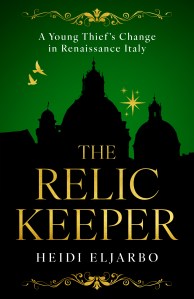
Inês resides more in our imaginations than in fact. She lived, had children, and died. 

Her family came from Galicia, in the northwest of Spain, where the famous city of Santiago de Compostela is located. Her father was a powerful noble, Pedro Fernãndez de Castro. Her mother, a noblewoman of Portuguese antecedents, was the mistress of her father. Her birth was illegitimate, which narrowed many of the choices available in her social class. She had kings in her lineage. Her parents also had a son, Alvaro. It is recorded that Alvaro became a good friend of the Pedro in this tale. 

Some accounts say she was raised in Portugal, and others in Castile. Inés could have been a young woman serving in the court of Portugal. But the legend says she came from Castile with Constanza, who married Portugal’s Infante Pedro. Coming with Constanza feels more probable because they were cousins and knew each other. If the legend is true that she and Pedro fell in love quickly, then the odds fall on the side to say their first knowledge of each other was a sudden arrival at court, not her growing up there. 

What comes down in the legend is her blonde hair and long neck, neither particular markers of great beauty in medieval Portugal. Yet, she is held out as a beauty. In those days, a high forehead was greatly prized, so women plucked their hair to make their foreheads taller. Did Inês? Probably – what young woman does not follow current fashion?  

There are no paintings or drawings for most people at this time. Pedro did leave us with an incredible gift, their sarcophagi. He was instrumental in their design. This is how Pedro remembers Inês. 

(Effigy of Inês. © Alcobaça Abbey, Portugal.) 

My underlying belief for Inês is that her beauty stems partly from appearance and partly from personality. I see her as easy to talk with, an attentive listener, and someone who gives you her full attention. She is loyal. She is determined. 

Most of all, Inês is true to herself. She is likely just 14- or 15-years old when she arrives on the scene. We know nothing of her years beforehand. I expect she could read and write as well as stitch and hunt, all skills of a medieval noblewoman. I believe that having suffered the shame of her birth, she desired the life of a legitimately married woman. She would eschew being mistress of any man, even the heir to the throne. Combine her marriage goal with her loyalty to her cousin Constanza, Pedro’s wife, and just sleeping with Pedro was out of the question. When you are marked young with an unfortunate circumstance, the power of motivation to alter the course of your life is strong. She will suffer for her choices, losing the trust of the king and being exiled. Repeatedly, the crown of Portugal throws obstacles in her way, and she perseveres. 

Then comes the day when Pedro plays his part. A widower, he holds out the promise of marriage. No one sees her as fit to be a queen. Of course, there is political intrigue involving her brothers. Life is never simple when you are in the orbit of the royal family. She loves children. She cares for her cousin’s children and her own with recorded affection. 

She is the glue of the story. In the novel, she is caught between two men, one whom she is unworthy to wed and one who repels her. When she rejects the king’s trusted adviser, Gonçalves, his hurt turns to jealous anger. “If I cannot have her, then no man can.” Who will the king trust, his son or his adviser? The choices she makes have dire consequences for our protagonist and antagonist.

Blurb:     

An heir to the throne, a gorgeous blonde lady-in-waiting, the king’s trusted advisor. When a father and son don’t understand each other, the son pays an outrageous price. 

Love, jealousy, loyalty, and revenge roil the court of 14th-century Portugal. 

In this engrossing launch to the Queens of Portugal trilogy, Catherine Mathis gives a fresh take on the tale of Pedro and Inês, Portugal’s real-life Romeo and Juliet. Pedro’s father would not have been king if not for his trusted advisor, Gonçalves. Once king, he wants no part in neighboring Castile’s royal convulsions, though his son, Pedro, befriends powerful Castilians. 

The all-consuming drive of the king is to ensure his line rules Portugal for centuries to come. He needs legitimate, strong heirs. The Infante Pedro loves a woman not deemed worthy to wear the crown as queen. Between father and son is Gonçalves, the king’s powerful, unquestioned counselor, who is a mentor to the son. Both Gonçalves and Pedro seek the attention of Inês. 

There is a horrific cost to winning the love of Inês. She will not release her grip on Pedro until he keeps the two sworn oaths he made to her. Can Pedro do the impossible to satisfy Inês? 

Inês is based on real people and events, exploring a cultural touchstone of Portuguese history. 

Praise for Inês: 

Mathis masterfully weaves emotional depth into the narrative, creating a deeply engaging experience that leaves a lasting impression and invites readers on an unforgettable journey through the grandeur and intrigue of Portugal’s past.
~ Mary Anne Yarde, The Coffee Pot Book Club 5* Review 

This exciting start to the Queens of Portugal trilogy describes the legendary love story of Pedro and Inês, and I was amazed at the excellent storytelling and how the author brings the courts to life. There is a lot of drama and intrigue, and the characters’ emotions are beautifully captured in this engrossing tale.
~ Readers’ Favorite 5* Review 


Buy Link: 

Universal Buy Link:   https://books2read.com/u/br8OBY  

Author Bio

Catherine Mathis was born in Berlin, the daughter of an American spy. As she grew up in Washington, D.C., her spy father turned into a drug enforcement agent. His career change wrecked any chance at high school popularity. She graduated from Sewanee | The University of the South with a degree in history focused on the medieval period. After a career in finance, she returned to her first love of medieval history to ‘Share Iberian Tales.’ Outside of writing, spare time joys are family, friends, reading, collecting folk/outsider art, and travel. 

Author Links

Website:  www.catherinemathis.com  

Facebook:   https://www.facebook.com/profile.php?id=100007239702480  

Instagram:  https://www.instagram.com/cmathisauthor/  

Amazon Author Page:  https://www.amazon.com/stores/Catherine-Mathis/author/B0F7FZHJ9T  

Goodreads:  https://www.goodreads.com/author/show/6987876.Catherine_Mathis 

Book Review: “The Formidable Women Who Shaped Medieval Europe: Power and Patronage at the Burgundian Court” by Susan Abernethy

Throughout European history, we tend to think about the countries as a whole when it comes to the political sphere of influence. We think of the big countries like France, Spain, Italy, Germany, Austria, and England as having the most impact, but we have to consider that during the Middle Ages, duchies held immense power. Take, for example, the Duchy of Burgundy, also known as the Burgundian Empire. It was a part of France, but that does not mean that the dukes stayed on the side of the French. The Burgundians used their influence to expand and marry into the medieval European families, affecting European history as a whole. While we tend to focus on the Dukes of Burgundy, we should be paying attention to the women of this duchy. That is why Susan Abernethy chose to focus on these women in her latest book, “The Formidable Women Who Shaped Medieval Europe: Power and Patronage at the Burgundian Court.”

I would like to thank Pen and Sword Books and NetGalley for sending me a copy of this book. I enjoyed Susan Abernethy’s first book about Catherine of Braganza. When I heard that she was writing a book about medieval Burgundian women, I was intrigued. I know a little bit about historical figures connected to Burgundy, but I didn’t know much about the history of the duchy itself, so I was excited to learn more.

Abernethy begins by giving her readers a brief history of how Burgundy became a kingdom and a duchy of France. While the history of Burgundy is extensive, we are mainly focusing on the Valois Dukes of Burgundy and the women in their lives. The Valois Dukes of Burgundy were Philip the Bold, John the Fearless, Philip the Good, and Charles the Bold. While this is primarily about the women of Burgundy, it is important to understand the political and military landscape that these women had to deal with in Burgundy and other countries during this time.

The bulk of this book focuses on the women of the Burgundian empire, starting with Margaret of England, Duchess of Brabant, in the 13th century, and ending with Queen Juana of Castile, in the 16th century. We get to hear stories about duchesses and queens, countesses and diplomats, and even a saint. They had to deal with wars, international diplomacy, family drama, and husbands who were not faithful. There were some familiar figures like Mary of Guelders, Queen of Scots, Jacquetta of Luxembourg, Margaret of York, Duchess of Burgundy, and Margaret of Austria, but the majority of these women were new to me, which was very exciting.

It’s a lot of ground to cover, but Abernethy has a way of telling the stories of women comprehensively. I thoroughly enjoyed learning about Burgundy and these extraordinary women who made the duchy an empire. If you are someone who wants to learn about the Duchy of Burgundy, I would recommend you read “The Formidable Women Who Shaped Medieval Europe: Power and Patronage at the Burgundian Court” by Susan Abernethy.

Guest Post: “Snippet from ‘The Boat on the Lake of Regret’ by Christy Matheson”

I am pleased to welcome Christy Matheson to my blog today to share a snippet from her novel, “The Boat on the Lake of Regret.” I would like to thank The Coffee Pot Book Club and Christy Matheson for allowing me to be part of this blog tour.

Snippet

Conversation with Morálta: 

But Morálta just shakes her head. “How should I know? I told you, I just work here.” 

“What has happened to Mór and Nuala?” The words burst out of me. 

She shrugs again. “I’m not in contact with the giants, so I don’t really have details. Last I saw, Red-beard was hoisting Nuala onto his pillion, and Mór was in Black-beard’s cart.” 

“Are they safe?” 

She gives me a strange look. “Safety is an illusion, Hannah.” 

“But”—I wave my hands around this room—“any more danger than we are in, here?” Which might be considerable. 

Morálta rolls her eyes. “It’s not like they are man-eating giants or anything. Black-beard really doesn’t care for those who don’t do their fair share of the work, so I dare say that Mór is going to be doing some scrubbing, and from what I’ve seen of her she’s not going to enjoy it. But hopefully you all have some true loves signed up to come and fetch you home again, right?” 

“Maybe…”  

Morálta does a double-take. “Three princes, three princesses, et cetera, and you couldn’t even fall in love?” 

“We didn’t have enough time,” I protest. “They just arrived last night.” Except me. 

Morálta sighs, sounding put-upon. “And you couldn’t manage it in one evening? Young people these days. I don’t know why the Seven-Inch-Man didn’t give you three days, which would have fit better anyhow. I’ll put it in my Exit Survey when I finish up here. Now, did you want tea or did you not?” 

We both murmur politely that we would like tea, thank you, and Morálta whisks away again. 

That was possibly the strangest conversation I’ve ever had. Exit Survey?  

Blurb: 

He has one last chance to be a fairy tale hero.  

But she didn’t agree to be the damsel in distress. 

When her longtime boyfriend unexpectedly slides a ring on her finger, Hannah is whisked from her everyday bedroom to a medieval ball. Hannah knew that Dylan would do anything to prove to her parents that he’s husband material, including going into the Fae world—but she never agreed to go through the Veil herself. 

Now one of three princess sisters, Hannah is paired with now-Prince Dylan. But, homesick and blindsided, she pretends the Veil has wiped him from her memory. 

As her prince scrambles in vain to be the right kind of hero, Hannah ignores her instincts and follows her new sisters onto a mysterious boat—which promptly sails them into a land of giants, magical traps, and enchanted pianos…and away from Dylan. 

Read now to journey back to medieval Ireland, complete with the Fae and mythological monsters, in this fairy tale adventure and sweet “it was always you” romance. 

Buy Link: 

Universal Buy Link: https://buy.bookfunnel.com/hzxiszq79z 

Author Bio

Characters you connect with. Adventure. Love. Family… And endings that are more than a sugar rush.  

When Christy Matheson is not throwing ordinary characters into fairy tales, she is busy raising five children. (Very busy.) She writes character-driven historical fiction with and without fantasy elements, and her “fresh, smart, and totally charming” stories have won multiple awards. 

Christy is also an embroidery artist, classically trained pianist, and sews all of her own clothes. She lives in Oregon, on a country property that fondly reminds her of a Regency estate (except with a swing set instead of faux Greek ruins), with her husband, five children, three Shelties, one bunny, and an improbable quantity of art supplies. 

Author Links

Website: https://christymatheson.com  

Twitter / X: https://x.com/CMathesonAuthor  

Facebook:https://www.facebook.com/profile.php?id=100091887100897 

Instagram:https://www.instagram.com/christy_matheson_author/ 

Bluesky: https://bsky.app/profile/christy-matheson.bsky.social 

Book Bub: https://www.bookbub.com/authors/christy-matheson 

TikTok: https://www.tiktok.com/@christy.matheson.author 

Amazon Author Page:https://us.amazon.com/stores/Christy-Matheson/author/B0D6J2KRLS 

Goodreads:  https://www.goodreads.com/author/show/49771827.Christy_Matheson 

Substack: https://unspokenstoriesofwomanhood.substack.com/  


Book Review: “Medieval Christmas: The Origins and Traditions of Christmas in the Middle Ages” by Toni Mount

The weather is getting colder, and life is getting a bit busier in preparation for winter and family gatherings. It’s time to get ready for the holiday season, and there is one that is universally loved. No, it’s not Halloween, even though it is October when I am writing this review. No, I am talking about Christmas. But one wonders what the origins of Christmas and how our traditions evolved? Toni Mount explores this most important holiday time in her latest book, “Medieval Christmas: The Origins and Traditions of Christmas in the Middle Ages.”

I would like to thank Toni Mount for sending me a copy of her latest book. I am always interested in learning the origins of holidays, especially Christmas, so when she sent me a copy of her book, I was excited to read it so that I can get into the holiday mood a bit early.

Since this book is relatively short, I will keep the review short. Mount explores the different aspects of Christmas and its origins in short sections. We begin with the origins of the holiday itself and how it went from Midwinter/ the Winter Solstice/ festival of Yule and Saturnalia to Christmas through the expansion of the Christian faith. In England, the first Christian Christmas was celebrated in 597 AD with Saint Augustine and King Aethelberht, but it was not until King Alfred that Christianity became the religion of England.

Christmas is not only a solemn day in the Christian calendar, but in the Middle Ages, it was an entire season full of feasting, music, and pageants. We also see how the concept of Santa Claus morphed overtime from Father Christmas and Old Man Winter to Saint Nicholas. We also learn the importance of gift giving and how politics would play a huge part in how Christmas was celebrated, or in the case of the Puritans, banned for many years.

I found this book enjoyable and extremely cozy in the vibes. I did wish it was a bit longer as I did enjoy learning about this topic and did not want it to end. Overall, I think “Medieval Christmas: The Origins and Traditions in the Middle Ages” by Toni Mount, was a delightful book and the perfect choice for medievalists who want to get into the holiday spirit.

Book Review: “Bring Up the Bodies” by Hilary Mantel

The year is 1535, and Henry VIII is growing bored with his current wife, Anne Boleyn. His eyes are wandering yet again, and this time his sights are set on Jane Seymour. Anne Boleyn had failed to give him his desired son, so Henry decided that it was only fitting for his right-hand man, Thomas Cromwell, to take down a queen. It’s Cromwell’s biggest challenge yet, but it could also become Cromwell’s defining moment. Hilary Mantel explores the pivotal months that pitted Cromwell against the Boleyns in her second book in the Wolf Hall trilogy, called “Bring Up the Bodies.”

Although the first book in the series, “Wolf Hall,” was a challenging read, I still wanted to continue reading the series. We all know Thomas Cromwell’s story, but since I started the Mantel retelling of his life, I wanted to see how she will handle the fall of Anne Boleyn.

We pick up where we left off in the first book, at Wolf Hall in 1535, where Henry VIII meets Jane Seymour and her family. The King is tired of Anne Boleyn, even though she is pregnant with what is hopefully Henry’s heir. Once they get back from Wolf Hall, rumors begin to spread about Anne’s infidelity while Cromwell is working on the dissolution of the monasteries. Anne has alienated so many people at court that they wonder if it’s time for a change and if perhaps Henry will take back Katherine of Aragon.

But it is too little too late. Katherine of Aragon will pass away without seeing her daughter, Mary. Anne believes that she is safe; however, fortune’s wheel is always turning. A jousting accident will rock the court and change the trajectory of Anne’s life forever. After Anne suffers a miscarriage, Henry decides now is the time to send in Cromwell to bring down the queen. We get the opportunity to see the downfall of Anne Boleyn and the men around her through the eyes of the man who brought about her fall from grace and her untimely death.

I enjoyed this novel more than Wolf Hall because there was that sense of drama and danger. We see Cromwell at his most impactful moment, but we also see that he is not some monster, but a human who was following orders. Mantel’s writing style may still be a bit difficult, but I felt this one was easier to follow along with than the first book. I cannot wait to see how Mantel will finish this trilogy. If you want to continue the Wolf Hall trilogy and see how the Cromwell/ Boleyn feud ends, I highly recommend you read “Bring Up the Bodies” by Hilary Mantel.

Poetry: Elizabeth of England by Agatha Christie

My mom is a fan of Agatha Christie and a collector. She was recently reading one of Christie’s lesser-known books, “Star Over Bethlehem: Poems and Holiday Stories,” when she found a poem about Elizabeth I. I thought it was just neat to see a crime writer write a poem about Queen Elizabeth I.

Elizabeth of England

I am Mistress of England- the Seas I hold!
I have gambled, and won, alone….
I have freed my land from the power of Spain,
I have gathered in gold from the Spanish Main
With the help of my mariners bold.

But never a child of my flesh and blood,
When I shall be dead and gone,
Oh! never a King of the Tudor blood
Shall sit upon England’s throne….

I have saved my land from the dreaded foe,
My fleet will be known to fame,
And many a ship has sailed to the West
In Gloriana’s name!

I was menanced by Spain before I was born
In the months, oh! mother most dear,
When my father defied those powers twain,
The curse of the Church and the might of Spain,
To keep the oath he had sworn!

And Katharine, raging, invoked her God,
And appealed both far and near,
And fostered the plan of leer and of nod
Which brought you down to the bier….

So is it written in ages past
With a woman’s smile as bait,
A King shall risk his very soul
And change a nation’s fate….
Did you never fear, oh! mother of mine,
When you played on a King’s desire,
When first of queenly rank you dreamed,
And subtly plotted and boldly schemed
To further your high design?
Did you never dread that the hand which crowned
Could cast you down in the mire,
That a love so swift might be swiftly drowned,
And a King might love-and tire?

Oh! red were your lips as you smiled in his face,
And red was your hair as fire!
And red was the band around your neck
As you met your doom so dire….

An Oath I swore!-and the Pride of Spain
Is driftwood along my coast!
I was not too royal to scheme and to smile,
To pay with a promise-and daily awhile-
Till I changed my mind again….

Your blood, oh! mother, which gave me might,
(Not that of the Tudor host,)
And a woman’s game that was played aright
Is Elizabeth Tudor’s boast.

‘Tis perilous work to trifle with France…
To jest with Spain may be death…
But I played my part with a woman’s guile
And never a catch in my breath!

I have hated most women- but one above all,
(No matter her rank or name,)
Fair was her face, and her frame spread wide
When in France she dwelt as a royal bride
Ere she sailed to her fate and fall.

The lure of her beauty drew all mankind
Like a moth to the candle flame…
They brought me the warrant to sign…and I signed
With a flourish my royal name!

(But oh! to think that when I am gone
And laid in my grace so low,
The Crown which rests on my royal head
Shall adorn a Stewart’s false brow!)

She had fostered a plan to seize my throne,
Conspiring with Rome and Spain,
She had aimed at my life, so they said- what then?
It was never fear that drove my pen!

(Who have never a child of my own…)
But the jealous rage that naught can slake
Of a woman who loved in vain…
And she shall die for her beauty’s sake!
Who has loved- and been loved again!

(There are gallants thronging around my throne,
And many a maiden fair,
But the maids who come to Elizabeth’s court
Must coif Saint Catherine’s hair!)

I am Queen of England! I rule unafraid!
(But never a son of my own…)
I have gowns in plenty, and jewels rare,
With many a wench to tire my hair,
And they call me a painted jade!

But many a ship in Elizabeth’s name
Shall open up seas unknown….
And I shall share in my Children’s fame
Who have never a child of my own….

Source

Christie, Agatha. 2011. Star over Bethlehem. Harper Collins.