
Book Review: “Normal Women: Nine Hundred Years of Making History” by Philippa Gregory

Normal WomenThe field of history for centuries has been focused on men and the struggles that mankind has had to endure for society to survive. We tend to get only a mere glimpse at the lives of women when they are next to powerful men. Some will write about women, mostly royal women, who lead extraordinary lives and left an imprint on the past. But what about those who lived ordinary lives? What about the women who lived daily, fighting to survive every obstacle? What can we learn about history through the eyes of ordinary women? Philippa Gregory has taken on the mammoth task of trying to answer these questions and more with her tome, “Normal Women: Nine Hundred Years of Making History.”

I would like to thank Harper Collins and Net Galley for sending me a copy of this book. I have had an interesting background regarding Philippa Gregory’s books. When I was in middle school/ high school, I started reading novels by Gregory and I became fascinated with the stories that she was weaving. It was only when I read other books that disproved some of the things that Gregory had included in her novels that I stopped reading them. When I saw this book and its praise, I decided to give Gregory another shot because, in the end, I enjoyed her writing style.

As the title suggests, Gregory covers over nine hundred years of English women’s history, from the Norman Conquest to the modern day. It is a daunting undertaking, but the way Gregory presents the information is so easy to follow that it allows the depth of the subject material to sink in without it being too overwhelming. Each part of this book focuses on a different era in the history of England and has segments that highlight important developments during the era when it comes to women’s roles in society. As readers, we can see changes in society like how the church accepted women, how society accepted women, what kind of rights women had, what jobs women could do for money, how women viewed relationships with men as well as other women, and how men viewed women’s nature.

Unlike Gregory’s previous books and novels, the focus of this book is not the women who wore crowns, but women who lived everyday lives and survived whatever life handed them. Mothers, wives, daughters, soldiers, protesters, doctors, factory workers, Suffragettes, guild widows, pirates, highwaywomen, and women husbands are all represented in this book. By including small snippets of stories from women of every walk of life over centuries, Gregory allows her readers to discover more about these women for themselves, which is an exciting prospect.

I am so glad I read this book and gave Philippa Gregory a second chance. This book was fresh, innovative, challenging at times, and overall a fascinating read. By letting the facts and the stories of these women speak for themselves, Gregory presents the past in a way that is both inspirational and heartbreaking, raw and real. If you want to learn more about English women’s history or you are a fan of Philippa Gregory, I highly suggest you read, “Normal Women: Nine Hundred Years of Making History” by Philippa Gregory.
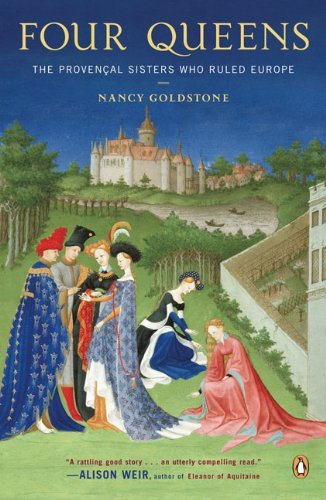
Book Review: “Four Queens: The Provencal Sisters Who Ruled Europe” by Nancy Goldstone

Four QueensIn southeastern France, there is a region called Provence, known today for its lavender fields and its vineyards. In 13th-century France, Provence would be known as the birthplace of four queens who dominated European politics. The daughters, Marguerite, Eleanor, Sanchia, and Beatrice were the daughters of Raymond Berenger V Count of Provence, and his wife Beatrice of Savoy. They would become the queens of France, England, Germany, and Sicily. While the sisters were known for their beauty, how they acted as queen consorts for their husbands cemented their legacies in history. Nancy Goldstone tells the tale of these remarkable siblings and how they changed European history in her book, “Four Queens: The Provencal Sisters Who Ruled Europe.”
I am always looking for a new history story to familiarize myself with to read and grow as a history nerd. I was familiar with Eleanor of Provence as she is mentioned in biographies about Henry III, but her sisters were a complete mystery to me and so when I heard about this book and its exploration into the sister queens and 13th-century European history, it intrigued me.

Goldstone begins with a story of how the English King Henry III met with the French King Louis IX in Paris during Christmas 1254, and this extraordinary meeting was orchestrated by two sisters, Eleanor and Marguerite of Provence. We then jump back in time to the childhood of the four sisters in Provence, full of wine and songs of the troubadours. At the heart of this glamorous court was Raymond Berenger V and Beatrice of Savoy, Count and Countess of Provence, along with their four daughters; Marguerite, Eleanor, Sanchia, and Beatrice. All around Provence, wars raged, and without a male heir, Raymond Berenger V and his beloved Provence risked the wars coming into his home and taking everything he loved. What is a father to do, but make exceptional matches for his daughters?

Marguerite, the oldest daughter, was married to the young Louis IX of France, thanks to the deal made by her father and her new mother-in-law, the formidable Blanche of Castile, the White Queen. Guillaume of Savoy, the sisters’ uncle, decided to arrange the next marriage, which was between Eleanor of Provence and the King of England, Henry III, who had been ruling a turbulent nation for over 20 years. The two eldest sisters would help weather civil wars and crusades to allow the dynasties that they married to survive.

The younger sisters, Sanchia and Beatrice, married men who were also younger siblings and were fighting for their rights to rule in Europe. Sanchia married Richard, Earl of Cornwall, the younger brother of Henry III. They would become King and Queen of Germany for only a brief time, but they would pave the way for the Habsburgs. Finally, Beatrice married the younger brother of Louis IX, Charles Count of Anjou; they would soon become the King and Queen of Sicily.

In the world of 13th-century Europe which was dominated by kings and popes fighting crusades and civil wars, it was the women at home and their husbands’ sides that helped stabilize nations. Marguerite, Eleanor, Sanchia, and Beatrice were fierce women who were loyal to their own families even if that meant that they had to step in the way of their sister’s glory. Goldstone can weave together a narrative of all four siblings that is compelling, engaging, and academically fascinating. If you want a book that explores the familial bonds of four sisters and the lengths that they had to go to to protect what they loved the most, I highly suggest you read, “Four Queens: The Provencal Sisters Who Ruled Europe” by Nancy Goldstone.

Book Review: “The Royal Women Who Made England: The Tenth Century in Saxon England” by M.J. Porter

royal womenWhen we think about England, we often think about a unified country with an illustrious history of wars and triumphs. However, England in the 10th century was drastically different. It was barely a country as it was newly formed through politics, but it faced the risk of elimination with a carousel of kings and Viking raiders. Some of the most notable kings of this era include Alfred, Edward the Elder, Athelstan, Edward the Martyr, and Aethelred II, but the most fascinating figures of this time were the women who were hidden in the shadows of the past. M.J. Porter uses the written record from the 10th and 11th centuries to tell the tales of these remarkable women in her book, “The Royal Women Who Made England: The Tenth Century in Saxon England.”

I would like to thank Pen and Sword Books and Net Galley for sending me a copy of this book. I have heard of M.J. Porter and her historical fiction novels ( I even hosted her for a guest post on my blog), but I had never read her books. I saw this particular title and I was curious as the history of 10th century England is a weak area in my historical research and I wanted to know more about the royal women who lived during this era.

Porter begins by explaining the concept of the long 10th century in England, which starts with the death of King Alfred in 899 to the death of Lady Elfrida in 1001/1002. In that span, ten kings reigned: Alfred, Edward the Elder, Aethelweard, Athelstan, Edmund, Eadred, Eadwig, Edgar, Edward the Martyr, and Aethelred II the Unready. Although this was a turbulent time, it was the women who kept England together. Women like Lady Aethelflaed Lady of the Mercians and Elfrida, the first crowned Queen of England, were not afraid to get their hands dirty whether that meant fighting off Viking invaders or potentially killing off her stepson so her son could be king. Some less famous women were daughters, sisters, mothers, saints, and abbesses/nuns who saw England transformed and whose stories survived through wills, charters, and chronicles.

While I did find the information in this book fascinating as I did take copious notes while reading, I have to be a bit critical of the actual structure of this book. The structure as it was published made it a bit difficult to follow along and I was struggling to keep track of who was who as some women shared the same name. I feel like Porter should have done an introduction to the events of the period in the beginning, then dived into what sources she will use in the book, and then gone into the more minutiae details of the lives of the royal women in chronological order.

Overall, it was a decent read that was extremely informative, but it could have been structured differently to make it even better and a more enjoyable read. Porter’s passion for this period of the past is evident on every page and I wonder how it translates to her historical fiction novels. If you want to learn more about the royal house of Wessex and the women who were close to the throne, I would recommend you read, “The Royal Women Who Made England: The Tenth Century in Saxon England” by M.J. Porter.

Guest Post: “Snippet from ‘Imperatrix’ by S.P. Somtow”

Imperatrix Tour BannerI am pleased to welcome S.P. Somtow to my blog today to share a snippet from his latest novel, “Imperatix.” I would like to thank S.P. Somtow and The Coffee Pot Book Club for allowing me to be part of this blog tour. 

Have another brain,” said the Emperor, feeding me Himself.

“Divinitas,” I said, “how many peacocks does it take to make such a platter?”

“Wonderful!” said Himself.  “Poppaea never takes an interest in how the world runs.  For her, the brains just appear by magic.  The answer to question is — why — we have our own, private little — to coin a word — pavonarium.  Would you like to see peacocks — a veritable ocean of peacocks — more bird-brains than even in the Senate?”  He clapped his hands, dropping a brain onto the grass, though Hercules quickly disposed of it.  “Come!”

He took me by the hand and started to pull me in toward the far side of the garden, where there was a fountain cunningly designed like a pair of dolphins.  I turned to look at the Lady Poppaea, terrified that I would soon be alone with the God.

“This could be your fortune,” she said to me.  “You’ve insulted, you’ve appeased.  Now, Sporus, you must seduce.”

Imperatrix CoverBlurb:

Captured by pirates and sold to a Roman aristocrat as a sex slave, Sporus attracted the attention of no less a personage than the Emperor Nero, ruler of the known world. Would-be poet, patron of the arts, aesthete, and brutal autocrat, the Divine Nero saw in the boy a startling resemblance to the Empress Poppaea – and made him an empress as well.

Suetonius, Tacitus, and other Roman historians have given tantalizing glimpses into the incredible life story of the boy who became twice an empress to two emperors and was condemned to die in the arena by a third.

In this meticulously researched trilogy, World Fantasy Award-winning author S.P. Somtow lays bare the darkest secrets of Imperial Rome – its triumphs and its nadirs, its beauty and its cruelty. Through this chaos, a contorted mirror of our contemporary world, this figure of Sporus moves, all too knowing yet all too innocent, providing a worm’s eye view of one of the wildest periods in ancient history.

Imperatrix, the second volume of the tale, takes us into the heart of the Imperial palace with all its intrigue, depravity, and splendor.

Buy Links:

This title is available to read on #KindleUnlimited.

Universal Buy Link: https://books2read.com/u/mV2EaJ

S.P. Somtow authorAuthor Bio:

Once referred to by the International Herald Tribune as ‘the most well-known expatriate Thai in the world,’ Somtow Sucharitkul is no longer an expatriate since he has returned to Thailand after five decades of wandering the world. He is best known as an award-winning novelist and a composer of operas.

Born in Bangkok, Somtow grew up in Europe and was educated at Eton and Cambridge. His first career was in music and in the 1970s, his first return to Asia, he acquired a reputation as a revolutionary composer, the first to combine Thai and Western instruments in radical new sonorities. Conditions in the arts in the region at the time proved so traumatic for the young composer that he suffered a major burnout, emigrated to the United States, and reinvented himself as a novelist.

His earliest novels were in the science fiction field and he soon won the John W. Campbell for Best New Writer as well as being nominated for and winning numerous other awards in the field. But science fiction was not able to contain him and he began to cross into other genres. In his 1984 novel Vampire Junction, he injected a new literary inventiveness into the horror genre, in the words of Robert Bloch, author of Psycho, ‘skillfully combining the styles of Stephen King, William Burroughs, and the author of the Revelation to John.’ Vampire Junction was voted one of the forty all-time greatest horror books by the Horror Writers’ Association.

In the 1990s Somtow became increasingly identified as a uniquely Asian writer with novels such as the semi-autobiographical Jasmine Nights and a series of stories noted for a peculiarly Asian brand of magic realism, such as Dragon’s Fin Soup, which is currently being made into a film directed by Takashi Miike. He recently won the World Fantasy Award, the highest accolade given in the world of fantastic literature, for his novella The Bird Catcher.

Returning to Thailand in 2001, he became artistic director of Opera Siam and has had more than a dozen operas produced around the world including The Snow Dragon and The Silent Prince, which premiered in the United States, Helena Citronova, an opera set during the Holocaust, and the ten-part DasJati: Ten Lives of the Buddha.

In the last few years, he has made a return to writing novels with the Nero and Sporus trilogy and the young adult series, Club X.

In 2021 the film he produced and wrote, The Maestro: Symphony of Terror received over forty awards at international festivals, and in 2023 the Thai government officially elevated him to the status of National Artist.

Read S.P. Somtow’s interview on Literary Titan about Imperatrix at https://literarytitan.com/2024/01/21/the-core-of-innocence/.

Author Links:

Website: www.somtow.com

Twitter: www.twitter.com/somtow

Facebook: www.facebook.com/somtow

Instagram: www.instagram.com/somtow

Book Bub: https://www.bookbub.com/profile/s-p-somtow

Amazon Author Page: https://www.amazon.com/stores/author/B000APBJXC

Goodreads:  https://www.goodreads.com/author/show/81037.S_P_Somtow

Book Review: “The History of England Vol. II: Tudors” by Peter Ackroyd

TudorsThe royal dynasties of English history are some of the most popular in European history. We have the Normans, the Angevins, the Plantagenets, who occupied the throne for 300 years, the Scottish Stuarts who saw religious change and political upheaval, the haughty Hanovers, and the current Windsor dynasty. However, one dynasty that has captured the imagination of history nerds for centuries has been the tumultuous Tudors. In book two of Peter Ackroyd’s “The History of England: Tudors,” he explores the stories that made the Tudor dynasty so infamous.

I saw this book at a used bookstore and picked it up. I just read the previous book in this series, “Foundation” and wanted to see how Ackroyd would tackle the tricky Tudors.

Ackroyd, unfortunately, does not start with the patriarch of the Tudor dynasty, Henry VII, instead, he starts with his infamous second son, Henry VIII, and his coronation. Ackroyd did include a bit of information about Henry VII’s reign in his previous volume, but I think it would have made much more sense to have included his story in this book to show the dynasty from beginning to end. When it comes to the reign of Henry VIII, his martial affairs take a backseat to the more religious and political aspects of his reign. The theme of religious changes goes throughout this book as Ackroyd explores the reigns of Edward VI, Mary I, and Elizabeth I, the children of Henry VIII.

While I did find some of the facts in this book informative, I did have issues with this book. When it comes to the characterization of the women in this book, especially Mary I, it felt like a repetition of some of the old tropes (like Bloody Mary). There were also stories and dialogue that Ackroyd had included that felt similar to historical fiction rather than historical facts, which was a bit distracting, especially for a chronicle.

Overall, I felt like this book was just okay, but quite a bit of the information presented in this book could be disproven with the latest research about the Tudors (of course this book is over 10 years old). I think this is a fine introductory book to the Tudor dynasty and the religious changes that happened during the 16th century in England. If this sounds intriguing to you or if you have read “Foundation,” “The History of England Vol. II: Tudors” by Peter Ackroyd might be something you would be interested in reading.

Guest Post: “Snippet from ‘Signatures in Stone’ by Linda Lappin

Signatures in Stone Tour BannerToday, I am pleased to welcome Linda Lappin to my blog to share a snippet from her novel, “Signatures in Stone.”I would like to thank The Coffee Pot Book Club and Linda Lappin for allowing me to be part of this blog tour.

Without inspiration, I could not write. What I needed was a new batch of
signatures, those curious messages our waking life sends us from our own unconscious, which I have come to see as promptings from the muse, and even as a spiritual guide for my own existence.

We are constantly immersed in a network of signs and symbols, whose meaning eludes us, but which, if only we could read them, would reveal every detail of our past and even predict our future.

The mind talks to itself not with words, but with scrambled symbols, pictures, fragments, often severed from any literal meaning. If we wish to learn to read them, we must abandon the rational links of words to thoughts. Signatures are always there waiting for us, like unopened letters slid beneath the front door, accumulating after a long absence, written in a hieroglyphic alphabet we have forgotten.

Signatures in Stone coverBlurb:

Captivating critics and readers, SIGNATURES IN STONE, was the OVERALL WINNER in the DAPHNE DU MAURIER AWARDS for Excellence in Mystery and Suspense Writing -Best Mystery of 2013

Rome, Italy – November 2023 – Pleasure Boat Studio is thrilled to announce the release of the second edition of Linda Lappin’s celebrated novel, SIGNATURES IN STONE: A BOMARZO MYSTERY. This captivating suspense tale takes readers on a thrilling journey through the enigmatic Monster Park of Bomarzo, also known as the Sacred Wood, an extraordinary Baroque sculpture garden in Italy. With the 500th anniversary of the park’s creation, this edition is accompanied by a magnificent new cover and a series of Tarot card illustrations by Santa Fe artist Carolyn Florek.

In SIGNATURES IN STONE, readers are transported to the atmospheric setting of the Monster Park of Bomarzo, a sixteenth-century garden adorned with mythical creatures believed to represent a terrifying journey into the realm of nightmares. Against this backdrop, four travelers find themselves intertwined in a fate-driven Italian holiday. Daphne, a British writer of occult mysteries, her down-on-his-luck aristocratic publisher Nigel, the aspiring artist and American gigolo Clive, and the art historian Professor Finestone, all converge in a dilapidated villa near the park. They are attended by rustic servants who harbor secrets of their own.

Professor Finestone has made a groundbreaking discovery, revealing that the garden was designed by one of Italy’s greatest artists as a transformative experience that delves into the shadow side of life. Over the centuries, the park’s meanders continue to influence the minds and destinies of those who venture within. As the group explores their heart’s desires amidst the haunting sculptures, they become entangled in a web of intrigue and danger. When Daphne, renowned for writing cozy murder tales, becomes the prime suspect in a shocking homicide, she must confront her own darkness and rely on her sleuthing skills to uncover the terrifying truth.

Linda Lappin’s gripping tale presents an intriguing exploration of gardens in Renaissance Italy, where they were regarded as tools for altering consciousness and changing destiny. The Monster Park of Bomarzo becomes the backdrop for a “Gothic-in-Wonderland” phantasmagoria, immersing readers in a suspenseful and thrilling journey.

New Edition of Linda Lappin’s Award-Winning SIGNATURES IN STONE: A BOMARZO MYSTERY Commemorates the 500th Anniversary of the Monster Park.

Praise:

“Layers of mystery are woven into Linda Lappin’s beautifully written and atmospheric historical novel set in Bomarzo, Italy’s enigmatic park of stone monsters.”
~ Gigi Pandian, author of The Accidental Alchemist.

“Deftly mixing fascinating art history and murder with an exotic atmospheric setting (the Bomarzo garden actually exists), dramatic historical period (1928 fascist Italy), and fully fleshed characters, Lappin (The Etruscan) has written a hallucinatory gothic mystery in which no one is as they appear. Daphne is a most memorable, if a bit unreliable narrator. Readers looking for an intelligent summer mystery will find much to savor here.”
~ Wilda Williams, Library Journal

Buy Link:

Universal Buy Link: https://books2read.com/u/mYDWvd

Linda LappinAuthor Bio:

Linda Lappin, poet, translator, novelist, and travel writer is the prize-winning author of four novels: The Etruscan (Wynkin deWorde, 2004); Katherine’s Wish (Wordcraft, 2008), dealing with the last five years of Katherine Mansfield’s life; Signatures in Stone: A Bomarzo Mystery (Pleasureboat Studio, 2013,2023), overall winner of the Daphne Du Maurier award for best mystery novel of 2013; and Loving Modigliani: The Afterlife of Jeanne Hébuterne (Serving House Books, 2020), 2021 Daphne Du Maurier award finalist and shortlisted for the 2021 Montaigne Medal for Books of Distinction.

She is also the author of The Soul of Place: Ideas and Exercises for Conjuring the Genius Loci, (Travelers Tales, 2015), winner of a Nautilus Award in the category of creativity in 2015.

A former Fulbright scholar to Italy, she has lived mainly in Rome for over thirty years. She is at work on a second Daphne Dublanc mystery novel, Melusine, set in Bolsena. The second edition of Signatures in Stone (2023) has been issued to commemorate the 500th anniversary of the Monster Park.

Author Links:

Website: https://www.lindalappin.net
Twitter: https://twitter.com/LindaLappin1
Facebook: https://www.facebook.com/LindaLappinAuthor/
Instagram: https://www.instagram.com/linda_lappin_author/
Threads: https://www.threads.net/@linda_lappin_author
Bluesky: https://bsky.app/profile/lindalappin.bsky.social
Book Bub: https://www.bookbub.com/profile/linda-lappin
Amazon Author Page: https://www.amazon.com/author/lindalappin
Goodreads: https://www.goodreads.com/author/show/1157178.Linda_Lappin

Book Review: “Women of the Anarchy” by Sharon Bennett Connolly

Women of the AnarchyCivil wars, clashes between cousins, are known to be full of battles between men on foot and horseback, with their eyes set on the throne of their desired country. Many stories of civil wars tend to leave out the women who often were left on the sidelines, ready to pick up the pieces. The story of the Anarchy is a bit different than other civil wars as one of the main figures was not a man, but Empress Matilda, the daughter of King Henry I and the rightful heiress of England facing off against the man who stole the throne from her, her cousin, King Stephen. However, it was not just Empress Matilda who defined what it meant to be a woman during the Anarchy. In her latest book, “Women of the Anarchy,” Sharon Bennett Connolly tells the stories of the mothers, sisters, and wives who defined this turbulent period that saw the end of one dynasty and the beginning of another.
I want to thank Amberley Publishing for sending me a copy of this book. I have enjoyed Sharon Bennett Connolly’s previous books that I have read, “Ladies of the Magna Carta,” “Silk and Sword,” “Defenders of the Norman Crown,” and “King John’s Right Hand Lady.” When I heard that Connolly was writing about the women who were involved in the Anarchy, I was excited because it is one of my favorite conflicts in history to study. I wanted to see what new information Connolly would present in her book.

Connolly begins by explaining how the conflict around the Anarchy arose and how Empress Matilda and Queen Matilda became the female faces of opposing sides of this civil war. Empress Matilda, the daughter of King Henry I, was the wife of the Holy Roman Emperor Henry V. However, her life took a dramatic turn when her only legitimate brother William Aetheling died on November 25, 1120, when the ship he was on, the White Ship, sank after a night of drunk sailing. As King Henry I’s last living legitimate child, Empress Matilda was the rightful heir to the English throne, even though she was a woman and she was willing to fight with everything in her power to sit on the throne. On the other side of the conflict was Queen Matilda of Boulogne, the wife of King Stephen. Although Queen Matilda or Empress Matilda could not wield a sword in battle, they showed that they were capable of fighting in their own unique ways.

Empress Matilda and Queen Matilda had grandmothers and mothers who showed them what it meant to be a queen and a mother who was willing to fight for their family. Women like Matilda of Flanders, Saint Margaret of Scotland, Matilda of Scotland, and Adeliza of Louvain showed the two Matildas how to help their husbands run a country while maintaining their strong identities as women rulers. However, Connolly does not stop just at the two Matildas when discussing royal women who had to navigate the Anarchy. We are introduced to interesting characters like Isabel de Vermandois, Ada de Warenne, Lucy Countess of Chester, Ela de Talvas, Mary of Boulogne, Isabel Countess of Warenne and Surrey, culminating with the story of Eleanor of Aquitaine.

While other books focus on the Anarchy, by focusing on the two Matildas and other women affected by this conflict, Connolly brings something fresh to this story that is centuries old. It shows how their actions to protect their families brought forth change in England through the birth of the Plantagenet dynasty. This book is rich in details and is so well written as Connolly takes the time to distinguish between the Matildas, which there are quite a few in this book, and explain how the conflict started and finally how it was concluded. I think if you want a fabulous book about the Anarchy and the women who defined this period, I highly recommend you check out, “Women of the Anarchy” by Sharon Bennett Connolly.

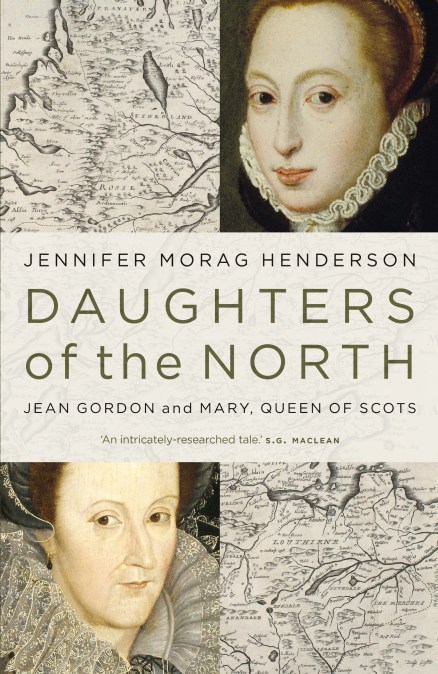
Book Review: “Daughters of the North: Jean Gordon and Mary, Queen of Scots” by Jennifer Morag Henderson

Daughters of the NorthIn the late 16th/ early 17th centuries, Scotland was chaotic and full of dynamic characters near or on the throne. People like Mary of Guise, Mary Queen of Scots, Lord Darnley, Earl of Bothwell, the four Maries, and James VI/I show how turbulent the Scottish court was to those around it. However, the stories of those who lived outside the court system and tried their best to maintain control of the country for their monarch tend to fade into obscurity. Take for example the story of Jean Gordon. A noblewoman who was married three times; to James Hepburn, Earl of Bothwell, Alexander Gordon, Earl of Sutherland, and her true love, Alex Ogilive. Jean’s story is full of heartaches, clashing clans, religious squabbles, and loyalty to one’s family, which is told in Jennifer Morag Henderson’s book, “Daughters of the North: Jean Gordon and Mary, Queen of Scots.”

I would like to thank Sandstone Press and Casemate for sending me a copy of this book. When it comes to 16th-century history, I mostly focus on England, but I wanted to branch out to other countries and learn more about European history as a whole. When I saw the title of this book, it immediately caught my attention because I wanted to learn more about Scottish history and I did not know anything about Jean Gordon.

Jean Gordon, born in 1545, was the daughter of one of the most powerful men in Northern Scotland (known as King of the North), George Gordon 4th Earl of Huntly, and his wife Elizabeth Keith. When she was a child, Jean fell in love with a man named Alex Ogilive, but it was never meant to be as her family fortune changed when the Huntlys decided to clash with Mary, Queen of Scots’ illegitimate brother Lord James Stewart, 1st Earl of Moray. This clash ended with the death of George Gordon (with his corpse being put on trial) and the execution of Jean’s brother John Gordon. The family fell out of favor with the young Mary, Queen of Scots, but they would soon rise again.

Mary, Queen of Scots ended up marrying Lord Darnley and having the future King James VI/I of Scotland and England, while in 1566, Jean married James Hepburn, Earl of Bothwell. Jean and James were not married for long because in 1567 after it was found that Lord Darnley was murdered, Bothwell decided to dump Jean and marry Mary, Queen of Scots; we all know how that one turned out. Bothwell was such a jerk, but Jean did not mind as she did not care for Bothwell at all.

Jean would marry for a second time to Alexander Gordon, 12th Earl of Sutherland. They would have between seven and eight children. Although it was an arranged marriage, there was love between Jean and Alexander as they worked hard to maintain order in the North while clans were clashing over small issues (like cutting horsetails) and religious rows. After Alexander died, Jean decided to take a chance and marry her true love Alex Ogilive after over 30 years of waiting. Jean would outlive her husbands, her siblings, some of her children, and several monarchs, dying in 1629.

As someone who did not know much about Jean Gordon’s story or 16th/17th-century Scottish history, I adored this book. Henderson has made this complex history accessible to readers, both novices and experts alike. Now I want to explore more Scottish history, maybe even medieval Scottish history. If you want a fresh look into the wider world of the 16th century full of romance and drama, I highly recommend you read, “Daughters of the North: Jean Gordon and Mary, Queen of Scots” by Jennifer Morag Henderson.

Book Review: “A Guide to the Medieval Castles of England” by Malcolm Hislop

A Guide to Medieval Castles of EnglandCastles, the monuments of medieval times, are buildings that hold many tales. Tales of sieges and sorrow, triumphs and tribulations. Through the centuries, their stones and foundations held many secrets. Some of the stories are famous, but most are hidden in the shadows of time and are hidden in ruins. Although castles exist in numerous countries and are centuries old, the castles of medieval England tell a story of a country facing turmoil and changing European and world history forever. Malcolm Hislop, a historian and researcher who specializes in architecture and archaeology, has written a single book exploring every medieval castle and its original architecture entitled, “A Guide to the Medieval Castles of England.”

I would like to thank Pen and Sword Books and Net Galley for sending me a copy of this book. I am somewhat of an architecture novice. I did take a class about the history of art and architecture when I was in college. When I saw the title of this book, I was hoping that he would dive into the terminology and the history of how each castle changed over time. Hislop does his best to deliver just that for his readers.

Hislop begins by explaining the premise behind this book and what the time range will be for a castle to be considered medieval, which is if it was built between 1050 and 1500, which means this book covers over 400 castles. It is quite a mammoth task to cover that many castles and so much archeology, but Hislop does include a sort of glossary to help his readers traverse the complex world of medieval architecture. I do wish that Hislop included terms like motte and bailey in his glossary to help distinguish the different types of castles for novices.

The bulk of this book is focused on the gazetteer, which is simply a list of castles from A to W. Each entry explains where the castle is located, whether it is open to the public or not, a brief history of the occupants and builders of the castle, and finally detailed descriptions of the castle. While I do appreciate the effort that it took to write this book if you are not in England or a writer of historical fiction or nonfiction, this particular guide may seem a bit dry as a read. I feel like if I took a trip to England, I might take this book along with me as a starting point for which castles I should visit, but I think it might not be the best book for casual readers. It’s a resource and not necessarily a riveting read and that may be because Hislop’s approach is more academic than casual history.

Overall, it is an academically sound book but it is not a casual read. This is a book for those who are architecture aficionados, castle nerds, medieval academics, and those who want to explore the ruins of England’s past. If this sounds like you, I recommend you read, “A Guide to the Medieval Castles of England” by Malcolm Hislop.

Book Review: “The Twilight Queen” by Teri Westerson

The Twilight QueenGreenwich Palace is a Tudor palace full of glamour, intrigue, and murder. A musician has been found murdered in the chambers of the current wife of King Henry VIII, Anne Boleyn. Only one person can solve this crime while protecting the royal family. No, he is not a knight or a lawyer, but a fool. No, an actual fool or jester of the court of Henry VIII, Will Somers. A man who is loyal to his king Henry VIII, but can he save his second wife from the murderer lurking in the shadows? Jeri Westerson’s Will Somers follows the clues to uncover the truth to protect those who are the most important to him in book two of A King’s Fool Mystery series, “The Twilight Queen.”

I would like to thank Severn House and Net Galley for sending me a copy of this novel. I have not read any of Jeri Westerson’s previous novels, including the first book of the A King’s Fool Mystery series, so I was going into this one completely blind. What caught my eye about this book was the concept that Will Somers, a character who is not featured much in Tudor novels, acts as an armchair detective trying to protect Henry VIII and Anne Boleyn.

This mystery takes place in April 1536, when Anne Boleyn is nervous that her husband has lost interest in her and has chosen his next bride. To make matters worse, she comes back from a night of revelry to find a dead body in her chambers. What can a queen do but call on a man who recently solved a murder mystery, Will Somers, her husband’s fool.

Will Somers is a complex character. He tries to balance keeping his monarch entertained while speaking his mind about those closest to the king, especially Thomas Cromwell and Anne Boleyn. Will is married to Marion Greene, the illegitimate daughter of the Yeoman of the Records, Lord Robert Heyward, whom he loves, but Somers has his affairs with men at court, like his lover in this book, Nicholas Pachett.

While I did enjoy the characters of Will, Marion, and Nicholas, I felt that the whole love triangle situation distracted me from the actual mystery. I feel like you can do a love story and a mystery together in the same novel, but in this instance, it felt a bit too much. There were a lot of good ideas, but it felt a bit rushed in a 250-page novel. Some elements made it feel a bit too modern than Tudor for my taste. Overall, I think some elements could be better, but I did feel attached to the main characters of Will, Marion, and Nicholas.

I think as my first dive into Westerson’s Tudor world, it was a bit rushed with compelling characters, but I do want to go back and read the first book in this series as well as see what kind of mystery Westerson will come up with next for Somers to solve. I think if you want an unconventional Tudor mystery that has an unlikely sleuth as the protagonist, you should check out “The Twilight Queen” and A King’s Fool mystery series by Jeri Westerson.