Book Review: “Eating with the Tudors: Food and Recipes” by Brigitte Webster

Eating with the TudorsWhen we think about food during the Tudor dynasty, one of the first images that pop into our head is of Charles Laughton, who played King Henry VIII in “The Private Life of Henry VIII” from 1933. He is seen in a popular image online devouring a chicken at a Tudor feast. We assume that the Tudors were indulgent regarding their food, not caring about what they put in their bodies and their benefits. However, the recipes from this period, from the beginning of King Henry VII’s reign to the death of Queen Elizabeth I, tell a different story. In her debut nonfiction book, “Eating with the Tudors: Food and Recipes,” Brigitte Webster shows how the political and religious changes during the Tudor dynasty affected how those living in England ate every day.

I want to thank Pen and Sword Books and Net Galley for sending me a copy of this book. I am always looking for a fresh approach to studying history, especially the Tudors, so when I heard Brigitte was writing a Tudor cookbook based on her research and culinary experiments, I knew I wanted to read it.

Webster begins by taking the time to explain the finer details of Galen’s 4 Humours Theory, how the body is divided into four humours; blood, phlegm, yellow bile, and black bile. This theory was the roadmap for Tudor dieticians and physicians on what food they would recommend for people to eat to keep them healthy. They believed that certain foods would benefit different humours, and the goal was to keep the humours balanced. She explores what the Tudors thought about digestion, which dishes should be served first or last during a meal, and when the Tudors should eat during the day. We also get to see the who’s who in a Tudor market and the evolution of the Tudor cookbook from the beginning of King Henry VII’s reign to the death of Queen Elizabeth I.

After the incredibly detailed introduction, Webster divides her book into five sections: Spring, Summer, Fall, Winter, and Banqueting Food. Each section comprises recipes that would have been popular for a king and commoners alike, showing the diversity of the age. The recipes include the original recipe, the modern translation of the recipe (with measurements), and an interesting bit of information about how physicians viewed the selected dish and their nutritional value according to the Four Humours Theory.

I found this an insightful read with delicious-sounding delectables. Webster’s passion for finding and testing new recipes is prevalent on every page. It gives a deeper understanding of the Tudor world, from feasts and holidays to everyday meals. Suppose you want to try some authentic Tudor recipes or are just curious about the dietary habits of Tudor England. In that case, I highly suggest you read “Eating with the Tudors: Food and Recipes” by Brigitte Webster.

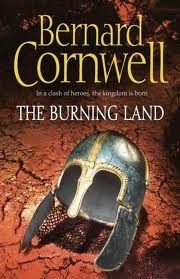
Book Review: “The Burning Land”(Book Five of the Saxon Stories series) by Bernard Cornwell

the burThe ninth century is coming to a close. King Alfred is dying, and his young son Edward is untested on the battlefield. Alfred wants Uhtred to swear his loyalty to his son Edward, but Uhtred wants to be free to recapture his beloved Bebbanburg. The Danes, led by the warrior Harald Bloodhair are on the warpath—just a typical mission for our intrepid Saxon lord who was raised by Danes warrior Uhtred of Bebbanburg. However, there is always a catch, and the major obstacle in his path is a fair woman with a fiery temper named Skade. How can one woman and her plans make Uhtred of Bebbanburg quake in his boots? Book number 5 in the Saxon Stories, “The Burning Land” by Bernard Cornwell, holds all the answers in the next adventure for Uhtred and his men.

We begin our latest adventure with Uhtred as he embarks on a journey in his ship Seolferwulf to make a deal with Jarl Haesten in Alfred’s name. There, we first hear the names Harald Bloodhair and Skade as Haesten warns our hero to be wary of what they will do. As Uhtred and his men raid another town, they come across the sorceress Skade and bring her to the court of Alfred to lure Harald out of hiding to have one epic battle to protect Wessex.

Uhtred’s plan works well, and he does secure a significant victory, but success comes with a heavy price. Skade is furious and curses Uhtred, which he laughs off until he discovers that his wife, Gisela, and their third child died during childbirth. We have seen Uhtred go through so many moments of grief and loss, but this moment pushes him over the edge and causes him to lose control. Uhtred’s actions are so deplorable in front of King Alfred and his court that he is banished, and his children are taken away from his care to be raised as Christians, against Uhtred’s wishes.

Here, Uhtred’s loyalty to Alfred and his family is tested as he is reunited with his friends Ragnar and Brida. He is given a choice on whether to stay loyal to the king he has served for years or to join his Danish family once again. I wouldn’t have blamed him if he abandoned Alfred and Edward to join Ragnar and Brida. Still, an unexpected person calls for his aid, that person being Aethelflaed, the one person in Alfred’s family that he cares about. The final battle in this book cements where Uhtred’s loyalty will remain, but it will also be challenging for Uhtred.

Cornwell continues to weave a fascinating tale of sorrow, woe, and triumphs for the fearless Uhtred of Bebbanburg. Another delightful adventure with Uhtred of Bebbanburg; if you have been reading the Saxon Stories, I recommend you read book 5, “The Burning Land” by Bernard Cornwell.

Guest Post: “The War Wagon” by Griffin Brady

The Hussar's Duty Tour Banner 1Today, I am pleased to welcome Griffin Brady to my blog to share a guest post as part of the blog tour for her novel, “The Hussar’s Duty.” I would like to thank Griffin Brady and The Coffee Pot Book Club for allowing me to be part of this blog tour. 

War wagon, war fortress, rolling fortress, rolling stock, stock, wagon fort, mobile fortress, and tabor. These terms all mean the same thing. Until I did my research on the Battle of Cecora for The Hussar’s Duty, I wasn’t familiar with any of them. I came up to speed quickly because the war wagon played an essential role in the story.

When Poland’s Grand Hetman of the Crown, Stanisław Żółkiewski, first set out to meet the Ottomans on a battlefield just east of Cecora (modern-day Țuțora in Romania), he took 9,000 Polish troops with him. Despite his recruiting efforts, his force was less than he had hoped for, but he wasn’t concerned—he didn’t expect a clash. He was confident he and the Ottoman commander, Iskender Pasha, would negotiate without bloodshed, as they had done before. What Żółkiewski didn’t anticipate, however, was inaccurate intelligence that led to underestimating the enemy’s strength. Further complicating matters, Żółkiewski’s army was comprised largely of magnates’ private troops with their agendas, and he had great difficulty controlling them.

Żółkiewski had proved himself a brilliant strategic commander in the past, but he was now in his early seventies and poor health. Recognizing combat was imminent—and that a Tatar army had joined Ottoman ranks—Żółkiewski showed flashes of his genius when he struck upon employing the tabor at Cecora, harkening back to 15th-century Hussite victories. The battlefield’s open, flat ground lent itself well to the mobile fortresses, which could be used to devastating effect.

Image 2 War Wagon

The tabor was a square or rectangular arrangement of wagons equipped with guns and manned by soldiers, artillerymen, and crossbowmen/archers. Within the formation, surrounded by the wagons, a calvary was placed. The wagons were pulled by teams of horses arranged so they nearly touched the back of the wagon before them, creating a sort of impenetrable “chain.”

Tabor tactics were broken into two phases: defensive and counterattack. As the enemy advanced on the mobile fortress, they were fired upon until weakened. Then the counterattack began, and cavalry and infantry filed inside the wagon formation, engaging the demoralized troops.

Żółkiewski laid out a plan that involved two tabors. The tabors were each defended by 500-700 men and flanked each side of his main strike force. That strike force comprised five cavalry regiments, a mix of Polish winged hussars and light cavalry. The scale of his formation was massive, a whopping .68-.75 miles wide and .62 miles deep. It’s difficult for me to wrap my head around what it must have looked like!

For all its innovation, though, the scheme held several devastating flaws. First, rather than a wide, shallow formation, it compressed the regiments into tight columns, limiting their mobility. Second, the success of the mission depended on the tabor remaining intact. One breach and the entire formation would be compromised.

The battle began at noon on September 19, 1620. At first, the Poles succeeded in pushing the enemy back. However, the right tabor encountered a trench that caused it to swing to the right, opening a gap at its rear and exposing the central strike force. Though Żółkiewski had beefed up the sides and rear to counter any potential breach, it proved too little. Tatar horsemen swept in, overwhelming the trapped Polish cavalry and wreaking havoc.

The Poles fell back, abandoning the men in the compromised tabor. Sadly, most of those left behind were captured or killed. At the end of the day, Żółkiewski’s force was reduced by a third. Making matters worse, that night, Polish troops fled from camp in a mass crossing over the Prut River. Some made it to safety, but many drowned during the attempt or were captured by Tatars.

After days of failed negotiations with Iskender Pasha, with supplies rapidly depleting and morale plummeting among his remaining ranks, Żółkiewski decided to retreat. But how could he preserve his weakened army with the enemy poised to pursue? Enter the tabor once more in a different configuration.

This time, it was a single formation with six rows of wagons, in lines of one hundred each, placed behind tethered horses. The horses acted as battering ram and a shield to protect against Tatar arrows. Their grouping also prevented any of Żółkiewski’s men from escaping on horseback. The wagons in the lead were loaded with cannons and hook guns and protected by infantry and artillerymen. Beside the wagons marched three rows of hussar and other cavalry banners carrying loaded firearms. The rear was defended by more cannons and guns, along with additional infantry and the Lisowczycy (a Polish mercenary cavalry also known as the Lost Men or Forlorn Hope). The wounded and sick were placed on carts at the interior of the tabor.

The retreat began on September 29, ten days after the battle itself. The enemy pursuit began in earnest the following day (the enemy was either caught by surprise by the exodus and/or was too busy plundering the abandoned camp to go after the fleeing army). However, when the attacks did come, they were rebuffed without much consequence, despite the Poles being harangued daily. The tabor was doing its job. That’s not to say Żółkiewski’s troops weren’t under tremendous duress. Unable to dismantle the Poles’ formation, the enemy took to a scorched earth policy, burning fields and buildings in the Poles’ path, leaving no resources whatever. To avoid enemy encounters, Żółkiewski’s men marched at night, suffering from lack of sleep, food, and water. Despite the hardships, the army averaged an astonishing pace of seventeen miles per day (27.5 km). It was a mere six miles from Mohylów, a fortified Polish border town, on October 5 when they chose to stop and rest—despite Żółkiewski urging them on.

Image 3 Cecora_Death of Zolkiewski_1620

That ill-advised layover, along with several other critical errors in judgment, would cause an ensuing cascade of calamities during the night of October 5-6. Among other tragedies, Żółkiewski lost his life—and his head. Ultimately, only a few thousand of his original 9,000 troops made it back to Poland alive. Had he had better control, had his army remained disciplined and stuck to their formation, they would have likely crossed the border into safety that night. In the end, the tabor’s undoing was not its concept, formation, or parts. Its final failing came at the hands of human nature.

The Hussar's Duty CoverBlurb:

Poland’s most valiant winged hussar is called to fight in a campaign ripe for disaster. But he must also protect those he loves from jackals waiting to pounce. How does he choose between duty and devotion when death is on the line?

When Sultan Osman II sends Poland’s envoy packing, the Commonwealth must prepare for war against one of the largest armies the Ottomans have ever assembled. Tasked with repelling the invasion is Grand Hetman of the Crown Stanisław Żółkiewski, and he knows who to turn to: Jacek Dąbrowski, the Commonwealth’s most valiant Polish winged hussar.

Jacek has been idle far too long, and the call to arms is a siren’s song he can’t resist. But he has built a life far from the battlefield with his wife, Oliwia, and their children. If he pursues his quest for glory, who will safeguard them?

Oliwia knows her husband is restless. In fact, she’s been sending Jacek on cross-country errands for years in the hopes of quelling his lust for battle. When she realizes her efforts are futile, she resolves herself to letting him go—after hatching a scheme to accompany him.

Honor. Obligation. Devotion. These forces push and pull Jacek in different directions. His country needs him, but so does his family. Where does his duty lie? His choice will cause catastrophic ripples no matter which path he follows … and could very well bring the loss of his loved ones or his life.

Will the cost of defending the king and country prove too steep for this warrior?

This is a standalone continuation in The Winged Warrior Series.

Buy Links:

This title is available to read on #KindleUnlimited.

Universal Link: https://readerlinks.com/l/3336453

Amazon US: https://www.amazon.com/dp/B0C2VZ2963/

Amazon UK: https://www.amazon.co.uk/dp/B0C2VZ2963/

Amazon AU: https://www.amazon.com.au/dp/B0C2VZ2963/

Amazon CA: https://www.amazon.ca/dp/B0C2VZ2963/ 

Griffin Brady authorAuthor Bio:

Griffin Brady is an award-winning historical fiction author interested in the Polish Winged Hussars of the 16th and 17th centuries. She is a member of the Historical Novel Society and Rocky Mountain Fiction Writers. Her debut novel, The Heart of a Hussar, was a finalist for the 2021 Chaucer Early Historical Fiction Award and a 2021 Discovered Diamond.

The proud mother of three grown sons, she lives in Colorado with her husband. She is also an award-winning bestselling romance author who writes under the pen name G.K. Brady.

Social Media Links:

Website: https://www.griffin-brady.com/historical-fiction/

Twitter: https://twitter.com/griffbrady1588

Facebook: https://www.facebook.com/AuthorGriffinBrady

Book Bub: https://www.bookbub.com/profile/griffin-brady

Amazon Author Page: https://www.amazon.com/author/griffinbrady

Goodreads: https://www.goodreads.com/author/show/20675881.Griffin_Brady


Guest Post: “The Auld Alliance” by J R Tomlin

The Douglas Bastard Tour Banner 1Today, I am pleased to welcome J R Tomlin to my blog to share a guest post as part of the blog tour for her latest novel, “The Douglas Bastard / The Archibald the Grim Series.” I would like to thank J R Tomlin and The Coffee Pot Book Club for allowing me to be part of this blog tour. 

Many people think that Scotland always fought alone against the English conquest. This was partially true.

In 1290, civil war loomed after the death of Scotland’s seven-year-old queen, Margaret, the Maid of Norway. The Scots turned to what they thought was a friendly monarch, England’s King Edward I. (Sounds crazy, I know, but Scotland and England had been at peace for most of the 13th century). The Scottish government started looking for allies. Phillip IV had just declared England’s possession of Gascony forfeit, so an alliance between Scotland and France looked like a good idea. A Scottish embassy traveled to negotiate with King Phillip, and the Treaty of Paris was signed on October 24, 1295.

In the short term, the alliance was no protection for Scotland. Edward invaded Scotland in 1296, temporarily crushed resistance, stripped the King of Scots, John de Balliol, whom he had chosen, and temporarily ended any Scottish government. It was, in effect, a province of England. Three years later, England and France signed a treaty of perpetual peace, leaving Scotland on its own. In France’s defense, there was effectively no Scottish government for it to support.

As we all know, Scotland refused to remain crushed. Andrew de Moray led the resistance in the north of Scotland, and William Wallace, aided by Robert the Bruce and Sir William Douglas, raised an army in the south. They joined forces to defeat the English at the Battle of Stirling Bridge. De Moray was killed in that battle. Wallace had probably met with the King of France but received no French aid, and the Scottish resistance was once more crushed, ending with the execution of Wallace. 

Again, Scotland refused to stay crushed and rose once again under the leadership of King Robert the Bruce. But the Bruce had killed one of the Balliol (remember them?) inside a church. (I reject the idea that it was a planned ambush. The Bruce was too intelligent a man to plan to do something so stupid) The pope almost immediately excommunicated him and all of his followers. Luckily for him and Scotland, many Scottish bishops rejected the ex-communication based on English lies to the pope. But the effect was that the King of France would defy the pope by coming to the aid of a government under anathema. 

The war lasted a very long time, and it was not until In 1324 that Bruce’s nephew, Thomas Randolph, Earl of Moray, met the Pope in person at his court in Avignon. Randolph successfully persuaded Pope John to recognize Robert as King of Scots, a major diplomatic coup that allowed the French the option of renewing relations with Scotland. A new, largely precautionary, treaty between France and Scotland, again negotiated by the Earl of Moray, was signed two years later.

The following year, King Edward III signed a treaty recognizing Scotland’s independence and Robert the Bruce as the rightful King of Scots. That should have been the end of it. See me roll my eyes.

King Robert died in 1327, leaving his only son, then five years old, as king and Thomas Randolph as regent.

Edward III felt humiliated by his defeat in the field by a Scottish army led by Sir James Douglas and Thomas Randolph and by having had to sign a peace treaty with Scotland. He backed John Balliol’s claim to the throne of Scotland and repudiated the peace treaty. Randolph died on his way to fight the invasion by Balliol, which the English king secretly backed. So now, that treaty with France would have some use.

At first, the defense against the invasion went badly. Many leading nobles were killed at the Battle of Dupplin Moor, including the new Guardian and thousands of Scottish troops. Although Balliol was then driven from Scotland by a later attack by the Scots, King Edward openly invaded. Soon most of Scotland was in English hands, with only a few castles holding out, and a majority of Scottish nobles, at least for a time, swore fealty to the English and their pretender. 

Now Scotland needed that ally.  In the winter of 1332, King Phillip dispatched a flotilla of ten ships to aid the Scots, but they were blown off course in a storm and never arrived. In the spring of 1334, £1000 came from France to be distributed to the Scottish defenders along with an offer of sanctuary to young King David, his queen, and members of his court. David or Moravia, Bishop of Moray and determined defender of Scottish independence, founded the Scots College of the University of Paris in 1333. He had to have been in Scotland at the time and may have had some influence on France.

The situation in Scotland was desperate enough that the Scots accepted the offer. In May 1334, King David and Queen Joanna arrived in France, along with their confessors, tutors in arts and arms, the king’s sisters, the Douglas children, the late regent’s sons, other children of Scottish nobles, and a number of clerics and nobles. They were given Château Gaillard as a residence. The French regularly sent supplies to Scotland and paid an annual pension of £2000 for the upkeep of King David’s court in exile. In June 1339, William Douglas, Lord of Liddesdale, visited King David in France and returned to Scotland, taking with him Arnoul d’Audrehen in command of 200 French troops and several ships, which aided in the attack on and capture of Perth. I have some doubt that Scotland as a kingdom would have survived without this ongoing aid.

In 1346, Edward overwhelmed French forces at the Battle of Crécy. Two months later, David II of Scotland was captured at the Battle of Neville’s Cross in response to a request from the French to attack England in order to force King Edward to return home; King David invaded England. The English captured him at the disastrous Battle of Neville’s Cross. However, the French continued to supply money and some troops to distract King Edward from his war in France, sending substantial funds and about sixty knights to aid in the capture of Berwick. Berwick was quickly lost, but it distracted Edward, who led a large army to ravage southern Scotland. William Douglas, later 1st Earl of Douglas, took part in that and, the following year, led 200 men-at-arms and forty knights to fight with the French at the Battle of Poitiers.
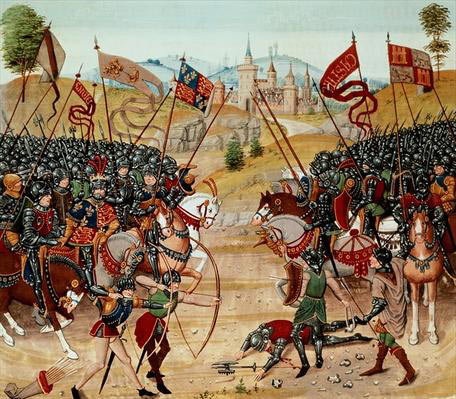
Battle of Poitiers - public domain

For a time, France was so battered as to have no funds for sending to Scotland, and Scotland’s King David I took peace with England as a policy. Even after King Robert II’s accession and the treaty’s renewal, neither nation saw any effects. It was in the following century that thousands of Scots once more went to the defense of Scotland. The Earl of Douglas’s son, the Earl of Wigtoun, and the Earl of Buchan helped the French defeat the English at the Battle of Baugé in 1421. It was a turning point in the Hundred Years’ War. King Charles VII granted Douglas the Duchy of Touraine, the first foreigner to be granted a dukedom in France. On May 8, 1429, Scots fought with Joan of Arc in the relief of Orléans, where legend has it bagpipes played Marche des Soldats de Robert Bruce as she entered the city.

England’s War of the Roses reduced the danger to both Scotland and France, at least for a time, but sometimes for good but often for bad, very bad; the Auld Alliance went on until James VI of Scotland, heir to the throne of England, repudiated it to strengthen his ties with England.

That, however, did not end the strong cultural ties between Scotland and France. The Scots’ language absorbed many French words. The ties with France could be seen in Scottish architecture, such as at Bothwell and Kildrummy Castle, built on French models. Many Scots who fought for France stayed to become citizens eventually. Scottish poets, bishops, and authors studied in France for centuries and brought the French influence home with them. The founder of Scotland’s first university, Bishop Henry Wardlaw, studied in France. So if you study there, you are benefiting from the Auld Alliance.
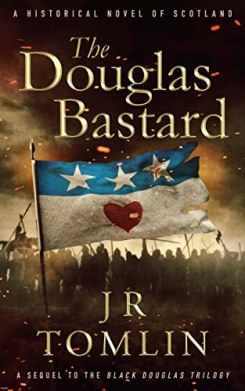
Cover - The Douglas BastardBlurb:

Young Archibald, the Black Douglas’s bastard son, returns from exile to a Scotland ravaged by war. The war-hardened Knight of Liddesdale will teach him what he must learn. And with danger on every side, he must learn to sleep with one eye open and a claymore in his hand because even their closest ally may betray them…

Buy Links:

The Douglas Bastard:

Universal Link:  https://books2read.com/u/4AAwdp 

Amazon UK: https://www.amazon.co.uk/dp/B0968X5V3Y 

Amazon US: https://www.amazon.com/dp/B0968X5V3Y 
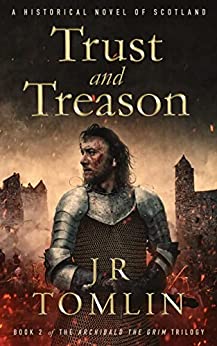
Cover - Trust and TreasonAmazon CA: https://www.amazon.ca/dp/B0968X5V3Y 

Amazon AU: https://www.amazon.com.au/dp/B0968X5V3Y

Barnes and Noble: https://www.barnesandnoble.com/w/the-douglas-bastard-a-historical-novel-of-scotland-j-r-tomlin/1140930069 

Kobo: https://www.kobo.com/ebook/the-douglas-bastard

iBooks: https://books.apple.com/us/book/id1606972264 

Google Play: https://play.google.com/store/books/details/J_R_Tomlin_The_Douglas_Bastard?id=AM12EAAAQBAJ

Archibald the Grim Series on Amazon:

Amazon UK: https://www.amazon.co.uk/dp/B0BDW1VJ61 

Amazon US:  https://www.amazon.com/dp/B0BDW1VJ61 
BIM-BLD224477 - © - Steve Smith

Author Bio:

J R Tomlin is the author of twenty historical novels.

Her historical novels are mainly set in Scotland. You can trace her love of that nation to the stories of Robert the Bruce and the Black Douglas that her grandmother read her when she was small and to her hillwalking through the Scottish Cairngorms, where the granite mountains have a gorgeous red glow under the setting sun.

In addition to having lived in Scotland, she has traveled in the US, mainland Europe, and the Pacific Rim. She now lives in Oregon.

Social Media Links:

Website: http://www.jrtomlin.com  

Twitter: https://twitter.com/TomlinJeanne 

Book Bub: https://www.bookbub.com/profile/j-r-tomlin 

Amazon Author Page: https://www.amazon.com/stores/J.R.-Tomlin/author/B002J4ME1S

Goodreads: https://www.goodreads.com/author/show/4094154.J_R_Tomlin

Guest Post: “Origins of Anna of Cleves” by Heather R. Darsie

image002Today, I am pleased to welcome Heather R. Darsie to my blog to share an excerpt from her latest book, “Children of the House of Cleves: Anna and Her Siblings.” I would like to thank Heather R. Darsie and Amberley Publishing for allowing me to be part of this blog tour. \

Anna von der Mark and her siblings, deemed by their father to be known as being “of Cleves,” his family’s territory, came from a somewhat new line of ducal power. The Duchy of Cleves existed as a county for hundreds of years before becoming a duchy. From whom the dynasty descends is a bit of a mystery, but thankfully, they have a certain mythology to explain,

“The noble Von der Mark family traces their lineage from a princess named Beatrix and her hero, the mythical Swan Knight Elias Gral… Family lore held that …[it was] the [Roman] Orsini…arrived in Cleves …. Such tales of noble heritage were common in the Medieval to Early Modern period…

A family origin tale specific to the Von der Marks involves the young, beleaguered heiress Beatrix. Beatrix, heiress of Nijmegen and Cleves, married the legendary Swan Knight after he floated down the Rhine in his boat, pulled by a swan wearing a golden collar. At the time, according to legend, Beatrix was being aggressively pursued by her suitors. The Swan Knight, named Elias Gral, came to her rescue. He agreed to be Beatrix’s husband on the condition that she never ask about his origin. The couple was happily wed for some time and had three sons together. Beatrix convinced one of her sons to ask Elias about his background. Elias sorted what was going on and instantly disappeared. Beatrix died shortly after Elias’ disappearance.

…. Elias Gral … lived in the 8th century…, and served the Frankish leader Charles Martel. … Martel was imprisoned in Cologne around 714 by his stepmother Plectrude because Martel’s father died, and Plectrude wished for her son to be heir. Gral helped free Martel from prison in Cologne. In return, Martel raised the Bailiwick of Cleves to the status of county, creating Gral the first Count of Cleves.….

The Von der Mark dynasty, thought to have arisen from servants of the Grals, was established when Margaretha [of Cleves] married Count Adolf von der Mark. Through the right of Margaretha, Adolf and Margaretha’s children became counts and countesses of the combined Duchy of Cleves and County of Mark, simply called Cleves-Mark…

Margaretha’s and Count Adolf von der Mark’s son, also named Adolf, greatly expanded the territories under Cleves-Mark’s control. Adolf of Cleves-Mark had his own son, whom he also named Adolf. This second Adolf of Cleves-Mark was the last Count of Mark and first Duke of Cleves.… Duke Adolf … married Marie of Burgundy in 1406. Marie was a daughter of John the Fearless, and sister of Philip the Good. Marie was only about thirteen years old when she married Adolf. Marie did not move to Cleves until 1415, when she was around twenty-two years old.

Duke Adolf and Marie of Burgundy had a lasting impact on the court culture in Cleves. Marie popularized the concept of the Frauenzimmer, which is directly translated as, “women’s room”, but was more like a women’s shadow court of the main masculine court. Women occupied the offices necessary to administering the Frauenzimmer. …

Marie of Burgundy and Duke Adolf of Cleves-Mark had eight children together, all of whom lived to adulthood and married well. It is through Marie’s and Adolf’s children that Mary, Queen of Scots and Louis XII of France were related to Anna of Cleves and her siblings.”

Anna’s family was known to be very supportive of the Holy Roman Emperor throughout the 15th century and on into the 16th. Unfortunately, her brother Wilhelm’s unreasonable behavior

41A37E73-B422-4A02-98BB-38C4C023055CIf this excerpt piqued your interest, consider reading Children of the House of Cleves: Anna and Her Siblings, set for release in the UK on 15 June 2023 and in the US/Internationally on 12 September 2023. Can’t wait until September? The US Kindle version is released on 15 June, too! You might also like to read Heather R. Darsie’s biography on Anna of Cleves, the first researched and written from the German perspective, Anna, Duchess of Cleves: The King’s Beloved Sister. Links below.

Amazon UK

Children of the House of Cleves, Anna and Her Siblings hardcover (15 June 2023): https://www.amazon.co.uk/Children-House-Cleves-Anna-Siblings/dp/1445699427/ref=sr_1_1?crid=19OOEUO2EX5PV&keywords=heather+darsie&qid=1686571230&sprefix=heather+darsi%2Caps%2C190&sr=8-1

Children of the House of Cleves, Anna and Her Siblings Kindle (15 June 2023): https://www.amazon.co.uk/Children-House-Cleves-Anna-Siblings-ebook/dp/B0C74VTCR3/ref=tmm_kin_swatch_0?_encoding=UTF8&qid=1686571230&sr=8-1

Amazon US

Children of the House of Cleves, Anna and Her Siblings hardcover (12 September 2023): https://www.amazon.com/Children-House-Cleves-Anna-Siblings/dp/1445699427/ref=sr_1_1?crid=5K793F0IN117&keywords=heather+darsie&qid=1686571143&sprefix=heather+darsie%2Caps%2C87&sr=8-1

Children of the House of Cleves, Anna and Her Siblings Kindle (15 June 2023): https://www.amazon.com/Children-House-Cleves-Anna-Siblings-ebook/dp/B0C74VTCR3/ref=tmm_kin_swatch_0?_encoding=UTF8&qid=1686571143&sr=8-1

IMG_0659Heather R. Darsie works as an attorney in the US. Along with her Juris Doctorate, she has a BA in German, which was of great value in her research. She completed multiple graduate-level courses in Early Modern History, with her primary focus being the Holy Roman Empire under Charles V. She runs the website MaidensAndManuscripts.com and is a co-host of the Tudors Dynasty podcast.

Sources & Suggested Reading

Darsie, Heather R. Children of the House of Cleves: Anna and Her Siblings. Stroud: Amberley (2023).

Darsie, Heather R. Anna, Duchess of Cleves: The King’s Beloved Sister. Stroud: Amberley (2019).

Book Review: “Children of the House of Cleves: Anna and Her Siblings” by Heather R. Darsie

When we think of the German Duchy of Cleves, our first thoughts tend to go to Anna of Cleves, King Henry VIII’s fourth wife, whom he immediately divorced due to not being attracted to her looks, at least according to English tales. We tend to leave Anna’s German life to the side and forget about her family’s story when we study the ever-changing 16th and 17th centuries, even though Germany was dealing with the Reformation. We have an inkling about how life might have been like for Anna of Cleves in England with the fabulous book, “Anna, Duchess of Cleves: The King’s Beloved Sister,” but what about Anna’s siblings, Sybylla, Wilhelm, and Amalia? Heather Darsie has decided to take up the challenge of telling the story of Anna of Cleves’ family from the German perspective in her latest book, “Children of the House of Cleves: Anna and Her Siblings.”

I want to thank Amberley Publishing for sending me a copy of this book. I thoroughly enjoyed Darsie’s first book on Anna, Duchess of Cleves. So when I heard she was writing a new book about Anna’s family and their impact on 16th and 17th-century European history, I knew I wanted to read it.

Darsie begins her book by explaining how the duchy system worked in Germany and the birth of William IV, Duke of Julich-Berg, in 1455, and we are introduced to John II, Duke of Cleves-Mark (grandfather of the von der Mark siblings and was known as the “Childmaker” for his illegitimate children). We also learn how the German duchies connected with the Holy Roman Empire and its often rocky relationship with the papacy in Rome. It is essential background information to fully understand the political and religious quagmire in which Anna and her siblings would be involved during the 16th century.

We then transition to the marriage of Johann III of Cleves-Mark and Maria of Julich-Berg, the parents of Sybylla, Anna, Wilhelm, and Amalia. It is through their marriage that the United Duchy of Julich-Berg-Cleves is formed. During their reign as the Duke and Duchess of Julich-Berg-Cleves, we see the emergence of Lutheranism, the rise of the Reformation, and the political landscape starting to shift.

The marriages of the von der Mark children and their consequences comprise the bulk of this book. Sybylla, the eldest child, married Johann Friedrich von Wettin, the Elector of Saxony and one of the founding members of the Schmalkaldic League. Anna married King Henry VIII, and we all know how well that marriage went, and Amalia never married. Wilhelm’s martial history is a bit more complex as he married Jeanne d’ Albret to align with France. Still, when that became a disaster, he married Maria von Habsburg, Hereditary Archduchess of Austria.

The tale of the von der Mark children is full of heartache, madness, war, and religious change. Although the von der Mark dynasty and the Duchy of Cleves lasted less than two centuries, it had a lasting impact, culminating in the Thirty Years’ War. Darsie has done a masterful job of collecting and presenting the story of Anna and her siblings to an English audience concisely. “Children of the House of Cleves: Anna and Her Siblings” by Heather R. Darsie is a marvelous dive into the life of 16th and 17th-century Germany that any Tudor nerd would find utterly delightful and insightful.

Book Review: “Arthur, Prince of Wales: Henry VIII’s Lost Brother” by Gareth Streeter

Arthur Prince of WalesThe tales of the Tudor kings are unique in how they became kings of England. We all know the story of how Prince Henry became King Henry VIII. His eldest brother, Prince Arthur, died shortly after he married the Spanish Princess Katherine of Aragon. Much has been discussed about Arthur’s wedding night and death, but not much has been written about his time as the Prince of Wales. In his debut book, “Arthur, Prince of Wales: Henry VIII’s Lost Brother” Gareth Streeter explores the life of the first Tudor prince.

I want to thank Pen and Sword Books and Net Galley for sending me a copy of this book. Prince Arthur has been mentioned in numerous accounts of the Tudors, but it is very rare for a book to focus on the young prince. I wanted to see what new information Streeter would bring to the story of the crown prince who would never become king.

Streeter begins his book by exploring the origins of the Tudor line and the significance of King Arthur and ancient Briton kings like Brutus and Cadwaladr. He then dives into the birth and baptism of Prince Arthur, which shows a lot of symbolism that the Tudors wanted to employ to establish their young dynasty. During the part about the baptism of the young prince, Streeter gives his audience a bit of background on those in attendance and the Wars of the Roses.

Most of this book focuses on Arthur’s life as the crown prince and the Prince of Wales, including the duties he was expected to take on. As the heir to the young Tudor dynasty and the son of King Henry VII and Queen Elizabeth of York, he was the hope of the entire country. Unfortunately, the pretenders Perkin Warbeck and Lambert Simnel threatened the fragile peace that Henry VII established. Amid the pretender drama, we see the young prince’s education and the arduous marriage negotiations between Spain and England. Finally, Streeter discusses the relationship between Arthur, Katherine of Aragon, and his family, until his untimely death, which left England with Henry VIII as the only heir to the Tudor dynasty.

For a debut, Streeter has done a great job presenting how he views Prince Arthur’s life and showing new information that Tudor fans alike will find fascinating. As Streeter has said in this book, Prince Arthur was more than just a prince who died. He did live, and his life as the first Tudor prince set the standard for King Henry VIII and Edward VI after him. I thoroughly enjoyed learning about Prince Arthur and look forward to reading the next book Gareth Streeter writes. If you want to learn more about the Tudor prince who never became king, I recommend reading “Arthur, Prince of Wales: Henry VIII’s Lost Brother” by Gareth Streeter.

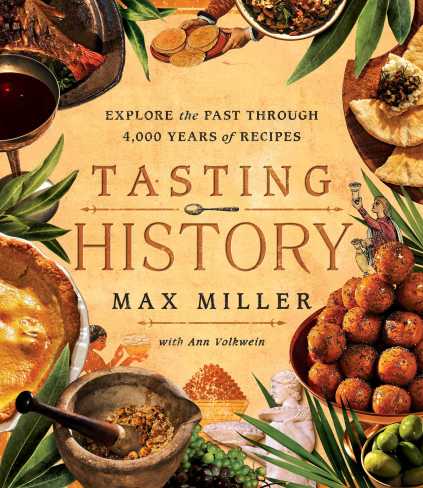
Book Review: “Tasting History: Explore the Past through 4,000 Years of Recipes” by Max Miller

tasting historyWhen we think of the phrase “historical recipes,” many of us would think about the recipes passed down in our families. These would be dishes you would make on special occasions and remind you of memories of loved ones. But what about recipes from so far back in the past that no one alive remembers who wrote down the recipes? The recipes that can only be found in history books and manuscripts? Max Miller has taken the arduous task of trying to bring some of these recipes back from the past to the modern age through his Youtube channel, and now this cookbook, “Tasting History: Explore the Past through 4,000 Years of Recipes.”

After watching B. Dylan Hollis’ videos, I was introduced to the Tasting History with Max Miller Youtube channel. I binged watched Miller’s videos for weeks because I enjoyed how he balanced the recipes with the historical facts surrounding the dishes and the period they came from to give his viewers a deeper understanding of the past. When I heard about this cookbook, I knew I wanted to read it to support Miller’s research into history.

Miller begins his cookbook with an explanation of how his Youtube channel began and a list of ingredients uncommon to modern cooks but prevalent in historical recipes. He then breaks his book into five sections; The Ancient World, The British Isles, Continental Europe, The Near & Far East, and The New World. Each section is organized chronologically, with the oldest recipe he has chosen to highlight to the newest (as new as 1914). Each recipe is easy to read, and instructions are easy to follow, with a touch of history that makes Tasting History so unique.

There are some recipes that I would like to try from a historical perspective, like Mead, Gingerbread, Hippocras, Rapey, Soul Cakes, Lasagne, and a Tart of Apples. Then, there are recipes I would like to try because they sound simply delicious, such as Parthian Chicken, Sally Lunn Buns, Parmesan Cheese Ice Cream, Aztec Chocolate, Precedella, and Samosas. I probably will not try the Spartan Black Broth any time soon.

This is the first time I have ever read a cookbook cover to cover, and I thoroughly enjoyed it. Full of stunning photographs, fascinating history facts, and mouthwatering recipes, Max Miller has shone a new light into the taste palettes of the past. Suppose you want to explore another element of sensory history, discovering the past through taste. In that case, I highly recommend that you read and try the recipes in “Tasting History: Explore the Past through 4,000 Years of Recipes” by Max Miller.

Guest Post: “Alternate Endings Anthology” by Historical Writers Forum Spotlight

Alternate Endings Tour BannerToday, I am pleased to welcome the Historical Writers Forum to my blog to promote their latest novel, “Alternate Endings Anthology.” I would like to thank The Coffee Pot Book Club and the Historical Writers Forum for allowing me to be part of this blog tour. 

Alternate Endings coverBlurb: 

We all know the past is the past, but what if you could change history?

We asked eight historical authors to set aside the facts and rewrite the history they love. The results couldn’t be more tantalizing.

What if Julius Caesar never conquered Gaul?

What if Arthur Tudor lived and his little brother never became King Henry VIII?

What if Abigail Adams persuaded the Continental Congress in 1776 to give women the right to vote and to own property?

Dive into our collection of eight short stories as we explore the alternate endings of events set in ancient Rome, Britain, the United States, and France.

An anthology of the Historical Writers Forum.

Buy Links:

This title is available to read on #KindleUnlimited.

Universal Link:  https://mybook.to/AltEnd 

Amazon UK: https://www.amazon.co.uk/dp/B0BKC33GFX 

Amazon US: https://www.amazon.com/Alternate-Endings-Short-Anthology-Historical-ebook/dp/B0BKC33GFX/ 

Amazon CA: https://www.amazon.ca/dp/B0BKC33GFX 

Amazon AU: https://www.amazon.com.au/dp/B0BKC33GFX 

Author Bios:

Samantha WilcoxsonSamantha Wilcoxson

Samantha Wilcoxson is an author of emotive biographical fiction and strives to help readers connect with history’s unsung heroes. She also writes nonfiction for Pen & Sword History.

Samantha loves sharing trips to historic places with her family and spending time by the lake with a glass of wine. Her most recent work is Women of the American Revolution, which explores the lives of 18th-century women, and she is currently working on a biography of James Alexander Hamilton.

Sharon Bennett ConnollySharon Bennett Connolly

Historian Sharon Bennett Connolly is the best-selling author of five non-fiction history books, with a new release coming soon.

A Fellow of the Royal Historical Society, Sharon has studied history academically and just for fun – and has even worked as a tour guide at a castle. She writes the popular history blog, http://www.historytheinterestingbits.com. 

Sharon regularly talks about women’s history; she is a feature writer for All About History magazine, and her TV work includes Australian Television’s ‘Who Do You Think You Are?’

Cathie DunnCathie Dunn

Cathie Dunn writes historical fiction, mystery, and romance. The focus of her historical fiction novels is on strong women through time.

She loves researching for her novels, delving into history books, and visiting castles and historic sites

Cathie’s stories have garnered awards and praise from reviewers and readers for their authentic descriptions of the past.

Karen HeenanKaren Heenan

As an only child, Karen Heenan learned early that boredom was the enemy. Shortly after, she discovered perpetual motion and has rarely been seen holding still since.

She lives in Lansdowne, PA, just outside Philadelphia, where she grows much of her own food and makes her own clothes. She is accompanied on her quest for self-sufficiency by a very patient husband and an ever-changing number of cats. 

One constant: she is always writing her next book.

Salina B BakerSalina Baker

Salina Baker is a multiple award-winning author and avid student of Colonial America and the American Revolution. 

Her lifelong passion for history and all things supernatural led her to write historical fantasy. Reading, extensive traveling, and graveyard prowling with her husband keep that passion alive. 

Salina lives in Austin, Texas.

Virginia CrowVirginia Crow

Virginia Crow is an award-winning Scottish author who grew up in Orkney and now lives in Caithness.

Her favorite genres to write are fantasy and historical fiction, sometimes mixing the two. Her academic passions are theology and history, her undergraduate degree in the former and her postgraduate degree in the latter, and aspects of these frequently appear within her writings.

When not writing, Virginia is usually to be found teaching music. She believes wholeheartedly in the power of music, especially as a tool of inspiration, and music often plays when she writes. Her life is governed by two spaniels, Orlando and Jess, and she enjoys exploring the Caithness countryside with these canine sidekicks.

She loves cheese, music, and films but hates mushrooms.

Elizabeth K CorbettElizabeth K Corbett

Elizabeth K. Corbett is an author, book reviewer, and historian who has recently published a short story, “Marie Thérèse Remembers.” She is working on her debut novel, a gothic romance set in Jacksonian America.

When she is not writing, she teaches academic writing, something she is very passionate about. She believes in empowering students to express themselves and speak their truth through writing. Additionally, she is a women’s historian who studies the lives of women in eighteenth and nineteenth-century North America. Mostly, she is fascinated by the lives of the lesser-known women in history.

A resident of gorgeous coastal New Jersey, she takes inspiration from local history to write her historical fiction. She is an avid reader who adores tea and coffee.

Stephanie ChurchillStephanie Churchill

After serving time as a corporate paralegal in Washington, D.C., then staying home to raise her children, Stephanie Churchill stumbled upon writing, a career path she never saw coming.

As a result of writing a long-winded review of the book Lionheart, Stephanie became fast friends with its New York Times best-selling author, Sharon Kay Penman, who uttered the fateful words, “Have you ever thought about writing?” 

Stephanie’s books are filled with action and romance, loyalty and betrayal. Her writing takes on a cadence that is sometimes literary, sometimes genre fiction, relying on deeply-drawn and complex characters while exploring the subtleties of imperfect people living in a gritty, sometimes dark world.

She lives in the Minneapolis area with her husband, two children, and two dogs while trying to survive the murderous intentions of a Minnesota winter.

Michael RossMichael Ross

Best-selling author Michael Ross is a lover of history and great stories.

He’s a retired software engineer turned author with three children and five grandchildren, living in Newton, Kansas, with his wife of forty years. He was born in Lubbock, Texas, and still loves Texas.

Michael attended Rice University as an undergraduate and Portland State University for his graduate degree. He has degrees in computer science, software engineering, and German. In his spare time, Michael loves to go fishing, riding horses, and play with his grandchildren, who are currently all under six years old. 

Connect with the Historical Writers Forum:

Twitter: https://twitter.com/HistWriters 

Facebook: https://www.facebook.com/profile.php?id=100063689944203 

Book Review: “Of Judgement Fallen: An Anthony Blanke Tudor Mystery” by Steven Veerapen

Of Judgement FallenThe year is 1523, and England is again preparing for war against its mortal enemy, France. Cardinal Wolsey is firmly in power as King Henry VIII’s right-hand man who is about to open Parliament, but Sir Thomas More’s star is slowly rising. London is busy, and at the center of it, all is Wolsey’s trumpeter and groom, Anthony Blanke. In this chaos of Wolsey’s household where murder and betrayal lie, and the enemies of the Cardinal begin to pile up. It is up to Anthony Blanke to clear his name and find the murderer before it is too late. Anthony’s latest thrilling adventure occurs in Steven Veerapen’s novel, “Of Judgement Fallen: An Anthony Blanke Tudor Mystery.”

Thank you, Polygon Books and Steven Veerapen, for sending me a copy of this novel. I enjoyed the first Anthony Blanke novel, “Of Blood Descended,” so when I heard that there was going to be a second mystery, I could not wait to read it.

Veerapen opens his novel with his first victim, Lancelot Cosyn, a scholar who is in a lot of pain and is on a mission. He is a man who detests Cardinal Wolsey, who he thinks is the source of evil in England, and he has chosen to take action by visiting the great man. Unfortunately, he is found dead inside Wolsey’s home before the meeting. Wolsey assigns Anthony Blanke the task of finding the person behind the murder of Cosyn before the news reaches the King’s ear and before Parliament opens.

As Anthony begins his investigation, more bodies of the Cardinal’s enemies start to pile up around him, so he enlists the help of Sir Thomas More to find the murderer. The color of his skin and how close Anthony is to the case make people suspect him of being involved in these dastardly deeds. Anthony, his friend Mark, and a pup named Bo work with Thomas More to prove Anthony’s innocence and determine why these people were murdered and who was behind the chaos in London.

What I love about this series is the diversity that Veerapen has chosen to show in Tudor England. Racism and religious issues are complex issues to discuss. Still, Veerapen has given his audience a window into the past and showed what it might have been like for a person of color to prove themselves in the court of Henry VIII while also dealing with people deemed as heretics for their beliefs.

This was a well-written mystery full of twists and turns that kept me guessing until the end. I had no clue who might have done it until the end, a sign of a fantastic mystery writer. If you are a fan of the first Anthony Blanke murder mystery and want another adventure, “Of Judgement Fallen: An Anthony Blanke Tudor Mystery” by Steven Veerapen must be on your to-be-read pile.