
 Today, I am pleased to welcome Anna Belfrage to my blog to discuss her book, “A Rip in the Veil,” and her character Matthew Graham. I want to thank Anna Belfrage and The Coffee Pot Book Club for allowing me to be part of this blog tour.
Date of Birth: March 31 in the year of our Lord 1630.
Astrological sign: Aries (but he scoffs at such nonsense)
Education: None from a formal perspective; he knows his letters, has a knack for complex ciphering and has most of the Catechism down by heart. (He grins and mimes an aching backside as he explains his Da was most insistent on this.) An intuitive horseman (said with pride), an excellent swordsman – no choice, had he not learned to wield the sword, he’d have died well before his twentieth birthday given the unrest of the times. Quite the marksman with a musket. Pistols, he says, are unreliable things. He has gone unbeaten in chess since his Da died, enjoys singing, and has a secret passion for John Donne’s poetry – not something he talks all that much about.
Favorite dish: Food, he says with something of a frown. As long as there’s something to eat daily, what does it matter what it is? He admits to a fondness for pork cracklings – and Alex’s spice cake when I push.
Favorite pastime: Long winter mornings spent in bed. (He winks)
He is most reluctant. Matthew ducks his head as he enters the room but remains by the door, hat in hand. Outlined against the square of light that is the open door, he stands tall – inordinately tall given the times – and with a pleasing width to chest and shoulders. A strong man is accustomed to physical work, as seen from his forearms and hands, at present rather dirty after a full day out in the fields.
“I don’t see the point,” he mutters, slapping his hat against his thigh.
“It’s called PR,” I say. After all, he’s the protagonist of A Rip in the Veil, my book presently on tour. To be correct, he stars in the entire The Graham Saga.
Matthew squirms at the “stars in” part and rolls his eyes at PR. I’ve tried to explain this concept to him over and over again, but as far as he’s concerned, this is all a waste of time.
“I just want to introduce you to my readers,” I say.
“Hmm.” Someone laughs in the yard, and he turns towards the sound, exposing a strong jaw and straight nose. As he turns back towards me, sunlight strikes him full in the face, and his hazel eyes lighten into golden green.
“Some background, no more,” I wheedle.
With a sigh, he comes over to join me by the table, sitting down on one of the stools. He leans back against the wall, extends his long legs, and crosses them at the ankle. His thighs bunch and relax under the coarse homespun of his breeches. Too tight, these breeches, too worn – not that I mind, not at all. I pour him some beer, leaning close enough to catch his scent, a fragrance of morning dew on a mossy moor, overlaid by the riper tones of wood smoke and male sweat. He needs a shave, his cheeks covered by dark stubble that is highlighted by the odd streak of deep chestnut. Matthew clears his throat, and I retake my eyes. It makes him smile.
“Background, aye?” And with that, he begins to talk.
Okay, so I’m not going to bore you with his detailed description of his childhood. At times I think he forgets I’m sitting there, so sunk is he in his memories of his Mam. He describes a very religious home, a place where having regular conversations with God about just about everything was the norm. But his mother laughs and sings; she berates God loudly when he’s inconsiderate enough to let it rain on her drying laundry and blows kisses to the heavens when the harvest is bountiful. His father is another matter; Malcolm Graham practices a stern faith, and as a consequence, so do his children – and, in particular, his eldest son.
“As it should be.” Matthew shrugs. He shifts on his stool, drumming his fingers against the tabletop.
His speech slows when he tells me of his years in the Commonwealth Army. A boy growing to a man amongst so much violence—it makes me shudder, but he speaks of his comrades and officers with warmth and respect. I have realized just how much these men have shaped him into what he is today, a man with a deep-seated belief in every man’s right to have a say in how he’s governed.
He breezes over the details of the battles he took part in, which is equally brief as he recounts his courtship of Margaret, his first wife. He says her name carefully as if his mouth fills with thorns when he pronounces it. And as to Luke . . . Matthew refuses to say a word about his brother – well, beyond cursing him for being the misbegotten treacherous pup that he is.
“Three years,” he says. “That’s what yon miscreant has cost me. Three years of non-life, of one endless day after the other, so alike there was no way of knowing if it was Sunday or Thursday, March or October. Well, mayhap the Sunday part is not correct; there’d be a minister come to visit us every now and then, long sermons about our duty to the Realm and its Lord Protector, very little about Our Lord’s mercy.” Matthew smiles crookedly and fiddles with his belt. “It wasn’t as if I had betrayed the Commonwealth, but no matter what I said, no one believed me. So I stopped talking – beyond the necessities.” He has twisted his hands together and spends some minutes studying the way his fingers braid around each other.
I wait. Talking about the years spent in prison due to the false testimony of his younger brother becomes difficult for Matthew.
“Sometimes . . .”
“What?” I prompt.
“I . . . they had me flogged, aye? For being obstructive. But I wasn’t – no more than all of us were.” He spits to the side. “It was Luke, I reckon.”
“You think?”
“Gold buys you favors everywhere,” Matthew says. “And he paid them well enough that they found reason to flog me on a regular basis, aye? Hoped I’d die of it, I reckon.” His shoulders tense under the linen of his shirt. His back is decorated with scars courtesy of those floggings, and he’s terribly self-conscious about his broken skin.
“But you didn’t die,” I say.
“I would have –had I not escaped.” A smile tugs at the corner of his mouth. “Took them some time to realize I’d run – if not, they’d have caught me before I made it over the Trent. As it was, I was well away by dark. But the next day—”
“What?” I lean forward. I’ve not heard these details before.
“Persistent man, yon commander. He’d had his men out looking for me all night, and at dawn, they had me neatly cornered.” Matthew laughs, and his eyes crinkle together for an instant or two. “It makes you right weak livered to sit on a roof and watch your pursuers come closer and closer. I had no choice; it was either leap off the roof and run for it or . . .”
“Or what?”
“The chimney.” He shakes his head. “Near on falling down it was, and with so many rooks’ nests crammed down inside it, it’s a marvel it hadn’t caught fire before. Part of the upper ledge crumbled when I clambered inside and no sooner was I out of sight, but the entire thing toppled.”
Not only the chimney, but the roof as well, and he’d fallen to land in a bed atop a woman – an old crone of a woman with no teeth and a grimy, oversized nightcap crammed down on her head. Fortunately, she’d been alone in the bed that took up most of the little garret room.
“I’m not sure who was the most frightened, me or her, but she kept her wits about her, and when the guards came storming up the stairs, she shoved me under the quilts while screaming like a banshee. About the roof, her imminent death, and the terror of having unknown men invade her bedroom.” He chuckled. “She didn’t mention the unknown man squished against her bosom.”
“Ah.” I can imagine that hadn’t been too much of a sacrifice. A man like Matthew Graham in your bed . . .
“She was old! Like Methuselah! And she stank, aye? The whole bed stank, and it sagged so badly in the middle her arse must have been resting on the floor, with me on top.” He makes a face. “She wiggled her hips, the dirty old trollop, and all the while the men were in the room, she had me pressed so close to her chest I near on swooned with lack of air.”
“Ah,” I repeat.
He looks at me from under his lashes – long, dark lashes – and smiles, his generous mouth curving in a way that makes me feel a ridiculous urge to giggle. I don’t.
“So why did she hide you?” I ask.
“A royalist helping another royalist, I reckon. And I saw no reason to correct her perception of me. Not even when she gave me her late son’s shirt, saying he’d died at Naseby. She saved my life,” he says, sounding serious. “Had that old lady handed me over, I’d have been dead and buried long since, and Alex—”
“Would never have met you – or you her.”
“Nay.” He looks away at absolutely nothing. “That would have been a great loss.”
“For her or you?” I ask, somewhat touched by his tone.
“For us both.” He grins and stands up. “But mostly for her. How would that daft lass have survived had I not found her?”
By the door, he turns to look at me. “She’s made it all worthwhile again.”
“Made what worthwhile?”
“Life,” he says, covering his dark, wavy hair with his hat. “Alex?” he shouts as he steps into the yard.
“Over here,” I hear her call back.
I rise to peek at them through the little window. Two people walk off towards the moor, so synchronized they walk like one. By the time they’ve crossed the yard, she is fused to his side, her arm around his waist, his arm around her shoulders.
“Lucky girl,” I say out loud. Or is she? After all, I haven’t quite made up my mind as to how this story will end. I chew on my pencil and watch them out of sight.
 Blurb:
On a muggy August day in 2002, Alex Lind disappears. On an equally stifling August day in 1658, Matthew Graham finds her on a Scottish moor. Life will never be the same for Alex – or Matthew.
Alexandra Lind is thrown three centuries backward to land at the feet of escaped convict Matthew Graham.
Matthew doesn’t know what to make of this strange woman who has seemingly fallen from the skies—what is she, a witch?
Alex is convinced the tall, gaunt man is some sort of hermit, an oddball, but she quickly realizes the odd one out is she, not he.
Catapulted from a life of modern comfort, Alex grapples with her new existence, further complicated by the dawning realization that someone from her time has followed her here—and not exactly to extend a helping hand.
Potential compensation for this brutal shift in fate comes in the shape of Matthew, a man she should never have met, not when she was born three centuries after him. But Matthew comes with his baggage, and on occasion, his past threatens them both. At times Alex finds it all excessively exciting, longing for the structured life she used to have.
How will she ever get back? And more importantly, does she want to?
Buy Links:
This title is available to read on #KindleUnlimited.
Universal Link: http://myBook.to/ARIV1
Amazon UK: https://www.amazon.co.uk/dp/B071VP9V5F
Amazon US: https://www.amazon.com/dp/B071VP9V5F
Amazon CA: https://www.amazon.ca/dp/B071VP9V5FClub
Amazon AU: https://www.amazon.com.au/dp/B071VP9V5F
 Author Bio:
Anna Belfrage
Had Anna been allowed to choose, she’d have become a time traveler. As this was impossible, she became a financial professional with two absorbing interests: history and writing. Anna has authored the acclaimed time-traveling series The Graham Saga, set in 17th-century Scotland and Maryland, and the equally acclaimed medieval series The King’s Greatest Enemy, set in 14th-century England.
Anna has also published The Wanderer, a fast-paced contemporary romantic suspense trilogy with paranormal and time-slip ingredients.
Her Castilian Heart is the third in her “Castilian” series, a stand-alone sequel to her September 2020 release, His Castilian Hawk. Set against the complications of Edward I’s invasion of Wales; His Castilian Hawk is a story of loyalty, integrity—and love. In the second installment, The Castilian Pomegranate, we travel with the protagonists to the complex political world of medieval Spain. This latest release finds our protagonists back in England—not necessarily any safer than the wilds of Spain!
Anna has also authored The Whirlpools of Time, in which she returns to the world of time travel. Join Duncan and the somewhat reluctant time-traveler Erin on their adventures through the Scottish Highlands just as the first Jacobite rebellion is about to explode!
Anna’s books have been awarded the IndieBRAG Medallion, she has several Historical Novel Society Editor’s Choices, and one of her books won the HNS Indie Award in 2015. She is also the proud recipient of various Reader’s Favorite medals and has won various Gold, Silver, and Bronze Coffee Pot Book Club awards.
Find out more about Anna and her books and enjoy her eclectic historical blog on her website, www.annabelfrage.com.
Social Media Links:
Website: www.annabelfrage.com
Twitter: https://twitter.com/abelfrageauthor
Facebook: https://www.facebook.com/annabelfrageauthor
Instagram: https://instagram.com/annabelfrageauthor
Book Bub: https://www.bookbub.com/profile/anna-belfrage
Amazon Author Page: http://Author.to/ABG
Goodreads: https://www.goodreads.com/author/show/6449528.Anna_Belfrage
 One of the most critical years in English history was 1066, when William Duke of Normandy invaded England in the Norman Conquest. Known as William the Conqueror, his strength and ruthlessness made him a legend, but William would not have been the Duke or King of England without his equally formidable wife. Matilda of Flanders stood her ground, became the Duchess of Normandy, had a large family with William, and would become the first crowned Queen of England. Although much has been written about William the Conqueror and the Norman Conquest, Matilda of Flanders has not received the same attention until now. Tracy Borman has written the first biography dedicated to this remarkable woman entitled, “Matilda: Wife of the Conqueror, First Queen of England.”
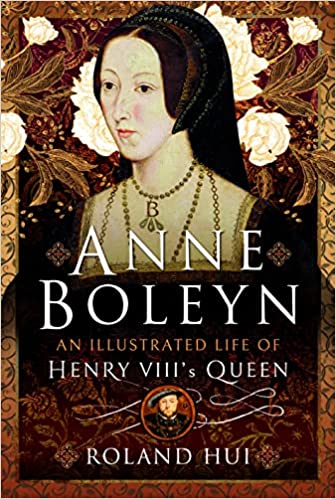 The wives of King Henry VIII have been discussed for centuries in length through novels and nonfiction books. Katherine of Aragon, Jane Seymour, Anna of Cleves, Catherine Howard, and Catherine Parr are all very popular queens, but there is one that you have all been waiting for, the most famous Tudor queen, Anne Boleyn. Her story has been told so many different ways by historians and historical fiction authors for centuries, and now it is time for another historian to write their spin on her story. In his latest book, “Anne Boleyn, An Illustrated Life of Henry VIII’s Queen,” Roland Hui paints a picture of the tumultuous life, love life, and death of Anne Boleyn.
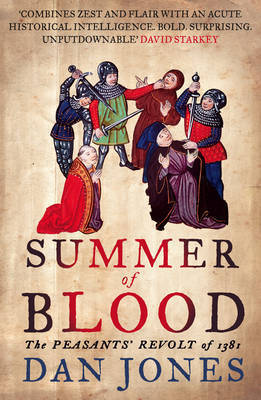 The year was 1381, and England was engulfed in chaos. A band of ruffians and revolters descended on London to achieve political change and a fair chance for the lower classes who suffered greatly from war and plague. The young King Richard II watched as men like Wat Tyler and the preacher John Ball led this ragtag army to his doorstep, fighting against his advisors, like John of Gaunt, to end a poll tax that was their last straw. Why did this ragtag army march on London? How did men like Ball and Tyler convince the masses to march against their sovereign and his government? How did this revolt end, and did the people get what they wanted due to their revolution? Dan Jones brings the bloody story of the first significant revolution by the English people to life in his book, “Summer of Blood: The Peasants’ Revolt of 1381.”
 Two kings, two rivals from different countries defined the 16th century. One was the spare to his father’s crown, but when his eldest brother suddenly passed away, he became the next Tudor king. The other was the sole heir to his parent’s large kingdom and would become the Holy Roman Emperor. Wars, the Reformation, and family drama kept these two men, Henry VIII and Charles V, busy and at each other’s throats. They would sometimes join and fight for one another’s causes, showing the importance of international politics. With each new scenario, their relationship would shift, either for the best or the worst. Richard Heath has combined the stories of these two monarchs, these “frenemies,” into one joint biography, “Henry VIII and Charles V: Rival Monarchs, Uneasy Allies.”
 Today, I am pleased to welcome to my blog Anna Belfrage to promote the audiobook for her novel, “His Castilian Hawk.” Thank you, Anna Belfrage and The Coffee Pot Book Club, for allowing me to participate in this tour.
  Buy Links:
  Author Bio:
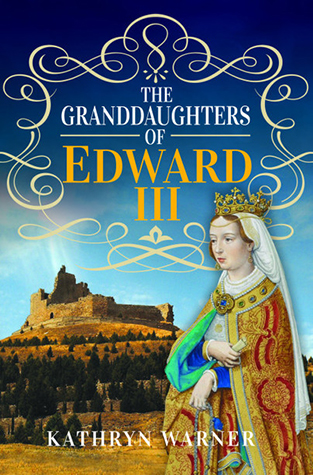 When we think about the legacy of Edward III, we often think about a warrior king who became king after his father, Edward II’s disastrous fall from grace. We know about his sons that he had with his beloved wife, Philippa of Hainault: Edward the Black Prince, Lionel of Antwerp, Duke of Clarence, John of Gaunt 1st Duke of Lancaster, Edmund of Langley, 1st Duke of York, and Thomas of Woodstock, Duke of Gloucester. Famously, we get the 15th-century conflict known as the Wars of the Roses through the descendants of Edward III. However, the male descendants only tell half the story of Edward III and Philippa of Hainault’s legacy in England and throughout Europe. In her latest book, “The Granddaughters of Edward III,” Kathryn Warner examines the lives of Edward III’s female descendants to better appreciate the strength of this group of branches of the Plantagenet family tree.
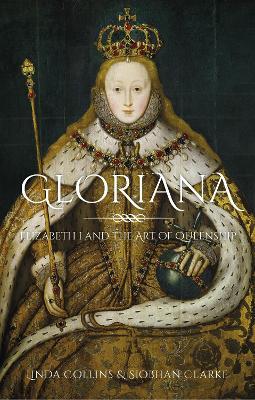 A queen locked in a struggle of being a single woman and the sole ruler of her kingdom must create the image that would help lead her divided country to a golden age. This image must comfort her people while showing strength and perseverance to her enemies who would try to take the throne from her. Elizabeth I worked hard with artists, poets, playwrights, and musicians to create the almost mythological image of “Gloriana,” the virgin goddess. Linda Collins and Siobhan Clarke explore how this image was created throughout Elizabeth’s reign in their latest book, “Gloriana: Elizabeth I and the Art of Queenship.”
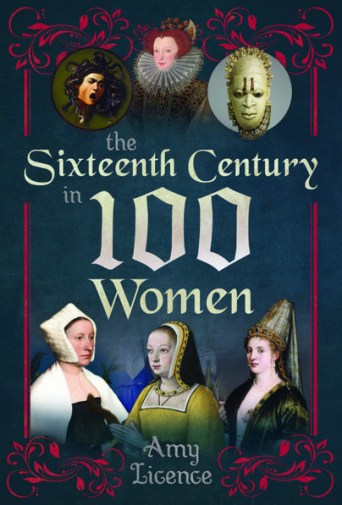 When we think of the phrase “16th-century women,” we often consider those from royal or noble houses throughout Europe. We tend to think of women like the six wives of Henry VIII, Mary I, Elizabeth I, Catherine de Medici, Mary Queen of Scots, and others associated who made an impact during the Renaissance and the Reformation. However, the 16th century did not stop at the borders of Europe; it extended all over the globe. There are many stories of women from all over the world and from different social classes that can help us understand how the world changed in the 16th century. Amy Licence took this concept and decided to write her latest book about a variety of women from around the world who lived in the 16th century, “The Sixteenth Century in 100 Women.”
 When we think of the word “education,” images of sitting in school rooms for hours, listening to lectures, and doing endless homework pop into our minds. Our modern education system tends to focus on math, science, language arts, and history as the core subjects we study, with music and physical education as something that we in America call an “elective.” But have you ever wondered what education looked like in the past? How did the Tudors pass on their knowledge to future generations? What subjects did the Tudors consider essential, and how did the amount of education you received change depending on your class? Amy McElroy explores these questions in her book, “Educating the Tudors.”
 Adventures of a Tudor Nerd