
 For a woman from the past to leave a mark in history books, she had to have lived an extraordinary life. Some have notorious reputations, or they were considered women of immaculate character. In Foxe’s Book of Martyrs, there was one who was “a woman of noble wit.” She was the daughter of an ancient gentry family who had connections with the court of Henry VIII. Her large family would navigate political turmoil and religious reformations to survive. The name of this wife and mother was Katherine Raleigh, and her tale is told in Rosemary Griggs’ debut novel, “A Woman of Noble Wit.”
I would like to thank The Coffee Pot Book Club and Rosemary Griggs for sending me a copy of this novel and allowing me to be part of this book tour. I did not know much about Katherine Raleigh before this novel, except that she was the mother of Sir Walter Raleigh, so I was looking forward to reading her story.
Katherine was a daughter of the Champernowne family who had a fiery passion for reading. As a girl, she was terrified of marrying an older man, but her family decided to marry Katherine to Otho Gilbert, a young man with a passion for firearms and adventures. As Katherine settles into her new life at Greenway Court, England experiences the reign of King Henry VIII through religious reforms, many marriages, and numerous executions. Although Katherine was not at court, she would receive gossip about court and her sister Kat, who we know today as Kat Ashley, the governess of Princess Elizabeth Tudor.
Katherine is a dutiful and loving wife to Otho, but her heart skips a beat when she meets the charming privateer Walter Raleigh Senior one day. I found Walter a much better match for Katherine than Otho, who seemed rather vain and jealous of his wife’s reputation. Katherine is free to be her educated self with Walter. They navigate the reigns of Edward VI, Mary I, and Elizabeth I while raising their family. We see how Katherine was known as “a woman of noble wit” through heartache, fear, and love.
As a debut novel, I found it a delightfully engaging read. Griggs has brought Katherine Raleigh from the shadows of her famous son’s fame and shined a light on her story. If I did have a complaint about this novel, it would be that I felt the ending was a bit rushed. Overall, I think it was an enchanting debut novel that illuminated the life of a fascinating woman who lived during the Tudor dynasty. I am excited to see what Rosemary Griggs will write about next. If you want a novel about a relatively hidden Tudor woman, I would highly suggest you read “A Woman of Noble Wit” by Rosemary Griggs.
 A Woman of Noble Wit
By Rosemary Griggs
Few women of her time lived to see their name in print. But Katherine was no ordinary woman. She was Sir Walter Raleigh’s mother. This is her story.
Set against the turbulent background of a Devon rocked by the religious and social changes that shaped Tudor England; a Devon of privateers and pirates; a Devon riven by rebellions and plots, A Woman of Noble Wit tells how Katherine became the woman who would inspire her famous sons to follow their dreams. It is Tudor history seen though a woman’s eyes.
As the daughter of a gentry family with close connections to the glittering court of King Henry VIII, Katherine’s duty is clear. She must put aside her dreams and accept the husband chosen for her. Still a girl, she starts a new life at Greenway Court, overlooking the River Dart, relieved that her husband is not the ageing monster of her nightmares. She settles into the life of a dutiful wife and mother until a chance shipboard encounter with a handsome privateer, turns her world upside down.…..
Years later a courageous act will set Katherine’s name in print and her youngest son will fly high.
Trigger Warnings: Rape.
Buy Links:
Universal Link: https://books2read.com/u/47O1WE
Amazon UK: https://www.amazon.co.uk/Woman-Noble-Wit-Rosemary-Griggs-ebook/dp/B09FLVZKSK
Amazon US: https://www.amazon.com/Woman-Noble-Wit-Rosemary-Griggs-ebook/dp/B09FLVZKSK
Amazon CA: https://www.amazon.ca/Woman-Noble-Wit-Rosemary-Griggs-ebook/dp/B09FLVZKSK
Amazon AU: https://www.amazon.com.au/Woman-Noble-Wit-Rosemary-Griggs-ebook/dp/B09FLVZKSK
Barnes and Noble: https://www.barnesandnoble.com/w/a-woman-of-noble-wit-rosemary-griggs/1140139238
Waterstones: https://www.waterstones.com/book/a-woman-of-noble-wit/rosemary-griggs/9781800464599
iBooks: https://books.apple.com/gb/book/a-woman-of-noble-wit/id1584793135
WHSmith: https://www.whsmith.co.uk/products/a-woman-of-noble-wit/rosemary-griggs/paperback/9781800464599.html
Foyles: https://www.foyles.co.uk/witem/fiction-poetry/a-woman-of-noble-wit,rosemary-griggs-9781800464599
 Author Bio:
Rosemary Griggs is a retired Whitehall Senior Civil Servant with a lifelong passion for history. She is now a speaker on Devon’s sixteenth century history and costume. She leads heritage tours at Dartington Hall, has made regular costumed appearances at National Trust houses and helps local museums bring history to life.
Social Media Links:
Website: https://rosemarygriggs.co.uk/
Twitter: https://twitter.com/RAGriggsauthor
Facebook: https://www.facebook.com/ladykatherinesfarthingale
Instagram: https://www.instagram.com/griggs6176
Amazon Author Page: https://www.amazon.com/Rosemary-Griggs/e/B09GY6ZSYF
Goodreads: https://www.goodreads.com/author/show/21850977.Rosemary_Griggs
 When we read about those who lived in past centuries, there is often a disconnect. We know that they were also human beings like we are, but we see how different their ways of life are compared to ours, and it feels incredibly bizarre. We can find wisdom from the past for our more modern lives. One of the most unlikely sources of knowledge for our daily lives comes from the lives of men and women who choose to take a religious path. In her latest book, “How to Live Like a Monk: Medieval Wisdom For Modern Life,” Daniele Cybulskie shows her readers how medieval monks can help us live our best lives here in the present.
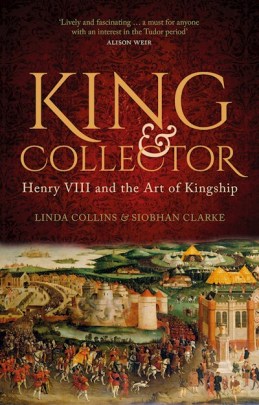 When we think of the legacy of King Henry VIII, a few descriptions come to mind—married six times, father of three children who would be the king and queens of England one day. We often see him as a man conflicted with religious changes and someone who could be tyrannical when dispatching his enemies and those closest to him. We don’t usually associate Henry VIII with a collector and patron of fine art, but his collection would help bring the Royal Collection to life. The artwork that Henry VIII commissioned and collected tells how he wanted to be viewed by the world. In “King and Collector: Henry VIII and the Art of Kingship,” Linda Collins and Siobhan Clarke peel back the layers of Tudor propaganda to show the truth about King Henry VIII and the artists who made his ideal image.
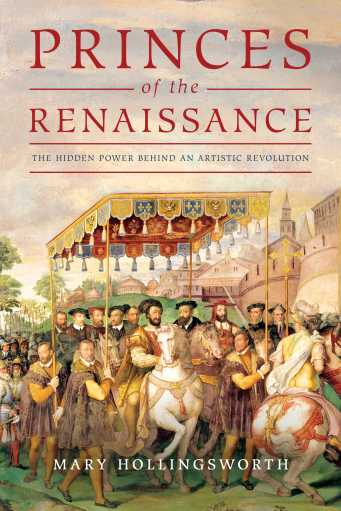 The 15th and 16th centuries were full of dynamic political and religious reforms, but they were also known for cultural changes throughout Europe. The medieval foundations started to crumble, and the early modern age emerged. One of the centers of change was Italy, a series of states with their rulers vying for power and prestige. These rulers would help finance masterpieces in art, literature, and architecture, but it was their rivals that threatened to tear the Renaissance society apart. In “Princes of the Renaissance: The Hidden Power Behind an Artistic Revolution,” Mary Hollingsworth explores the lives of the men and women who helped shape the Renaissance.
 The Black Death has ravished England and Europe for centuries. Although the plague in the 16th century was not as devastating as in previous centuries, it still was a horrific disease that killed thousands. For example, in Warwickshire, England, a family understood how unforgiving death could be and how it can tear down even the strongest of familial bonds. The family of the playwright William Shakespeare must navigate the sudden loss of their beloved son while they keep their family together. “Hamnet” by Maggie O’Farrell is the story of the death of one child and how his death affected so many people.
 Today, I am pleased to welcome Sylvia Barbara Soberton back to discuss another forgotten Tudor woman, Gertrude Courtenay, who is the subject of her latest book, “The Forgotten Tudor Women: Gertrude Courtenay. Wife and Mother of the last Plantagenets”.
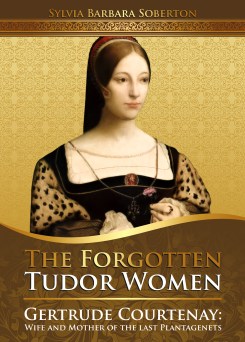 About the Book
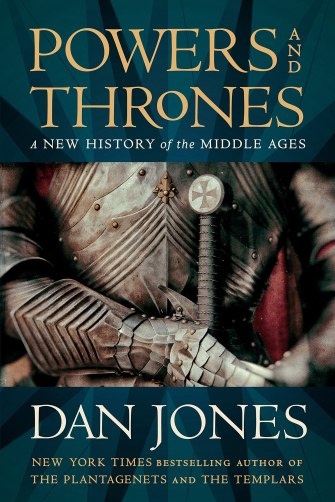 When we study human history, in general, we tend to pick a country and a period to focus on and research. Books on the subject material tend to focus on one land with interactions between other nations. It is infrequent for authors to take on multiple countries unless concentrated on one event that affected numerous locations. Those books often read like textbooks and can be a bit dry. Finding the perfect balance between these elements and engaging with the reader is a monumental task for any author, but Dan Jones has taken on the challenge. His latest behemoth tome, “Powers and Thrones: A New History of the Middle Ages,” takes on the gigantic task of telling the story of the Middle Ages from diverse perspectives.
 In human history, when citizens have disagreed with a new law or those in charge, they often stage a protest to show their frustration. When their voices are not heard, people often turn to rebellions and revolts to make sure their opinions matter. We might think that revolution and rebellion as a form of protest are modern ideas, but they go back for centuries. Revolutions and rebellions shaped history, no more so than in the middle ages. In his latest book, “Rebellion in the Middle Ages: Fight Against the Crown,” Matthew Lewis examines the origins of the most famous rebellions in medieval England and how they transformed the course of history.
 When it comes to studies into the Tudor dynasty, many different approaches have been taken in the past. We have examined every monarch, their spouses, how they lived, what they wore, and the various political events that defined the dynasty. The list is endless to the different studies that have been done with the Tudors, yet there are still new areas of study that are being explored. One of those areas of study is how individuals with disabilities survived in the past. How did society treat those who had disabilities, and what rights did they have according to the laws of the land? In her first non-fiction book, “Disability and the Tudors: All the King’s Fools,” Philippa Vincent-Connolly explores the lives of famous fools and monarchs with disabilities to discover how they were treated by Tudor society.
 On a cold December day in 1386, two knights met at the field at Saint-Martin-Des-Champs in Paris to face each other in a duel. This may seem like your average duel for entertainment to any outsider, but this was a duel to the death to determine who was telling the truth when it came to a sinister crime. A Norman knight, Jean de Carrouges, accused a squire, Jacques Le Gris, of raping his wife, Marguerite. It was a truly heinous crime, but what was it true, and why did these accusations lead to a duel to the death? Eric Jager explores this specific event and the factors that led to this clash in his nonfiction book, “The Last Duel: A True Story of Crime, Scandal, and Trial by Combat.”
 Adventures of a Tudor Nerd