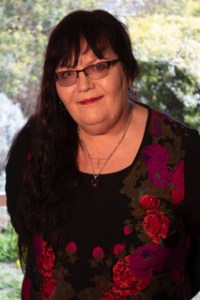
Guest Post: “Snippet from ‘The Boat on the Lake of Regret’ by Christy Matheson”

I am pleased to welcome Christy Matheson to my blog today to share a snippet from her novel, “The Boat on the Lake of Regret.” I would like to thank The Coffee Pot Book Club and Christy Matheson for allowing me to be part of this blog tour.

Snippet

Conversation with Morálta: 

But Morálta just shakes her head. “How should I know? I told you, I just work here.” 

“What has happened to Mór and Nuala?” The words burst out of me. 

She shrugs again. “I’m not in contact with the giants, so I don’t really have details. Last I saw, Red-beard was hoisting Nuala onto his pillion, and Mór was in Black-beard’s cart.” 

“Are they safe?” 

She gives me a strange look. “Safety is an illusion, Hannah.” 

“But”—I wave my hands around this room—“any more danger than we are in, here?” Which might be considerable. 

Morálta rolls her eyes. “It’s not like they are man-eating giants or anything. Black-beard really doesn’t care for those who don’t do their fair share of the work, so I dare say that Mór is going to be doing some scrubbing, and from what I’ve seen of her she’s not going to enjoy it. But hopefully you all have some true loves signed up to come and fetch you home again, right?” 

“Maybe…”  

Morálta does a double-take. “Three princes, three princesses, et cetera, and you couldn’t even fall in love?” 

“We didn’t have enough time,” I protest. “They just arrived last night.” Except me. 

Morálta sighs, sounding put-upon. “And you couldn’t manage it in one evening? Young people these days. I don’t know why the Seven-Inch-Man didn’t give you three days, which would have fit better anyhow. I’ll put it in my Exit Survey when I finish up here. Now, did you want tea or did you not?” 

We both murmur politely that we would like tea, thank you, and Morálta whisks away again. 

That was possibly the strangest conversation I’ve ever had. Exit Survey?  
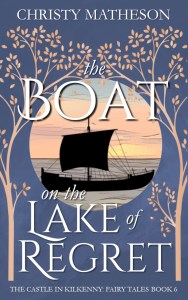
Blurb: 

He has one last chance to be a fairy tale hero.  

But she didn’t agree to be the damsel in distress. 

When her longtime boyfriend unexpectedly slides a ring on her finger, Hannah is whisked from her everyday bedroom to a medieval ball. Hannah knew that Dylan would do anything to prove to her parents that he’s husband material, including going into the Fae world—but she never agreed to go through the Veil herself. 

Now one of three princess sisters, Hannah is paired with now-Prince Dylan. But, homesick and blindsided, she pretends the Veil has wiped him from her memory. 

As her prince scrambles in vain to be the right kind of hero, Hannah ignores her instincts and follows her new sisters onto a mysterious boat—which promptly sails them into a land of giants, magical traps, and enchanted pianos…and away from Dylan. 

Read now to journey back to medieval Ireland, complete with the Fae and mythological monsters, in this fairy tale adventure and sweet “it was always you” romance. 

Buy Link: 

Universal Buy Link: https://buy.bookfunnel.com/hzxiszq79z 

Author Bio

Characters you connect with. Adventure. Love. Family… And endings that are more than a sugar rush.  

When Christy Matheson is not throwing ordinary characters into fairy tales, she is busy raising five children. (Very busy.) She writes character-driven historical fiction with and without fantasy elements, and her “fresh, smart, and totally charming” stories have won multiple awards. 

Christy is also an embroidery artist, classically trained pianist, and sews all of her own clothes. She lives in Oregon, on a country property that fondly reminds her of a Regency estate (except with a swing set instead of faux Greek ruins), with her husband, five children, three Shelties, one bunny, and an improbable quantity of art supplies. 

Author Links

Website: https://christymatheson.com  

Twitter / X: https://x.com/CMathesonAuthor  

Facebook:https://www.facebook.com/profile.php?id=100091887100897 

Instagram:https://www.instagram.com/christy_matheson_author/ 

Bluesky: https://bsky.app/profile/christy-matheson.bsky.social 

Book Bub: https://www.bookbub.com/authors/christy-matheson 

TikTok: https://www.tiktok.com/@christy.matheson.author 

Amazon Author Page:https://us.amazon.com/stores/Christy-Matheson/author/B0D6J2KRLS 

Goodreads:  https://www.goodreads.com/author/show/49771827.Christy_Matheson 

Substack: https://unspokenstoriesofwomanhood.substack.com/  


Book Review: “Medieval Christmas: The Origins and Traditions of Christmas in the Middle Ages” by Toni Mount

The weather is getting colder, and life is getting a bit busier in preparation for winter and family gatherings. It’s time to get ready for the holiday season, and there is one that is universally loved. No, it’s not Halloween, even though it is October when I am writing this review. No, I am talking about Christmas. But one wonders what the origins of Christmas and how our traditions evolved? Toni Mount explores this most important holiday time in her latest book, “Medieval Christmas: The Origins and Traditions of Christmas in the Middle Ages.”
I would like to thank Toni Mount for sending me a copy of her latest book. I am always interested in learning the origins of holidays, especially Christmas, so when she sent me a copy of her book, I was excited to read it so that I can get into the holiday mood a bit early.

Since this book is relatively short, I will keep the review short. Mount explores the different aspects of Christmas and its origins in short sections. We begin with the origins of the holiday itself and how it went from Midwinter/ the Winter Solstice/ festival of Yule and Saturnalia to Christmas through the expansion of the Christian faith. In England, the first Christian Christmas was celebrated in 597 AD with Saint Augustine and King Aethelberht, but it was not until King Alfred that Christianity became the religion of England.

Christmas is not only a solemn day in the Christian calendar, but in the Middle Ages, it was an entire season full of feasting, music, and pageants. We also see how the concept of Santa Claus morphed overtime from Father Christmas and Old Man Winter to Saint Nicholas. We also learn the importance of gift giving and how politics would play a huge part in how Christmas was celebrated, or in the case of the Puritans, banned for many years.

I found this book enjoyable and extremely cozy in the vibes. I did wish it was a bit longer as I did enjoy learning about this topic and did not want it to end. Overall, I think “Medieval Christmas: The Origins and Traditions in the Middle Ages” by Toni Mount, was a delightful book and the perfect choice for medievalists who want to get into the holiday spirit.

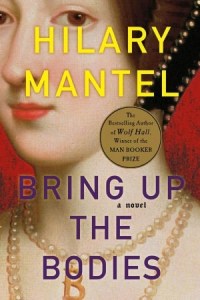
Book Review: “Bring Up the Bodies” by Hilary Mantel

The year is 1535, and Henry VIII is growing bored with his current wife, Anne Boleyn. His eyes are wandering yet again, and this time his sights are set on Jane Seymour. Anne Boleyn had failed to give him his desired son, so Henry decided that it was only fitting for his right-hand man, Thomas Cromwell, to take down a queen. It’s Cromwell’s biggest challenge yet, but it could also become Cromwell’s defining moment. Hilary Mantel explores the pivotal months that pitted Cromwell against the Boleyns in her second book in the Wolf Hall trilogy, called “Bring Up the Bodies.”
Although the first book in the series, “Wolf Hall,” was a challenging read, I still wanted to continue reading the series. We all know Thomas Cromwell’s story, but since I started the Mantel retelling of his life, I wanted to see how she will handle the fall of Anne Boleyn.

We pick up where we left off in the first book, at Wolf Hall in 1535, where Henry VIII meets Jane Seymour and her family. The King is tired of Anne Boleyn, even though she is pregnant with what is hopefully Henry’s heir. Once they get back from Wolf Hall, rumors begin to spread about Anne’s infidelity while Cromwell is working on the dissolution of the monasteries. Anne has alienated so many people at court that they wonder if it’s time for a change and if perhaps Henry will take back Katherine of Aragon.

But it is too little too late. Katherine of Aragon will pass away without seeing her daughter, Mary. Anne believes that she is safe; however, fortune’s wheel is always turning. A jousting accident will rock the court and change the trajectory of Anne’s life forever. After Anne suffers a miscarriage, Henry decides now is the time to send in Cromwell to bring down the queen. We get the opportunity to see the downfall of Anne Boleyn and the men around her through the eyes of the man who brought about her fall from grace and her untimely death.

I enjoyed this novel more than Wolf Hall because there was that sense of drama and danger. We see Cromwell at his most impactful moment, but we also see that he is not some monster, but a human who was following orders. Mantel’s writing style may still be a bit difficult, but I felt this one was easier to follow along with than the first book. I cannot wait to see how Mantel will finish this trilogy. If you want to continue the Wolf Hall trilogy and see how the Cromwell/ Boleyn feud ends, I highly recommend you read “Bring Up the Bodies” by Hilary Mantel.

Poetry: Elizabeth of England by Agatha Christie

My mom is a fan of Agatha Christie and a collector. She was recently reading one of Christie’s lesser-known books, “Star Over Bethlehem: Poems and Holiday Stories,” when she found a poem about Elizabeth I. I thought it was just neat to see a crime writer write a poem about Queen Elizabeth I.

Elizabeth of England

I am Mistress of England- the Seas I hold!
I have gambled, and won, alone….
I have freed my land from the power of Spain,
I have gathered in gold from the Spanish Main
With the help of my mariners bold.

But never a child of my flesh and blood,
When I shall be dead and gone,
Oh! never a King of the Tudor blood
Shall sit upon England’s throne….

I have saved my land from the dreaded foe,
My fleet will be known to fame,
And many a ship has sailed to the West
In Gloriana’s name!

I was menanced by Spain before I was born
In the months, oh! mother most dear,
When my father defied those powers twain,
The curse of the Church and the might of Spain,
To keep the oath he had sworn!

And Katharine, raging, invoked her God,
And appealed both far and near,
And fostered the plan of leer and of nod
Which brought you down to the bier….

So is it written in ages past
With a woman’s smile as bait,
A King shall risk his very soul
And change a nation’s fate….
Did you never fear, oh! mother of mine,
When you played on a King’s desire,
When first of queenly rank you dreamed,
And subtly plotted and boldly schemed
To further your high design?
Did you never dread that the hand which crowned
Could cast you down in the mire,
That a love so swift might be swiftly drowned,
And a King might love-and tire?

Oh! red were your lips as you smiled in his face,
And red was your hair as fire!
And red was the band around your neck
As you met your doom so dire….

An Oath I swore!-and the Pride of Spain
Is driftwood along my coast!
I was not too royal to scheme and to smile,
To pay with a promise-and daily awhile-
Till I changed my mind again….

Your blood, oh! mother, which gave me might,
(Not that of the Tudor host,)
And a woman’s game that was played aright
Is Elizabeth Tudor’s boast.

‘Tis perilous work to trifle with France…
To jest with Spain may be death…
But I played my part with a woman’s guile
And never a catch in my breath!

I have hated most women- but one above all,
(No matter her rank or name,)
Fair was her face, and her frame spread wide
When in France she dwelt as a royal bride
Ere she sailed to her fate and fall.

The lure of her beauty drew all mankind
Like a moth to the candle flame…
They brought me the warrant to sign…and I signed
With a flourish my royal name!

(But oh! to think that when I am gone
And laid in my grace so low,
The Crown which rests on my royal head
Shall adorn a Stewart’s false brow!)

She had fostered a plan to seize my throne,
Conspiring with Rome and Spain,
She had aimed at my life, so they said- what then?
It was never fear that drove my pen!

(Who have never a child of my own…)
But the jealous rage that naught can slake
Of a woman who loved in vain…
And she shall die for her beauty’s sake!
Who has loved- and been loved again!

(There are gallants thronging around my throne,
And many a maiden fair,
But the maids who come to Elizabeth’s court
Must coif Saint Catherine’s hair!)

I am Queen of England! I rule unafraid!
(But never a son of my own…)
I have gowns in plenty, and jewels rare,
With many a wench to tire my hair,
And they call me a painted jade!

But many a ship in Elizabeth’s name
Shall open up seas unknown….
And I shall share in my Children’s fame
Who have never a child of my own….

Source

Christie, Agatha. 2011. Star over Bethlehem. Harper Collins.

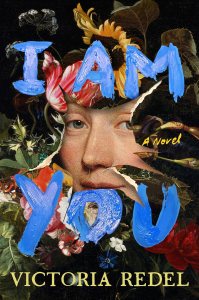
Book Review: “I Am You” by Victoria Redel

Have you ever looked at a painting and wondered what it must have been like for the artist to paint it? Have you ever wondered what their lives might have been like when they were painting these images that have sparked discussion and intrigue? Usually, we tend to focus on the male artists and their lives, but there has been a trend in recent years to tell the stories of women artists. Take, for example, the story of Maria van Oosterwijk and her maid Geertje Pieters Wyntges. Can these two women find their own successes during Amsterdam’s Golden Age through their art while navigating their own feelings towards each other? Victoria Redel explores the lives of these two women in her latest novel, “I Am You.”
I would like to thank Zando/SJP Lit and Net Galley for sending me a copy of this novel. I did not know anything about Amsterdam’s Golden Age or about Maria van Oosterwijk or Geertje Pieters Wyntges. It was one of those books whose premise intrigued me so much that even though I am not familiar with 17th-century art or the history of the Netherlands, I wanted to give it a shot.

Our protagonist is not the famous floral artist Maria van Oosterwijk, but rather her maid, Geertje, who is known in this novel as Gerta Pieter. During her youth, she dressed as a boy, worked for Maria’s family as a servant, and went by the name Pieter. It’s not a glamorous life, but it allows Pieter to stay close to Maria, whom Pieter admires from afar. Maria is a talented artist and attracts the attention of male admirers, but she is only interested in her art. When Maria gets the opportunity to go to Utrecht to study under Jan Davidsz de Heem, Maria insists that Pieter go with her as her maid, Gerta. Gerta accepts.

It is at this point that Gerta and Maria begin their lives together. After her apprenticeship with de Heem, Maria decides that they should move to Amsterdam, which they do once the plague dies down. It is there that Maria and Gerta meet artists like Rembrandt and Willem van Aelst, the poet Constantijn Huygens, and the art dealer Jan Six. However, the person who left the biggest impact on the lives of Gerta and Maria was Maria’s orphaned nephew Jacobus. Gerta and Maria grow closer as student and teacher and would eventually become lovers. But their social standings would always separate them, and Gerta would realize that love with Maria would be more complex than she had imagined. Behind the beautiful flowers they painted lies a darkness of betrayal and the pain of love being used as a pawn in a bigger game.

This was a richly woven tale of love and betrayal told from the perspective of a maid in love with her mistress. It is raw, especially one scene, and it shows how one person was able to bloom in the midst of love, betrayal, and heartache. “I Am You” by Victoria Redel is the perfect novel for anyone who wants something original and tells the tale of two women artists from the 17th century and the love they shared for their art and each other.

Guest Post: “Researching Renaissance Italy” by Ken Tentarelli

Today, I am pleased to welcome Ken Tentarelli to share information about his research into Renaissance Italy for his novel, “The Blackest Time.” I would like to thank The Coffee Pot Book Club and Ken Tentarelli for allowing me to participate in this blog tour.
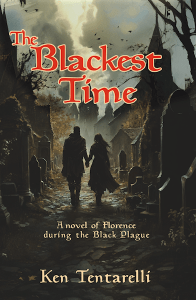
Readers expect historical fiction to be authentic, and that aligns well with my passion for research. Often, I spend more time doing research than writing. The fun comes in discovering little-known bits of history. As an example, when you look at maps of Renaissance Italy, you’ll find brightly colored drawings showing the Republic of Florence, the Duchy of Milan, and the other major city-states, but those simplifications ignore the small independent jurisdictions. 

Prepping for my fourth book, Conspiracy in Bologna, I came upon an item describing how the border was established between the Papal States and the Republic of Florence. Both agreed to use the course of a stream as their border, and both sent out teams of surveyors to create maps. As luck would have it, the two teams of surveyors identified different streams, leaving land and a town between the two streams unclaimed by either side. The land and the town became the Republic of Cospaia, which remained an independent republic for four hundred years. You’d be hard pressed to find a map of Renaissance Europe showing that tiny republic or the many other independent jurisdictions sprinkled throughout Italy. 

We are blessed today with the internet, where we can find copies of original source documents written a thousand years ago. Many have been translated into English. I’m fortunate that I can read the ones that are still available only in Italian. One helpful resource for my latest book, The Blackest Time, was a journal written by Giorgio Villani, a banker in Florence. He wrote about life in Florence at the time of the Black Plague until he finally succumbed to the plague. His writings are available on the Internet in Italian. 

Though extensive, the internet is not all-encompassing. In one of my books, a group of men was following an ancient Roman road through central Italy. The road ran alongside the Tiber River—the same river that flows through the center of Rome, but the story is set close to its source in the Apennine Mountains. The men wanted to cross the river to a town on the opposite bank, and for them to get across, I needed to know how they could cross the river. Today, a bridge spans the river, but nowhere on the internet could I find whether a bridge or a ferry was used during the Renaissance, so I emailed the town’s historical society asking whether their records held the answer. They kindly responded with information saying that not only was there a bridge during the Renaissance, but the Romans had built the first bridge at that site nearly two thousand years ago. I could have just picked one of the possibilities, bridge or ferry; after all, the book is fiction, but I felt better knowing the story accurately reflected the history. 

Tidbits I found while doing research for a book in my Renaissance mystery series are what led me to write a book set during the time of the Black Plague. Although the mysteries are set during the 1400s, I got carried away at one point, looked further back in time, and came upon three significant events: a triple conjunction of planets, which was taken as an ill omen by astrologers, two years of incessant rain that destroyed farm crops and caused famine in the cities, and the Black Plague. Those three events happening within a brief span of time convinced me there had to be a story worth telling. 

Blurb:   

Set in the 1300s during the devastating black plague, The Blackest Time is a powerful tale of compassion, love, and the human spirit’s ability to endure immense adversity. 

Gino, the central character, is a young man who leaves his family’s farm to find work in a pharmacy in Florence. His experiences show us how people coped in the most horrific time in history. 

Shortly after Gino arrived in the city, two years of incessant rain destroyed crops in the countryside, leading to famine and despair in the city. Gino offers hope and help to the suffering— he secures shelter for a woman forced to leave her flooded farm, rescues a young girl orphaned by the plague, and aids others who have lost everything. 

The rains had barely ended when the plague hit the city, exposing the true character of its people. While some blamed others for the devastation, the story focuses on the compassionate acts of neighbors helping each other overcome fear and suffering. Doctors bravely risk infection to care for their patients. A woman healer, wrongly accused of witchcraft and driven from the city, finds a new beginning in a village where her skills are appreciated.  

Despite the hardships, love blossoms between Gino and a young woman he met at the apothecary. Together they survive, finding strength in each other and hope in a world teetering on the edge. 

The Blackest Time is a testament to the strength of the human spirit in overcoming unimaginable tragedy. 

Buy Link: 

Universal Buy Link:  https://books2read.com/u/bPO08J  

Author Bio

Ken Tentarelli is a frequent visitor to Italy. In travels from the Alps to the southern coast of Sicily, he developed a love for its history and its people. 

He has studied Italian culture and language in Rome and Perugia, a background he used in his award-winning series of historical thrillers set in the Italian Renaissance. He has taught courses in Italian history spanning time from the Etruscans to the Renaissance, and he’s a strong advocate of libraries and has served as a trustee of his local library and officer of the library foundation. 

When not traveling, Ken and his wife live in beautiful New Hampshire. 

Author Links

Website:   https://KenTentarelli.com  

Facebook:  https://www.facebook.com/ken.tentarelli.3/  

Instagram: https://www.instagram.com/kententarelliauthor/  

Book Bub:  https://www.bookbub.com/authors/ken-tentarelli  

Amazon Author Page:   

https://www.amazon.com/stores/Ken-Tentarelli/author/B07PDYZ34Q  

Goodreads: https://www.goodreads.com/author/show/18920645.Ken_Tentarelli  


Book Review: “To Kill a Queen” by Amie McNee

When we think of Elizabethan England, we tend to think of the Golden Age of England. A time of discoveries and for the arts to flourish under the Virgin Queen, Elizabeth I. However, there is a darker side. It was also a time of espionage, fears of invasions from other countries, and the hatred between Catholics and Protestants. The dangers of the Elizabethan underworld have reached the queen, as there is an attempt on her life. Can Jack, the son of a crime boss, change his life and find the culprit before they find him, or will he be betrayed by those he calls his friends? Amie McNee explores the seedy underworld of Elizabethan England in her novel, “To Kill a Queen.”
I would like to thank Crooked Lane Books and Net Galley for sending me a copy of this novel. I am a sucker for a good historical mystery, and if it is set in Tudor England, even better. I read the premise of this novel and decided to give McNee a try.

The year is 1579, and Queen Elizabeth I is entertaining her final suitor, the Duke of Anjou. The city is all abuzz with rumors of wedding bells. Everyone except Jack, a young coroner apprentice, who is the son of a crime boss. Jack is helping the Justice of the Peace, Ben, and his mentor, coroner Damian, try to solve a case of a wife beaten to death by her husband. It is a pretty open and shut case, so Jack was surprised to receive another case so soon. A soldier died protecting the queen from an assassin. Now, Jack, Ben, and Damian must find the assassin before it’s too late.

It seems like your typical murder case set in a period setting, but that’s where McNee mixes things up. We get to meet Jack’s father, Axe, the crime boss, and we find out that Jack is not their real identity. Not many know Jack’s true identity, except for his lover Jenny and Damian. Jack’s friend Harry is a common resident of Bedlam, but he is now out, and Jack has to take care of him. When associates close to Jack end up being killed, there is a sense of urgency that Jack has to find the murderer before they find Jack. There are a lot of twists and turns, and the reveal of the whodunnit was shocking, but the conclusion of the book did not fit well with the tone of the rest of the book.

Overall, it was a decent novel, even though it felt more Oliver Twist than Tudor. It was nice to see the typical Tudors step to the side so that we can focus on other stories in Elizabethan London. If you want a detective novel with an unlikely protagonist, filled with twists and turns, and set during the Tudor age, I recommend you read “To Kill a Queen” by Amie McNee.

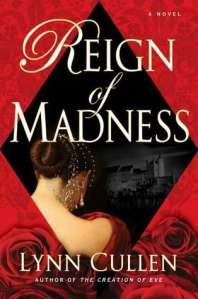
Book Review: “Reign of Madness” by Lynn Cullen

The daughters of Isabel of Castile and Ferdinand of Aragon lived very interesting lives. Of course, we know what happened to Katherine of Aragon, but her elder sister, Juana, has her own tragic tale. She was known as Juana the Mad because the rumors were that when her husband, Philip the Handsome, died, she carried her coffin around for months and would not let him be buried. Was Juana truly mad, or was it all a ruse by powerful men to steal her lands and titles? Lynn Cullen explores Juana of Castile’s life in her novel, “Reign of Madness.”
This was a book that I found when I was in a used book shop. I saw that it was about Juana of Castile, and I’ll be honest, I have never read a novel that is solely about her life. I know the basic information about her life and reign, but I was hoping that a novel would help me connect to Juana a bit more.

Juana of Castile was the daughter of Isabel of Castile and Ferdinand of Aragon. Since she was the second daughter, she was third in line for the throne of Castile, behind her brother, Juan, and eldest sister, Isabel. She was not destined to become queen, so her parents married her off to Philippe the Handsome, Duke of Burgundy. While it was a marriage for an alliance, love did bloom between Juana and Philippe, even though she did not always get along with Dowager Duchess Margaret of York. Eventually, the honeymoon stage ended, and it was replaced with paranoia and fears of infidelity. At the same time, fortune’s wheel turned in such a way that Juana became her mother’s heir to Castile. Juana doesn’t want power for herself, but Philippe desires power. Juana just wants to take care of her family, which includes her son, the future Charles V. Eventually, the desire for power would become so great that the idea of Juana as mad would overtake her entire life and her legacy.

I had some issues with this book, and there were times when I wanted to throw the book across the room. Some of the biggest ugh moments for me were when she said that bathing was something that only the Spanish were familiar with, and when Philippe kept breaking into Juana’s confinement chamber. These elements, along with a few others, showed me that Cullen didn’t fully grasp the 16th-century European world and its nuances. I also did not like how Juana was portrayed as a mousey character, and her father, Ferdinand, came across as almost a trophy husband.

This novel had the potential to do something groundbreaking when it comes to writing a novel about Juana of Castile by showing that she was sane, but it fell a bit flat. I think if you are someone who is not particular about historical nuances being accurate in a historical novel, and you want something about Juana of Castile, you might enjoy “Reign of Madness” by Lynn Cullen.

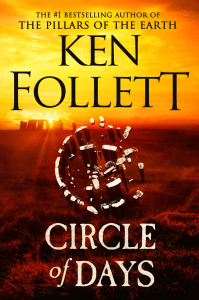
Book Review: “Circle of Days” by Ken Follett

Stonehenge, a marvel of the ancient world that still stands centuries after it was built. It has been the center of mystery and wonder for all who gaze upon it. A gigantic monolithic structure, whose purpose has been a source of discussion since its origins, but that raises another quandary: who were the people who built such an impressive landmark? This single question presents a grand opportunity for historical fiction writers as we don’t have many written records for this period of time, which means authors have room to play. Ken Follett took on the daunting task of telling the tales of those who built this imposing monument in his latest novel, “Circle of Days.”
I would like to thank Grand Central Publishing and Net Galley for sending me a copy of this novel. I have been a fan of Ken Follett’s historical fiction novels since I read “A Column of Fire” and then the first two books of the Kingsbridge series, “The Pillars of the Earth” and “World Without End.” A bit out of order, but I am loving that series. When I heard that he was writing a brand new historical fiction novel about Stonehenge, it was such an intriguing idea that I knew I wanted to read it.

Like Follett’s previous historical fiction novels, he focuses on several protagonists from different walks of life to create a cohesive story. In the case of this novel, the three main groups; herders, farmers, and woodlanders. Seft, our first main character, is a bit of an outsider. He is the son of a miner who abuses him, but Seft yearns to start a new life and he wants to build things that will help his community. Seft falls in love with a herder girl named Neen, the daughter of a herder elder named Ani. Neen’s sister Joia is a priestess who dreams of a stone monument so that they can keep their traditions alive for generations.

The dreams of Seft and Joia are ambitious in nature, especially because there are those who want to stay in the old ways instead of moving forward. They include Cog, Seft’s abusive father who wants Seft to remain a minder the rest of his life, Troon, the leader of the farmers who refuses to work with the herders and is the enemy of Scagga, an elder of the herders, and finally Baz, once an ally but who turned into an enemy when disaster strikes. From drought and famine to raids and wars, the people of the Great Plains fight for what they believe in while falling in love, starting their own families, and striving to fulfill their ambitions in life.

This is another masterpiece by Ken Follett. Not only are the characters so dynamic, but their world feels so believable. You can tell Follett was meticulous when it came to the research as he made the world of 2500 BC vibrant and so real. I would have liked to have seen a historical note at the end of this particular novel to explain how he was able to create this ancient world. Overall, I loved every moment of this book and I was genuinely sad when it came to an end. I cannot wait to see what Follett will write about next. If you are a fan of Ken Follett or just want a historical fiction novel that explores one of England’s oldest monuments, I highly recommend you read “Circle of Days.”

Book Review: “Shades of Yellow” by Wendy J. Dunn

Have you ever wondered what it might be like for a historical fiction writer during their writing process? How do they balance both their own lives and the lives of their characters? While we can read author interviews to find out what goes on in an author’s mind, why not take a fun twist of a historical fiction author writing about a historical fiction writer writing her first historical fiction novel? Meet Lucy Ellis, a new writer who is writing her first novel about the death of Amy Robsart while recovering from cancer and going through a divorce. Can Lucy finish her novel about Amy Robsart before her life and her health come crashing down? Wendy J. Dunn tells the tale of two women betrayed in her latest novel, “Shades of Yellow.”

I would like to thank Wendy J. Dunn and The Coffee Pot Book Club for sending me a copy of this novel. I am a fan of Dunn’s writing style, especially when it comes to her novels, so when I heard she was writing a new novel, I knew I wanted to read it before I knew the premise. The idea of a novel about writing a historical fiction novel was very intriguing, and to throw in the story of Amy Robsart in the mix adds to the complexity of this idea, which I love.

We begin with Lucy Ellis about to leave Australia for a research trip to England. Her mother does not want her to go because Lucy’s doctor found something concerning. Lucy is a survivor of breast cancer and is on the verge of a divorce from her husband, Ben, and she is nearing her 30th birthday. Life is hitting her hard, but along the way, she found a historical figure that she resonates with: Amy Robsart. She wants to tell the story of what really happened to Amy in her first novel, so she has to do research in England to make it more authentic.

Once in England, Lucy meets up with her aunt Jo, her cousin Max, and her grandpa, who is a blind author. We get to see her novel-writing process and bits of the novel while Lucy deals with a whole host of family drama. While the main focus of this book is Lucy’s story, sprinkled within are flashes of Amy’s life, how she felt about her husband Robert Dudley, and her rival in love, Elizabeth I. It is by studying Amy’s life that Lucy learns how to embrace life’s challenges and realize that she has people around her who love her. 

It takes a lot of skill to write not just one novel, but a novel within a novel, but Dunn nails it perfectly. I would love to read the finished novel about Amy Robsart one day. This novel takes the aspects of a dual timeline novel and flips it on its head in such an innovative way. If you want a contemporary novel about healing between two women centuries apart and their strengths to keep fighting when life throws so many obstacles their way, I highly recommend you read “Shades of Yellow” by Wendy J. Dunn. 

Blurb: 

During her battle with illness, Lucy Ellis found solace in writing a novel about the mysterious death of Amy Robsart, the first wife of Robert Dudley, the man who came close to marrying Elizabeth I. As Lucy delves into Amy’s story, she also navigates the aftermath of her own experience that brought her close to death and the collapse of her marriage. 

After taking leave from her teaching job to complete her novel, Lucy falls ill again. Fearing she will die before she finishes her book, she flees to England to solve the mystery of Amy Robsart’s death. 

Can she find the strength to confront her past, forgive the man who broke her heart, and take control of her own destiny?

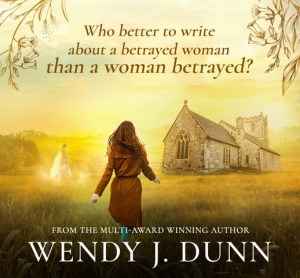
Who better to write about a betrayed woman than a woman betrayed

Buy Link: 

Universal Buy Link: https://books2read.com/u/mqPGgd  

This title is available to read on #KindleUnlimited. 

Author Bio

WENDY J. DUNN is a multi-award-winning Australian writer fascinated by Tudor history – so much so she was not surprised to discover a family connection to the Tudors, not long after the publication of Dear Heart, How Like You This, her first Anne Boleyn novel, which narrated the Anne Boleyn story through the eyes of Sir Thomas Wyatt, the elder.  

Her family tree reveals the intriguing fact that one of her ancestral families – possibly over three generations – had purchased land from both the Boleyn and Wyatt families to build up their holdings. It seems very likely Wendy’s ancestors knew the Wyatts and Boleyns personally. 

Wendy gained her PhD in 2014 and tutors in writing at Swinburne University of Technology, Australia. She loves walking in the footsteps of the historical people she gives voice to in her books.  

Author Links

Website: http://www.wendyjdunn.com/ 

Newsletter: https://wendyjdunn.substack.com/ 

Facebook:  https://www.facebook.com/authorwendyjdunn 

Instagram: https://www.instagram.com/wendyjdunnauthor/  

Threads: https://www.threads.com/@wendyjdunnauthor  

Bluesky: https://bsky.app/profile/wendyjdunn.bsky.social  

Book Bub: https://www.bookbub.com/profile/wendy-j-dunn  

TikTok: https://www.tiktok.com/@wendyjdunn  

Amazon Author Page: https://www.amazon.com/stores/Wendy-J.-Dunn/author/B004FRTZFA  

Goodreads: https://www.goodreads.com/author/show/197156.Wendy_J_Dunn 

LinkedIn: https://www.linkedin.com/in/dr-wendy-dunn-6358181a