
 Today, it is my pleasure to welcome Catherine Meyrick to my blog to share an excerpt from her novel, “Forsaking All Other”. I would like to thank Catherine Meyrick and The Coffee Pot Book Club for allowing me to take part in this blog tour.
Excerpt
Wyard studied Lucy Torrington. Was this the manner of woman his mother thought would suit him best? She was well-dowered and, no doubt, malleable. But she was not to his taste, insipid was probably the best way to describe her. It had been a mistake to allow Eloise to talk him into coming here, he should have gone straight to Bucklings Hall.
He glanced at Bess Stoughton. Of all the women present she was the most appealing. Despite his initial misgivings, she seemed honest and sensible. She was not predatory or flirtatious, nothing like that bold piece who had tried to get him to dance last night. Perhaps Bess Stoughton’s relationship with that serving man was some sort of protection—life could be difficult for a widow. And she looked at him with neither pity nor revulsion.
‘You know Mistress Torrington well?’
‘As well as any. Lucy is a good and gentle girl who deserves to be treated with kindness and respect.’
‘Who does not?’
Her eyelashes fluttered as if surprised at his comment. ‘Lucy would bloom best married to someone who loved her.’
‘Few have that blessing. Kindness and respect are the best that most of us can hope for.’
She bit her lip, frowning. ‘Are you considering marrying Lucy?’
Wyard shrugged, ‘She is one of a number of young women my mother thinks would make a suitable bride.’ He gave a wry smile. ‘It may be more accurate to say would make a suitable good-daughter.’
‘Do you have a list of requirements—number of hands high, girth, teeth, temperament? A list such as you would take to a horse market.’
It sounded ridiculous the way she described it. He gave a sudden bark of laughter. ‘In truth, I have no list.’
‘Do you always do as your mother wishes?’
‘Rarely, but it is probably time I married and she fears that, left to my own devices, I will either never marry or choose someone highly unsuitable.’
‘Who would be unsuitable?’
‘From my mother’s position, someone without money or connections.’
‘And from your own?’
‘I have not thought so far.’ If you could not marry the best, the most loving woman you had ever met, it really did not matter.
‘Well you should. Can you imagine what it is like for a woman married to a man who is forcing himself to his duty, who does not like her company or her person, who married her simply because his mother or his father told him to?’
He had never thought of it from a woman’s point of view. ‘Was your own marriage like that?’
‘You lack courtesy, Master Wyard.’
‘But you sound as if you speak from experience.’
‘That is none of your business,’ she snapped, colour flooding her cheeks. ‘If I were a man, if I had your freedom, I would do exactly as I pleased. I would never accept a bride who had been bundled up for me by my mother.’ She glared at him, ‘Now, if you will excuse me.’ She swept away towards the group of singers, her back straight and her head held high.
Wyard wanted to stop her, to explain it was never so easy. He watched her go, wondering why he had never imagined he could truly do as he wished.
 (Blurb)
England, 1585.
Bess Stoughton, waiting woman to the well-connected Lady Allingbourne, has discovered that her father is arranging for her to marry an elderly neighbour. Normally obedient Bess rebels and wrests from her father a year’s grace to find a husband more to her liking.
Edmund Wyard, a taciturn and scarred veteran of England’s campaign in Ireland, is attempting to ignore the pressure from his family to find a suitable wife as he prepares to join the Earl of Leicester’s army in the Netherlands.
Although Bess and Edmund are drawn to each other, they are aware that they can have nothing more than friendship. Bess knows that Edmund’s wealth and family connections place him beyond her reach. And Edmund, with his well-honed sense of duty, has never considered that he could follow his own wishes.
With England on the brink of war and fear of Catholic plots extending even into Lady Allingbourne’s household, time is running out for both of them.
Love is no game for women. The price is far too high.
Buy Links:
Amazon UK • Amazon US • Amazon CA • Amazon AU • Barnes and Noble • Kobo • Apple
 Author Bio:
Catherine Meyrick
Catherine Meyrick is a writer of historical fiction with a particular love of Elizabethan England. Her stories weave fictional characters into the gaps within the historical record – tales of ordinary people who are very much men and women of their time, yet in so many ways are like us today. These are people with the same hopes and longings as we have to find both love and their own place in a troubled world.
Catherine grew up in regional Victoria, but has lived all her adult life in Melbourne, Australia. Until recently she worked as a customer service librarian at her local library. She has a Master of Arts in history and is also an obsessive genealogist. When not writing, reading and researching, Catherine enjoys gardening, the cinema and music of all sorts from early music and classical to folk and country and western and, not least of all, taking photos of the family cat to post on Instagram.
Social Media Links:
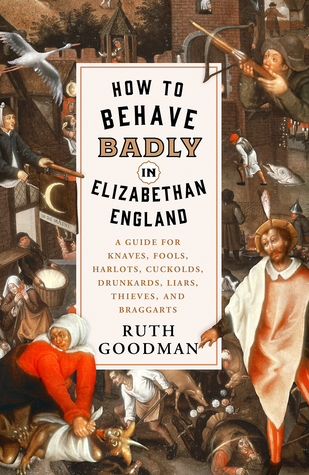 In many books about the different mannerisms and routines of different dynasties, we tend to see how the average person lived in the most prim and proper manner. How they avoided trouble at all costs to provide the best life that they could for their families. Yet, we know that there were those who did not adhere to the rules. They chose to rebel against the natural way of life. Every social echelon had their own rule-breakers, but what were these rules that they chose to break? How are these troublemakers of the past similar and different from our modern-day rebels? Famed experimental archeologist and historian Ruth Goodman takes her readers on a journey through the Elizabethan and the early Stuart eras to show how the drunkards, thieves, and knaves made a name for themselves. The name of this rather imaginative book is “How to Behave Badly in Elizabethan England: A Guide for Knaves, Fools, Harlots, Cuckolds, Drunkards, Liars, Thieves, and Braggarts”.
 Margery Kempe, the only daughter of the mayor of Bishop’s Lynn, England has made a tough decision in 1413. She has decided to leave her home, her husband, and her fourteen children to go on a pilgrimage to the holy city of Jerusalem as a way to honor her late father’s dying wishes. As she begins her journey, she meets the famous anchoress Julian of Norwich, who entrusts Margery with an important mission. She gives Margery her book Revelations of Divine Love and tells her to spread her message throughout the world in secret. Margery’s pilgrimage, her connection to Julian of Norwich, and the aftermath of her journey are intricately woven together in Mary Sharratt’s stunning novel, “Revelations”.
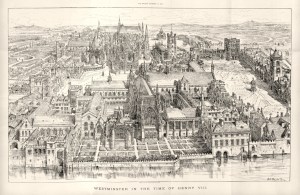
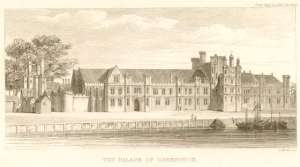
 I am pleased to welcome Karen Heenan to my blog today to discuss life at the Tudor Court. This is part of the book tour to promote Karen Heenan’s book, “Songbird (The Tudor Court, book 1). Thank you The Coffee Pot Book Club and Karen Heenan for allowing me to participate in this tour.
  “Bess!”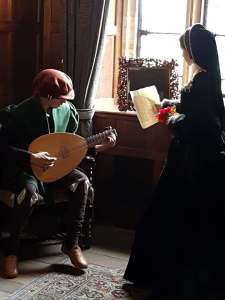
 Blurb
Blurb Author Bio
 I am pleased to welcome Judith Arnopp to my blog today to share an excerpt from her latest novel, “A Matter of Conscience: Henry VIII, The Aragon Years”. Thank you, The Coffee Pot Book Club and Judith Arnopp for allowing me to host a spot on this blog tour.
  Blurb
Blurb Author Bio:
 Have you ever read a history book and wondered what life was really like for those who lived in the past? To understand a time period and the motives of the people of the past, we have to understand the structure of their society. How they understood things like class, sex, violence, government, and religion is essential for us to understand what separates us from our ancestors. What they ate, what they wore, and where they slept also give a unique insight into the time period. It can be a difficult undertaking to figure out all of the different aspects of the past connect and to present it cohesively, yet acclaimed historian Ian Mortimer has embraced this challenge head-on to tackle one of the most complex periods of the past; the Elizabethan era. His love letter to the Elizabethan age entitled, “The Time Traveler’s Guide to Elizabethan England” is a delightfully imaginative guide to the past.
 In 1483, King Edward IV’s family received a devastating announcement; the king in the prime of his life died, leaving the throne to his young son Edward V. However, neither Edward V nor his younger brother Richard of York would ever see the throne. Instead, they were taken to the Tower of London by their protector, Richard of Gloucester, for protection, never to be seen again. For over five hundred years, many theories have emerged about what happened to the princes in the tower and who might have possibly killed the boys. In MJ Trow’s latest book, “The Killer of the Princes in the Tower: A New Suspect Revealed”, he works hard to uncover the truth of what might have happened to the sons of King Edward IV.
 The year is 1399 in Paris and the royal family is concerned about the Priory in Poissy. Something has happened behind the cloistered walls and only one person who is extremely loyal to the king and queen can figure out what is amiss, Christine de Pizan the famous medieval writer. Christine goes to Poissy to act as a copyist for the prioress, but she soon finds herself in the middle of a sinister murder case. A nun has been found dead and it is up to Christine and her allies, plus one frenemy, to figure out who killed the nun while protecting the king’s youngest daughter who calls the priory home. Can Christine figure out who murdered the young nun and make it out of the priory alive? This is the premise of Tania Bayard’s latest installment of her Christine de Pizan murder mystery series, “Murder in the Cloister”.
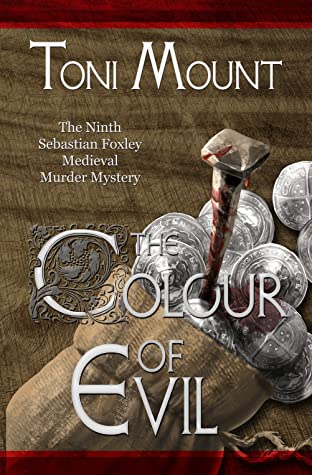 Money problems litter the streets of London like debris. Those who have money have power. Yet, there are those who try to beat the system by making their own counterfeit currency to beat the system. When this counterfeit currency leaves to murder, only Seb Foxley and his merry band of friends and family members can bring justice to those who were killed. When unexpected complications arise, like Seb’s wayward brother Jude coming home with an Italian child bride and a commission from King Edward IV himself, can Seb solve the case before anyone else becomes the next victim in this vicious cycle of greed and exploitation? Toni Mount takes her readers on another thrilling adventure in, “The Colour of Evil”, the ninth installment of the Sebastian Foxley Medieval Murder Mystery series.
 The last Tudor monarch, Queen Elizabeth I, was known for many things, but her main legacy is that she never chose to marry anyone. She was the infamous “Virgin Queen”. However, there were those around her who manage to capture her attention and her admiration for a time. The most famous of these men was Robert Dudley, Earl of Leicester. He was a massive supporter of the arts and the Protestant faith, gaining prestige and praise from his highly exalted monarch. Yet, his life and his relationship with his wives, his enemies, and Elizabeth I was full of dangers and numerous scandals. Who was this man who wooed the heart of the most eligible woman in all of 16th century Europe? Robert Stedall investigates the relationship between these two lovers destined to never marry each other in, “Elizabeth I’s Secret Lover: Robert Dudley, Earl of Leicester”.
 Adventures of a Tudor Nerd