
 A series of wars that engulfed England for over thirty years finally comes to its conclusion. The Plantagenet dynasty is no more and the once outlaw is now the first king of the brand new dynasty, the Tudors. Margaret Beaufort is reunited with her beloved son, Henry Tudor as he is crowned King Henry VII. As Henry faces the numerous challenges of being a father and a king, his mother is right by his side to guide and protect him and his family. In the epic conclusion to her Beaufort Chronicle series, Judith Arnopp explores the transition for Margaret Beaufort in the early years of the Tudor dynasty in, “The King’s Mother”.
Since I have read the previous books in this series, it was only natural that I read “The King’s Mother”. I have thoroughly enjoyed Judith Arnopp’s writing in the past and I wanted to know how she would conclude this ingenious series.
We reunite with Margaret Beaufort and her son Henry as they prepare for the event that she has been dreaming of, his coronation. To unite both the houses of York and Lancaster to ensure peace would prevail, Henry Tudor married Elizabeth of York. Their young family grows with their sons and daughters: Arthur, Margaret, Henry, and Mary. There were other children, but they died very young. Margaret Beaufort watches her grandchildren grow and acts as an advisor to Henry as the Mother of the King.
For the most part, peace and harmony reign throughout the land. However, trouble was never too far off from the comforts of the Tudor court. Pretenders lurch around every corner and rebellions are on the edge of boiling over. Henry tries to navigate the intricate European marriage market to make the best possible matches for his children.
To see these events full of hope and sorrow from the eyes of Margaret Beaufort was a delight. This was all she ever wanted, to see her son happy and alive, but for her to realize that even after the war there would be danger around every corner. Margaret was not a monster mother-in-law to Elizabeth like she is portrayed in other historical fiction novels, yet she is not a saint. Arnopp’s Margaret Beaufort is simply a human mother and grandmother who is just trying to do her best for her family.
I have thoroughly enjoyed Arnopp’s Beaufort Chronicle and this is the perfect conclusion. I have always been a fan of Margaret Beaufort and her life story. This series made me love her story even more. It made Margaret feel like a regular human being instead of the monster that other novels portray her to have been. If you want an insider’s look into the early years of the Tudor dynasty through the eyes of its matriarch, I highly recommend you read The Beaufort Chronicle by Judith Arnopp, especially the third book, “The King’s Mother”.
 Numerous castles with remarkable stories dot the landscapes of many European countries, especially England. Few are in good condition whereas others are in a rather ruinous stage. In the village of Sheriff Hutton, there is a shell of a once illustrious castle that protected England and its monarchs for centuries, aptly named Sheriff Hutton Castle. For those who are familiar with the family York and the Nevilles of the Wars of the Roses, you might be familiar with the name of this castle, but do you know the entire story of the castle? Why was this castle so significant to the history of northern England and why did it fall into disarray? These questions and more are explored in Alexander Hill’s debut book, “A Princely Lodging: A History of Sheriff Hutton Castle”.
 The Tudors were a royal family striving to survive in England through male heirs. Yet, its strongest rulers were female, Elizabeth, and her eldest half-sister, Mary. Obviously, many remember Queen Elizabeth I for her “Golden Age” and the first woman monarch of England to rule by her own right, but that title should really go to Mary I. Elizabeth tends to get all of the attention, but Mary’s life was full of her own struggles. In “Mary Tudor: A Story of Triumph, Sorrow and Fire”, Anthony Ruggiero explores the myths and the facts about this much-maligned and tragic figure in English history.
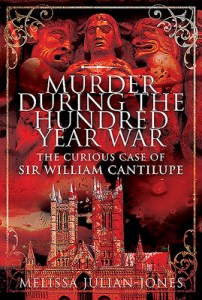 In 1375, the body of Sir William Cantilupe was found murdered in a field. He was stabbed multiple times, yet it looked like he was moved as his clothing had no marks on it. The initial investigation pointed to William Cantilupe’s immediate family and his household staff who appeared dissatisfied with how he ran his household. This particular case has been an area of fascination for medieval historians for centuries as it explores different aspects of life during the Hundred Years War. Some of these areas include domestic violence, social norms, law and order, and the punishment for crimes like murder. Melissa Julian-Jones explores every aspect of this case while combining contemporary sources to give readers a new approach to this murder in her book, “Murder During the Hundred Year War: The Curious Case of Sir William Cantilupe”.
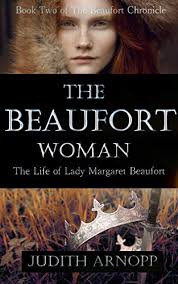 A young woman separated from her only son as a war divides the nation that she dearly loves. The struggle between York and Lancaster, the Wars of the Roses, grows in intensity and the only hope for the Lancastrians is the son of Margaret Beaufort, Henry Tudor. To keep him safe, Margaret must allow him to go into hiding as she adapts to the court of Edward IV and his wife Elizabeth Woodville. Margaret’s journey through love, death, and court intrigue continues in Judith Arnopp’s second book in her Beaufort Chronicle, “The Beaufort Woman”.
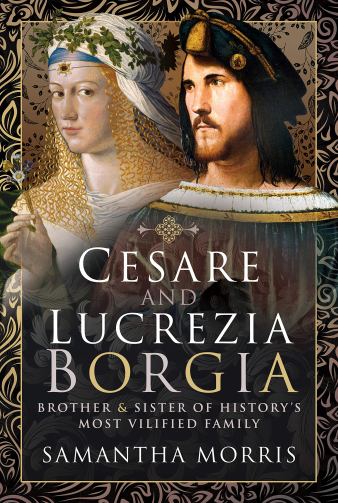 A family mired in myths and rumors of incest, murder, and intrigue for centuries. A brother and sister caught in the middle, attracting the attention of gossips and historians alike. No, I am not referring to a royal family in England. In fact, this story starts in Spain with Alonso de Borja, who moved to Italy and helped create the infamous Borgia family. Caught in the middle were the son and daughter of Rodrigo Borgia, Alonso’s nephew, and his mistress Vanozza Cattanei; Cesare and Lucrezia Borgia. How close were these famous siblings? What were their lives really like? In Samantha Morris’ latest biography, “Cesare and Lucrezia Borgia: Brother and Sister of History’s Vilified Family”, she dives deep into the archives to find out the truth about the legendary Borgia family.
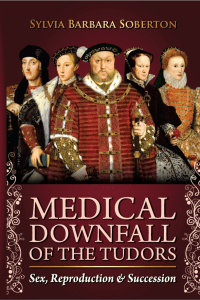 Today, I would like to welcome Sylvia Barbara Soberton to my blog as part of the book tour to promote her latest book, “Medical Downfall of the Tudors”, which is available now.
 Have you ever wondered what it would be like to travel into the past? You could interact with your favorite historical figures and truly understand what they were like. You could dine like a king or a commoner, dress to impress and experience everyday life. There would be risks involved, but any history nerd might jump at the chance to explore the past. One lucky history student named Beth Wickers discovers that a ring in her professor’s office allows her to travel back into the past to visit her favorite historical icon, Anne Boleyn. Can Beth help Anne to survive the dangerous Tudor court of Henry VIII? Follow Beth’s adventures in Tudor England in Phillipa Vincent-Connolly’s first historical fiction novel, “Timeless Falcon- Volume One”.
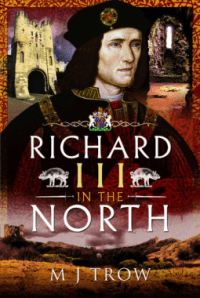 If you have studied the Wars of the Roses, you are obviously very familiar with the infamous last Plantagenet King of England, Richard III. He is known for many things, but the most notorious thing that he is associated with is the murder of the Princes in the Tower, his nephews. However, we cannot be certain that he committed this crime or if a crime was committed in the first place. These rumors swirled around London and Southern England where Richard III was not popular. It was a different story in Northern England, where he was much beloved. In M.J. Trow’s latest book, “Richard III in the North”, he tries to uncover the true story of Richard III by looking at his life while he was living in the North. Was he really the monster that literature has portrayed him as or do we have a case of misunderstanding a historical figure?
 When we think of pirates, we tend to think of Caribbean pirates that are popular in fiction and in movies. They are swashbuckling rogues who are only looking out for themselves, booze, and treasure. We tend to think about the 1600s-1800s as the height of piracy on the open seas, but there were pirates that existed even earlier than that. In England, they were known as corsairs, and one of the best during the reign of Queen Elizabeth I was the suave and debonair Sir Francis Drake. Although he did circumnavigate the world and helped the English defeat the Spanish Armada, his story is rarely told in novels. That is until now. In the first book in his Elizabethan series, Tony Riches takes on the challenge to explore what Drake’s life was like and what kinds of adventures he took in order to protect his beloved homeland. This is Tony Riches’ latest novel, “Drake- Tudor Corsair”.
 Adventures of a Tudor Nerd