
 When we think of medieval kings of England, we tend to think about strong warriors who did things their own way. Men like Edward I and Edward III often come to mind. Yet, there was a king in between these two legendary warriors whose name lives on in infamy, King Edward II. He is known for his numerous favorites, his relationships with men like Piers Gaveston and Hugh Despenser the Younger, his disagreements with the barons who were trying to help him run the country, his relationship with his equally famous wife and son, Isabella of France and Edward III, and his dramatic death. But who was the man known as King Edward II? What was he really like? Stephen Spinks explores these questions in his latest biography, “Edward II the Man: A Doomed Inheritance”.
I would like to thank Amberley Publishing for sending me a copy of this book. I remember hearing briefly about Edward II’s story in different documentaries that I have watched, but I have never read a biography about him before. This book was rather enlightening.
Spinks naturally begins with the birth of Edward of Caernarfon (the future King Edward II) to his parents, King Edward I and Eleanor of Castile. What is interesting is that Edward was their only son who survived long enough to become king, since his elder brothers would all pass away. His father, Edward I, was truly a warrior king, fighting against Wales and Scotland, yet he accumulated absolutely staggering debts which Edward II had to deal with when he was king. With his father’s victory in Wales, Edward of Caernarfon was made the first English Prince of Wales.
When Edward I died, Edward became King Edward II, with an inheritance filled with issues that would come to define his reign. Edward II had to deal with the crippling debt, war from numerous countries, and barons that were constantly trying to control how he ran the country. On top of all of this, Edward decided to rely heavily on men like Piers Gaveston and Hugh Despenser the Younger, his “favorites”, which really did not sit well with the barons or his wife, Isabella of France. It is the belief of Spinks that Edward’s relationships with Gaveston and Despenser were more than platonic, that they were Edward’s lovers and that is why he always took their advice above his barons and gave them massive rewards. Personally, I am not sure how I feel about this theory since this was the first biography I read about Edward II, and I think I would need to study a bit more before I settle on a theory about this topic.
Another huge topic that Spinks addresses in his book is the split between Edward and Isabella that ultimately led to his downfall and his death. It was interesting to see how even though they did split up, Edward did indeed cared for his family, although he did have a rather unusual way of showing it. His abdication, death, and the stories of how he survived are really compelling and makes you wonder what happened to Edward II after his son became King Edward III.
Overall, I found this book extremely informative. Spinks was able to combine the complex nature of the government that was run by the barons with an easy to understand writing style. Spinks also discusses other theories written by other historians to allow readers to understand why he believes what he believes. After reading this book, I do want to learn more about King Edward II and his reign. If you want a great introductory book into the reign of King Edward II, I highly recommend you read, “Edward II the Man: A Doomed Inheritance” by Stephen Spinks.
 The Tudor dynasty and the enigmatic figures who made this time period so fascinating have been hotly discussed for centuries. Henry Tudor, who became King Henry VII after defeating King Richard III at the Battle of Bosworth Field in 1485. King Henry VIII, the second son whose numerous wives and his split from the Catholic Church made his name infamous in history. King Edward VI, Henry VIII’s beloved son who died before he really could accomplish the reformation that he had planned for England. Queen Mary I, who was the first Queen of England to rule in her own right and wanted to restore the Catholic Church. Finally, Queen Elizabeth I, who never married and led England to a “Golden Age”. Many historians have viewed the Tudor dynasty as a time of great change and England was in a good place. However, G.J. Meyer paints a darker picture of the era in his book, “The Tudors: The Complete Story of England’s Most Notorious Dynasty”.
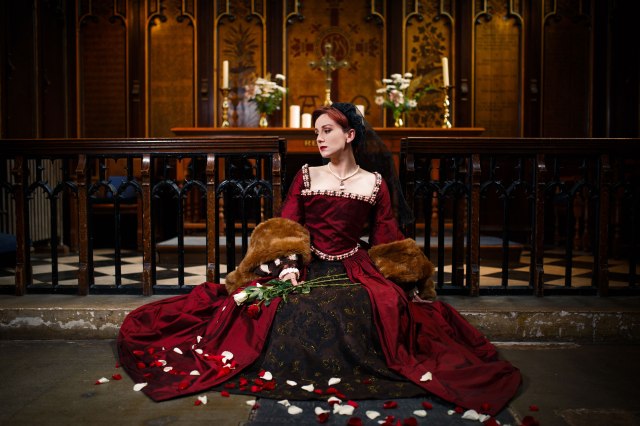 Try Me, Good King- Immersive Classical Concert of Tudor Tales and Shakespearean Stories
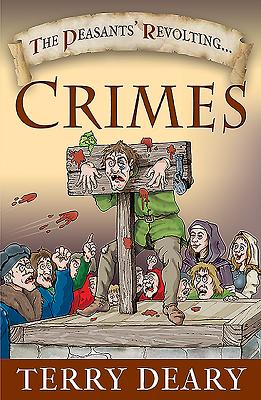 In history, we tend to look at people based on their class. There are the upper class (royalty and nobility), the middle class, and the underclasses (peasants). Most of the focus tends to be on the deeds of the upper and middle classes, yet the underclasses had there own struggles, some of which resulted in them committing crimes. What was life like for the criminals of the underclasses? What type of crimes did they commit and what sort of punishments did they suffer once they were caught? Terry Deary decided to explore the crimes of the British peasants throughout history, in his own humorous way, in his latest book, “The Peasants’ Revolting….Crimes”.
 In English history, the story of the royal families tends to capture the imagination of those who study it. Full of dynamic tales of kings and queens, and numerous nobles, these are tales that make it into history books and history classes. We tend to focus on the same kings and queens, who have become the popular royals. But what about those who are left in the dust of those popular royals? Who were the royal women who lived in the shadow of the throne that time has forgotten? What were the lives of these women like? It is these women who are the focus of Erin Lawless’s latest book, “Forgotten Royal Women: The King and I”.
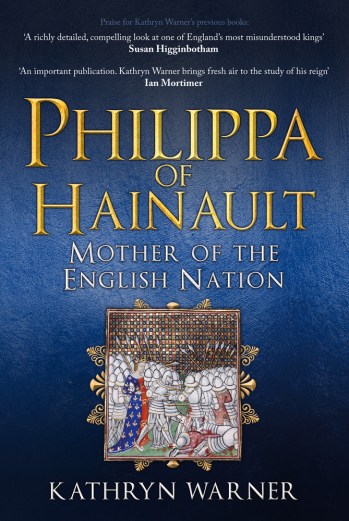 In medieval England, the queens were almost as famous, or infamous, as their husbands. In most cases, they came from royal backgrounds and their sons would become kings. That, however, was the case for Philippa of Hainault, the wife of King Edward III. She tends to be forgotten when it comes to discussing her famous husband, her infamous mother-in-law Isabella of France, and her sons whose children would go on to shape English history forever. That is until now. Kathryn Warner has decided to discover the truth about this rather remarkable woman in her latest biography, “Philippa of Hainault: Mother of the English Nation”.
 There is a new film that has been getting a lot of hype lately and that is based on the story of King Henry V and the Battle of Agincourt. Starring Timothee Chalamet as the main protagonist King Henry V, “The King” on Netflix is the latest historical drama movie that has come out this year. From the trailers and the information that we learned about the film before it was released, I was really intrigued, so I decided to watch it this weekend. Since there were a lot of things I wanted to discuss, I have decided to write a sort of movie review for “The King”.
 The reigns of the Tudor monarchs were full of change, not only in court and in culture, but also when it came to religion. None more so than in the reign of King Henry VIII, especially during the incident known as “The Great Matter”, when the king wanted a divorce from his first wife, Katherine of Aragon. Many people were swept into the chaos of this time, but there are two who were infamous during this time; Thomas Wolsey and Anne Boleyn. These two were adversaries, vying for the attention of the king. They both experienced extreme highs and tragic lows as they navigated the change in England that would be the start of the Reformation. Lynda Telford explores the lives of Thomas Wolsey and Anne Boleyn, as well as the lives of other people who were caught displeasing King Henry VIII during this tumultuous time in her book, “Tudor Victims of the Reformation”.
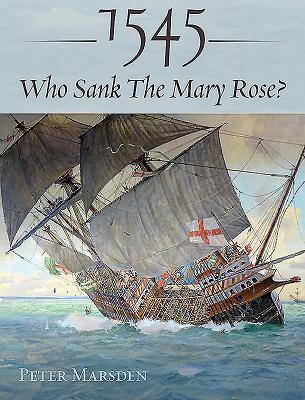 On a calm summer day in July of 1545, a battle was being fought in Solent between the Tudor navy and the French navy. Tragedy struck when the
 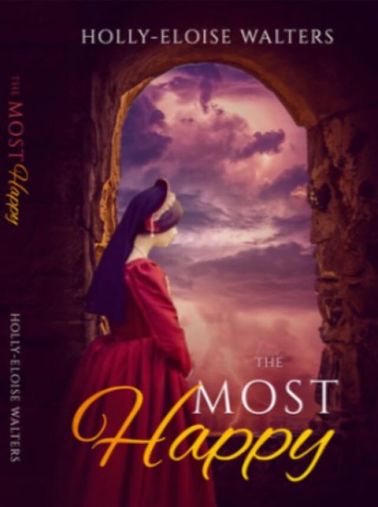 The story of Anne Boleyn is one of love, triumph, and tragedy. Her tale has been told in many different ways in the several centuries since her execution by many different people. Except by Anne Boleyn herself. We never truly understood what it might have felt like when she went to court for the first time, what it must have felt like to have fallen in love with King Henry VIII. How she might have felt when she had her daughter and experienced her numerous miscarriages. The devastation she must have felt when she found out about Henry’s abusive side, his mistresses, and her ultimate demise. That is until now. In Holly-Eloise Walters’ debut novel, “The Most Happy”, Anne Boleyn tells her personal story, giving the readers a better understanding of the legend.
 Adventures of a Tudor Nerd