
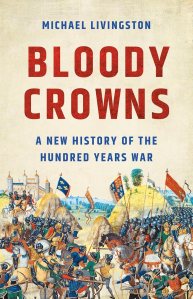
 Medieval Europe was a time of conflicts and change. While smaller disputes between countries or civil wars would define borders, the most prominent conflict during this period was the Hundred Years’ War. A conflict that has been traditionally taught to have lasted 116 years between England and France. It is often told from the English perspective, with battles such as Agincourt, Crecy, and Poitiers celebrated. But what if we look at the bigger picture and expand our lens to the whole of Europe while keeping a neutral approach to the France vs England conflict? What if the conflict did not last a mere hundred years, but in fact two hundred years? What type of story would this kind of approach tell when it comes to medieval European history? Michael Livingston takes on the mammoth challenge of telling the tale of how this war changed European history forever in his latest book, “Bloody Crowns: A New History of the Hundred Years War.”
I would like to thank Basic Books and Net Galley for sending me a copy of this book. I enjoyed the previous book that I read by Michael Livingston on the Battle of Crecy, so when I heard that he was writing a new book about the Hundred Years’ War, I was intrigued. I wanted to see what new information he could provide for a conflict that has been discussed heavily for centuries.
Livingston delivers with a plethora of information. He begins by explaining that the term Hundred Years’ War came from a French textbook in 1823. We often think that it began when King Philippe VI of France declared English lands forfeit on May 24, 1337, so King Edward III declared that he was the rightful king of France; and the end of the war was when the French seized the city of Bordeaux on October 19, 1453. However, Livingston argues that the war began in 1292 and ended in 1492, which means it was a two-hundred-year war. Livingston then goes into explaining the origins of France and England to explain how on earth they even got to a state of strife.
While the study of the conflict between France and England tends to focus on these countries, Livingston expands his view to include a pirate war between English and Norman merchants, wars in Portugal, the Burgundian Wars, fights between England, Scotland, and Wales, peasant revolts of all varieties, and wars with the Flemish. We also see a few civil wars in both France and England, including the Wars of the Roses. There are also colorful characters, including a couple of mad kings, the Black Prince, Henry V, Joan of Arc, William Wallace, earls and dukes of every variety, knights who were loyal to a fault, queens who fought for their families, heiresses fighting for their land rights, and a ton of family squabbles. And of course, Livingston focuses on the battles that defined the period, including Crecy, Poitiers, Agincourt, and Orleans, as well as lesser-known battles that helped shift the momentum for either side. Livingston can provide such vivid details that it feels like you are on the battlefield, even when it comes to the more obscure battles.
In my opinion, Livingston is one of the finest medieval military historians right now, and this is his magnum opus. I learned so much by reading this book that it kind of redefined what I think of the Hundred Years’ War. This is one of the best books I have read this year. If you want a book about medieval Europe that will challenge your way of thinking about one of the biggest conflicts of the age, I highly recommend you read “Bloody Crowns: A New History of the Hundred Years War” by Michael Livingston.
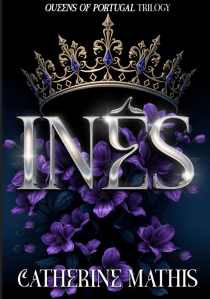
 Today, I am pleased to welcome Catherine Mathis to my blog to discuss Ines de Castro, the main protagonist of her novel, “Ines,” the first book in her Queens of Portugal trilogy. I would like to thank The Coffee Pot Book Club and Catherine Mathis for allowing me to participate in this blog tour.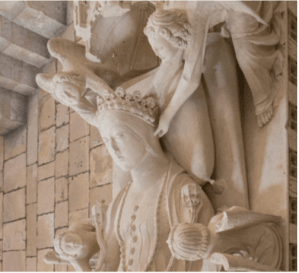
 Blurb:
  Author Bio
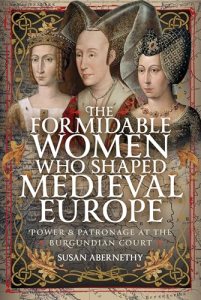 Throughout European history, we tend to think about the countries as a whole when it comes to the political sphere of influence. We think of the big countries like France, Spain, Italy, Germany, Austria, and England as having the most impact, but we have to consider that during the Middle Ages, duchies held immense power. Take, for example, the Duchy of Burgundy, also known as the Burgundian Empire. It was a part of France, but that does not mean that the dukes stayed on the side of the French. The Burgundians used their influence to expand and marry into the medieval European families, affecting European history as a whole. While we tend to focus on the Dukes of Burgundy, we should be paying attention to the women of this duchy. That is why Susan Abernethy chose to focus on these women in her latest book, “The Formidable Women Who Shaped Medieval Europe: Power and Patronage at the Burgundian Court.”
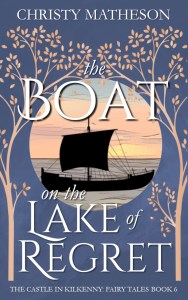
 I am pleased to welcome Christy Matheson to my blog today to share a snippet from her novel, “The Boat on the Lake of Regret.” I would like to thank The Coffee Pot Book Club and Christy Matheson for allowing me to be part of this blog tour.
 Blurb:
 Author Bio
 The weather is getting colder, and life is getting a bit busier in preparation for winter and family gatherings. It’s time to get ready for the holiday season, and there is one that is universally loved. No, it’s not Halloween, even though it is October when I am writing this review. No, I am talking about Christmas. But one wonders what the origins of Christmas and how our traditions evolved? Toni Mount explores this most important holiday time in her latest book, “Medieval Christmas: The Origins and Traditions of Christmas in the Middle Ages.”
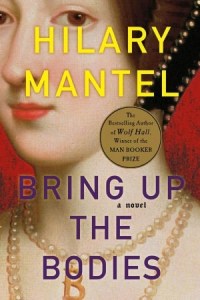 The year is 1535, and Henry VIII is growing bored with his current wife, Anne Boleyn. His eyes are wandering yet again, and this time his sights are set on Jane Seymour. Anne Boleyn had failed to give him his desired son, so Henry decided that it was only fitting for his right-hand man, Thomas Cromwell, to take down a queen. It’s Cromwell’s biggest challenge yet, but it could also become Cromwell’s defining moment. Hilary Mantel explores the pivotal months that pitted Cromwell against the Boleyns in her second book in the Wolf Hall trilogy, called “Bring Up the Bodies.”
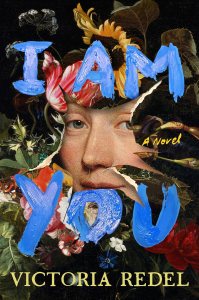 Have you ever looked at a painting and wondered what it must have been like for the artist to paint it? Have you ever wondered what their lives might have been like when they were painting these images that have sparked discussion and intrigue? Usually, we tend to focus on the male artists and their lives, but there has been a trend in recent years to tell the stories of women artists. Take, for example, the story of Maria van Oosterwijk and her maid Geertje Pieters Wyntges. Can these two women find their own successes during Amsterdam’s Golden Age through their art while navigating their own feelings towards each other? Victoria Redel explores the lives of these two women in her latest novel, “I Am You.”
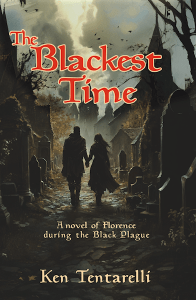
 Today, I am pleased to welcome Ken Tentarelli to share information about his research into Renaissance Italy for his novel, “The Blackest Time.” I would like to thank The Coffee Pot Book Club and Ken Tentarelli for allowing me to participate in this blog tour.
 Blurb:
  Author Bio
 When we think of Elizabethan England, we tend to think of the Golden Age of England. A time of discoveries and for the arts to flourish under the Virgin Queen, Elizabeth I. However, there is a darker side. It was also a time of espionage, fears of invasions from other countries, and the hatred between Catholics and Protestants. The dangers of the Elizabethan underworld have reached the queen, as there is an attempt on her life. Can Jack, the son of a crime boss, change his life and find the culprit before they find him, or will he be betrayed by those he calls his friends? Amie McNee explores the seedy underworld of Elizabethan England in her novel, “To Kill a Queen.”
 Adventures of a Tudor Nerd