
 The deaths of the Duke of York, Earl Salisbury and Edmund Earl of Rutland at the Battle of Wakefield at the end of 1460 marked a changing point for how the Wars of the Roses was fought. Now it was not going to be simply a matter of who was going to be the King of England, but it was a war of revenge. What the Lancastrians did not realize at the time was the fact that these deaths would unleash two men who would mark the destruction of the Lancastrian cause; Edward Duke of York, the future King Edward IV, and Richard Neville Earl of Warwick “the Kingmaker”. In the third book of Conn Iggulden’s Wars of the Roses series called “Bloodline”, Iggulden explores the rise of these two dynamic men and how family matters tore the two best friends apart.
After the victory at Wakefield, Margaret of Anjou marched her Lancastrian forces to London, but they were not allowed to enter. The Lancastrians decided to keep marching until they meet the Yorkists at St. Albans for a rematch, on February 17, 1461. The Lancastrians were able to win the battle and regain control of King Henry VI. However, this was a small victory. After the defeat, Edward Duke of York decided to take up the claim to the throne that his father left behind, and declared himself King Edward IV of England. That’s right, there were two kings of England in 1461. Margaret of Anjou and the Lancastrians were not about to give without a fight. They met Edward IV, Warwick and the Yorkists forces outside Towton on March 29, 1461, during a snowstorm. The Battle of Towton is known to be the bloodiest battle on English soil and the way Iggulden described the onslaught is masterful. In the end, the Yorkists are victorious and Edward IV is officially the King of England while Henry VI is held captive in the Tower of London while Margaret of Anjou and her son flee to France for help.
After Towton, Edward IV and Warwick are closer than ever. Warwick wants to do what he can to help support his friend and king so he tries to arrange a marriage between Edward and a French princess, to form an alliance. However, Edward has other ideas and marries Elizabeth Woodville and decides to tell Warwick later. I find it fascinating that Iggulden decided to change how Edward and Elizabeth met as it is quite different from what traditionally is told about how they met, but it works really well. Edward’s brother George Duke of Clarence falls in love with Warwick’s daughter Isabel and wants to marry her. This is the moment when Edward and Warwick really begin to feud.
Iggulden explains in his Historical Note why he decides to focus on this aspect of their relationship quite a bit:
In the first two books, I have tried to explore the sheer awe felt by some for the person of the king of England. It is the only thing that explains why King Henry remained alive despite being captured by York and held for months at a time. Yet it is also true of human nature that “awe” is less likely when one witnessed a boy growing up and becoming king. No man is a prophet in his own home- and Warwick was sufficiently exasperated with Edward and his wife to throw it all into the air and arrange Edward’s capture and imprisonment. (Iggulden, 402).
It is interesting to read about the relationship between these two friends and how that friendship turned into hatred because Edward decided to marry for love. Iggulden is able to capture the shifting relationships between the main characters extremely well in the third book of this amazing series. The blend of battles, political intrigue and romance is perfect and keeps the reader engaged. This is the fall of the Lancasters and the rise of the Yorks. If you were a fan of the first two books of the Wars of the Roses series, I highly encourage you to read “Wars of the Roses: Bloodline” by Conn Iggulden.
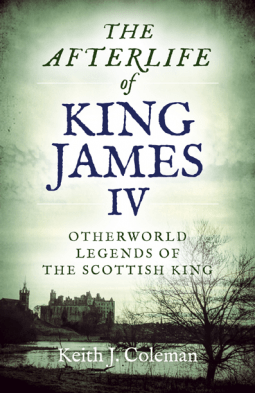 A king who died on the battlefield and his remains were never found. His story and his legacy went through many revisions throughout history. This sounds like a certain English king, King Richard III, but this story actually takes place decades after Richard’s death in Scotland. This is the story of King James IV of Scotland, who died at the Battle of Flodden in 1513. It was this event and how James IV was viewed afterward which Keith J. Coleman explores in his book, “The Afterlife of King James IV: Otherworld Legends of the Scottish King”.
 known as the Hundred Years’ War, and the massively destructive illness that we know today as either “the Black Death” or “the Black Plague”. This was a time of despair, but it was also a time where we see a shift from old traditions of the church and the state. It is also two centuries after the events of Ken Follett’s massively popular book, “The Pillars of the Earth”. Follett explores how the people of Kingsbridge survived during this tumultuous time in his second book of the Kingsbridge series, “World Without End”.
 When one thinks about epic tales stories of adventures and romance tend to come to mind. One hardly thinks about the construction of a magnificent building as an “epic tale” with monks and builders as the main characters. We see cathedrals as these massive buildings from the past used as churches, but we rarely think about how they were constructed and why. Who were the people who decided to make these spectacular buildings and what might have their lives have been like? These are just some of the questions that Ken Follett wanted to try and answer in his monumental historical fiction masterpiece, “The Pillars of the Earth”.
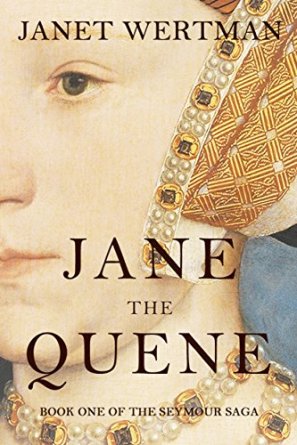 Henry VIII may have had six wives, but only one could give him the desired son that he wanted. She was kind, demure and everything that Henry VIII’s second wife Anne Boleyn was not. Her name was Jane Seymour, Henry’s third wife. Sadly, she is often remembered for the birth of her son and her death. However, there was a lot more to Jane’s story than the ending. What was her relationship with her family like? How did she fall in love with the King? And how was her relationship with her romantic rival, Anne Boleyn? These are just some of the questions that Janet Wertman strives to answer in her first novel of her new Seymour Saga called, “Jane the Quene”.
  The children of Henry VIII have been the center of historical studies for centuries. Edward VI, Mary I, and Elizabeth I were all considered Henry’s “legitimate” children and were able to obtain the crown of England. Henry Fitzroy was the illegitimate son of the king, but he was still able to gain titles and a good marriage before he died. They all had something in common; they were all recognized by their father, Henry VIII. However, there was another child who many believed to have been the daughter of the king. The name of this intriguing lady was Lady Katherine Knollys and her story comes to life in Sarah-Beth Watkins’ book, “Lady Katherine Knollys- The Unacknowledged Daughter of King Henry VIII”.
 Adventures of a Tudor Nerd