
 Elizabeth I was perhaps the most influential monarch in English history. There are episodes in her life that became legendary. From her tumultuous childhood to her reign where everyone either wanted her to marry or put someone else on the throne, Elizabeth’s life was hardly easy. Even though much is known about her public life as queen, we really do not know a lot about her private life. In Alison Weir’s book, “The Life of Elizabeth I”, the gap between the public Elizabeth and the private Elizabeth is bridged in order to give a more complete biography of this fascinating English queen.
Alison Weir explains what Elizabeth had gone through in her early life and how it shaped her as a queen:
When she came to the throne her subjects knew relatively little about her. Nurtured in a hard school, having suffered adversity and uncertainty from her infancy, and having gone in danger of her life on at least two occasions, she had learned to keep her own counsel, hide her feelings and live by her wits. Already, she was a mistress of the arts of deception, dissimulation, prevarication and circumvention, all admired attributes of a true Renaissance ruler. At twenty-five years old, she was at last in control of her destiny, and having lived in one kind of constraint or another for the whole of her existence so far, she was determined to preserve her independence and autonomy. She had learned from her sister’s mistakes and resolved never to repeat them. She would identify herself with her people and worked for their common interests. She would bring peace and stability to her troubled kingdom. She would nurture it, as a loving mother nurtures a child. For this, she believed, God had preserved her life. (Weir, 9-10)
Weir begins her book with the coronation of Elizabeth, touching briefly on Elizabeth’s childhood and how she got to the throne. She explains the England that Elizabeth knew and how right after she was crowned, her people desired for the queen to have a husband and to know what religion she would adopt for her own and for her country. Although Elizabeth liked to have quite a few favorites, including Robert Dudley and Francis Duke of Anjou, she never gave her heart solely to one man. Instead she chose to be the mother of her country and to be married to the job of protecting her people. Elizabeth not only had to keep her people happy but she had to deal with threats from other countries, including King Philip II of Spain and his Armada, the St. Bartholomew’s Day massacre of the Huguenots in France, and the religious feuds in the Netherlands. One of her biggest external threats was her cousin Mary Queen of Scots, who claimed that she should be Queen of England. Elizabeth eventually had to make the decision to execute another queen, very similar to the decision her father had to make when he had Elizabeth’s mother executed a few decades before.
Elizabeth also had to deal with internal threats such as favorites, especially Robert Devereux, the 2nd Earl of Essex, becoming jealous of others in court and throwing fits. There were those who would dare to marry without the Queen’s permission and had their own children. In these instances, Elizabeth’s anger would come out in full force. She didn’t trust many people and tended to keep her feelings to herself. To the outside world, she was “Gloriana” or “The Virgin Queen”, but to those who truly knew her, she was just Elizabeth, a woman who became queen and who was just trying to survive for herself and her country.
Elizabeth I has always been my favorite Tudor monarch. Her story was the one that really got me interested in the Tudors and this book made me fascinated with her all over again. Alison Weir was able to yet again combine her engaging writing style with amazing details to tell the full story of the reign of Elizabeth I, from her coronation at age of 25 to her death at the age of 69, and how she changed England for the better. I loved reading this book. There was so much information about Elizabeth that I didn’t know about in this book, it was like discovering a whole new side to a person I thought I knew very well. If you want to learn more about Elizabeth I, the woman behind the legend, and her impact on England and the 16th century world, I highly recommend you read this book, “The Life of Elizabeth I” by Alison Weir. An absolutely fascinating read on one of England’s most remarkable rulers.
 Anne Boleyn, the second wife of Henry VIII and the mother of Elizabeth I. Most of us know her story of how she fell in love with Henry VIII and how their relationship changed England forever as Henry broke off with Rome in order to get a divorce from his first wife Katherine of Aragon so that he could marry Anne. Unfortunately, when Anne couldn’t give Henry the son he so desired, their love began to fade. Anne Boleyn’s story ends in tragedy as she was accused of having multiple affairs, plotting the death of Henry VIII, and witchcraft, Anne was found guilty and was killed. Her fall happened in May 1536, a month that changed everything, but how much of these charges are true? Did she indeed have these affairs? Did she plot to kill her husband? What is the truth behind her fall? These are the questions that Alison Weir try to answer in her book “The Lady in the Tower: The Fall of Anne Boleyn.”
 Owen Tudor, the second husband of Catherine of Valois and the father of Edmund and Jasper Tudor. His affair with Catherine changed English history forever, yet not much is known about his past before he met Catherine. Was he married before he met Catherine and after she died? What must have been like for him as the Wars of the Roses began to take hold of England and everything he worked hard for began to fade away. The man who started as a Welsh servant turned step- father to King Henry VI and the grandfather of King Henry VII, the patriarch of the Tudor Dynasty, this is the protagonist in Tony Riches’ book, “Owen: Book One of the Tudor Trilogy”.
 Edward Seymour, the brother of Thomas and Jane Seymour, as well as the uncle of Edward VI. Many people remember him for his role as Lord Protector to his nephew as well as his role in the execution of his brother Thomas. That, however, is only a small snapshot into the life of an interesting man. His life after his sister Jane died and before he became the 1st Duke of Somerset was one of twists and turns. Nothing was safe for the brother of Henry VIII’s most beloved wife, especially when it came to dealing with his enemy at court, Bishop Stephen Gardiner. This is the time period that Janet Wertman has decided to explore in her latest book, “The Path to Somerset”, the second book in her Seymour saga (The first book of the Seymour saga is called “
 There were some men who tried to court Elizabeth, including Robert Dudley, but none could ever get her to the altar. That was when she was queen, however, there was one man who was very close to marrying her when she was just Elizabeth Tudor. The man was Thomas Seymour, the brother of Edward and Jane Seymour and the husband of Catherine Parr. In Elizabeth Norton’s book, “The Temptation of Elizabeth Tudor: Elizabeth I, Thomas Seymour, and the Making of a Virgin Queen”, she explores the relationship between Thomas and Elizabeth and why he was her temptation.
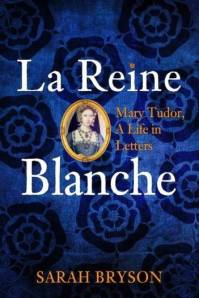 When we think of the Tudors, we often think of strong women like Katherine of Aragon, Anne Boleyn, Elizabeth I, Margaret Beaufort and Mary I. However, there was another Mary who made an impact during this time. She was the daughter of Henry VII, the sister of Henry VIII, and the wife of King Louis XII of France. She was referred to as one of the most beautiful women in the world. She gave away all of her titles to marry the man she loved, even though he was not a king. She took on debt to have a family and helped those who needed help. This is the life of Mary Tudor. In Sarah Bryson’s debut book, “La Reine Blanche: Mary Tudor, A Life in Letters”, Bryson explores the life of this extraordinary woman through her letters.
 When we think of the Grey family, we often come up with certain stereotypes. Lady Jane Grey was a passive, obedient girl who did whatever her family and her husband’s family wanted her to do. Frances Grey was a cruel mother. Katherine and Mary lived very uneventful lives. These could not be further from the truth. Leanda de Lisle in her book, “The Sisters Who Would Be Queen” attempts to paint a more realistic of the Grey sisters; Jane, Katherine and Mary.
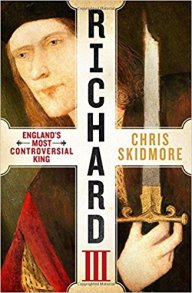 When we often think about Richard III, we tend to focus on the princes in the tower, Bosworth Field where he died, and the discovery of his body in 2012. But he was a brother to a king, a protector and he did rule as king of England. There should be more to his story than this. Chris Skidmore believed so and decided to write a modern biography on Richard called “Richard III: England’s Most Controversial King”.
 One of the greatest mysteries of all time is what happened to the young princes, the sons of Edward IV, who were held in the Tower of London. Many people believed that they were killed. There are some who believe that Richard III had them murdered and there are some who say that Henry VII ordered the deed to be done. But what if they were never killed? What if they survived? That is the premise of Matthew Lewis’s book “The Survival of the Princes in the Tower: Murder, Mystery and Myth”.
  Perkin Warbeck. These were the most famous pretenders and the ones who challenged Henry VII’s right to the throne. If they were really the princes in the tower, why were they defeated? Why were they considered pretenders? Lewis explores other people who could possibly be the princes, including a theory by amateur art historian Jack Leslau on “The Family of Sir Thomas More” by Hans Holbein the Younger.
 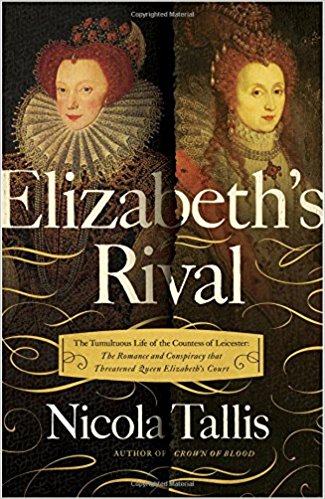 When we think of Lettice Knollys, we often think about the kinswoman who made Elizabeth I really mad when she married Robert Dudley, Elizabeth’s favorite. These two women were once best of friends, but that one event torn then apart forever. However, there is more to Lettice Knollys than this one event. She was married three times, survived seven different monarchs, and lived well into her nineties. Her story has always been hidden, until now. Lettice Knollys story is finally being told in “Elizabeth’s Rival: The Tumultuous Life of the Countess of Leicester: The Romance and the Conspiracy that Threatened Queen Elizabeth’s Court” by Nicola Tallis.
 Adventures of a Tudor Nerd