
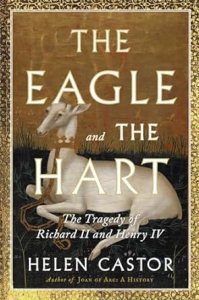
 The story of the Plantagenets is filled with high triumphs and devastating tragedies. It is a story of families torn apart for a crown and the desire to either rule with an iron fist for the glory of England or live a life of luxury at the expense of their citizens. The story explored in this particular book is the tale of two cousins born months apart, Richard of Bordeaux and Henry Bolingbroke. Richard and Henry were not born to become King of England, but Fortune’s Wheel had a different plan for the cousins. So how did these cousins become kings and how did their tale turn to tragedy not only for their relationship but for all of England? Helen Castor tells the tale of these two Plantagenet kings in her latest book, “The Eagle and the Hart: The Tragedy of Richard II and Henry IV.”
I want to thank Avid Reader Press and Net Galley for sending me a copy of this book. I have seen this book on social media and ever since it was announced, I knew I wanted to read it. I have enjoyed Castor’s posts online as well as her documentary on the She-Wolves, based on her book of the same name, so when I heard about this one, it was an intriguing premise and so I jumped at the chance to read it.
The fact that Richard of Bordeaux and Henry Bolingbroke became King Richard II and King Henry IV respectively is quite the story. Richard was the son of Edward The Black Prince and Henry was the son of John of Gaunt; both of their fathers were sons of Edward III and so the idea was that one of his sons would inherit the throne. However, Edward III had different plans after the death of Edward The Black Prince. It was announced that the young Richard of Bordeaux would be crowned King of England. This should have been the first red flag for England because it means that a Regency council must be formed. There are fights for power and fights over finances that culminate in the Peasants’ Revolt. Richard II doesn’t have much desire to fight for his country on the battlefield against the French or the Scottish, but he does care about favoring his favorites, even if it means turning the government against him. One such group, the Appellant Lords, will prove an extremely dangerous challenge for Richard II, and it will include his cousin Henry Bolingbroke. While many of the Appellant Lords will end up dead, Henry Bolingbroke is merely exiled, which in the long run, was not the best decision for Richard II.
In 1400, John of Gaunt died and the title as well as the lands of the Duke of Lancaster were turned over to Richard II while Henry Bolingbroke was in exile in France. This marks the turning point for Henry as he decides to invade England while Richard is away dealing with problems in Ireland. It will end with Richard’s abdication and the coronation of Henry Bolingbroke as King Henry IV. However, things are not all sunshine and rainbows for Henry IV, the 1st Lancastrian King of England, as he finds out that it is not easy being a king.
I must applaud Castor for writing a dual biography that is both balanced and utterly brilliant. It did take me a while to read this book because I was taking so many notes while I was reading and it gave me a better understanding of this tumultuous time. I would suggest that if you do read this book, take your time so that you can understand the complex nature of the conflict between these two cousins. If you are a fan of the Plantagenet dynasty, I highly recommend you read, “The Eagle and the Hart: The Tragedy of Richard II and Henry IV” by Helen Castor.
 Have you ever read about a historical figure and wondered what it would be like to interact with them in the present day? How would they deal with modern problems and technology? Could they function in the 21st century or would they become overwhelmed? And even if they could come to the 21st century, how would it affect their timeline and history? This intriguing premise plays out in Maria Vetrano’s novel, “Queen Bess: A Tudor Comes to Save America,” which sees Queen Elizabeth I coming forward about 400 years in time to become the President of the United States in the 2028 election.
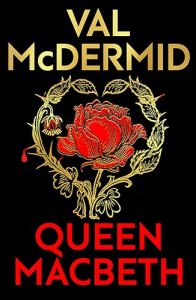 When we think of the name Macbeth, we often imagine the play by William Shakespeare of a power-hungry man and his equally vicious wife willing to do whatever it took to become King and Queen of Scotland. It is a play about revenge and murder, but Shakespeare did not pull these characters out of thin air. He took these characters from the annals of history, such as a man named Macbeth and his wife, a Lady Macbeth named Gruoch. However, the names are about as much as Shakespeare gets right regarding the story of one of the first Kings of Scotland. Val McDermid tells her version of Macbeth and Gruoch’s story in her latest novel, “Queen Macbeth.”
 The year is 1342 in the sleepy coastal English town of Hookton when marauders attack and steal a precious relic. Thomas, a young archer, is the only survivor. With his father’s dying breath, he has given Thomas a mission to carry out, retrieve the relic, and avenge his family’s honor. The hunt for the man responsible takes Thomas to France during the beginning of the conflict that will be known as the Hundred Years’ War. Can Thomas of Hookton find the relic he was tasked to find or will another quest drag him into an even darker path? Thomas’s tale begins in the first book of the Grail Quest trilogy by Bernard Cornwell called, “The Archer’s Tale.”
 Throughout history, women have been seen as pious mothers, wives, or daughters who stayed in their lane or vile manipulators who wanted power and were willing to do anything to maintain their status. While the former group of women would be an interesting study, as the saying goes, well-behaved women seldom make history. So why did certain women receive a villainess lens when we look at their lives and what do the historical records tell us about them? Samantha Morris has chosen to take the stories of these misunderstood maidens and tell them in her latest book, “The Most Maligned Women in History.”
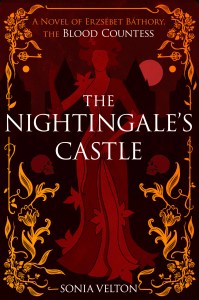 A castle looms in the distance and the owner, a glamourous countess, has asked for fair maidens from the surrounding areas to work for her. But this is not an ordinary castle and this was not a benevolent countess. The rumors say if you enter the castle, you will never return as the infamous Blood Countess Erzsebet Bathory will kill you and bathe in your blood. A rather gruesome tale that has been told for centuries, but how true is this story? What truly happened in the Countess’s castle and what was the countess like? Sonia Velton hopes to answer these questions in her novel about Erzsebet Bathory’s life, entitled “The Nightingale’s Castle.”
 Marriage has been an integral part of life for centuries. It has been used to create strong alliances and cement love matches. However, once the wedding ceremony is finalized, the facade often fades and the truth about the families is revealed. Jane Parker finally marries the love of her life, George Boleyn, but she soon realizes that her new family is full of ambition, especially her new sister-in-law Anne Boleyn. As one of the greatest marriages of the 16th century is beginning to fall apart, can a new romance be waiting in the wing to rock England and all of Europe to its core and whose side will Jane join in the end? Danielle Marchant continues her exploration of Jane Parker Boleyn, Lady Rochford’s life in her novel, “The Lady Rochford Saga Part 2: Tourmens de Mariage.”
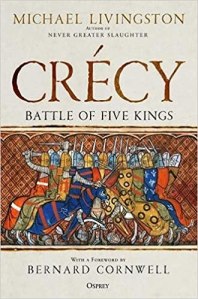 The year is 1346 and war has just begun between France and England. This conflict would be known as the Hundred Years War, which lasted over 116 years and ended in failure for the English. However, some glorious moments like Agincourt gave the English cause to celebrate, but none more so than the Battle of Crecy. It was a colossal battle between five European kings, leaving countless dead on the field without many long-term rewards. So how did the French and English armies meet on the field of Crecy and what truly happened? Michael Livingston dives deep into the archives and archaeological research to tell the truth of this famous battle in his book, “Crecy: Battle of Five Kings.”
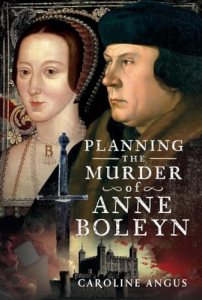 The 16th century was filled with tales of remarkable women. Still, one of the most defining figures of the century was a woman of noble birth who the King of England fell in love with and decided that he was going to divorce his first wife of over twenty years to marry her. The Great Matter caused a great scandal across Europe, however, it was a love match that would not last long. The relationship between Henry VIII and his second wife Anne Boleyn would turn volatile and in the end, Anne and the men around her would be executed. We often blame Anne Boleyn’s death at the foot of Henry VIII’s right-hand man Thomas Cromwell, but who was behind the death of this famous queen? Caroline Angus has chosen to re-examine the case to find out who was truly responsible for the fall of this famous queen in her latest book, “Planning the Murder of Anne Boleyn.”
 Weddings are supposed to be happy occasions to unite two families through the bonds of love, at least in our more modern sense of the ceremony. However, in the past, weddings were ceremonies that would unite families through contracts to create powerful alliances—hardly a romantic endeavor. One of the grandest weddings of the 16th century was meant to unite France, which led to bloodshed between Catholics and Huguenots. Minou Joubert and her family are invited to the wedding of Marguerite de Valois and Henri of Navarre in Paris, but the decision to attend the lavish event leads her family on a path full of tears and heartbreak. The story of the Joubert family’s struggle to fight for the faith they strongly believe in and to unite their broken family is masterfully told in Kate Mosse’s novel, “The City of Tears.”
 Adventures of a Tudor Nerd