
 When we consider the issue of succession, we often imagine the crown being passed to the next legitimate heir, regardless of gender, but that was not always the case. We think about the struggles that women like Mary I and Elizabeth I endured to secure and stay on the throne, but one woman came before them so close to becoming England’s first ruling queen. She was the daughter of King Henry I and the next in line to the throne after her brother tragically died, but after her father passed away, it was her cousin Stephen who usurped the throne. The war for the crown which would last decades would be known as The Anarchy is the primary focus for Sharon Kay Penman’s novel, “When Christ and His Saints Slept.”
I found this particular novel when I was going used book shopping and after so many people said that it was their favorite novel by Penman after “The Sunne in Splendour,” I knew that I wanted to buy and read it. I have been a fan of books about the struggle between Empress Matilda and King Stephen and the birth of the Plantagenet dynasty, so I wanted to see what kind of spin Penman would give to this story.
Penman begins her novel with a flashback to the last time Stephen saw his father before he went on Crusade in 1101, which was an influential moment in his young life. We then jump forward to Barfleur, Normandy in November 1120, which is where the legitimate male heir of Henry I, William, boarded the White Ship on a voyage he would not survive. The only legitimate child of Henry I, because the man had quite a few illegitimate children, was Empress Matilda (Maude). Her 1st husband, the Holy Roman Emperor died and since they did not have any children, Henry decides that she needs to remarry and his choice for her next husband is Geoffrey of Anjou. To say their relationship was tempestuous would be an understatement, but they were able to have a large family including Henry Plantagenet, the future King Henry II.
It seemed like all Matilda (known as Maude in this novel) had to do in order to secure the crown was sail to England for her coronation. But that’s not what happened. Instead, her dear cousin Stephen and his wife Matilda, stole her crown. If you think Maude is going to let Stephen do what he wants with her inheritance left to her by her father, you thought wrong because instead Maude decides to fight for her rights in the conflict known as the Anarchy. It was a bloody couple of decades for England full of betrayals and sieges. It will soon turn to not only a fight between Maude and Stephen but between their sons Henry and Eustace. This was not just a battle between nobility but, as we see with one of my favorite characters Ranulf Fitz Roy (a fictional character), it was a battle between barons and the illegitimate children of the old king for the future of England.
This was another absolutely brilliant book by Penman. The way she was able to craft such believable characters based on the historical records is nothing but awe-inspiring. It was a mammoth tome but it needed every single page to develop this rich story that I did not want to end. If you are like me and you crave a thrillingly vivid historical fiction novel, you must check out “When Christ and His Saints Slept” by Sharon Kay Penman.
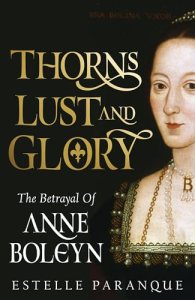 A young woman catches the attention of a king already married to a princess from a faraway kingdom. The king desires the young lady and divorces his wife to marry her. However, there is a catch. The young lady spent some time in the French court of Francis I and Claude of France, whereas the king’s wife was the daughter of the Spanish King and Queen as well as the aunt of the Holy Roman Emperor. The Great Matter of Henry VIII, Anne Boleyn, and Catherine of Aragon is considered one of the messiest divorces in English history and rightfully so when you consider the diplomatic consequences that this divorce would have across Europe. Estelle Paranque highlights the connection between Anne Boleyn and the French court in her latest book, “Thorns, Lust, and Glory: The Betrayal of Anne Boleyn.”
 English royal history is filled with fantastic stories of triumphs and tribulations, grand romances, and divorces that shook the foundations of the monarchy. It is also filled with struggles over religion, wars both inside England and with foreign nations, and heartbreaking child losses. We often think about the spouses of the Plantagenets and the Tudors when we think about royal romances, but we shouldn’t forget about the dynasties that came after, like the Stuarts. So how did the Stuart dynasty come to be and how did the unions between monarchs and their significant others affect the dynasty and England? Heather R. Darsie explores this often-overlooked dynasty and the stories of their marriages and romances in her latest book, “Stuart Spouses: A Compendium of Consorts from James I of Scotland to Queen Anne of Great Britain.”
 English history is filled with kings who had to fight for their crown, both at home and away in foreign lands. Men like William the Conqueror, Henry II, Henry IV, Edward IV, and Henry VII can be considered warrior kings, but one stands above them all. He only ruled for a little over nine years, but he proved his worth time and time again, especially against his French adversaries, and secured the crown of France for his young son. He was the son of Henry Bolingbroke, King Henry IV, and the grandson of John of Gaunt. He was Henry V and his story is one of the most remarkable tales in English medieval history, told masterfully in Dan Jones’ latest book, “Henry V: The Astonishing Triumph of England’s Greatest Warrior King.”
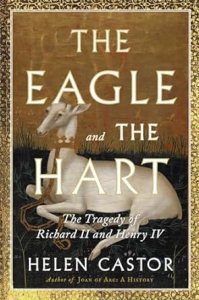 The story of the Plantagenets is filled with high triumphs and devastating tragedies. It is a story of families torn apart for a crown and the desire to either rule with an iron fist for the glory of England or live a life of luxury at the expense of their citizens. The story explored in this particular book is the tale of two cousins born months apart, Richard of Bordeaux and Henry Bolingbroke. Richard and Henry were not born to become King of England, but Fortune’s Wheel had a different plan for the cousins. So how did these cousins become kings and how did their tale turn to tragedy not only for their relationship but for all of England? Helen Castor tells the tale of these two Plantagenet kings in her latest book, “The Eagle and the Hart: The Tragedy of Richard II and Henry IV.”
 Have you ever read about a historical figure and wondered what it would be like to interact with them in the present day? How would they deal with modern problems and technology? Could they function in the 21st century or would they become overwhelmed? And even if they could come to the 21st century, how would it affect their timeline and history? This intriguing premise plays out in Maria Vetrano’s novel, “Queen Bess: A Tudor Comes to Save America,” which sees Queen Elizabeth I coming forward about 400 years in time to become the President of the United States in the 2028 election.
 When we think of the name Macbeth, we often imagine the play by William Shakespeare of a power-hungry man and his equally vicious wife willing to do whatever it took to become King and Queen of Scotland. It is a play about revenge and murder, but Shakespeare did not pull these characters out of thin air. He took these characters from the annals of history, such as a man named Macbeth and his wife, a Lady Macbeth named Gruoch. However, the names are about as much as Shakespeare gets right regarding the story of one of the first Kings of Scotland. Val McDermid tells her version of Macbeth and Gruoch’s story in her latest novel, “Queen Macbeth.”
 The year is 1342 in the sleepy coastal English town of Hookton when marauders attack and steal a precious relic. Thomas, a young archer, is the only survivor. With his father’s dying breath, he has given Thomas a mission to carry out, retrieve the relic, and avenge his family’s honor. The hunt for the man responsible takes Thomas to France during the beginning of the conflict that will be known as the Hundred Years’ War. Can Thomas of Hookton find the relic he was tasked to find or will another quest drag him into an even darker path? Thomas’s tale begins in the first book of the Grail Quest trilogy by Bernard Cornwell called, “The Archer’s Tale.”
 Throughout history, women have been seen as pious mothers, wives, or daughters who stayed in their lane or vile manipulators who wanted power and were willing to do anything to maintain their status. While the former group of women would be an interesting study, as the saying goes, well-behaved women seldom make history. So why did certain women receive a villainess lens when we look at their lives and what do the historical records tell us about them? Samantha Morris has chosen to take the stories of these misunderstood maidens and tell them in her latest book, “The Most Maligned Women in History.”
 Adventures of a Tudor Nerd