
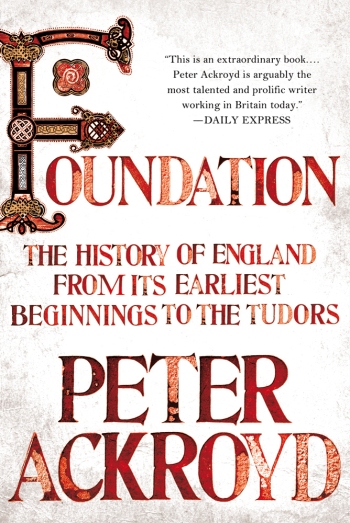
 England is a nation that is rich in history and conflicts galore. Through the centuries, England has seen so much change. Many of us know the stories of the medieval and the Tudor kings and queens of England, covered in numerous books, but Peter Ackroyd has taken this concept a step forward. Ackroyd embarked on an epic quest to chronicle the history of England from its prehistoric origins to the modern age. In “Foundation: The History of England From Its Earliest Beginnings to the Tudors,” Peter Ackroyd begins his epic journey into the past to explore the origins of English history.
This book is one that I have seen every time I go to a bookstore and look at the history nonfiction section. I have heard great things about Ackroyd and this series, however, I have yet to read any of his books. It was always an intriguing book to me, but it was one that I never read until now.
Ackroyd has decided to begin his book with one of the most ancient sites in all of England, Stonehenge, explaining that before the first stone was set in Stonehenge, the origins of England were centuries old. We travel through the Stone Age, the Bronze Age, the Iron Age, and into Roman Britain before we dive into the time of the Anglo-Saxons and the Viking invasions. There is a lot of history to cover in less than a hundred pages, but Ackroyd can get his point across about how much change England went through during that time and that it continued to grow throughout the following centuries.
We see the impact that the Norman Conquest and William the Conqueror’s reign. The fall of the Normans with the death of King Stephen led to the rise of the Plantagenets and the reign of King Henry II. It was the Plantagenets that Ackroyd focuses the bulk of this book on as the dynasty lasted over 300 years and witnessed much change. From the Crusades, the Hundred Years War, and the Wars of the Roses, to the Black Death, rebellions, and religious changes, the Plantagenets saw England through major highs and lows. It was not just the monarchs that Ackroyd highlights in this book, he also examines how normal life changed with each dynasty and through the centuries, which adds a bit of depth to his examination of the past. Ackroyd concludes with the fall of Richard III and the rise of Henry VII and the Tudor dynasty. I wish Ackroyd would have waited until his next book to discuss the reign of Henry VII, but it is a minor qualm in the long run.
Overall, I found this an enjoyable and informative read. This is not only a tale of warring kings but a story of the people of England and what makes England so unique. A story whose origins are centuries old, but are rich and vivid in details. I look forward to seeing how Ackroyd will chronicle the Tudors and the rest of England’s history. If you want a book that explores as much of the beginnings of England’s story through multiple dynasties and dramatic changes, I would suggest you read, “Foundation: The History of England From Its Earliest Beginnings to the Tudors” by Peter Ackroyd.
 A life of luxury from birth, destined to be crowned King or Queen of England. This is what we often think life must have been like for royal heirs who reached the ultimate destination of a crown and a throne. However, the stories of those who failed to reach the throne are mired in tragedy and heartache. The question of royal succession in England is a complex issue, especially when the heir to the throne dies unexpectedly, leaving doubts on whether a dynasty will survive through blood or dissolve in conflict. How did the deaths of these potential rulers radically transform the fabric of English history as a whole and what can their lives tell us about what kind of rulers they might have been? Ashley Mantle hopes to answer all of these questions and more in his latest book, “Uncrowned: Royal Heirs Who Didn’t Take the Throne.”
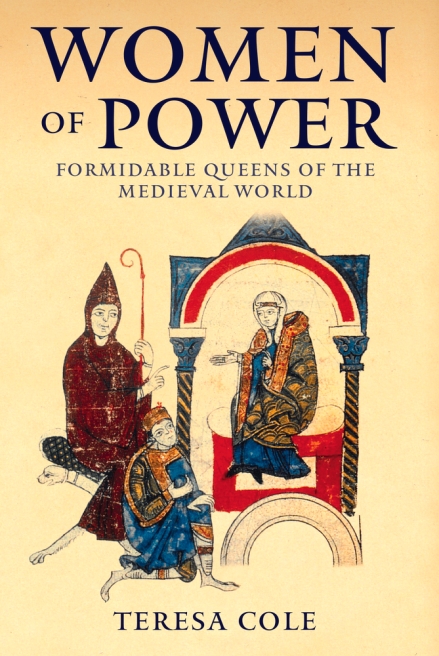 When we think about medieval women, we often think about very pious figures who relied on men, had numerous children, and would often fade into obscurity when they died. While this would be the ultimate fate for many women, it was not so for those close to thrones worldwide. In times of war and political upheaval, the daughters, the wives, and the queens picked up the pieces and patched their respective kingdoms back together. In her latest book, “Women of Power: Formidable Queens of the Medieval World,” Teresa Cole has chosen a select group of women to highlight her point about the strength of women who held power in the Middle Ages.
 When we think of old homes, we often think of the phrase, “If walls could talk,” because the true treasure of any home is not the floorboards or the walls, but rather the stories of those who lived inside its walls. Take, for example, Hampton Court Palace in England. A home for over 500 years that has seen many architectural and artistic changes in its hallowed halls, but it is the stories of those who stayed for brief periods that truly make this palace spectacular. Stories full of salacious scandals, religious implications, and revelations that would shake England to its core through revolutions. Hampton Court Palace has been the center of English court drama for centuries and finally, these tantalizing tales are being told in a truly remarkable book, “The Palace: From the Tudors to the Windsors, 500 Years of British History at Hampton Court” by Gareth Russell.
 The story of the Boleyn family in the 16th century and their ultimate fall from grace has been told for centuries. However, there is a more intriguing tale hidden in the Boleyn family tree. The origins of the family and how they became such a dynamic family that revolutionized the 16th century. How did this family of peasants rise through the ranks to have one of their own become the Queen of England? It is a tale of struggle, survival, and triumph that is told in Claire Martin’s debut book, “Heirs of Ambition: The Making of the Boleyns.”
 Illegitimate royal children have been known to make an impact on history. Take Henry Fitzroy, the illegitimate son of Henry VIII, and Bessie Blount, whom Henry VIII acknowledged as his son. There were discussions about Henry Fitzroy becoming the heir apparent if Henry VIII did not have a legitimate son. But what about the illegitimate children that a king did not acknowledge? What might their lives have been like? The story of Mary Boleyn and her affair with King Henry VIII has been told many times, but the story of her daughter born during that time is lesser known. In her first full-length nonfiction book, “Henry VIII’s True Daughter: Catherine Carey, A Tudor Life,” Wendy J Dunn has taken on the task of discovering the truth of Catherine Carey’s parentage and how it impacted her life.
 The 1520s in England were a raucous time. As the years pass, King Henry VIII’s desire for a legitimate son grows and his resentment towards his wife Katherine of Aragon increases. Henry has decided to divorce his wife of over 20 years to marry a new fling, Anne Boleyn, who would surely give him the son and heir. All of Europe, especially the Pope, is horrified at the direction Henry is taking, but one man stands firmly on the side of the King. Thomas Cromwell rose through the ranks to become Henry VIII’s right-hand man, even though he had rather humble origins. Can Thomas Cromwell help the man who made him and survive the king’s wrath? Hilary Mantel explores the origins of Cromwell’s rise and The Great Matter in the first book in her Thomas Cromwell trilogy, “Wolf Hall.”
 Time travel is a dream for history and science fiction nerds alike. To be able to go to a different period in history to witness major events sounds like it would be tons of fun, but it can also be treacherous if you do not know the era well. What should you wear? Where would you live? What would your occupation be and what should you eat? If you are invited to court, how do you navigate the crazy court intrigue and the ever-changing religious dilemma? Toni Mount has created the ideal book for those who wish to travel to the 16th century called, “How to Survive in Tudor England.”
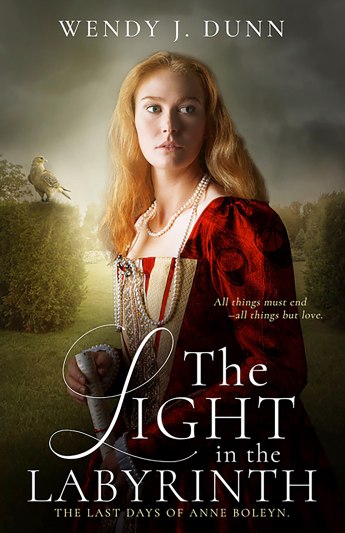 The year is 1535 and a young girl whose mother was a shining light at court, dreams of getting away from her family and joins her aunt at court. Her name is Kate Carey, the daughter of Mary (Boleyn) Carey, and her aunt is Queen Anne Boleyn. Little does Kate know that the court life she desires is full of danger and enemies around every corner. In the labyrinth of court life, Kate must navigate it successfully to come out alive, even as her aunt’s reign is coming to an end and a secret is revealed that will radically change her life forever. Wendy J. Dunn tells Kate Carey’s story in her young adult novel, “The Light in the Labyrinth: The Last Days of Anne Boleyn.”
 The tragedies of the Boleyns and the Howards left many with scars and heartache, none more so than Jane Parker. The daughter of Henry Parker, Lord Morley, Jane is seen to be destined for a great marriage and a successful career at court. As one of the ladies to serve Queen Catherine of Aragon, Jane witnesses the splendor, glam, and intrigue needed to survive in the court of Henry VIII. Danielle Marchant has taken inspiration from what she has studied about Jane Parker to create “The Lady Rochford Saga- Part 1: Into the Ranks of the Deceived.”
 Adventures of a Tudor Nerd