
 When we study the past, the stories of queens often begin when they marry their prince or the king. We don’t see their formative years unless they are extraordinary. One of the more extraordinary queens in English history was Anne Boleyn, a woman who was able to capture the heart of King Henry VIII, divide her nation, and gave birth to the legendary Queen Elizabeth I. We all know how the story of Anne Boleyn ends, but how did she become the woman who would one day be Queen of England? Hever Castle currently has an exhibition about Anne Boleyn’s formative years. This corresponding book, “Becoming Anne: Connections, Culture, Court” by Owen Emmerson and Kate McCaffrey, gives readers an in-depth look into her early years.
“Becoming Anne: Connections, Culture, Court,” the exhibition to celebrate the 500th anniversary of Anne Boleyn’s debut at the English Court on March 4, 1522, is currently running at Hever Castle until November 9, 2022, for anyone interested in attending. For those who cannot participate in this exhibit, like me, “Becoming Anne: Connections, Culture, Court” by Owen Emmerson and Kate McCaffrey is perfect for celebrating this momentous event in Tudor history.
We begin our exploration of Anne Boleyn’s formative years by looking at how the Boleyn family rose to a prominent position at Henry VIII’s court. Thomas Boleyn rose through the ranks and married well to Lady Elizabeth Howard. The Boleyn children were given the best possible education to secure great marriages. Anne’s education inside England and throughout Europe defined her as a captivating figure in history. Her international education included stays at the court of Margaret of Austria in Mechelen, Queen Mary Tudor, and Queen Claude in France, Louise of Savoy, and Marguerite of Angouleme.
Emmerson and McCaffrey have written a book that combines the latest in Boleyn research from the top experts, including Lauren Mackay, Elizabeth Norton, Tracy Borman, and Claire Ridgway, to name a few. For a companion book for an exhibit about Anne Boleyn, I found this book informative and was complemented by the gorgeous images that the authors included. If you want a delightfully informative and beautifully illustrated book about Anne Boleyn’s formative years, I recommend reading “Becoming Anne: Connections, Culture, Court” by Owen Emmerson and Kate McCaffrey.
 England in the 9th century was a land full of dangers and was deeply divided in the form of four main kingdoms; Northumbria, East Anglia, Mercia, and Wessex. One by one, the kingdoms began to fall to the Danes until there was only Wessex that stood in the way of complete conquest. There was a young man who became a king who stood in the way of the invaders. His name was King Alfred the Great, but he was not alone in his quest to unite all of England. His right-hand man was a Northumbrian nobleman who lost his birthright, was raised by the Danes, and had to choose a side in this conflict. His name was Uhtred of Bebbanburg, and his story begins in the first novel of The Saxon Stories series by Bernard Cornwell, “The Last Kingdom.”
 During medieval wars, one’s fate is often determined by the spin of the Wheel of Fortune, even for those who did not fight a single battle. One could be living a life of luxury, stability reigning supreme, and is destined to marry a foreign king or prince, but when the wheel begins to spin, all seems lost, and the things that once were as good as guaranteed fall by the wayside. This description could fit any number of stories from the past. Still, the one highlighted in this particular novel is the story of the eldest daughter of King Edward IV and Elizabeth Woodville and the first Tudor queen. In the first book of her latest book series, “The Last White Rose: A Novel of Elizabeth of York,” Alison Weir shows how one woman was able to ride the highs and lows of life to secure her family’s legacy and transform English history forever.
 When we think of famous artists in the 15th and 16th centuries, we focus on the great European masters. Michelangelo, Leonardo da Vinci, and Albrecht Durer tend to come immediately to mind. However, one man from Augsburg, Germany, revolutionized how we viewed the Tudor dynasty through portraiture: Hans Holbein the Younger. Many are familiar with his famous works of art and how they influenced how the Tudors have been perceived for centuries, but the man behind the masterpieces has been overlooked. His story and how art was understood in the 16th century is told in Franny Moyle’s latest biography, “The King’s Painter: The Life of Hans Holbein.”
 In history, the stories of women closest to those who sat on the throne tend to shine a bit brighter than others. Their tales give us great insight into how their respective countries were run and how dangerous it could be to marry someone with royal blood in their veins. However, some of the tales get lost in the annals of the past, only to be discovered much later. One of those tales is the story of Cecily Bonville- Grey, the wife of Thomas Grey Marquis of Dorset. In her own right, an extremely wealthy woman, her marriage into the Grey family would help define the succession issue during the late Tudor dynasty. Her story is finally told in Sarah J. Hodder’s latest book, “Cecily Bonville-Grey- Marchioness of Dorset: From Riches to Royalty.”
 In any dynasty, those closest to the throne are the most at risk of dealing with suspicions and conspiracies. Those who were not next in line for the throne were seen as threats, especially those whose bloodline was a bit stronger than those who sat on the throne. The Tudor dynasty’s biggest threat was the few Plantagenets who still lived at court. The family that had the most Plantagenet blood in their veins and poised the most significant threat was the Pole family. However, one woman who was very close to Henry VIII and his family married a man who had Plantagenet blood in his veins. Her name was Gertrude Courtenay, the Marchioness of Exeter, and her story is finally getting the light it deserves in Sylvia Barbara Soberton’s latest book, “The Forgotten Tudor Women: Gertrude Courtenay: Wife and Mother of the Last Plantagenets.”
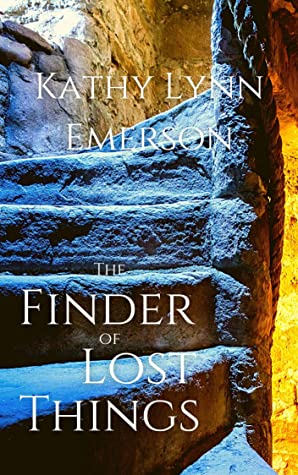 Blanche Wainfleet, a merchant’s wife living in England in 1590, has a reputation for finding items that others have deemed lost. Blanche has a gift for finding mementos important to others, from lost handkerchiefs to pets. However, there is one thing that she is searching for that will prove her greatest challenge yet, finding the truth about her sister’s murder. Blanche’s sister Alison fell in love with a Catholic man and converted to the Catholic faith when there was a war between Catholicism and Protestantism. To uncover the truth, Blanche must infiltrate the Otley family who took Alison in during her final days, but will she discover the truth and come out of the ordeal alive? This is the premise of Kathy Lynn Emerson’s latest novel, “The Finder of Lost Things.”
 When one studies a specific dynasty, we tend to focus on the stories of those who rule their respective countries and explore the men who influenced the king’s decisions. A dynasty’s legacy tends to be viewed from the military and legal victories of the men, but just as important are the women who stood beside the king. Royal women tend to be considered side characters of the dynasty who were only crucial for their inheritance, who they married, and the children they could produce. But if we focused on the story of the royal women in a specific dynasty, what could we learn about the dynasty? Amy Licence took this concept to explore women’s voices and decided to tackle the Tudor dynasty in her latest book, “Tudor Roses: From Margaret Beaufort to Elizabeth I.”
 Elizabeth Tudor is now the Queen of England and is learning quickly how her relationships with others would affect all of Europe, especially when it comes to her marriage. Marriage is difficult, as Margery Preston soon discovers. Margery is a lady in waiting to the fickle Queen Elizabeth and must navigate the intricacies of court life while learning to be a wife to Robin Lewis, a man she barely knows. She is treated like a child rather than a woman by those around her. Can Margery convince others that she is a strong woman and find love and happiness in the quagmire of court life? Margery’s story is told in the third installment of The Tudor Court series by Karen Heenan, “Lady, In Waiting.”
 When we think of Vikings, a few images come to mind. It is either the cartoonish image of warriors with horned helmets or blood-soaked warriors from TV shows like The Vikings. They are seen as men and women who fight Christians in England and France and sometimes into North America, but we do not see them in the east. With archaeological digs and discoveries being made recently, what can the artifacts tell us about the Viking world? In “River Kings: A New History of the Vikings from Scandinavia to the Silk Roads,” Dr. Cat Jarman takes her readers on a journey of discovery, following the trail of a single carnelian bead.
 Adventures of a Tudor Nerd