
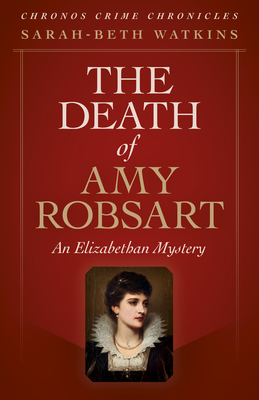
 On September 8, 1560, a woman was found dead at the bottom of a flight of stairs inside Cumnor Place. The only visible marks on her body were two wounds on the side of her head, yet her neck was clearly broken. If she was an ordinary woman, her death would not have been remembered through the centuries, yet she was no ordinary woman. She was the wife of Robert Dudley, the man who was considered as one of Queen Elizabeth I’s favorite courtiers. Amy Robsart was a third wheel in the relationship between her husband and the queen, but does that mean that she was murdered? In her latest book, “Chronos Crime Chronicles- The Death of Amy Robsart: An Elizabethan Mystery”, Sarah-Beth Watkins plays detective to uncover the cause of death and the possible motive for those who wanted to see Amy dead.
I would like to thank Sarah-Beth Watkins and Chronos Books for sending me a copy of this book. I have enjoyed Watkins’ previous books, so when I found out she was writing another book about the case of Amy Robsart, I knew that I wanted to read it.
Amy Robsart, the wife of Robert Dudley, was a woman whose life was an enigma, but her death caused a sensation. In this short book, Watkins gives her readers a brief outline of what we know about her death and the coroner’s report on her case. As someone who has read about this case in the past, I found that she was able to touch on the significant points of the case in a succinct yet engaging manner.
Watkins then moves to the main topic of her book, which is if someone did have Amy murder, who were the possible suspects, and what could have been their motives for the crime. Obviously, she does mention Robert Dudley and Queen Elizabeth I as suspects because they were subject to the rumors swirling around this particular case. Watkins does also brings up others who could have committed the crime because they were jealous of the relationship between Dudley and Elizabeth I. If Amy Robsart was indeed murdered, it seems likely it was her husband’s enemies who wanted to blacken his name, not because they had an extreme hatred towards Amy herself.
As someone who believes that Amy Robsart’s death was indeed a terrible accident, I found that some of Watkins’ arguments rather compelling. I think that Watkins’ easy-to-understand writing style is a benefit for a case as complex as this one. This is a good introduction book for those who are not familiar with the death of Amy Robsart, but I wish Watkins did dive a bit more in-depth into some of the theories that she does mention. If you want a book that introduces you to the mysterious death of Amy Robsart, “Chronos Crimes Chronicles- The Death of Amy Robsart: An Elizabethan Mystery” by Sarah-Beth Watkins is the book for you.
 “Uneasy lies the head that wears the crown.” This famous quote from William Shakespeare’s play Henry IV, Part III has been used throughout the centuries to describe how difficult it is to rule a country for any duration of time. Most kings and queens of the past lasted for a few years, but there was one queen who lasted for a handful of days. She was the successor of Henry VIII’s only male son, King Edward VI, and was meant to replace his eldest half-sister, who would become Queen Mary I. It was a battle between Protestantism and Catholicism with a 17-year-old scholar caught in the middle. Her name was Lady Jane Grey, but many refer to her as the “Nine Day Queen of England”. Lady Jane Grey’s tragically short story, how she became queen, and the consequences of her reign are discussed thoroughly in Nicola Tallis’ beautifully written debut biography, “Crown of Blood: The Deadly Inheritance of Lady Jane Grey”.
 Action, adventure, drama, heartache, and love are what people crave when they read fictional stories. Yet, these elements are ever-present in the stories from the past. Each one of these topics could be explored in numerous ways when we are discussing history, but an area in history where romance and love were intermingled with politics was Elizabethan England. Queen Elizabeth I was obviously known as the “Virgin Queen” because she chose not to marry, but that did not mean that her subjects were banned from love and marriage. How did Elizabethans view the ideas of love, marriage, and sex? In this book, “Sex, Love, and Marriage in the Elizabethan Age”, R.E. Pritchard sets out to explore what love, marriage, and the intimate moments meant to Elizabethans of every class.
 Divorced, beheaded, died. Divorced, beheaded, survived. For those who study Tudor history, we have heard this unimaginative rhyme to refer to the wives of Henry VIII for the longest time. We all know the stories of the queens, especially Anne Boleyn, but the fifth wife and the second one to be beheaded tend to be cast aside for some of the more intriguing tales. Her name was Catherine Howard, Henry’s youngest bride. Her story is full of rumors and myths, just like her cousin Anne Boleyn. Most know of her romantic dalliances that, in the end, led to her demise, but what was her reign like as queen? What was the court of Henry VIII like during his fifth marriage as his health was failing? In Gareth Russell’s brilliant biography, “Young and Damned and Fair: The Life and Tragedy of Catherine Howard at the Court of Henry VIII”, he dives deep into the archives to shine a light on the life of this tragic and young queen.
 The year 1483 proved to be a pinnacle point of change for the short-lived Yorkist dynasty. After finally defeating the Lancastrian army, King Edward IV and his family bring peace and order to England, but even their happiness cannot last as King Edward IV dies unexpectedly on April 9, 1483. A power struggle ensues between Richard Duke of Gloucester and Elizabeth Woodville over who should be King of England. Most of Elizabeth Woodville’s children side with her, but there is one child who is staunchly loyal to the Yorkist cause and her uncle Richard; Cecily of York. In her latest novel, “Princess of Thorns”, Saga Hillbom tells the heartbreaking tale of Cecily of York showing how deep her loyalty to her family was and how loyalty came with a cost.
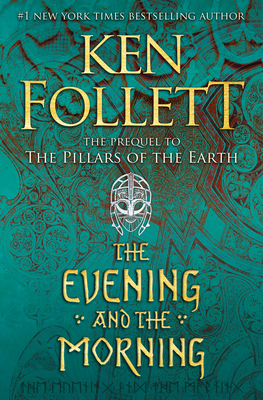 The year is 997 and England is in a dire situation. Fears of invasions from the Welsh and the Vikings leave the Anglo- Saxon residents rattled while those in power take advantage of their citizens. Chaos reigns supreme as those who rule the towns are in constant power struggles between themselves and their king, Ethelred the Unready, with the average villagers caught in the middle, like the villagers of Dreng’s Ferry. It is in this small village where three characters find their lives intertwined with the political and social drama. A young boatbuilder named Edgar endures heartache and sorrow when the Vikings attack his home. A Norman noblewoman named Ragna follows her heart to marry the man she loves and travels to a faraway land but soon finds out how difficult that love can be. Finally, a monk named Aldred works hard for the people while dreaming of transforming his meek abbey into a lively center of learning. Their tales are masterfully woven together in the much-anticipated prequel to the Kingsbridge series by Ken Follett. This is “The Evening and the Morning”.
 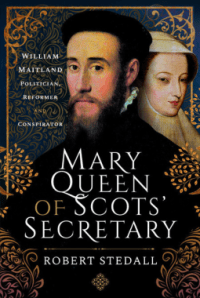 One of the most dynamic queens in 16th century Europe who spent most of her youth in a country that was not her homeland, but was fighting for the right to rule England. Her name was Mary Queen of Scots, the cousin of Queen Elizabeth I. Many know of her tragic tale, but there was a man who was behind the scenes trying to guide Scotland to a brighter future. He was not married to Mary Queen of Scots, but he was influential in her life and choosing who she might marry and who she would end up divorcing. He was a politician and a religious reformer whose decisions would alter history dramatically. His name was William Maitland and he served as Mary’s secretary. He is always mentioned as a footnote in history, until now. Robert Stedall’s latest biography, “Mary Queen of Scots’ Secretary: William Maitland- Politician, Reformer, and Conspirator”, explores the life and legacy of this rather extraordinary secretary.
 One of the most prominent royal families of English history was the Plantagenets, who reigned for over three hundred years. In the first one hundred years of this family’s infamous history, five kings ruled (the first two are considered kings of the Angevin dynasty): Henry II, Richard I, John, Henry III, and Edward I. These five kings saw England change drastically, but they also participated in the international political landscape of the day, which involved the series of wars that today we simply refer to as the Crusades. The early Plantagenet kings saw much bloodshed and war, but they were not alone in their struggle to keep the dynasty going. These men would not have gotten as far as they did without their wives who stood by their sides. In Alison Weir’s latest installment of England’s Medieval Queens series, “Queens of the Crusades”, she takes a deep dive into the lives of the first five Plantagenet queens to show how remarkable these women truly were to stand beside their husbands during the times of the Crusades in Europe.
 The year is 1540 and King Henry VIII has grown tired of his fourth wife from Germany, Anne of Cleves. The aging king longs for another heir to make sure that his dynasty is secure, which means he is searching for his fifth wife. Henry’s wandering eye lands on a young girl who happens to be a cousin of his second wife of Anne Boleyn. The young woman’s name who caught the king’s attention is Katheryn Howard. Henry believes that his new bride is virtuous as well as being very beautiful, but what secrets does this young queen hide? In her latest installment of the Six Tudor Queens series “Katheryn Howard: The Scandalous Queen”, Alison Weir takes a look into the life of this young woman and the men who loved her.
 Adventures of a Tudor Nerd