
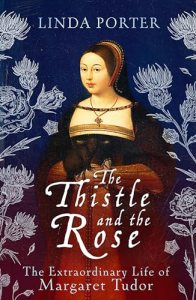
The Tudors have been an area of fascination for historians and history nerds alike for centuries. The attention tends to focus on either Henry VIII and his six wives or his daughter, Elizabeth I, but we need to remember that they were not the only Tudors. In fact, we should remember that Henry VIII had siblings, Arthur, Margaret, and Mary. While Arthur and Mary tend to get more attention due to their proximity to Henry VIII and his marital life, Margaret Tudor had her own eventful life as Queen of Scotland and the mother of King James V. Linda Porter tells Margaret’s story in her latest biography, “The Thistle and the Rose: The Extraordinary Life of Margaret Tudor.”
I had heard that Porter was writing a new biography about Margaret Tudor, so I knew I wanted to read it. I have read a few books about Margaret Tudor, but they have been relatively short, so I wanted to see what new information Porter would include in this book.
Margaret Tudor was the second child of King Henry VII and Queen Elizabeth of York. As such, she was destined to marry a foreign prince and create a strong alliance for the brand-new Tudor dynasty. Since her brother Arthur was betrothed to Catherine of Aragon, Margaret’s parents chose a match with Scotland and King James IV, who was twice the age of Margaret. As Queen of Scotland, Margaret did her best to bridge the gap between England and Scotland, deal with her husband’s mistresses and illegitimate children, and be a mother to her son, King James V.
Everything changed when James IV died at the Battle of Flodden. Margaret was now a widow and regent for the young King James V. To protect her family, Margaret decided to marry Archibald Douglas, 6th Earl of Angus, which turned out to be a trainwreck. Although Archibald did give Margaret her daughter, Margaret Douglas, he was stealing from Margaret’s own properties, which was a jerk move. Margaret wanted a divorce, but her dear brother Henry VIII was against the idea. A bit hypocritical, especially since he would divorce Catherine of Aragon a few years later. Eventually, Margaret would divorce Archibald and marry a third time to Henry Stewart, Lord Methven.
Throughout history, Margaret Tudor has been viewed negatively because she married Archibald so quickly, but Porter showed that Margaret should be applauded for how she survived during difficult circumstances. She fought for herself and her children, even if it meant that she was at odds with her husbands or her brother. Through her letters, we see how Margaret was a diplomat trying to make peace between England and Scotland.
Porter does an excellent job telling Margaret’s story in a respectful manner. This book is extremely well researched and easy to read. If you are a Tudor fan and you want to learn more about Henry VIII’s sister Margaret Tudor, I highly recommend you read “The Thistle and the Rose: The Extraordinary Life of Margaret Tudor” by Linda Porter.
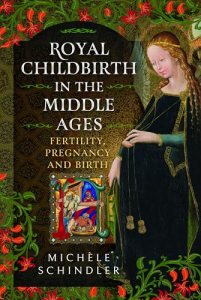 Throughout history, many aspects of life have changed drastically, but one thing has remained the same: the different stages of life—birth, youth, adolescence, adulthood, old age, and death. It is the first stage of life, birth, that tends to get the least amount of attention when it comes to historical research. In recent years, it has been gaining more and more attention, especially when it comes to royal births, which have the most amount of written records. Michele Schindler has chosen to focus on the aspects of medieval childbirth in her latest book, “Royal Childbirth in the Middle Ages: Fertility, Pregnancy and Birth.”
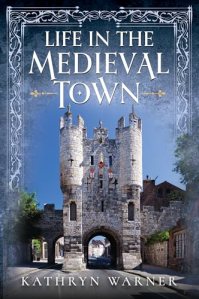 Have you ever watched a movie, played a video game, or read a novel set in the Middle Ages and wondered if life was really like that? Was it super dirty, grimy, and deadly, or is this a fictional device to show how bad the past was compared to the present? Kathryn Warner has delved into the archives to uncover the truth about what life was like in an average medieval town for her latest book, “Life in the Medieval Town.”
 Have you ever read about a historical figure and used what they went through to help you get through difficult times? It is as if you read about their life at the perfect time in your life to help you get through your own struggles. Growing up, for me, it was reading about young Elizabeth I. For Ana Garriga and Carmen Urbita, it was reading about 16th and 17th-century nuns, the ones that they were researching for their PhDs. What lessons did Garriga and Urbita find when they were researching two centuries and the nuns who lived during this period? They share the lessons that they learned from the past in their book, “Convent Wisdom: How Sixteenth-Century Nuns Could Save Your Twenty-First Century Life.”
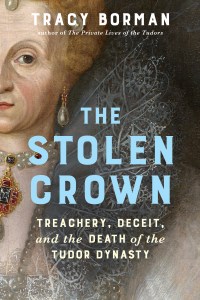 It is March 1603, and the Virgin Queen is dying. She has no children to inherit her throne directly, so she must choose a successor. She chooses the son of Mary Queen of Scots, the queen who had been executed a few years before. James VI of Scotland will become James I of England, but was it as easy as William Camden makes it in his account? What does a recent discovery about Camden’s original manuscript of Annales tell us about James’ succession to the throne of England? Tracy explores the messy conflict to find an heir to the English throne in her latest book, “The Stolen Crown: Treachery, Deceit and the Death of the Tudor Dynasty.”
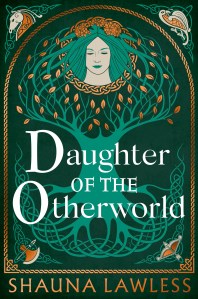 When we think about the Norman Conquest, we often think about how it impacted England, Wales, and Scotland, but we tend to forget about Ireland. Early medieval Ireland do not get a whole lot of attention in historical fiction. That is, until Shauna Lawless’s Gael Song trilogy. Now, fifty years after the events of the original trilogy, Lawless has brought in a new cast of characters, as well as old characters, into the fight between the Descendants of the Tuatha De Danann and the Fomorians. When a child of prophecy is introduced into the mix that is said to be able to defeat the Fomorians, the race is on to protect the child or to kill her. Will the Descendants survive, or will the Fomorians torch the land and the Descendants’ hope? Shauna Lawless jumps back into this work with the Gael Song Era 2 book 1, “Daughter of the Otherworld.”
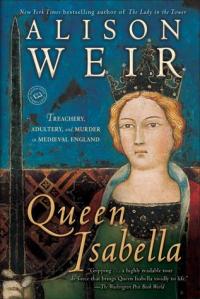 Throughout medieval English history, there have been some famous queens who left their marks. Empress Matilda, Eleanor of Aquitaine, Eleanor of Castile, Philippa of Hainault, and Margaret of Anjou each left an impression on English history, either good or bad. However, there was one queen whose negative reputation came with the nickname “She-Wolf of France,” and her name was Queen Isabella of France. The wife of Edward II and mother of Edward III, she left her husband for Roger Mortimer and overthrew her husband in favor of her son. For centuries, she has been viewed as a horrible villainess, but is that a fair assessment of her life? Alison Weir dives into the archives to find the truth about Isabella of France, and she presents her findings in her biography, “Queen Isabella: Treachery, Adultery, and Murder in Medieval England.”
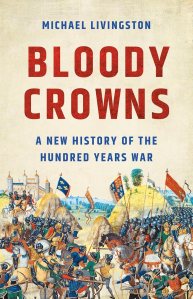 Medieval Europe was a time of conflicts and change. While smaller disputes between countries or civil wars would define borders, the most prominent conflict during this period was the Hundred Years’ War. A conflict that has been traditionally taught to have lasted 116 years between England and France. It is often told from the English perspective, with battles such as Agincourt, Crecy, and Poitiers celebrated. But what if we look at the bigger picture and expand our lens to the whole of Europe while keeping a neutral approach to the France vs England conflict? What if the conflict did not last a mere hundred years, but in fact two hundred years? What type of story would this kind of approach tell when it comes to medieval European history? Michael Livingston takes on the mammoth challenge of telling the tale of how this war changed European history forever in his latest book, “Bloody Crowns: A New History of the Hundred Years War.”
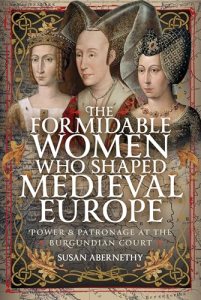 Throughout European history, we tend to think about the countries as a whole when it comes to the political sphere of influence. We think of the big countries like France, Spain, Italy, Germany, Austria, and England as having the most impact, but we have to consider that during the Middle Ages, duchies held immense power. Take, for example, the Duchy of Burgundy, also known as the Burgundian Empire. It was a part of France, but that does not mean that the dukes stayed on the side of the French. The Burgundians used their influence to expand and marry into the medieval European families, affecting European history as a whole. While we tend to focus on the Dukes of Burgundy, we should be paying attention to the women of this duchy. That is why Susan Abernethy chose to focus on these women in her latest book, “The Formidable Women Who Shaped Medieval Europe: Power and Patronage at the Burgundian Court.”
 Adventures of a Tudor Nerd