Guest Post: “Making Real People Work for You” by Anna Belfrage

Their Castilian Orphan Tour Banner 1I am pleased to welcome Anna Belfrage to my blog today to share a guest post to promote her novel, “Their Castilian Orphan.” I would like to thank Anna Belfrage and The Coffee Pot Book Club for allowing me to be part of this blog tour.

I write Historical Fiction. While my protagonists are entirely fictional, they now and then have to interact with “real” people who’ve existed, lived, and died for real. This can be a bummer – especially when your perfectly crafted timeline suddenly crashes headlong into the wall of historical facts. That conversation your protagonist was to have with the wife of the 14th-century Earl of Lancaster can no longer happen, seeing as the lady died some months before the planned meeting. The touching scene in which Philippe Augustus of France reconciles with his Danish wife, Ingeborg, must be scrapped – the king would no more reconcile with his wife than he would have a crocodile in his bed (which would not only be very weird but also anachronistic, as there were no crocodiles in medieval France. As an aside, no one knows just why Philippe Augustus stormed out of the chamber in which he’d just spent his wedding night said Ingeborg, determined to never, ever have her near him again). See? These real-life characters are hard to deal with. In actual fact, so are the invented characters, as all of a sudden they start developing opinions of their own and generally refuse to cooperate when they don’t agree with the overall plotline, but that is neither here nor there – not in this post.
Including real characters in the story adds a certain nerve. People can read the book, become intrigued, and spend some time googling the real characters. Hopefully, they come away with the impression that the author has done a good job adhering to the overall facts. If not, there may be a problem, as readers of historical fiction tend to be sensitive to incorrect information.

The further back in history you write, the more leeway you have when utilizing real-life characters. Also, I think it important to underline that Historical Fiction is precisely that: fiction. Even when writing about real historical people, we must keep in mind that we don’t know these shadowy ghosts from the past. What we have are fragments of their lives (at best), mentions in this roll or the other, acidic comments in one chronicler’s version of events, and praise in another’s. So what any good historical fiction author does is that he/she constructs a picture – fleshes out the spare bones we have left to create a living, breathing character (in as much as characters can breathe, of course). Every such representation is incorrect in that it does not – cannot – be a fair representation of the person who lived and died all those years ago.

This is why we get such varied depictions of historical people. Authors may start with the same bare facts, but then they’ll add biases and personal values, which is why Henry Tudor comes across as the villain in one book, as an earnest man with a mission in another. The thing is, we have no idea what he was really like. Was he passionate in bed? Did he have the enervating habit of sucking his teeth as he thought? Did he take reading matter with him to the garderobe? Did he eat the veggies first? Did he now and then curse that meddlesome mother of his to hell and back? We simply don’t know. What we do know is that he won at Bosworth – and that, according to some, is down to pure luck, while others will argue for divine intervention.

I guess the long and short of all this is that a historical fiction author must know his/her period, and must be familiar with customs and foods, clothes, and values. Of course, when writing about real people, the author needs to have read up on the facts that exist. But these are just the building blocks. A historical fiction author wants to tell a story, and sometimes those real-life characters have to be tweaked – a bit – to create the required tension. And so Henry Tudor is at times represented as diabolical, at others as an ambitious man who truly believes he deserves the English crown. A skilled author will have the reader accepting either or – for the sake of the story as such.

In my recent release, Their Castilian Orphan, I am writing about a very, very bad year for Edward I. 1294 is probably one of his least favourite years, even if nowhere close to that most awful year, 1290 (when his wife died. And see what I am doing here? I am imbuing Edward with romantic traits by indicating he never, ever got over the loss of Eleanor. While there seems to be plenty of evidence this was the case, we do not know. Not really. . .) In 1294, Philippe IV of France more or less tricked Edward into turning over parts of Gascony to him, and, as icing on the cake, the Welsh seized the opportunity offered by Edward’s conflict with France to rebel.

Obviously, Edward plays an important role in my novel. While he is not one of my protagonists, most of my invented peeps live in his shadow, some in closer proximity to him than others, but none untouched. As Edward was king, we know more about him than about other players in the period. We can, for example, track his itinerary through his rolls—and boy did the man move about a lot! But the documents offer little insight into his mind and innermost thoughts.

My Edward is a man determined to come across as powerful. Being humiliated by the much younger Philippe must hurt, as does, in all likelihood, his gouty toe. But Edward would refuse to show weakness in public—it suffices that some of his more vociferous nobles are insinuating he was tricked by Philippe because Philippe promised him his young sister, Marguerite as a new bride. Ugh, his nobles exclaim, a king ruled by his lusts! My Edward doesn’t want to wed again—but he knows he has no choice, not really, seeing as he only has one surviving son, and everyone knows a king needs at least one spare. My Edward is temperamental and at times he unfairly subjects those who serve him to his anger. I have no idea if the real Edward would ever throw a heavy candlestick at a boy, but my Edward does—and is incapable of bending his pride sufficiently to apologise for it afterwards.

Many would probably portray Edward as more demonic—especially those writing about his campaigns against the Scots. And yes, to them he probably was the devil in disguise, but like every other person in the world, Edward was a multifaceted person, even if he does seem to have had a propensity for ruthless violence when riled. On the other hand, he was a medieval king, and such kings ruled through the force of their swords.

In conclusion, as I said right at the beginning, I write fiction. I have the joy of constructing a plot that weaves its way through the tapestry of known history, my invented leads interacting freely with the people who populate the history books – as I see them. Lucky me, hey?

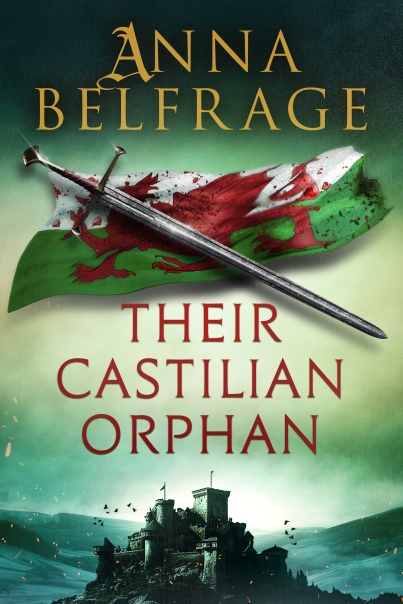
Their Castilian Orphan coverBlurb:

It is 1294 and Eustace de Lamont is back in England after five years in exile. He will stop at nothing to ruin Robert FitzStephan and his wife, Noor d’Outremer.

Robert’s half-brother, Eustace de Lamont, has not mellowed during his absence. He is more ruthless than ever, and this time he targets Robert’s and Noor’s foster son, Lionel.

Lionel is serving King Edward as a page when Eustace appears at court. Not only does Lionel become the horrified witness to Eustace’s violent streak, Eustace also starts voicing his suspicions about Lionel’s parentage. The truth about Lionel’s heritage is explosive—should King Edward find out, all would be lost for Robert and Noor.

In October of 1294, Wales rises in rebellion. Robert must leave his family unprotected to fight the Welsh rebels on the king’s behalf, comforted only by the fact that Eustace too is called to fight.

Except that Eustace has no intention of allowing his duty to his king—or a mere rebellion—come between him and his desire to destroy Robert FitzStephan . . .

Buy Links:

This title is available to read on #KindleUnlimited.
Universal buy link: https://mybook.to/TCO

Anna BelfrageAuthor Bio:

Had Anna been allowed to choose, she’d have become a time traveler. As this was impossible, she became a financial professional with three absorbing interests: history, romance, and writing. Anna has authored the acclaimed time travelling series The Graham Saga, set in 17th-century Scotland and Maryland, as well as the equally acclaimed medieval series The King’s Greatest Enemy which is set in 14th-century England. Anna has just released the final installment, Their Castilian Orphan, in her other medieval series, The Castilian Saga, which is set against the conquest of Wales. She has recently released Times of Turmoil, a sequel to her time travel romance, The Whirlpools of Time, and is now considering just how to wiggle out of setting the next book in that series in Peter the Great’s Russia, as her characters are demanding. . .

All of Anna’s books have been awarded the IndieBRAG Medallion, she has several Historical Novel Society Editor’s Choices, and one of her books won the HNS Indie Award in 2015. She is also the proud recipient of various Reader’s Favorite medals as well as having won various Gold, Silver, and Bronze Coffee Pot Book Club awards.

“A master storyteller”

“This is what all historical fiction should be like. Superb.”

Find out more about Anna, and her books and enjoy her eclectic historical blog on her website, http://www.annabelfrage.com

Sign up for Anna’s newsletter to keep up with new releases, giveaways, and other fun stuff: http://eepurl.com/cjgatT

Author Links:

Website: http://www.annabelfrage.com
Twitter: https://twitter.com/abelfrageauthor
Bluesky: https://bsky.app/profile/abelfrageauthor.bsky.social
Facebook: https://www.facebook.com/annabelfrageauthor
Instagram: https://instagram.com/annabelfrageauthor
Book Bub: https://www.bookbub.com/profile/anna-belfrage
Amazon Author Page: http://Author.to/ABG
Goodreads: https://www.goodreads.com/author/show/6449528.Anna_Belfrage

Guest Post: “Excerpt from ‘A Splendid Defiance’ by Stella Riley”

A Splendid Defiance Tour BannerI am pleased to welcome Stella Riley to my blog today to share an excerpt from her novel, “A Splendid Defiance.” I would like to thank Stella Riley and the Coffee Pot Book Club for allowing me to be part of this blog tour.

Abby storms the castle

Considering that he had left his bed to dress hurriedly and come straight downstairs, the Captain’s room was remarkably tidy. A lot tidier, thought Abigail, with a faintly shocked sideways glance, than he was himself. It was also larger than she had expected, being situated at the top of the south-east turret and reached by means of a narrow spiral stair.

I shouldn’t be here, thought Abigail, in sudden panic.  Jonas will kill me if he finds out.

Justin deposited his sword in a corner.  Then, turning to pull the bedclothes into some semblance of order, he told her to sit down and demanded again to be informed what she wanted of him.

Abigail hovered and hesitated.

‘For God’s sake!’ exclaimed Justin, dropping irritably upon the bed and regarding her with acute disfavour.  ‘Sit down and stop being coy.  I’m not in the mood for it.’

She obeyed him rather quickly.  ‘I’m sorry.’

‘Don’t be sorry.  Just come to the point.’

His tone made this difficult but she did her best.

‘It’s my brother.  He was arrested in the Market Place this afternoon – but he didn’t do anything.  I mean, he wasn’t involved in the fighting in the way that others were.  So I came to ask you to please let him come home.’

Comprehension dawned slowly and the blurred gaze registered astonishment.

‘You mean he was taken for rioting?  No, no.  It’s too good to be true.’

Abigail stiffened.  ‘I’m afraid I don’t find it funny.’

The dark brows soared and his reply was deliberately blighting. 

‘My dear child, I’d be amazed if the members of your household found anything funny.  Quite apart from your religious persuasion, your appalling brother and his sour-faced wife are enough to kill anyone’s sense of humour.  However, if you’ve hauled me out of bed just to ask a favour for Jonas, I can only say that your nerve outstrips your intelligence.  To put it bluntly, I don’t care if he rots.’

Abigail dissected this remarkable speech before brushing it aside.

‘What has Jonas to do with it?  It isn’t him you’ve got.’  And then, staring at him, ‘Is that what you thought?’

‘Not being on intimate terms with your entire family, what else was I to think?’ he asked acidly.  ‘Well?’

‘I’m sorry.  I thought you’d realise …’ She paused.  ‘If it was Jonas, I wouldn’t be here.’

‘And I am supposed to know that because …?’  Captain Ambrose leaned back, brooding on her overfolded arms. ‘Mistress Radford.  My patience, as you may have noticed, is extremely limited and diminishing by the second. Will you please tell me, in plain language, just who the hell it is you came to rescue?’

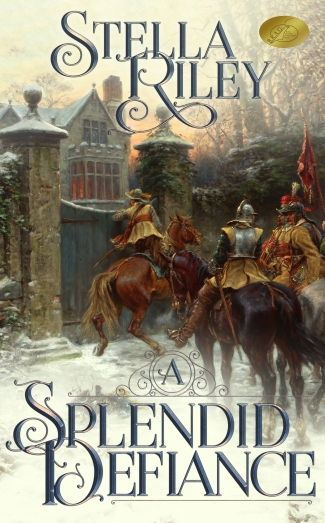
A Splendid Defiance cover 2Blurb:

For two years England has been in the grip of the Civil War.  In Banbury, Oxfordshire, the Cavaliers hold the Castle, the Roundheads want it back and the town is full of zealous Puritans.

Consequently, the gulf between Captain Justin Ambrose and Abigail Radford, the sister of a fanatically religious shopkeeper, ought to be unbridgeable.

The key to both the fate of the Castle and that of Justin and Abigail lies in defiance.  But will it be enough?

A Splendid Defiance is a dramatic and enchanting story of forbidden love, set against the turmoil and anguish of the English Civil War.

Buy Link: 

Universal Buy Link:  https://books2read.com/u/bPzVNd

Stella RileyAuthor Bio:

Winner of four gold medals for historical romance and sixteen Book Readers’ Appreciation Medallions, Stella Riley lives in the beautiful medieval town of Sandwich in Kent.

She is fascinated by the English Civil Wars and has written six books set in that period. These, like the 7-book Rockliffe series, the Brandon Brothers trilogy, and, most recently The Shadow Earl, are all available in audio, performed by Alex Wyndham.

Stella enjoys travel, reading, theatre, Baroque music, and playing the harpsichord.  She also has a fondness for men with long hair – hence her 17th and 18th-century heroes.

Author Links:

Website: https://stellarileybooks.co.uk

Twitter: https://twitter.com/RileyStella

Facebook: https://www.facebook.com/stellariley.books

Instagram: https://www.instagram.com/stellarileybooks/

Pinterest: https://www.pinterest.co.uk/riley9631/stella-riley-books/

Book Bub:  https://www.bookbub.com/authors/stella-riley

Amazon Author Page: https://www.amazon.co.uk/Stella-Riley/e/B0034PB7UU/ 

Goodreads:  https://www.goodreads.com/book/show/40487661-a-splendid-defiance

Guest Post: “Spotlight for ‘The Falconer’s Apprentice’ by Malve von Hassell

The Falconer's Apprentice Tour BannerI am pleased to welcome Malve von Hassell to my blog today to share a spotlight for her novel, “The Falconer’s Apprentice.” I want to thank The Coffee Pot Book Club and Malve von Hassell for allowing me to be part of this blog tour.

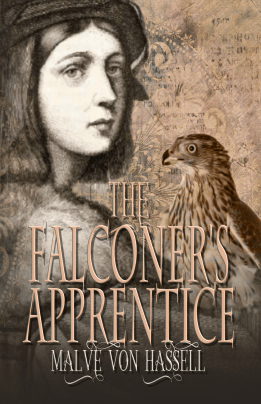
The Falconer's Apprentice CoverBlurb:

THE FALCONER’S APPRENTICE is a story of adventure and intrigue set in the intense social and political unrest of the Holy Roman Empire in the thirteenth century.

“That bird should be destroyed!” 

Andreas stared at Ethelbert in shock. Blood from an angry-looking gash on the young lord’s cheek dripped onto his embroidered tunic. Andreas clutched the handles of the basket containing the young peregrine. Perhaps this was a dream—

Andreas, an apprentice falconer at Castle Kragenberg, cannot bear the thought of killing the young female falcon and smuggles her out of the castle. Soon he realizes that his own time there has come to an end, and he stows away, with the bird, in the cart of an itinerant trader, Richard of Brugge. 

So begins a series of adventures that lead him from an obscure castle in northern Germany to the farthest reaches of Frederick von Hohenstaufen’s Holy Roman Empire, following a path dictated by the wily trader’s mysterious mission. Andreas continues to improve his falconry skills, but he also learns to pay attention to what is happening around him as he travels through areas fraught with political unrest. 

Eventually, Richard confides in Andreas, and they conspire to free Enzio, the eldest of the emperor’s illegitimate sons, from imprisonment in Bologna. 

Buy Links:

This title is available to read on #KindleUnlimited.

Universal Buy Link: https://books2read.com/u/31BMjD   

Barnes & Noble: https://www.barnesandnoble.com/w/the-falconers-apprentice-malve-von-hassell/1121105739?ean=9781737101185/   

Malve von Hassell Author photoAuthor Bio:

Malve von Hassell is a freelance writer, researcher, and translator. She holds a Ph.D. in anthropology from the New School for Social Research. Working as an independent scholar, she published The Struggle for Eden: Community Gardens in New York City (Bergin & Garvey 2002) and Homesteading in New York City 1978-1993: The Divided Heart of Loisaida (Bergin & Garvey 1996). She has also edited her grandfather Ulrich von Hassell’s memoirs written in prison in 1944, Der Kreis schließt sich – Aufzeichnungen aus der Haft 1944 (Propylaen Verlag 1994). 

She has taught at Queens College, Baruch College, Pace University, and Suffolk County Community College while continuing her work as a translator and writer. 

Malve has published two children’s picture books, Tooth Fairy (Amazon KDP 2012/2020), and Turtle Crossing (Amazon KDP 2023), and her translation and annotation of a German children’s classic by Tamara Ramsay, Rennefarre: Dott’s Wonderful Travels and Adventures (Two Harbors Press, 2012).

The Falconer’s Apprentice (2015/KDP 2024) was her first historical fiction novel for young adults. She has published Alina: A Song for the Telling (BHC Press, 2020), set in Jerusalem in the time of the Crusades, and The Amber Crane (Odyssey Books, 2021), set in Germany in 1645 and 1945, as well as a biographical work about a woman coming of age in Nazi Germany, Tapestry of My Mother’s Life: Stories, Fragments, and Silences (Next Chapter Publishing, 2021), also available in German, Bildteppich Eines Lebens: Erzählungen Meiner Mutter, Fragmente Und Schweigen (Next Chapter Publishing, 2022), and is working on a historical fiction trilogy featuring Adela of Blois. 

Author Links:

Website: https://www.malvevonhassell.com

Twitter: https://twitter.com/MvonHassell

Facebook author page: https://www.facebook.com/malvevonhassellauthor/

Linkedin: https://www.linkedin.com/in/malve-von-hassell-02b61517/ 

Instagram: https://www.instagram.com/mvonhassell/

Bluesky: https://bsky.app/profile/malvevonhassell.bsky.social

Goodreads: https://www.goodreads.com/author/show/471746.Malve_von_Hassell

Bookbub: https://www.bookbub.com/authors/malve-von-hassell

Amazon author link: https://www.amazon.com/stores/Malve-von-Hassell/author/B0CTGLDQ7P/

Book Review: “The Dartington Bride” by Rosemary Griggs

The Dartington Bride Tour Banner 1The 16th century was known for its dramatic changes in religious issues. None more so than during the late Tudor dynasty especially during the reign of Elizabeth I. However, France also saw the religious pendulum swing between Protestantism and Catholicism. Many families from all walks of life were caught in religious squabbles, like the Montgomery family. Lady Gabrielle Roberda Montgomery found herself in the middle of the drama and was forced to marry into a prominent Devon family in Elizabethan England, far from her native France. Roberda’s extraordinary story is told masterfully in Rosemary Griggs’ latest novel, “The Dartington Bride.” 

I would like to thank Rosemary Griggs and The Coffee Pot Book Club for allowing me to take part in this blog tour with a book review. I thoroughly enjoyed Griggs’ debut novel, “ A Woman of Noble Wit,” so when I heard that she was writing a new novel, it was intriguing to me. I had never heard of Lady Gabrielle Roberda Montgomery before reading this novel, so I was excited to learn more about her life.

Lady Gabrielle Roberda Montgomery was the daughter of Gabriel de Lorges, Count of Montgomery, Lord of Lorges and Ducey, and his wife Isabeau de la Touche. Her father was the captain of the Scots Guard during the reign of King Henri II of France, but everything changed in 1559, when he accidentally struck the king in the eye with a lance, killing the king. The Montgomery family must make tough choices to survive and fight with Louis I de Bourbon, Prince de Conde in the French Wars of Religion and survive the St. Bartholomew’s Day Massacre. 

To make sure Roberda is safe and secure, her parents arrange a marriage alliance with Sir Arthur Champernowne. Roberda marries Gawen Champernowne, a rough brute of a man, who is jealous of not only his young wife and how she looks at other men but is jealous of men like Sir Francis Drake who can get all the glory while he stays in the shadows as a spy for Walsingham. Roberda has a difficult marriage, but she gets along with her father-in-law Sir Arthur Champernowne, and her friend Anne Cecil at Dartington Hall. Roberda is a great mother to her growing family and helps Huguenot refugees start again in England. However perfect her life may look on the outside, Gawen remains jealous and decides that the only way to quell his anger is through divorcing his faithful wife.

This is another brilliant novel by Rosemary Griggs highlighting a woman from the Elizabethan age who has for centuries lived in the shadows of the past. I loved how Griggs was able to take a woman who has been a footnote in history and give her a beautiful yet heartbreaking tale of love and tragedy. I cannot wait to see who Rosemary Griggs will write about next. If you want a gripping novel about a lesser-known lady living in the Elizabethan age, you should check out, “The Darington Bride” by Rosemary Griggs. 

The Dartington Bride coverBlurb:

1571, and the beautiful, headstrong daughter of a French Count marries the son of the Vice Admiral of the Fleet of the West in Queen Elizabeth’s chapel at Greenwich. It sounds like a marriage made in heaven…

Roberda’s father, the Count of Montgomery, is a prominent Huguenot leader in the French Wars of Religion. When her formidable mother follows him into battle, she takes all her children with her.

After a traumatic childhood in war-torn France, Roberda arrives in England full of hope for her wedding. But her ambitious bridegroom, Gawen, has little interest in taking a wife.

Received with suspicion by the servants at her new home, Dartington Hall in Devon, Roberda works hard to prove herself as mistress of the household and to be a good wife. But there are some who will never accept her as a true daughter of Devon.

After the St Bartholomew’s Day Massacre, Gawen’s father welcomes Roberda’s family to Dartington as refugees. Compassionate Roberda is determined to help other French women left destitute by the wars. But her husband does not approve. Their differences will set them on an extraordinary path…

Buy Links:

Universal Buy Link: https://rosemarygriggs.co.uk/books/2/The%20Dartington%20Bride/ 

Rosemary GriggsAuthor Bio:

Author and speaker Rosemary Griggs has been researching Devon’s sixteenth-century history for years. She has discovered a cast of fascinating characters and an intriguing network of families whose influence stretches far beyond the West Country and loves telling the stories of the forgotten women of history – the women beyond the royal court; wives, sisters, daughters, and mothers who played their part during those tumultuous Tudor years: the Daughters of Devon. 

Her novel A Woman of Noble Wit tells the story of Katherine Champernowne, Sir Walter Raleigh’s mother, and features many of the county’s well-loved places. 

Rosemary creates and wears sixteenth-century clothing, a passion that complements her love for bringing the past to life through a unique blend of theatre, history, and re-enactment. Her appearances and talks for museums and community groups all over the West Country draw on her extensive research into sixteenth-century Devon, Tudor life, and Tudor dress, particularly Elizabethan. 

Out of costume, Rosemary leads heritage tours of the gardens at Dartington Hall, a fourteenth-century manor house and now a visitor destination and charity supporting learning in arts, ecology, and social justice.

Author Links:

Website:https://rosemarygriggs.co.uk/

Twitter: https://twitter.com/RAGriggsauthor

Facebook: https://www.facebook.com/ladykatherinesfarthingale

Instagram: https://www.instagram.com/griggs6176/ 

Threads: https://www.threads.net/@griggs6176

Bluesky: https://bsky.app/profile/ragriggsauthor.bsky.social

Amazon Author Page: https://www.amazon.com/stores/Rosemary-Griggs/author/B09GY6ZSYF 

Goodreads: https://www.goodreads.com/author/show/21850977.Rosemary_Griggs 

Guest Post: “Spotlight for ‘Riddle of the Gods’ by Eric Schumacher

Riddle of the Gods Tour BannerI am pleased to welcome Eric Schumacher to my blog today to share a spotlight for his novel, “Riddle of the Gods.” I would like to thank Eric Schumacher and The Coffee Pot Book Club for allowing me to be part of this blog tour.

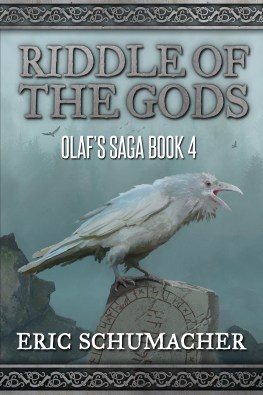
Riddle Of The Gods coverBlurb:

Riddle of the Gods is the riveting fourth novel in the best-selling series chronicling the life and adventures of one of Norway’s most controversial kings, Olaf Tryggvason.

It is AD 976. Olaf Tryggvason, the renegade prince of Norway, has lost his beloved wife to a tragedy that turns the lords of the land he rules against him. With his family gone and his future uncertain, Olaf leaves his realm and embarks on a decades-long quest to discover his course in life. Though his journey brings him power and wealth, it is not until he encounters the strange man in the streets of Dublin that his path to fame unfolds. And in that moment, he is forced to make a choice as the gods look on – a choice that could, at worst, destroy him and at best, ensure his name lives on forever.

Buy Links:

This book is available to read on #KindleUnlimited.

Universal Buy Link: https://mybook.to/Riddleofthegods 

Eric SchumacherAuthor Bio:

Eric Schumacher (1968 – ) is a historical fiction author of multiple best-selling novels set in the Viking Age. From a young age, Schumacher was drawn to books about medieval kings and warlords and was fascinated by their stories and the turbulent times in which they lived. It is a fascination that led to the publication of his first novel, God’s Hammer, in 2005, and many subsequent novels after that.

Schumacher now resides in Santa Barbara with his wife and two children and is busy working on his next novel.

Author Links:

Website: www.ericschumacher.net

Twitter: https://twitter.com/DarkAgeScribe

Facebook: https://www.facebook.com/EricSchumacherAuthor

Book Bub: https://www.bookbub.com/profile/eric-schumacher

Amazon Author Page: https://author.to/EricSchumacher

Guest Post: “Excerpt from ‘The Royal Women Who Made England’ by MJ Porter

I am pleased to welcome MJ Porter to my blog to share an excerpt from her nonfiction book, “The Royal Women Who Made England.” I would like to thank MJ Porter and The Coffee Pot Book Club for allowing me to be part of this blog tour.

Ælfthryth, the daughter of King Alfred and Lady Ealhswith – The Continental Connection

The union between Ælfthryth and Count Baldwin II is believed to have taken place sometime between Asser’s writing [of Alfred’s life] and the death of Alfred in 899. As Æthelweard’s Chronicon informs, Ælfthryth was married to Count Baldwin II of Flanders (879–918). Count Baldwin II was the son of Alfred’s stepmother, Judith, through her third marriage to Baldwin, Count of Flanders, with whom she eloped in 860, against her father’s wishes. Perhaps this was a love match that had been denied her before. Judith had previously been married to Æthelwulf, King of Wessex, Alfred’s father, and also to Æthelbald, King of Wessex, Alfred’s brother. There is no record of children born to these unions.

Judith was a daughter of Charles the Bald (823–877), who in turn was the son of Louis the Pious (773–840), a son of Charlemagne (c.742–814). Charles the Bald was king of the Franks from 840–877 and emperor from 875–877.

Blurb:

Throughout the tenth century, England, as it would be recognized today, formed. No longer many Saxon kingdoms, but rather, just England. Yet, this development masks much in the century in which the Viking raiders were seemingly driven from England’s shores by Alfred, his children, and grandchildren, only to return during the reign of his great, great-grandson, the much-maligned Æthelred II.

Not one but two kings would be murdered, others would die at a young age, and a child would be named king on four occasions. Two kings would never marry, and a third would be forcefully divorced from his wife. Yet, the development of ‘England’ did not stop. At no point did it truly fracture back into its constituent parts. Who then ensured this stability? To whom did the witan turn when kings died, and children were raised to the kingship?

The royal woman of the House of Wessex came into prominence during the century, perhaps the most well-known being Æthelflæd, daughter of King Alfred. Perhaps the most maligned being Ælfthryth (Elfrida), accused of murdering her stepson to clear the path to the kingdom for her son, Æthelred II, but there were many more women, rich and powerful in their own right, where their names and landholdings can be traced in the scant historical record.

Using contemporary source material, The Royal Women Who Made England can be plucked from the obscurity that has seen their names and deeds lost, even within a generation of their own lives.

Buy Links:

Universal Buy Link: https://books2read.com/TheRoyalWomenWhoMadeEngland

Publisher Link: https://www.pen-and-sword.co.uk/The-Royal-Women-Who-Made-England-Hardback/p/24395

Author Bio:

MJ Porter is the author of over fifty fiction titles set in Saxon England and the era before the tumultuous events 1066. Raised in the shadow of a strange little building and told from a young age that it housed the long-dead bones of Saxon kings, it’s little wonder that the study of the era was undertaken at both undergraduate and graduate levels.

The Royal Women of the Tenth Century is the first non-fiction title. It explores this period’s ‘lost’ women through the surviving contemporary source material. It stemmed from a frustration with how difficult it was to find a single volume dedicated to these ‘lost’ women and hopes to make it much easier for others to understand the prestige, wealth, and influence of the women of the royal House of Wessex.

Author Links:

Website: www.mjporterauthor.com/ or www.mjporterauthor.blog

Twitter: www.twitter.com/coloursofunison

Facebook: https://www.facebook.com/MJPorterauthor/

LinkedIn: https://www.linkedin.com/in/mj-porterauthor/

Instagram: instagram.com/m_j_porter/

Threads: https://www.threads.net/@m_j_porter

Bluesky: mjporterauthor.bsky.social

Pinterest: https://www.pinterest.co.uk/coloursofunison/

Book Bub: https://www.bookbub.com/authors/mj-porter

Amazon Author Page: www.amazon.com/MJ-Porter/e/B006N8K6X4

Goodreads: https://www.goodreads.com/author/show/7163404.M_J_Porter

TikTok: tiktok.com/@mjporterauthor

LinkTree: https://linktr.ee/MJPorterauthor

Guest Post: “Excerpt and Recipe from the ‘Chateau de Verzat Series’ by Debra Borchert”

Chateau de Verzat Series BannerToday, I am pleased to welcome Debra Borchert to share an excerpt and a recipe from her series, “The Chateau de Verzat Series.” I want to thank Debra Borchert and The Coffee Pot Book Club for allowing me to be part of this tour. 

Her Own Legacy, Versailles, December 13, 1788

Joliette Meets Guillaume

Maman guided me toward a man so old, he could be my grandpapa. My arms tensed. She could not possibly think that old man appropriate. 

Papa strode toward us. “May I have your first dance, ma princesse?” 

Relief washed through me.

Maman frowned. “Bring her right back. She has many introductions.”

He took my hand and led me toward a group of dancers. 

“Merci, Papa,” I whispered.

He winked, led me to the lead position, and danced me about the Galerie. As the lead couple, we whirled with and between the dancers. Papa’s warm smile and strong leading steps relaxed me, and I enjoyed myself. He led me to greet the last couple. I turned to offer my hand to the next gentleman and his green eyes—bright as grapevines during bud break—startled me. 

I forgot the movement and faltered. I searched to locate Maman. Had she seen? She would have me dancing twelve hours a day after this. 

Without missing a beat, he rescued my wayward hand and adroitly led it to its next position. My hands grew moist inside my gloves. His steps and arms were strong, like Papa’s, but dancing with Papa had not made me breathless. The mirrors spun shards of light as he led me through the twisting rosettes. I dizzied as he returned me to Papa. Perspiration coated my face, and I fluttered my fan to dry it. 

The man wore a frock coat and breeches of pale lavender silk with tiny bouquets of violets—so delicate and fine I expected them to have a scent—embroidered along his cuffs and hem. His ensemble resembled that of our King, yet the silk puckered beneath the embroidery—the fabric was inferior. He was working hard to fit in at Court, yet every courtier would notice his black shoes—without red heels. He had not been presented. 

The allemande at an end, he turned to my father and bowed deeply. He unfurled from his bow and straightened to Papa’s height. “Comte de Verzat, I believe you are acquainted with my father, the Baron Pricaud?” 

Papa’s eyebrow rose. “Ah…oh, yes, you are…?”

“Guillaume Pricaud.” He bowed, again. “It is an honor to meet the man who produces the finest wines in France, if not the world, Monsieur le Comte.”

Finest in the world? I leaned closer. The sounds of conversations, laughter, music all faded. His eau de Cologne smelled woodsy with a hint of lime. 

Papa gave a tight smile. “May I present my daughter, Mademoiselle Joliette de Verzat?”

He bowed. My hand, of its own accord, sought his. As he held my fingers, his lips brushed my hand ever so gently. Damned protocol requiring gloves.

“Your mother’s beauty shines from within you, Mademoiselle.”

Words sat in my mouth like melting chocolate. I was supposed to thank him, but I could not summon a word. I held the fingers his lips had caressed.

“You remember my father, Comte?”

“We knew each other many years ago, when we were your age.”

Pricaud reached into his frock coat and withdrew a thick blue leather purse. “He asked me to deliver this.” With both his hands, he held it out to Papa. “My father wishes me to express his humble gratitude for your patience.”

Papa put up his hands. “Eh…that was so long ago. All is forgotten.”

“Not by my father.” He continued to present the purse.

Why did Papa refuse him? Pricaud’s demeanor, his manners, his tenacity, all impeccable. Neither of my parents could find fault with Pricaud. Nor could I. He never glanced at the emeralds at my neck. He knew of the Verzat legacy. Why had I not seen him at Court before?

“There is no need.” Papa shook his head.

Maman’s skirts brushed against mine. “Pardon, Monsieur.” 

Pricaud withdrew the purse and dropped into a deep bow.

Maman inserted herself between me and Monsieur Pricaud, but she did not extend her hand. “My daughter and I have been summoned by the Queen.” She held my elbow and drew me away. “Forgive us, please.”

Joliette’s Chilled Fresh Pea Soup

While living in France, Joliette never cooked—she was far too busy fermenting wine. But when she and Henri arrived in America, she longed for dishes made by her beloved Cook. Joliette remembered afternoons, sitting at Cook’s battered wooden table, shelling peas for Cook’s sweet and velvety Chilled Fresh Pea Soup. This recipe is based on Joliette’s memories and my experimentations. 

Serves 6–8 

Ingredients

2 cups fresh or frozen peas sea salt (optional)

1 cup water fruity white balsamic vinegar (optional)*

a few sprigs of fresh mint

Process 

  1. Simmer peas in water until peas are tender. 
  2. Keeping the broth, drain peas and allow to cool. 
  3. Using an immersion blender, blitz the peas with enough of the cooking liquid for a consistency and thickness you like.
  4. Add salt to taste. Chill. 
  5. Serve with a mint spear and a drizzle of a fruity white balsamic vinegar. 

Notes

  1. *My favorite fruity white balsamic vinegar is OMG!’s D’Anjou Pear White Balsamic Vinegar. See the Resources page.
  2. This soup freezes well.

Blurb:

HER_OWN_LEGACY_COVERHer Own Legacy:

A Woman Fights for Her Legacy as the French Revolution Erupts

Determined to inherit her family’s vineyard, Countess Joliette de Verzat defies society’s rules, only to learn of her illegitimate half-brother, the rightful heir. 

Her Own Revolution:HER_OWN_Revolution__FINAL_COVER

A Woman Forges a Treacherous Path to Save Hundreds from the Guillotine

If Geneviève Fouquier-Tinville had the same rights as a man, she wouldn’t have to dress like one. A suspenseful page-turner led by a renegade heroine whose compassion for innocent people leads to both loss and love.

Buy Links:

*Her Own Legacy will be only 0.99 in the UK, CA, and AU stores from March 5th – 15th, 2024!*

Universal Buy Links:  

Her Own Legacy: https://books2read.com/u/bWYod1 

Her Own Revolution: https://books2read.com/u/m0aJVl 

Series Buy Links:

US: https://www.amazon.com/gp/product/B0B9KN1536 

UK: https://www.amazon.co.uk/gp/product/B0B9KN1536 

Debra Borchert 1Author Bio:

Debra is the author of the Château de Verzat series that follows headstrong and independent women and the four hundred loyal families who protect a Loire Valley château and vineyard, and its legacy of producing the finest wines in France during the French Revolution. Her Own Legacy published in 2022, Her Own Revolution published in 2023, and Her Own War will be published in 2024. A passionate cook, she also wrote a companion cookbook to the series: Soups of Château de Verzat, A Culinary Tribute to the French Revolution, 2023.

A graduate of the Fashion Institute of Technology, she weaves her knowledge of textiles and clothing design throughout her historical fiction. She lives in the Pacific Northwest with her family and standard poodle, named after a fine French Champagne. 

Author Links:

Website: https://debraborchert.com/ 

Twitter: https://twitter.com/debraborchert 

Facebook: https://www.facebook.com/DebraBorchertAuthor/

LinkedIn: https://www.linkedin.com/in/debra-borchert-10b8305/

Instagram: https://www.instagram.com/debraborchertauthor/

Pinterest: https://www.pinterest.com/debraborchert/ 

Book Bub: https://www.bookbub.com/authors/debra-borchert

Amazon Author Page: https://www.amazon.com/stores/Debra-Borchert/author/B00CSW9MH0 

Goodreads: https://www.goodreads.com/author/show/7787729.Debra_Borchert

Guest Post: “Snippet from ‘A Matter of Time’ by Judith Arnopp”

A Matter of Time Tour BannerI am pleased to welcome Judith Arnopp back to my blog to share a snippet from her latest novel. “A Matter of Time.” I would like to thank Judith Arnopp and The Coffee Pot Book Club for allowing me to be part of this blog tour.
June 1541 Henry and Katherine Howard on royal progress

Brandon is not with us this night, having ridden ahead to make preparation for our stay with him at Grimsthorpe, but I am content with Katherine beside me, a few musicians, and her favourite ladies and my closest gentlemen. We grow merry, the youngest members of the party dancing into the early hours. The music rises and falls, the fire crackles, while I sit and eat and watch, with my foot resting on a stool. 

When they form up for the next dance, Katherine is partnered by Culpepper, and they make an elegant pairing. I look on enviously as the steps of the dance take them close together. Their elbows hook, and then they part again, Katherine’s hand reluctantly extended toward him as the dance dictates. Surrounded by the gaiety of the company, yet not part of it, I grow bored, longing for my bed. I’ve admitted to nobody how the journey is taking its toll, on both my health and my spirits. I close my eyes, rest my head on the back of my chair and thank God for the good company. The words of a song I wrote long ago jangle in my mind.

Pastime with good company

I love and shall until I die;

A Matter of Time CoverBlurb:

With youth now far behind him, King Henry VIII has only produced one infant son and two bastard daughters. More sons are essential to secure the Tudor line and with his third wife, Jane Seymour dead, Henry hunts for a suitable replacement.

After the break from Rome, trouble is brewing with France and Scotland. Thomas Cromwell arranges a diplomatic marriage with the sister of the Duke of Cleves but when it comes to women, Henry is fastidious, and the new bride does not please him. The increasingly unpredictable king sets his sights instead upon Katherine Howard and instructs Cromwell to free him from the match with Cleves.

Failure to rid the king of his unloved wife could cost Cromwell his head.

Henry, now ailing and aging, is invigorated by his flighty new bride but despite the favours he heaps upon her, he cannot win Katherine’s heart. A little over a year later, broken by her infidelity, she becomes the second of his wives to die on the scaffold, leaving Henry friendless and alone.

But his stout heart will not surrender and leaving his sixth wife, Katheryn Parr, installed as regent over England, Henry embarks on a final war to win back territories lost to the French more than a century before. Hungry for glory, the king is determined that the name Henry VIII will shine brighter and longer than that of his hero, Henry V.

Told from the king’s perspective, A Matter of Time: Henry VIII: the Dying of the Light shines a torch into the heart and mind of England’s most tyrannical king.

Buy Links:

Universal Buy Links to the three titles in the series:

 A Matter of Conscience: https://mybook.to/amoc

A Matter of Faith: https://mybook.to/amofaith 

A Matter of Time: https://mybook.to/amot

Judith Arnopp PembrokeAuthor Bio:

A lifelong history enthusiast and avid reader, Judith holds a BA in English/Creative writing and an MA in Medieval Studies. She lives on the coast of West Wales where she writes both fiction and non-fiction. She is best known for her novels set in the Medieval and Tudor period, focusing on the perspective of historical women but recently she has been writing from the perspective of Henry VIII himself.

Judith is also a founder member of a re-enactment group called The Fyne Companye of Cambria which is when she began to experiment with sewing historical garments. She now makes clothes and accessories both for the group and others. She is not a professionally trained sewer but through trial, error and determination has learned how to make authentic-looking, if not strictly historically accurate clothing. Her non-fiction book, How to Dress like a Tudor was published by Pen and Sword in 2023.

Her novels include:

A Song of Sixpence: The Story of Elizabeth of York

The Beaufort Chronicle: The Life of Lady Margaret Beaufort (three-book series)

A Matter of Conscience: Henry VIII, the Aragon Years (Book One of The Henrician Chronicle)

A Matter of Faith: Henry VIII, the Days of the Phoenix (Book Two of The Henrician Chronicle)

A Matter of Time: Henry VIII, the Dying of the Light (Book Three, Coming soon)

The Kiss of the Concubine: A Story of Anne Boleyn

The Winchester Goose: at the court of Henry VIII

Intractable Heart: The Story of Katheryn Parr

Sisters of Arden: on the Pilgrimage of Grace

The Heretic Wind: The Life of Mary Tudor, Queen of England

Peaceweaver

The Forest Dwellers

The Song of Heledd

Previously published under the pen name – J M Ruddock.

The Book of Thornhold

A Daughter of Warwick: The Story of Anne Neville, Queen of Richard III

Author Links:

Website: www.judithmarnopp.com

Blog: http://www.juditharnoppnovelist.blogspot.co.uk/

Twitter: https://twitter.com/JudithArnopp

Facebook: https://www.facebook.com/thetudorworldofjuditharnopp

LinkedIn: www.linkedin.com/in/judith-arnopp-ba999025

Instagram: https://www.instagram.com/tudor_juditharnopp/

Threads: tudor_juditharnopp@threads.net

Bluesky: https://bsky.app/profile/jarnopp.bsky.social

Pinterest: https://www.pinterest.co.uk/jarnopp/

Book Bub: https://www.bookbub.com/profile/judith-arnopp

Amazon Author Page: https://author.to/juditharnoppbooks

Goodreads: https://www.goodreads.com/author/show/4088659.Judith_Arnopp

Guest Post: “Snippet from ‘Imperatrix’ by S.P. Somtow”

Imperatrix Tour BannerI am pleased to welcome S.P. Somtow to my blog today to share a snippet from his latest novel, “Imperatix.” I would like to thank S.P. Somtow and The Coffee Pot Book Club for allowing me to be part of this blog tour. 
Have another brain,” said the Emperor, feeding me Himself.

“Divinitas,” I said, “how many peacocks does it take to make such a platter?”

“Wonderful!” said Himself.  “Poppaea never takes an interest in how the world runs.  For her, the brains just appear by magic.  The answer to question is — why — we have our own, private little — to coin a word — pavonarium.  Would you like to see peacocks — a veritable ocean of peacocks — more bird-brains than even in the Senate?”  He clapped his hands, dropping a brain onto the grass, though Hercules quickly disposed of it.  “Come!”

He took me by the hand and started to pull me in toward the far side of the garden, where there was a fountain cunningly designed like a pair of dolphins.  I turned to look at the Lady Poppaea, terrified that I would soon be alone with the God.

“This could be your fortune,” she said to me.  “You’ve insulted, you’ve appeased.  Now, Sporus, you must seduce.”

Imperatrix CoverBlurb:

Captured by pirates and sold to a Roman aristocrat as a sex slave, Sporus attracted the attention of no less a personage than the Emperor Nero, ruler of the known world. Would-be poet, patron of the arts, aesthete, and brutal autocrat, the Divine Nero saw in the boy a startling resemblance to the Empress Poppaea – and made him an empress as well.

Suetonius, Tacitus, and other Roman historians have given tantalizing glimpses into the incredible life story of the boy who became twice an empress to two emperors and was condemned to die in the arena by a third.

In this meticulously researched trilogy, World Fantasy Award-winning author S.P. Somtow lays bare the darkest secrets of Imperial Rome – its triumphs and its nadirs, its beauty and its cruelty. Through this chaos, a contorted mirror of our contemporary world, this figure of Sporus moves, all too knowing yet all too innocent, providing a worm’s eye view of one of the wildest periods in ancient history.

Imperatrix, the second volume of the tale, takes us into the heart of the Imperial palace with all its intrigue, depravity, and splendor.

Buy Links:

This title is available to read on #KindleUnlimited.

Universal Buy Link: https://books2read.com/u/mV2EaJ

S.P. Somtow authorAuthor Bio:

Once referred to by the International Herald Tribune as ‘the most well-known expatriate Thai in the world,’ Somtow Sucharitkul is no longer an expatriate since he has returned to Thailand after five decades of wandering the world. He is best known as an award-winning novelist and a composer of operas.

Born in Bangkok, Somtow grew up in Europe and was educated at Eton and Cambridge. His first career was in music and in the 1970s, his first return to Asia, he acquired a reputation as a revolutionary composer, the first to combine Thai and Western instruments in radical new sonorities. Conditions in the arts in the region at the time proved so traumatic for the young composer that he suffered a major burnout, emigrated to the United States, and reinvented himself as a novelist.

His earliest novels were in the science fiction field and he soon won the John W. Campbell for Best New Writer as well as being nominated for and winning numerous other awards in the field. But science fiction was not able to contain him and he began to cross into other genres. In his 1984 novel Vampire Junction, he injected a new literary inventiveness into the horror genre, in the words of Robert Bloch, author of Psycho, ‘skillfully combining the styles of Stephen King, William Burroughs, and the author of the Revelation to John.’ Vampire Junction was voted one of the forty all-time greatest horror books by the Horror Writers’ Association.

In the 1990s Somtow became increasingly identified as a uniquely Asian writer with novels such as the semi-autobiographical Jasmine Nights and a series of stories noted for a peculiarly Asian brand of magic realism, such as Dragon’s Fin Soup, which is currently being made into a film directed by Takashi Miike. He recently won the World Fantasy Award, the highest accolade given in the world of fantastic literature, for his novella The Bird Catcher.

Returning to Thailand in 2001, he became artistic director of Opera Siam and has had more than a dozen operas produced around the world including The Snow Dragon and The Silent Prince, which premiered in the United States, Helena Citronova, an opera set during the Holocaust, and the ten-part DasJati: Ten Lives of the Buddha.

In the last few years, he has made a return to writing novels with the Nero and Sporus trilogy and the young adult series, Club X.

In 2021 the film he produced and wrote, The Maestro: Symphony of Terror received over forty awards at international festivals, and in 2023 the Thai government officially elevated him to the status of National Artist.

Read S.P. Somtow’s interview on Literary Titan about Imperatrix at https://literarytitan.com/2024/01/21/the-core-of-innocence/.

Author Links:

Website: www.somtow.com

Twitter: www.twitter.com/somtow

Facebook: www.facebook.com/somtow

Instagram: www.instagram.com/somtow

Book Bub: https://www.bookbub.com/profile/s-p-somtow

Amazon Author Page: https://www.amazon.com/stores/author/B000APBJXC

Goodreads:  https://www.goodreads.com/author/show/81037.S_P_Somtow

Guest Post: “Snippet from ‘Signatures in Stone’ by Linda Lappin

Signatures in Stone Tour BannerToday, I am pleased to welcome Linda Lappin to my blog to share a snippet from her novel, “Signatures in Stone.”I would like to thank The Coffee Pot Book Club and Linda Lappin for allowing me to be part of this blog tour.
Without inspiration, I could not write. What I needed was a new batch of
signatures, those curious messages our waking life sends us from our own unconscious, which I have come to see as promptings from the muse, and even as a spiritual guide for my own existence.

We are constantly immersed in a network of signs and symbols, whose meaning eludes us, but which, if only we could read them, would reveal every detail of our past and even predict our future.

The mind talks to itself not with words, but with scrambled symbols, pictures, fragments, often severed from any literal meaning. If we wish to learn to read them, we must abandon the rational links of words to thoughts. Signatures are always there waiting for us, like unopened letters slid beneath the front door, accumulating after a long absence, written in a hieroglyphic alphabet we have forgotten.

Signatures in Stone coverBlurb:

Captivating critics and readers, SIGNATURES IN STONE, was the OVERALL WINNER in the DAPHNE DU MAURIER AWARDS for Excellence in Mystery and Suspense Writing -Best Mystery of 2013

Rome, Italy – November 2023 – Pleasure Boat Studio is thrilled to announce the release of the second edition of Linda Lappin’s celebrated novel, SIGNATURES IN STONE: A BOMARZO MYSTERY. This captivating suspense tale takes readers on a thrilling journey through the enigmatic Monster Park of Bomarzo, also known as the Sacred Wood, an extraordinary Baroque sculpture garden in Italy. With the 500th anniversary of the park’s creation, this edition is accompanied by a magnificent new cover and a series of Tarot card illustrations by Santa Fe artist Carolyn Florek.

In SIGNATURES IN STONE, readers are transported to the atmospheric setting of the Monster Park of Bomarzo, a sixteenth-century garden adorned with mythical creatures believed to represent a terrifying journey into the realm of nightmares. Against this backdrop, four travelers find themselves intertwined in a fate-driven Italian holiday. Daphne, a British writer of occult mysteries, her down-on-his-luck aristocratic publisher Nigel, the aspiring artist and American gigolo Clive, and the art historian Professor Finestone, all converge in a dilapidated villa near the park. They are attended by rustic servants who harbor secrets of their own.

Professor Finestone has made a groundbreaking discovery, revealing that the garden was designed by one of Italy’s greatest artists as a transformative experience that delves into the shadow side of life. Over the centuries, the park’s meanders continue to influence the minds and destinies of those who venture within. As the group explores their heart’s desires amidst the haunting sculptures, they become entangled in a web of intrigue and danger. When Daphne, renowned for writing cozy murder tales, becomes the prime suspect in a shocking homicide, she must confront her own darkness and rely on her sleuthing skills to uncover the terrifying truth.

Linda Lappin’s gripping tale presents an intriguing exploration of gardens in Renaissance Italy, where they were regarded as tools for altering consciousness and changing destiny. The Monster Park of Bomarzo becomes the backdrop for a “Gothic-in-Wonderland” phantasmagoria, immersing readers in a suspenseful and thrilling journey.

New Edition of Linda Lappin’s Award-Winning SIGNATURES IN STONE: A BOMARZO MYSTERY Commemorates the 500th Anniversary of the Monster Park.

Praise:

“Layers of mystery are woven into Linda Lappin’s beautifully written and atmospheric historical novel set in Bomarzo, Italy’s enigmatic park of stone monsters.”
~ Gigi Pandian, author of The Accidental Alchemist.

“Deftly mixing fascinating art history and murder with an exotic atmospheric setting (the Bomarzo garden actually exists), dramatic historical period (1928 fascist Italy), and fully fleshed characters, Lappin (The Etruscan) has written a hallucinatory gothic mystery in which no one is as they appear. Daphne is a most memorable, if a bit unreliable narrator. Readers looking for an intelligent summer mystery will find much to savor here.”
~ Wilda Williams, Library Journal

Buy Link:

Universal Buy Link: https://books2read.com/u/mYDWvd

Linda LappinAuthor Bio:

Linda Lappin, poet, translator, novelist, and travel writer is the prize-winning author of four novels: The Etruscan (Wynkin deWorde, 2004); Katherine’s Wish (Wordcraft, 2008), dealing with the last five years of Katherine Mansfield’s life; Signatures in Stone: A Bomarzo Mystery (Pleasureboat Studio, 2013,2023), overall winner of the Daphne Du Maurier award for best mystery novel of 2013; and Loving Modigliani: The Afterlife of Jeanne Hébuterne (Serving House Books, 2020), 2021 Daphne Du Maurier award finalist and shortlisted for the 2021 Montaigne Medal for Books of Distinction.

She is also the author of The Soul of Place: Ideas and Exercises for Conjuring the Genius Loci, (Travelers Tales, 2015), winner of a Nautilus Award in the category of creativity in 2015.

A former Fulbright scholar to Italy, she has lived mainly in Rome for over thirty years. She is at work on a second Daphne Dublanc mystery novel, Melusine, set in Bolsena. The second edition of Signatures in Stone (2023) has been issued to commemorate the 500th anniversary of the Monster Park.

Author Links:

Website: https://www.lindalappin.net
Twitter: https://twitter.com/LindaLappin1
Facebook: https://www.facebook.com/LindaLappinAuthor/
Instagram: https://www.instagram.com/linda_lappin_author/
Threads: https://www.threads.net/@linda_lappin_author
Bluesky: https://bsky.app/profile/lindalappin.bsky.social
Book Bub: https://www.bookbub.com/profile/linda-lappin
Amazon Author Page: https://www.amazon.com/author/lindalappin
Goodreads: https://www.goodreads.com/author/show/1157178.Linda_Lappin