 I am pleased to welcome Elizabeth St John to my blog to share a guest post about her latest novel, The King’s Intelligencer. I want to thank Elizabeth St John and The Coffee Pot Book Club for allowing me to participate in this blog tour.
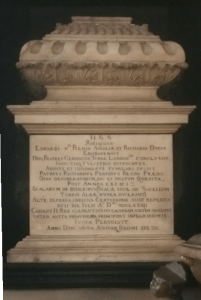
The inspiration for The King’s Intelligencer arose from my research for The Godmother’s Secret, centered on the mystery of the missing princes in the Tower of London. During this time, I visited Westminster Abbey, specifically the Chapel of the Innocents, where Sir Christopher Wren’s marble urn—commissioned by Charles II in 1675—allegedly contains the bones of Edward V and Richard, Duke of York. The inscription claims the princes were murdered by their “perfidious uncle Richard the Usurper” and secretly buried in the Tower for 191 years. Standing near the urn, close to where my seventeenth-century character Franny Apsley’s parents, Sir Allen and Frances Apsley, are buried, I began to question the authenticity of this narrative.
I turned to further research to find out more. Helen Maurer’s paper Bones in the Tower: A Discussion of Time, Place and Circumstance and Annette Carson’s article The Bones in the Urn cast doubt on the identity of the remains. What if these bones weren’t the princes’ at all, but a politically convenient discovery designed to bolster Charles II’s claim to the throne during a period of intense religious and political tension?
This idea gains significance when we consider the political climate of the late 17th century. Charles II ruled during a time of deep religious divides between Protestants and Catholics. Though Charles outwardly professed Protestantism, he secretly favored Catholicism and converted on his deathbed. His brother, James II, was openly Catholic, which led to his eventual overthrow during the Glorious Revolution of 1688. The discovery of the princes’ bones in 1674 provided Charles II with an opportunity to legitimize his reign, portraying himself as a restorer of justice for the murdered princes, and distancing himself from his brother’s Catholic sympathies.
 The timing of the discovery raised questions about whether the bones were used to manipulate public opinion and strengthen Charles’s position. Further research revealed more secrets. I explored the details of the Secret Treaty of Dover, a clandestine agreement between Charles II and Louis XIV of France. In this treaty, Charles promised to declare himself a Catholic in exchange for financial support. This hidden agreement, uncovered years later, underscores the precarious balance of power in 17th-century England and allowed me to link national concerns to my family history.
 In this climate of political maneuvering, espionage became crucial. Intelligencers gathered information covertly, often operating unofficially, and reported back to their patrons the news and gossip that was circulating. This secretive world provided the perfect backdrop for my protagonist, Franny Apsley, who navigates the hidden loyalties, treaties, and espionage of 17th-century England. A friend remarked that these intelligencers hung around coffee shops and eavesdropped on other people…which sounded just the kind of thing Franny would have done.
Franny’s family was deeply involved in real-life espionage. In the third book of The Lydiard Chronicles, Written in Their Stars, we follow her parents, Sir Allen, and Frances Apsley, along with her cousin Nan Wilmot, Countess of Rochester, who were all engaged in covert activities during the English Civil War. Nan cleverly deceived Oliver Cromwell to protect her Royalist family and later negotiated her Parliamentarian relative’s release at the Restoration. Meanwhile, Franny’s brother, Peter Apsley, worked as an intelligencer for Charles II and James II, receiving substantial payments for his covert work. This family history inspired the espionage elements of The King’s Intelligencer, imagining Franny following in their footsteps.
And what about the bones? Even if the present monarch permits DNA testing, the remains may have deteriorated too much to provide conclusive results. If the bones are proven to belong to the princes, we would still lack crucial details—like the cause of death or the identity of their murderer. The mystery of the bones remains unsolved, leaving historians and novelists alike to speculate.
The King’s Intelligencer blends historical fact with fiction, following Franny Apsley as she embarks on a dangerous quest for truth. Uncovering hidden secrets and navigating espionage, Franny’s journey ultimately reveals how personal and national histories intersect. This novel is a companion to The Godmother’s Secret and The Lydiard Chronicles, continuing to explore the secrets buried in the past.
 Blurb:
London, 1674: When children’s bones are unexpectedly unearthed in the Tower of London, England’s most haunting mystery—the fate of the missing princes—is reignited.
Franny Apsley, trusted confidante to Charles II’s beloved niece and heir, Lady Mary Stuart, is caught up in the court’s excitement surrounding the find. Yet, as a dark family secret comes to light, Franny realizes the truth behind the missing princes is far more complex—and dangerous—than anyone suspects. Recruited by her formidable cousin Nan Wilmot, Dowager Countess of Rochester, to discover the truth behind the bones, Franny is thrust into the shadowy world of intelligencers. But her quest is complicated by an attraction to the charismatic court artist Nicholas Jameson, a recent arrival from Paris who harbors secrets of his own.
Pursued by Nicholas, Franny searches for evidence hidden in secret family letters and paintings and uncovers a startling diplomatic plot involving Lady Mary, which causes Franny to question her own judgment, threatens the throne, and sets England on a course for war. With only her courage and the guidance of an enigmatic spy within the royal household, Franny must decide how far she will go to expose the truth—and whether that truth will lead to England’s salvation or her own heartbreak.
In a glittering and debauched society where love is treacherous and loyalty masked, Franny must navigate a world where a woman’s voice is often silenced and confront the ultimate question: What is she willing to risk for the sake of her country, her happiness, and her family’s safety?
A captivating historical novel of conspiracy, passion, and courage, The King’s Intelligencer is one woman’s quest for a truth that could change the fate of a nation. A companion to the critically acclaimed best-selling novels The Godmother’s Secret and The Lydiard Chronicles, The King’s Intelligencer weaves together beloved characters and actual events to bring a suspenseful mystery to life.
Buy Links:
This title is available to read on #Kindle Unlimited.
Universal Buy Link: https://geni.us/KingsIntelligencer
 Author Bio:
Elizabeth St.John’s critically acclaimed historical fiction novels tell the stories of her ancestors: extraordinary women whose intriguing kinship with England’s kings and queens brings an intimately unique perspective to Medieval, Tudor, and Stuart times.
Inspired by family archives and residences from Lydiard Park to the Tower of London, Elizabeth spends much of her time exploring ancestral portraits, diaries, and lost gardens. And encountering the occasional ghost. But that’s another story.
Living between California, England, and the past, Elizabeth is the International Ambassador for The Friends of Lydiard Park, an English charity dedicated to conserving and enhancing this beautiful centuries-old country house and park. As a curator for The Lydiard Archives, she is constantly looking for an undiscovered treasure to inspire her next novel.
Elizabeth’s works include The Lydiard Chronicles, a trilogy set in 17th-century England during the Civil War, and The Godmother’s Secret, which unravels the medieval mystery of the missing princes in the Tower of London. Her latest release, The King’s Intelligencer, follows Franny Apsley’s perilous quest to uncover the truth behind the sudden discovery of the princes’ bones. In Charles II’s court of intrigue and deceit, Franny must decide what she’ll risk—for England’s salvation, her family’s safety, and her own happiness.
Author Links:
Website:
https://www.elizabethjstjohn.com/
Twitter:
https://x.com/ElizStJohn
Facebook:
https://www.facebook.com/ElizabethJStJohn/
LinkedIn:
https://www.linkedin.com/in/elizabethjstjohn/
Instagram:
https://www.instagram.com/elizabethjstjohn/
Threads:
https://www.threads.net/@elizabethjstjohn
Bluesky:
https://bsky.app/profile/elizabethstjohn.bsky.social
Book Bub:
https://www.bookbub.com/profile/elizabeth-st-john
Amazon Author Page:
https://geni.us/AmazonElizabethStJohn
Goodreads:
https://geni.us/GoodreadsElizStJohn

 When we consider the issue of succession, we often imagine the crown being passed to the next legitimate heir, regardless of gender, but that was not always the case. We think about the struggles that women like Mary I and Elizabeth I endured to secure and stay on the throne, but one woman came before them so close to becoming England’s first ruling queen. She was the daughter of King Henry I and the next in line to the throne after her brother tragically died, but after her father passed away, it was her cousin Stephen who usurped the throne. The war for the crown which would last decades would be known as The Anarchy is the primary focus for Sharon Kay Penman’s novel, “When Christ and His Saints Slept.”
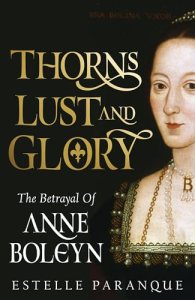 A young woman catches the attention of a king already married to a princess from a faraway kingdom. The king desires the young lady and divorces his wife to marry her. However, there is a catch. The young lady spent some time in the French court of Francis I and Claude of France, whereas the king’s wife was the daughter of the Spanish King and Queen as well as the aunt of the Holy Roman Emperor. The Great Matter of Henry VIII, Anne Boleyn, and Catherine of Aragon is considered one of the messiest divorces in English history and rightfully so when you consider the diplomatic consequences that this divorce would have across Europe. Estelle Paranque highlights the connection between Anne Boleyn and the French court in her latest book, “Thorns, Lust, and Glory: The Betrayal of Anne Boleyn.”
 English royal history is filled with fantastic stories of triumphs and tribulations, grand romances, and divorces that shook the foundations of the monarchy. It is also filled with struggles over religion, wars both inside England and with foreign nations, and heartbreaking child losses. We often think about the spouses of the Plantagenets and the Tudors when we think about royal romances, but we shouldn’t forget about the dynasties that came after, like the Stuarts. So how did the Stuart dynasty come to be and how did the unions between monarchs and their significant others affect the dynasty and England? Heather R. Darsie explores this often-overlooked dynasty and the stories of their marriages and romances in her latest book, “Stuart Spouses: A Compendium of Consorts from James I of Scotland to Queen Anne of Great Britain.”
 English history is filled with kings who had to fight for their crown, both at home and away in foreign lands. Men like William the Conqueror, Henry II, Henry IV, Edward IV, and Henry VII can be considered warrior kings, but one stands above them all. He only ruled for a little over nine years, but he proved his worth time and time again, especially against his French adversaries, and secured the crown of France for his young son. He was the son of Henry Bolingbroke, King Henry IV, and the grandson of John of Gaunt. He was Henry V and his story is one of the most remarkable tales in English medieval history, told masterfully in Dan Jones’ latest book, “Henry V: The Astonishing Triumph of England’s Greatest Warrior King.”
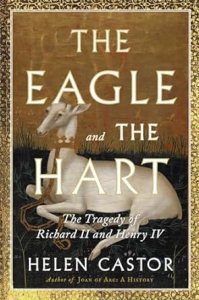 The story of the Plantagenets is filled with high triumphs and devastating tragedies. It is a story of families torn apart for a crown and the desire to either rule with an iron fist for the glory of England or live a life of luxury at the expense of their citizens. The story explored in this particular book is the tale of two cousins born months apart, Richard of Bordeaux and Henry Bolingbroke. Richard and Henry were not born to become King of England, but Fortune’s Wheel had a different plan for the cousins. So how did these cousins become kings and how did their tale turn to tragedy not only for their relationship but for all of England? Helen Castor tells the tale of these two Plantagenet kings in her latest book, “The Eagle and the Hart: The Tragedy of Richard II and Henry IV.”
 Blurb:
 Author Bio
 Have you ever read about a historical figure and wondered what it would be like to interact with them in the present day? How would they deal with modern problems and technology? Could they function in the 21st century or would they become overwhelmed? And even if they could come to the 21st century, how would it affect their timeline and history? This intriguing premise plays out in Maria Vetrano’s novel, “Queen Bess: A Tudor Comes to Save America,” which sees Queen Elizabeth I coming forward about 400 years in time to become the President of the United States in the 2028 election.
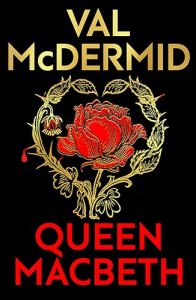 When we think of the name Macbeth, we often imagine the play by William Shakespeare of a power-hungry man and his equally vicious wife willing to do whatever it took to become King and Queen of Scotland. It is a play about revenge and murder, but Shakespeare did not pull these characters out of thin air. He took these characters from the annals of history, such as a man named Macbeth and his wife, a Lady Macbeth named Gruoch. However, the names are about as much as Shakespeare gets right regarding the story of one of the first Kings of Scotland. Val McDermid tells her version of Macbeth and Gruoch’s story in her latest novel, “Queen Macbeth.”
 Adventures of a Tudor Nerd