
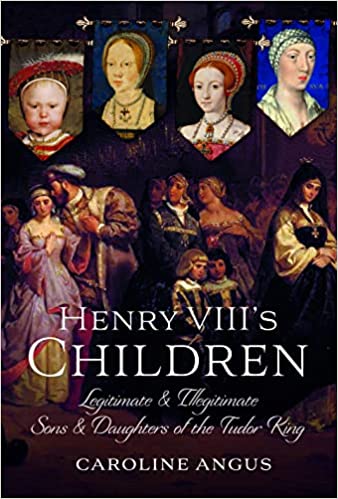
 When we think about the title royal children, images of children who get whatever they want, being spoiled with gems and gowns, and ruling kingdoms, they are married to create alliances. In that sense, it would define a life of luxury. However, for the children of King Henry VIII, luxury was not always in their dictionary. What was life like for the legitimate and illegitimate children of Henry VIII? Caroline Angus explores this question in her latest book, “Henry VIII’s Children: Legitimate and Illegitimate Sons and Daughters of the Tudor King.”
I want to thank Pen and Sword Books and NetGalley for sending me a copy of this book. I have read quite a few books about the children of Henry VIII, so when I saw the title, I was interested to see what new information Angus would provide in her book.
To understand why Henry VIII desired a large family, especially male heirs, Angus explores Henry’s childhood as the second son of Henry VII and Elizabeth of York. We then transition to the marriage of Henry and Katherine of Aragon and her multiple miscarriages until her beloved daughter Mary was born. After Mary, Angus explores the relationships of Henry VIII with Bessie Blount, Anne Boleyn, and Jane Seymour and his other children that were recognized as his own, Henry Fitzroy, Elizabeth, and Edward, respectively.
What I enjoyed in this book is the amount of information that Angus provided about not only Henry’s legitimate children but his illegitimate children, primarily the information about Henry Fitzroy. For so long, Henry Fitzroy was a footnote in the Henry VIII story, but it is so fascinating how much he relied on his eldest son even though he was illegitimate. Then, you have Mary’s upbringing compared to Elizabeth’s, and you see how much of a struggle it was to be a daughter of Henry VIII instead of a treasured son.
Angus also included a section about children who many questioned if they were indeed illegitimate children of the king, including the children of Mary Boleyn. She also included some Tudors I had never heard about, which was interesting to read about how their life experiences differed from their royal counterparts. The king’s legitimate and illegitimate children dealt with so much pain and suffering because of who their dear old dad was, and they all craved a little bit of his love in return.
Angus has done an excellent job telling the tales of the rather sad upbringings of the children of Henry VIII. A crown and a king as a father did not mean your life was a fairy tale. By understanding their childhoods, we can understand why the Tudor children became strong-willed leaders. If you want an excellent book that gives you a glimpse into what it meant to be a child of a monarch during the Tudor period, check out, “Henry VIII’s Children: Legitimate and Illegitimate Sons and Daughters of the Tudor King” by Caroline Angus.
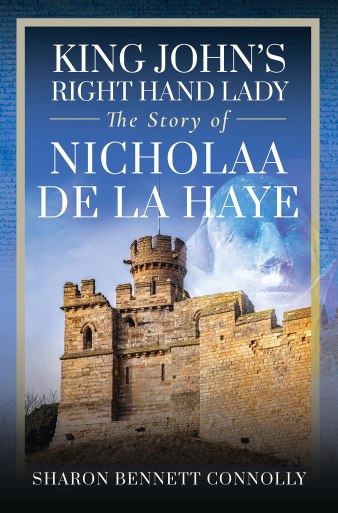 The year is 1217, and Lincoln Castle is being attacked. King John is dead, and his son Henry III is now king, but chaos still reigns. Noblemen are fighting against each other, and amid this conflict is a woman in her sixties. She is used to the instability of England as she is not only the constable of the castle being besieged, but she has earned the right to be named the first female sheriff of England. She was a daughter, a wife, a mother, a widow, and someone the Plantagenets could depend on. The name of this remarkable woman is Nicholaa de la Haye, and her unbelievable story is told in Sharon Bennett Connolly’s latest book, “King John’s Right Hand Lady: The Story of Nicholaa de la Haye.”
 Two women destined to be rivals for one man’s affection. One is the daughter of royalty, destined to become Queen of England since she was a baby. Her first husband died suddenly, and she married her brother-in-law, the young King Henry VIII. The other woman is the daughter of a family on the rise at court. She has been educated in courts abroad but has returned to her native England to serve the Queen of England, but King Henry VIII falls in love with this young woman. Catherine of Aragon and Anne Boleyn; are two women destined to be rivals, but a new museum exhibit uncovers these women’s similarities. In this corresponding book, “Catherine and Anne: Queens, Rivals, Mothers,” Owen Emmerson, Kate McCaffrey, and Alison Palmer share the latest academic research to understand better these two queens who dominated the 16th century.
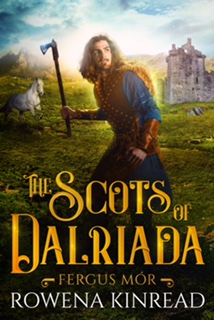
 Today, I am pleased to welcome Rowena Kinread to my blog as part of the blog tour for her novel, “The Scots of Dalriada.” I want to thank The Coffee Pot Book Club and Rowena Kinread for allowing me to be part of this blog tour.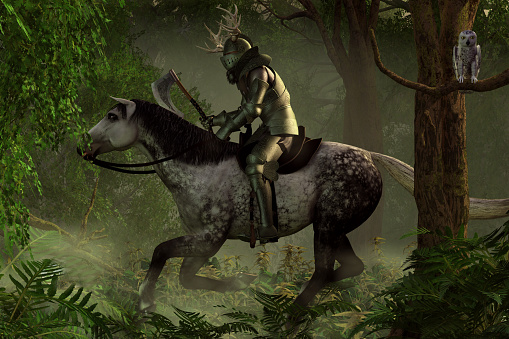
 Blurb:
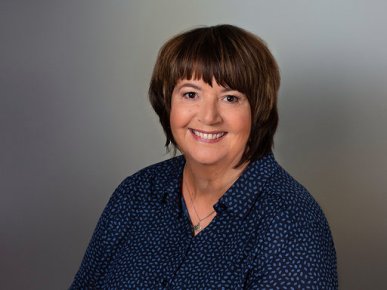 Author Bio:
 When we think of the infamous queens of England, some names come to mind, but one rises to the top for the number of black myths and influence surrounding her name: Eleanor of Aquitaine. The orphaned Duchess of Aquitaine, who married the future King Louis VII of France, went on the Second Crusades with her husband, survived battles and kidnappings, and ended up divorcing her first husband because she couldn’t give a male son. So, she married the young Count of Anjou, who would become the first king of the Plantagenet dynasty, King Henry II, who had a large family and split her time between England and France. Eleanor would eventually side with her sons, rebel against Henry, and spend 15 years in prison. A fire-cracker of a queen, but how many of the stories surrounding the titular queen are true? In her latest biography, “Eleanor of Aquitaine: Queen of France and England, Mother of Empires,” Sara Cockerill dives deep into the archives to tell the true story of this much-maligned queen of England and France.
 I am pleased to welcome Chris Tomasini to my blog today to share an excerpt from his novel, “Close Your Eyes- A Fairy Tale.” I would like to thank Chris Tomasini and The Coffee Pot Book Club for allowing me to be part of this tour.
  Blurb:
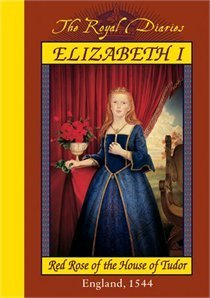 What was the first book you read that excited you so much about the historical figure that you wanted to continue studying history? You would read any text you could get ahold of that mentioned their name, including encyclopedia entries. You have fond memories of that book and wish to reread it as an adult to see if it is still a great book with all its charms. I have noted numerous times that the book series that enticed me to study history was The Royal Diaries Series. The book that started my fascination with the Tudors was “The Royal Diaries- Elizabeth I: Red Rose of the House of Tudor” by Kathryn Lasky.
 When we think of the phrase “middle ages,” we think of a time of bloody battles and deadly plagues, full of warriors and kings, and a more patriarchal society where women sat on the sidelines. Only the highly pious women or women who tore down barriers genuinely stood out in the history books. At least, that is what we have been told for centuries, but what does archeological research tell us? How about the newly discovered historical records? In her latest book, “Femina: A New History of the Middle Ages, Through the Women Written Out of It,” Janina Ramirez tells the story of the Middle Ages innovatively; through the stories of women who, until recently, were hidden voices from the past.
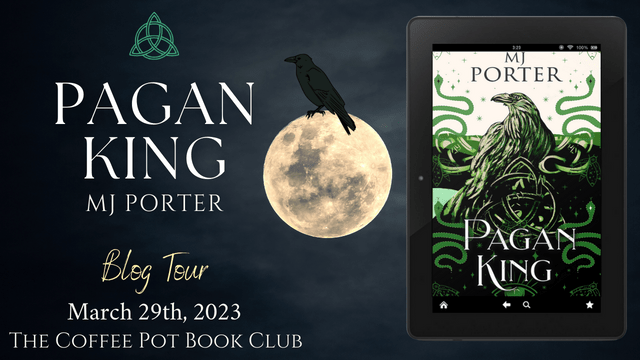 Today, I am pleased to welcome MJ Porter to my blog to share the blurb for her book, “Pagan King.” I would like to thank MJ Porter and The Coffee Pot Book Club for allowing me to be part of this blog tour.
 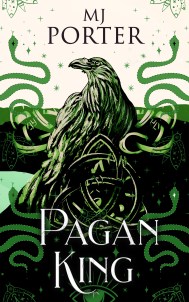 Blurb:
 Author Bio:
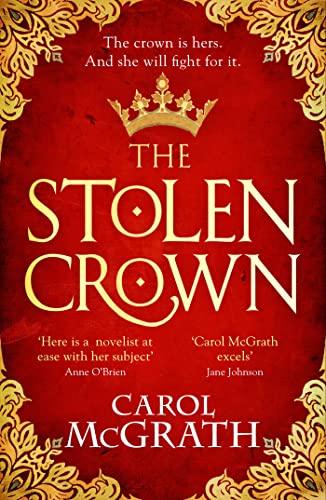 A nautical disaster has left Henry I of England in a bind. His only legitimate child is his daughter Matilda, the former Holy Roman Empress. Matilda’s path to the throne may seem straightforward as she has the oaths of all the leading men in the kingdom and a new younger husband named Geoffrey of Anjou, but things take a drastic turn when Henry I dies. Chaos reigns supreme as her cousin, Stephen of Blois, is declared King of England. Matilda knows that the throne is rightfully hers, and she will fight tooth and nail to recover what has been lost. Her story is told in Carol McGrath’s latest novel, “The Stolen Crown.”
 Adventures of a Tudor Nerd