
 I am pleased to welcome Catherine Hughes to my blog today to share an excerpt from her latest novel, “Therein Lies the Pearl.” I would like to thank The Coffee Pot Book Club and Catherine Hughes for allowing me to participate in this blog tour.
Excerpt
Her voice lifted in confusion. “Father?”
Margaret had been breathing in the musky smell of the woodlands and the flowering anemone that lined their path when she saw her father’s body, as it was positioned in the saddle, tilt further and further toward the side.
That morning, the family had left the inn and began traveling toward Favreshant, following a path made fragrant by the flowers and plants newly opened for spring. The weather did much to improve Margaret’s spirits as the sun shone brightly upon them from a clear, blue-domed sky. An occasional puffy cloud floated across the heavens, but never did it linger long enough to diminish the warmth that embraced her. Walking with a bemused smile upon her face, Margaret surrendered to the charms of the countryside, relishing in the way the light accentuated the many shades of green that colored the leaves, the bushes, and the flower stems. A random look toward the front of the cavalcade snapped her pleasant daydream when she noticed the rider near the head of the train—her father—was about to fall.
Abandoning her usual sauntering walk, she broke into enormous strides, trying to close the gap between her father and herself. The rapid turnover of her feet upon the soil alarmed the flock of yellowhammers who had been flitting about the blossoms. To escape the disruption, they rose higher and hovered above, waiting for the
tumult to settle.
“Father!”
Her shout coincided with the loud thud of his body landing on solid ground, his head coming to rest in a patch of wildflowers.
Before Margaret reached him, she could see Gerhard was already there. He had carefully removed young Edgar from the saddle and then ran toward Edward, dropping to his knees for closer inspection.
Margaret skidded to a halt and took the same posture on the other side of her father’s fallen body. Hesitantly, she repeated again, “Father…?”
His lips parted, but no sound issued forth.
After a quick glance in her direction, Gerhard moved closer to Edward, placing one hand beneath his master’s neck and bringing his own closer. “Edward! Edward, can you hear me?” Nothing. “Blink your eyes if you can hear me.” Gerhard’s voice cracked with worry, his usual composure gone. Because Gerhard had leaned so closely over her father’s head, Margaret had to slide further up toward his shoulder to be able to see whether or not her father had comprehended Gerhard’s words.
To her relief, she saw his eyelashes flutter—he understood! He was still there, he was still with them!
Gerhard continued. “Can you move your legs, my lord? Your arms? Just blink to let me know if you still have some control over your limbs.”
The words hung in the air as other people soon gathered around the group of three upon the ground. Margaret heard Edgar sniffling somewhere outside the circle and felt Harold, the priest, and his two brothers glaring down upon them from their seats. None of them had dismounted; instead, they surrounded the trio like a band of
highwaymen waiting to pounce on an unsuspecting victim. To Margaret’s dismay, her father’s eyelids did not flicker.
She studied Gerhard and watched the changing color of emotion move across his face—from confusion to concern, from fear to speculation, from suspicion to anger. When they both noticed the parting of her father’s lips, their hopes lifted. Together, she and Gerhard leaned in closer.
Her father’s eyes remained open but unfocused, and he whispered gently, more so to the air than to them. “No … feeling …my legs. My feet… cannot feel them… cannot move them… nothing there.”
Gerhard was about to respond, but stopped when he saw Edward gather his breath once more. Unable to inhale deeply, he spoke in shallow exchanges. “Dizzy … since morn…could not get… legs…to keep hold … of the horse… chest feels … full… crushed.” He paused here for a lengthier break.
Margaret could feel her eyes welling up, her lashes wet with moisture.
“Cannot… take …. in … air.” With his gaze still focused at some point in the far distance, he whispered in a hushed tone, “Twas… foul… play.” Silence, and he moved no more.
Margaret felt tears stinging her eyes. They burned her skin as they tumbled down her face until they left small, individual droplets of water on her father’s tunic. She watched as Gerhard placed his hand over Edward’s face, his fingers gently extending to close each eyelid.
Tiny bright-blue flowers with yellow centers formed a soft, decorative pillow where his sleeping head lay. Reminded of Jesus’ promise when he created these delicate blossoms, Margaret trusted that the Blessed Virgin would watch over her father’s soul. And she also knew that her father—like the flower itself—was urging her to “forget-me-not.”
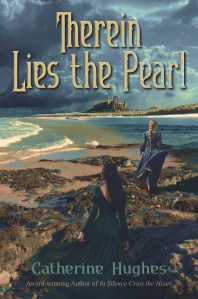 Blurb:
Normandy, 1064
Celia Campion, a girl of humble background, finds herself caught in a web of intrigue when Duke William commands her to work as his spy, holding her younger sister hostage. Her mission: to sail across the sea to Wilton Abbey and convince Margaret, daughter of Edward the Exile, to take final vows rather than form a marriage alliance with the newly crowned king to the North, Malcolm III of Scotland. Preventing a union between the Saxons and Scots is critical to the success of the Duke’s plan to take England, and more importantly for Celia, it is the only way to keep her sister alive.
In this sweeping epic that spans the years before and after the Conquest, two women from opposite sides of the English Channel whisper across the chasm of time to tell their story of the tumultuous days that eventually changed the course of history. As they struggle to survive in a world marked by danger, loss, and betrayal, their lives intersect, and they soon come to realize they are both searching for the same thing–someone they can trust amidst the treachery that surrounds them.
Together, their voices form a narrative never before told.
Buy Link:
Universal Buy Link: https://books2read.com/u/bolgZa
 Author Bio:
Award-winning writer Catherine Hughes is a first-time author who, from her earliest years, immersed herself in reading. Historical fiction is her genre of choice, and her bookshelves are stocked with selections from ancient, Medieval, and Renaissance Europe as well as those involving New England settlements and pioneer life in America. After double-majoring in English and business management on the undergraduate level, Catherine completed her Master’s degree in British literature at Drew University and then entered the classroom, where she has been teaching American, British, and World Literature at the high school level for the last thirty years.
Aside from teaching and reading, Catherine can often be found outdoors, drawing beauty and inspiration from the world of nature. Taking the words of Thoreau to heart, “It is the marriage of the soul with nature that makes the intellect fruitful,” Catherine sets aside time every day to lace up her sneakers and run with her dog in pre-dawn or late afternoon hours on the beaches of Long Island. When her furry companion isn’t busy chasing seagulls or digging up remnants of dead fish, she soaks in the tranquility of the ocean setting, freeing her mind to tap into its deepest recesses where creativity and imagination preside.
In Silence Cries the Heart, Hughes’s first book, received the Gold Medal in Romance for the Feathered Quill 2024 Book of the Year contest, the Gold Medal for Fiction in the 2024 Literary Titan competition, and the 2024 International Impact Book Award for Historical Fiction. In addition, the Historical Fiction Company gave it a five-star rating and a Silver Medal in the category of Historical Fiction Romance. The book was also featured in the February 2024 Issue 31 of the Historical Times magazine and was listed as one of the Best Historical Fiction Books of 2024 by the History Bards Podcast. Therein Lies the Pearl is her second venture into the world of historical fiction.
Author Links:
Website: www.catherinehughesauthor.com
Facebook: https://www.facebook.com/cathy.hughes.5036
Instagram: https://www.instagram.com/cathyhughes22/
Amazon Author Page:
https://www.amazon.com/stores/Catherine-Hughes/author/B0CJT8MXR6
Goodreads:
https://www.goodreads.com/author/show/49501263.Catherine_Hughes
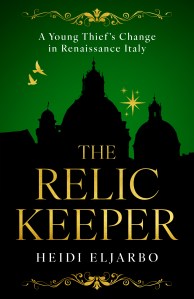
 I am pleased to welcome Heidi Eljarbo back to my blog to share a spotlight for her latest novel, “The Relic Keeper.” I would like to thank Heidi Eljarbo and The Coffee Pot Book Club for allowing me to participate in this blog tour.
 Blurb:
  Author Bio:
 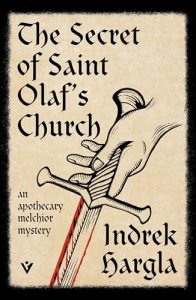 15th-century Estonia was at the edge of Christendom. It also just finished facing off against the notable Victual Brothers, a band of brigands and pirates who wreaked havoc across the land. In the town of Tallinn, St. Olaf’s Church is being constructed, but nefarious dealings are coming to the surface. A serial killer is turning this once peaceful town, which is finding its identity on its head. Now, an apothecary named Melchior Wakenstede must help the magistrate solve the case before anyone else is killed. This is the premise for the first Apothecary Melchior Mystery by Indrek Hargla, entitled “The Secret of Saint Olaf’s Church.”
 When we think about significant law documents from medieval England, we think about the Doomsday Book, the Assize of Clarendon, and the Statutes of Westminster. These documents would remain significant to England, but there is only one that would transcend its original purpose: the Magna Carta. To many nations, it is the foundation of liberty and justice for all. But, if we take away all the sparkling praise of the present day for the document, what can we discover about the Magna Carta? What was the Magna Carta truly at its heart, and why was it written? Dan Jones examines this document and the circumstances behind its creation in his book, “Magna Carta: The Birth of Liberty.”
 The year is 1540, and King Henry VIII is looking for a wife. He has been a widower for over three years, and his councilor Thomas Cromwell believes that a foreign alliance will be the best path forward for England, so he arranges a marriage between Henry and Anne of Cleves. In theory, it should be a good match, but it falls apart quickly. To top it all off, one of Anne of Cleves’ Maid of Honour brought her own drama to court that ended with a murder. Can Will Somers, the King’s Fool, navigate the drama at court while dealing with his own love life, or will the mystery of the missing body prove too much for him to handle? This is the premise of the next book in the King’s Fool Mysteries series called “Devil’s Gambit.”
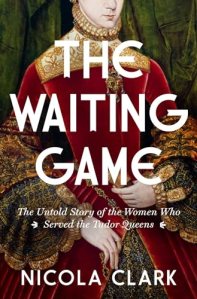 When we think about queens of the Tudor dynasties, we often think about films and dramas that show the queen with a gaggle of girls following behind, gossiping, and just being best friends with their queen. However, things on TV and on the screen are not always truthful. The ladies-in-waiting during the Tudor dynasty lived on a tightrope on whether to live their truths or to stay neutral and silent. For centuries, these women tended to be in the shadows of those whom they served, until now. Nicola Clark, in her debut book, “The Waiting Game: The Untold Story of the Women Who Served the Tudor Queens,” tells the stories of these hidden figures of Tudor history.
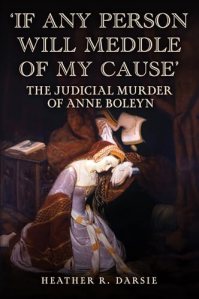 We all know the story of Anne Boleyn. The story of the English noblewoman who caught the eye of King Henry VIII, who decided to divorce his first wife, Katharine of Aragon, to marry Anne. He broke away from Rome and created the Church of England to do it, but marital bliss did not last long, as a few years later, Anne would leave their three-year-old daughter Elizabeth behind when she was executed by Henry over charges of adultery. We know this version of the story, but what if we look at Anne’s story from a continental European perspective? How does her story change when we view her life through a religious lens? Heather R. Darsie hopes to show her audience a different side of Anne Boleyn in her latest book, “‘If Any Person Will Meddle of My Cause’: The Judicial Murder of Anne Boleyn.”
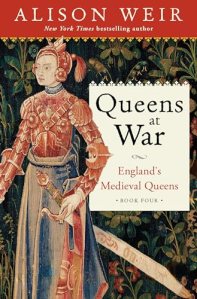 The fifteenth century in England was a time of war. Between a usurper king, fighting with France, and fighting amongst themselves, an English king must be prepared to go into battle at any moment, and his queen must be ready to support him in any way. During this period, there were five kings and queens, and while the kings get a lot of attention, it is the queens who should get their flowers for what they did in times of distress. Alison Weir explores the lives of the final five Plantagenet queens in her final book in the England’s Medieval Queens series, entitled “Queens at War.”
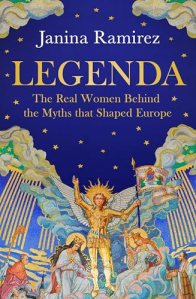 When we think of famous medieval European women, we often think of figures like Joan of Arc and Isabella of Castile. They are seen as women who broke the mold and challenged traditional stereotypes by becoming leaders in traditionally male-dominated fields. These women would be used to craft the identities of their respective nations, but they would help shape the identities of other women from the 18th and 19th centuries. We think we know the stories about these medieval women and their lives, but what new information can we learn from their lives when we examine their lives from their eras? Janina Ramirez takes the stories of seven medieval women and their contemporaries to show how their legacies have been transformed in her latest book, “Legenda: The Real Women Behind the Myths That Shaped Europe.”
 Have you ever believed in something or someone so much that you were willing to do anything to be with them? What if it meant isolating yourself from everyone and everything you loved? Aleys knows this all too well. Born near Bruges during the 13th century, Aleys believes that she is destined for great things and has religious visions. Can this young woman survive both religious and political challenges to make her aspirations of being closer to God a reality, or will she fly too close to the sun and lose everything? Janet Rich Edwards tells Alleys’ tale in her debut novel, “Canticle.”
 Adventures of a Tudor Nerd