 Today, I am pleased to welcome Mercedes Rochelle to my blog to share an excerpt from her book “The Usurper King: The Plantagenet Legacy Book 3”. This passage is when Prince Hal has to tell Queen Isabella about Richard’s death. I would like to thank Mercedes Rochelle and The Coffee Pot Book Club for inviting me to partake in this blog tour.
Excerpt
Isabella of Valois was probably the only person in England who did not know about Richard’s funeral. She was fourteen now and kept in close confinement at Havering-atte-Bower, where she was taken after the failed rebellion. Her prison was an old royal palace to the northeast of London, modest but comfortable. She knew Richard’s life was in danger and was worried sick about him. Alas, no matter how much she cried and demanded to visit her husband, she was politely refused. So she was relieved when the Prince of Wales was announced, for of all King Henry’s children he was closest to her in age and they had gotten along well before he went to Ireland. Before her life fell apart.
Hal came in by himself and knelt before her—a gesture sorely lacking these many months. He had grown much taller since she last saw him, and his shoulders had filled out from training. Unsurprisingly, his stiff posture had not relaxed, nor had his eyes softened; they were guarded as usual.
Blinking back tears, she held out her hands. “You are a welcome sight, my lord. Thank you for visiting me.”
Slowly he stood and together they walked over to a window seat. Tucking a lock of hair behind her ear, she smiled self-consciously. It had been so long since she had a visitor, she was not dressed like a princess. Hal didn’t seem to care.
“Do you have everything you need?” he said, trying to find a good place to start a conversation.
Isabella nodded. She knew that’s not why he was here. “I had hoped to see my husband,” she said softly. She knew this was none of his doing, but she had to make her feelings known to somebody.
At least Hal had the grace to look embarrassed. “I loved King Richard like a father,” he said earnestly, trying to take her hand. “He was very good to me.”
“Loved?” Her eyes narrowed. “You love him no longer?”
He sighed. There was no easy way to say this. “My lady, there is something I must tell you.”
She pulled her hand away, panic spreading over her face. “What has happened to him?”
As he struggled to find the words, Isabella broke into tears. “He’s dead, isn’t he?” She covered her face with her hands. “My poor Richard. How could you do this to him?”
Stricken, Hal fell to his knees. “I swear to you, I am overcome with anguish. I didn’t even know where he was kept.”
Lowering her hands, she looked at him doubtfully. “Do you expect me to believe that?”
Hal shook his head. “I am not privy to my father’s decisions.”
“How can that be?”
He hesitated, biting his lip. “It seems my father trusts no one, except for the archbishop. And perhaps his inner circle. We were never close.”
She was not convinced. However, there was no point in arguing. “How did Richard die?” Her voice was so soft he barely heard her.
“It is said that after the rebellion, he stopped eating. This went on for almost two weeks when they sent a confessor to reason with him. Relenting, he tried to eat but by then he was unable to swallow. Sadly, he expired shortly thereafter.”
“Dear God, he starved to death?”
“That is what I am told.” This sounded weak, even to him. What could he do? Richard’s death was shrouded in mystery.
“Do you believe this?” Isabella’s voice was harsh.
“Of course I do.” Hal tried to sound sincere.
“I expect to attend his funeral,” she said firmly. Once again, he hesitated and she couldn’t restrain her tears. “You wouldn’t stop me, would you?”
Hal had to fight back his rage at his father. He was furious to discover Isabella hadn’t been told about the funeral and insisted he be the one to break the tidings to her. Now he regretted it.
“It’s too late, Isabella. The king thought it best for you not to attend.”
“Not to attend?” Her voice rose to a shriek.
Hal stood, stepping back. “He sent me to tell you. He thought it would be best for you to hear from my lips.”
Did she even heed him? Turning away, she threw herself onto the cushion, crying uncontrollably. Looking around the room, Hal went over to a sideboard and poured a cup of water. He knelt by her side, holding it out.
“Here, drink this.”
Hiccoughing, she sat obediently, accepting the water.
“I promise you, I will do my best to see you are well taken care of,” he said.
She stopped drinking. “What does it matter? I’ve lost everything I care about.”
Defeated, Hal got up to leave.
“Wait.”
He stopped, his back to her.
“When?”
He was hoping she wouldn’t ask. Turning, Hal wiped his hands on his sides. “The funeral was the twelfth of March.”
“That was months ago!”
He waited for her to start wailing again and she surprised him by her restraint. “I see how it is,” she said sadly. “Once again I am a pawn in your game. I am not supposed to have feelings. I must do what I am told for I have no choice.”
She was breaking his heart. “My dear friend, you are not the only one.”
Henry’s response gave her pause. She cocked her head, considering him for a moment. “I am sorry we are enemies,” she said. “In another world we might have been friends. Please, Hal. Help me go home.”
 (Blurb)
From Outlaw to Usurper, Henry Bolingbroke fought one rebellion after another.
First, he led his uprising. Gathering support the day he returned from exile, Henry marched across the country and vanquished the forsaken Richard II. Little did he realize that his problems were only just beginning. How does a usurper prove his legitimacy? What to do with the deposed king? Only three months after he took the crown, Henry IV had to face a rebellion led by Richard’s disgruntled favorites. Worse yet, he was harassed by rumors of Richard’s return to claim the throne. His supporters were turning against him. How to control the overweening Percies, who were already demanding more than he could give? What to do with the rebellious Welsh? After only three years, the horrific Battle of Shrewsbury nearly cost him the throne—and his life. It didn’t take long for Henry to discover that that having the kingship was much less rewarding than striving for it.
Buy Links:
Amazon UK: https://www.amazon.co.uk/gp/product/B08YLFMVPZ
Amazon US: https://www.amazon.com/gp/product/B08YLFMVPZ
 Author Bio:
Mercedes Rochelle
Mercedes Rochelle is an ardent lover of medieval history and has channeled this interest into fiction writing. Her first four books cover eleventh-century Britain and events surrounding the Norman Conquest of England. The next series is called The Plantagenet Legacy about the struggles and abdication of Richard II, leading to the troubled reigns of the Lancastrian Kings. She also writes a blog: HistoricalBritainBlog.com to explore the history behind the story. Born in St. Louis, MO, she received her BA in Literature at the Univ. of Missouri St. Louis in 1979 then moved to New York in 1982 while in her mid-20s to “see the world”. The search hasn’t ended! Today she lives in Sergeantsville, NJ with her husband in a log home they had built themselves.
Social Media Links:
Website: https://mercedesrochelle.com/
Blog: https://mercedesrochelle.com/wordpress/
Facebook: https://www.facebook.com/mercedesrochelle.net
Twitter: https://twitter.com/authorRochelle
Book Bub: https://www.bookbub.com/authors/mercedes-rochelle
Amazon Author Page: https://www.amazon.com/Mercedes-Rochelle/e/B001KMG5P6?
Goodreads: https://www.goodreads.com/author/show/1696491.Mercedes_Rochelle

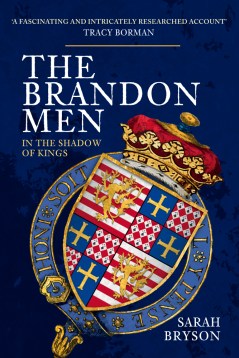 Loyalty to one’s king was imperative during times of war and strife. This statement was painfully true during periods of civil war when cousins fought against cousins. The Wars of the Roses was where we see families rise and fall like the tides, depending on which side they were loyal to and who was on the throne. One family who was able to navigate this political quagmire and end up on the side that would win in the end was the Brandons. Many recognize the name Brandon because of Charles Brandon and his rise in the court of Henry VIII, but how did they reach that point? What are the origins of the Brandon family? In her latest book, “The Brandon Men: In the Shadow of Kings”, Sarah Bryson takes her readers on a ride to find out what loyalty to the crown gave this family and why their legacy lives on today.
 In the middle of the night on November 25, 1120, screams could be heard from the English Channel. A ship known as The White Ship hit a rock and began to sink. Those on board were the glamorous English elite, including the legitimate son of King Henry I, William Aetheling. In an era where people feared the sea and could not swim, those on board sank to their watery death on that cold winter night that began with such frivolity. No one knew that night that this one disaster at sea would cause a dynastic struggle that would lead to the founding of the infamous Plantagenet dynasty. In his latest book, “The White Ship: Conquest, Anarchy and the Wrecking of Henry I’s Dream”, Charles Spencer takes his readers on a journey to fully understand the impact that this tragedy had on the English royal family.
 A man who was young and had charisma would attract the attention of the Virgin Queen herself, yet that attention came with a price. The young man could not do what he desired and was buried in debt. His anger could not be quenched and he would end up rebelling against the very queen who brought him so much glory and honor. This rebellion would lead to his execution. The man’s name was Robert Devereux, 2nd Earl of Essex, and his story is told in Sarah-Beth Watkins’ latest bite-size biography, “Elizabeth I’s Last Favourite: Robert Devereux, 2nd Earl of Essex”.
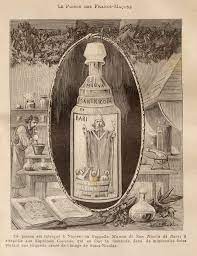
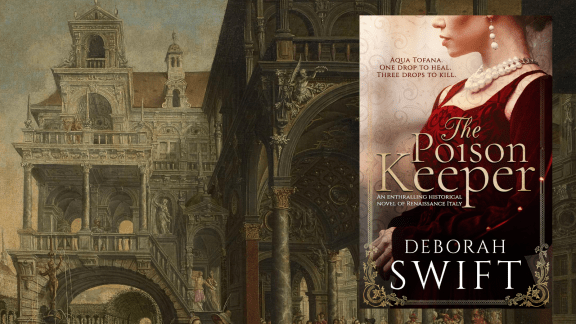
 Today, it is my pleasure to welcome Deborah Swift to my blog to discuss the inspiration for her latest novel,


 (Blurb)
 Author Bio:
 A man ahead of his time who never finished the tasks that he was given as his mind was constantly racing, thinking of new ideas. This is what we consider a genius or a Renaissance Man today, but during Leonardo da Vinci’s time, it was just considered odd. Leonardo da Vinci was an enigma. He could make the impossible possible. His art seemed to leap off the canvas with its realism. However, there are still so many mysteries surrounding his life and his works. What made this one artist/inventor so fascinating for centuries? In her book, “The Real Leonardo da Vinci” Rose Sgueglia opens the curtain to reveal Leonardo da Vinci’s truth and inner circle.
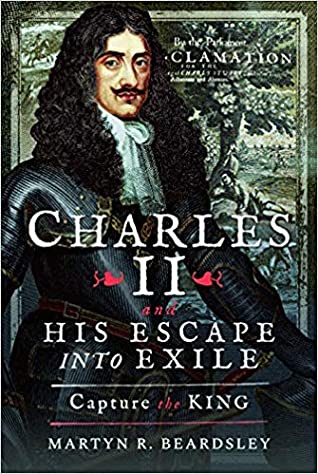 On January 30, 1649, the Stuart monarchy took a major hit when Charles I was tried and executed by the Rump Parliament, making way for the Commonwealth of England to take control. His eldest son, Charles II, fled England leaving the control of the country in the hands of Oliver Cromwell. Two years later, in 1651, Charles tried to make his triumphant return to restore the monarchy. However, it failed miserably at the Battle of Worcester on September 3, 1651; Charles II was able to escape with the help of those loyal to the crown. The story of his escape from Cromwell’s men and his exile in Europe are told in Martyn R. Beardsley’s book, “Charles II and His Escape into Exile: Capture the King.”
 Adventures of a Tudor Nerd