
 Have you ever wondered what your favorite television series would be like on the big screen? To have all your favorite characters go on new adventures, even after the series had ended. However, you are worried that something will get lost once the series moves to the film adaptation. I know I was worried about it before I went to see Downton Abbey the movie.
Now, I know what you are thinking. Why is she talking about Downton Abbey, which takes place in the 1920s when this blog is all about the Wars of the Roses and the Tudors? Don’t worry, this is a one-time thing.
Downton Abbey holds a special place in my heart. It is really the first series that I really felt that I could binge and it never gets old for me. It feels magical every time I watch it. From the clothes and the gorgeous Highclere Castle to the complex characters that you fall in love with, Downton Abbey is a series that stands the test of time.
I was worried that the film was not going to have the same magic as the series, but Downton Abbey blew my expectations out of the water.
Downton Abbey plays host to King George V and Queen Mary as they travel across the country, which means a lot of drama and oh so much stress. All of the original cast is back (which is amazing) with brand new royals and royal servants. With all of these regal characters, how will Downton Abbey, both upstairs and downstairs, deal with the new protocols and procedures fit for a king?
The character interactions during the different twists and turns during this film feels like you never left Downton Abbey. They are still brilliantly witty, especially Dame Maggie Smith who plays Violet Crawley Dowager Countess of Grantham, and they truly care about the honor of the Crawley family and the honor of Downton Abbey. With romances and intrigue abound, Downton Abbey never disappoints.
I did have a few issues with the movie. I wanted to see more of the young kids. They were in the background a lot, but I wanted to see them interact more. I also wanted to see more of Robert and Cora Crawley, played by Hugh Bonneville and Elizabeth McGovern respectfully. Finally, I wanted the interactions between Mary and Edith Crawley, played by Michelle Dockery and Laura Carmichael (who many might recognize as Margaret Pole, Countess of Salisbury in The Spanish Princess), to be more like they were in the past. In a word, they were a bit too “nice” to each other.
Overall, I loved Downton Abbey. It felt like reuniting with old friends and making new ones. I really hope that they make either a sequel movie or another season after this movie. If you are a fan of the Downton Abbey series, you will thoroughly enjoy Downton Abbey.
 The study of the Tudors tends to focus on England as a country of focus, however the Tudors did affect other countries like Spain, France, and Scotland. Many know the story of Mary, Queen of Scots and her relationship with Elizabeth I, but many do not know the tale of her mother, Marie de Guise. Her tale is one of love for her family and her adoptive country of Scotland. It is of loyalty and strength to do what she believed was right. She was a sister, a daughter, a mother, a queen, and a regent of Scotland. Marie’s story tends to be overshadowed by her daughter’s tragic tale, until now. Her story is the main focus of Melanie Clegg’s latest biography, “Scourge of Henry VIII: The Life of Marie de Guise”.
 Words have a lot of power, especially when it comes to how we perceive historical figures. It can be through letters, chronicles, biographies, and this instance, through a couplet written by William Collynbourne in 1484. The couplet in question goes; “
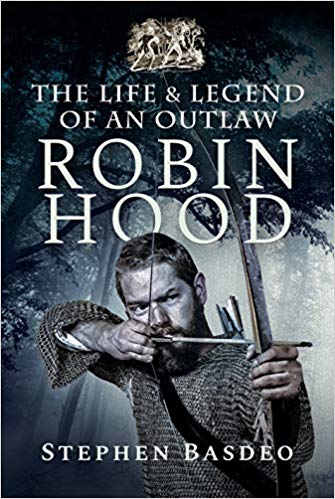 When one studies history, one comes across legends and myths that seem to transcend time itself. In England, there are two such legends. One, of course, is King Arthur and his Knights of the Round Table. The other is of a rogue and his band of merry men, who “stole from the rich and gave to the poor”. Of course, I am speaking of none other than Robin Hood. When exploring Robin Hood, tons of questions come to mind. Who was Robin Hood? Was Robin Hood an actual person? How did his legend change over time? Stephen Basdeo, an Assistant Professor of History at Richmond University, dives into discovering the truth about Robin Hood in his latest book, “Robin Hood: The Life and Legend of an Outlaw”.
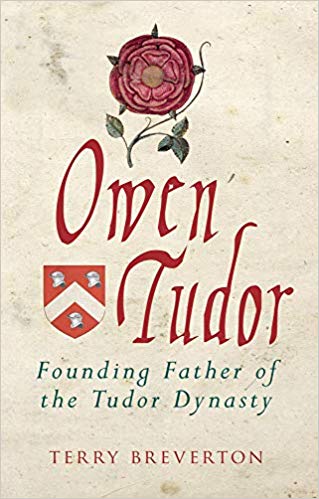 Henry VII winning at the Battle of Bosworth Field on August 22, 1485, is viewed as the beginning of the Tudor Dynasty. However, the story of the Tudor family goes back centuries in Wales. What we consider the story of the Tudors tends to start with a man named Owen Tudor, a servant, who fell in love and married the dowager Queen of England, Catherine of Valois. Quite a romantic tale, but how much of it is true? Were the Tudors simple folk or did they have a bigger role to play in their native Wales? What roles did Owen and his sons play in the Wars of the Roses? These questions and more are explored in Terry Breverton’s latest biography, “Owen Tudor: Founding Father of the Tudor Dynasty”.
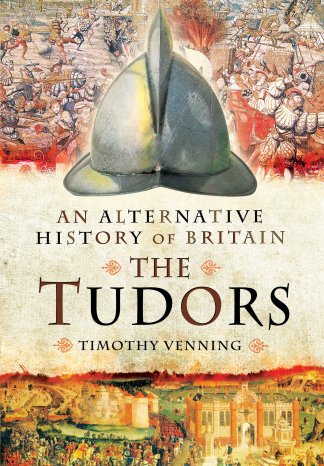 The study of history is all about asking questions about how and why events happened. We understand that history is very much a study of cause and effect; if a certain person causes something to happen, we study the effect of those actions. But what if the person changes what they do? What would happen to the course of history? These are considered the “what ifs” of history, which is something that history fans and students like to discuss with one another. These questions rarely are discussed in books, until now. Timothy Venning explores some of the “what ifs” of the Tudor Dynasty in his book, “An Alternative History of Britain: The Tudors”.
  In history, many people tend to focus on the big names. The kings and queens, the rebels, and those who really made an impact. The political advisors and men of the church tend to get left behind in the dust since they are not seen as “important”. However, it is these men who were the backbone of the monarchy, who helped make the king’s vision come to fruition. They tend to come and go, so that is why John Morton’s story is so extraordinary. John Morton helped three separate kings of England, was the enemy to a fourth king, tried to reform the church, and had numerous building projects. His life tends to be overshadowed by the kings that he served, but his life is brought into the light in this biography by Stuart Bradley, “John Morton: Adversary to Richard III, Power Behind the Tudors”.
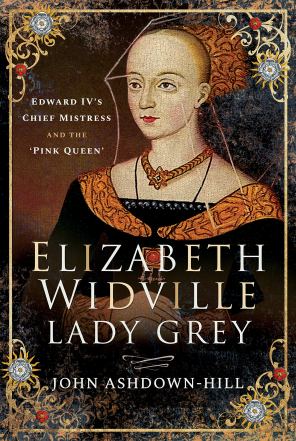 The English conflict known as the Wars of the Roses is filled with dynamic figures whose stories are those of legends. None more so than the wife of Edward IV and the mother of Elizabeth of York and the princes in the Tower, Elizabeth Woodville. She has been known in popular culture as the commoner turned “White Queen” consort, but do we really know the true story about her life? Was she really Edward IV’s wife? How much influence did she actually carry? These questions and more are tackled in Dr. John Ashdown-Hill’s latest book, “Elizabeth Widville Lady Grey: Edward IV’s Chief Mistress and the ‘Pink Queen’.
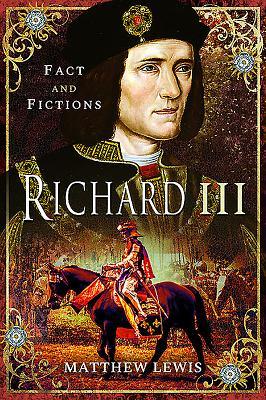 When one looks at the study of history as a whole, the traditional way to look at a person as either good or bad through a combination of facts and fictional tales of their supposed exploits. None so much so as King Richard III, one of the most controversial English monarchs. Fictitious tales, like William Shakespeare’s play
 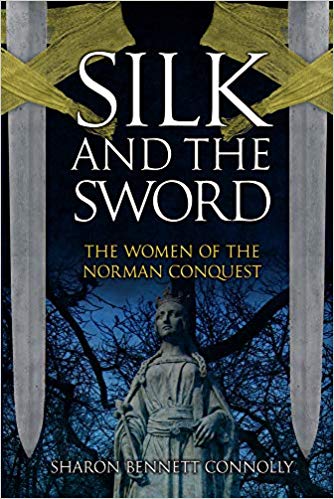 There are quite a few events that one can name that radically shaped the course of British history. None more so than the events of 1066, the year that saw Norman, Breton, Flemish, and French forces, led by the Duke of Normandy, William the Conqueror, invaded England in what we know today as the Norman Conquest. Most history books tend to focus on the men who lived before, during, and after the Norman Conquest: Aethelred the Unready, Edward the Confessor, Cnut, Harold II, Harald Hardrada, and of course William the Conqueror just to name a few. What the history books tend to gloss over is the strong women who stood by their husbands, brothers, and sons during this conflict. Who were these women? What were their stories? How did they help their families before, during and after 1066? These questions are answered in Sharon Bennett Connolly’s delightful book, “Silk and the Sword: The Women of the Norman Conquest”.
 Adventures of a Tudor Nerd