
 In recent years, the study of the English conflict known as the “Wars of the Roses” has become rather popular. The Lancasters and the Yorks fighting for the English throne. Only one can be the winner. When we do look at this time period, we tend to focus on the people involved in the battles and the political aspect of the conflict. The battles, how they were fought, and why the conflict started in the first place tend to be pushed to the sideline. That is not the case with this particular book. In Hugh Bicheno’s book, “Battle Royal- The Wars of the Roses: 1440-1462”, the political and military aspects combine with family histories for a comprehensive look into what made this time period so fascinating.
I came across this particular book by browsing the shelves at Barnes and Noble. I saw that it was about the Wars of the Roses, but I was not familiar with the author. I decided to give it a shot and I am so glad I did. This book is a delight and a fantastic resource.
Bicheno starts his book by exploring two extraordinary women whose families would shape the direction that the Wars of the Roses would take; Jacquetta Woodville and Catherine de Valois. Both women married for love and this love would shape who would win the crown of England, as Bicheno explains:
Sometimes love does conquer all: despite having turned their backs on the game of power, Catherine and Jacquetta became the common ancestors of every English monarch since 1485. Before that could happen, all those with a superior claim to the throne had first to wipe each other out. This they did in what was, in essence, a decades-long, murderously sordid dispute over an inheritance within a deeply dysfunctional extended family. It became merciless not despite but because the combatants had so much in common, and projected their own darkest intentions onto each other….it was an extraordinary period in English history. Four of the six kings crowned between 1399 and 1485 were usurpers who killed their predecessors, undermining the concept of divine right as well as the prestige of the ruling class. (Bicheno, 10-11).
Family drama is the center of Bicheno’s book so he spends several chapters laying out the major players and how they were related to one another. This can get a tad bit confusing for those who are not familiar with the story, so Bicheno has included family trees and a list of protagonists and marriages to help readers. I will say that they became very useful for me as I was reading this book and I would highly suggest you use the resources that Bicheno has included in this book for future research. Bicheno also included maps, which corresponded with the different battles that were important between 1440 and 1462, not only in England but in France, Wales, and Scotland as well.
What really impressed me about this book was the amount of detail that Bicheno was able to include and making it understandable for any casual student of the Wars of the Roses, yet engaging enough for a scholar. That is not an easy feat, but Bicheno is able to do it. He uses modern data with extensive research of historical documents, knowledge of medieval military strategies, and interpreting all of this information for modern readers, which included a few nods to a certain popular show(Game of Thrones) that is roughly based off of the events of this time period.
Hugh Bicheno breathes new life into the study of the Wars of the Roses. I wasn’t really sure what to expect when I first started reading this book, but I am extremely glad I did. Even if you think you know tons about the Wars of the Roses, this book will surprise you with new information and make you question your previous knowledge about the battles in the first part of this tumultuous time. If you have an interest in the Wars of the Roses and understanding how it occurred from a military and a political point of view, I highly suggest you read Hugh Bicheno’s book, “Battle Royal- The Wars of the Roses: 1440-1462”. It is an eye-opening, riveting reading experience.
 By the year 1470, England had been embroiled in a civil war between the houses of York and Lancaster for nearly 20 years. Edward IV was king until he was driven out of the country by his former best friend Warwick and Edward’s own brother, George Duke of Clarence. The House of Lancaster is back in charge with Henry VI, but Edward IV and his other brother Richard Duke of Gloucester are not giving up without a fight. However, there is another family who wants to fight for the throne, the Tudors. How will it come to an end? Who will become King of England when all the major battles come to an end? These questions are answered in Conn Iggulden’s thrilling conclusion to his Wars of the Roses series, “Ravenspur- Rise of the Tudors.”
 The deaths of the Duke of York, Earl Salisbury and Edmund Earl of Rutland at the Battle of Wakefield at the end of 1460 marked a changing point for how the Wars of the Roses was fought. Now it was not going to be simply a matter of who was going to be the King of England, but it was a war of revenge. What the Lancastrians did not realize at the time was the fact that these deaths would unleash two men who would mark the destruction of the Lancastrian cause; Edward Duke of York, the future King Edward IV, and Richard Neville Earl of Warwick “the Kingmaker”. In the third book of Conn Iggulden’s Wars of the Roses series called “Bloodline”, Iggulden explores the rise of these two dynamic men and how family matters tore the two best friends apart.
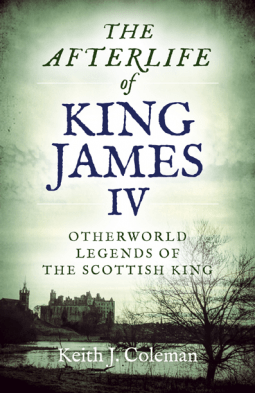 A king who died on the battlefield and his remains were never found. His story and his legacy went through many revisions throughout history. This sounds like a certain English king, King Richard III, but this story actually takes place decades after Richard’s death in Scotland. This is the story of King James IV of Scotland, who died at the Battle of Flodden in 1513. It was this event and how James IV was viewed afterward which Keith J. Coleman explores in his book, “The Afterlife of King James IV: Otherworld Legends of the Scottish King”.
 known as the Hundred Years’ War, and the massively destructive illness that we know today as either “the Black Death” or “the Black Plague”. This was a time of despair, but it was also a time where we see a shift from old traditions of the church and the state. It is also two centuries after the events of Ken Follett’s massively popular book, “The Pillars of the Earth”. Follett explores how the people of Kingsbridge survived during this tumultuous time in his second book of the Kingsbridge series, “World Without End”.
 When one thinks about epic tales stories of adventures and romance tend to come to mind. One hardly thinks about the construction of a magnificent building as an “epic tale” with monks and builders as the main characters. We see cathedrals as these massive buildings from the past used as churches, but we rarely think about how they were constructed and why. Who were the people who decided to make these spectacular buildings and what might have their lives have been like? These are just some of the questions that Ken Follett wanted to try and answer in his monumental historical fiction masterpiece, “The Pillars of the Earth”.
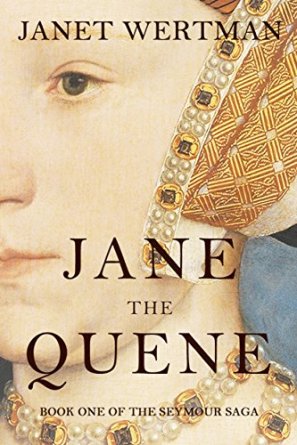 Henry VIII may have had six wives, but only one could give him the desired son that he wanted. She was kind, demure and everything that Henry VIII’s second wife Anne Boleyn was not. Her name was Jane Seymour, Henry’s third wife. Sadly, she is often remembered for the birth of her son and her death. However, there was a lot more to Jane’s story than the ending. What was her relationship with her family like? How did she fall in love with the King? And how was her relationship with her romantic rival, Anne Boleyn? These are just some of the questions that Janet Wertman strives to answer in her first novel of her new Seymour Saga called, “Jane the Quene”.
  Adventures of a Tudor Nerd