I am pleased to welcome Sam Mee, founder of the Antique Ring Boutique, to my blog today to share an article about Tudor jewelry.
Jewelry was predominantly religious in the austere Middle Ages, focusing on relics, devotional rings, and crosses. But the Tudor rulers developed it as a way to project their own royal power and authority. Clothing fashions of the time emphasized structure, and monarchs like Henry VIII and Elizabeth I integrated jewelry to proclaim their status and divine favor.
This was the age of portraiture, when the elite commissioned likenesses as propaganda. Hans Holbein the Younger depicted Henry VIII in a way that showed off his jewels and chains of office as much as his formidable bulk (and codpiece). Holbein’s most famous image of Henry is a 1537 mural that, while destroyed by fire in 1698, is still known through copies. It shows the King with a powerful stance and wearing multiple chains and rings to further emphasized his authority and wealth.
 Holbein portrait, public domain image: https://upload.wikimedia.org/wikipedia/commons/thumb/f/f9/After_Hans_Holbein_the_Younger_-_Portrait_of_Henry_VIII_-_Google_Art_Project.jpg/1024px-After_Hans_Holbein_the_Younger_-_Portrait_of_Henry_VIII_-_Google_Art_Project.jpg
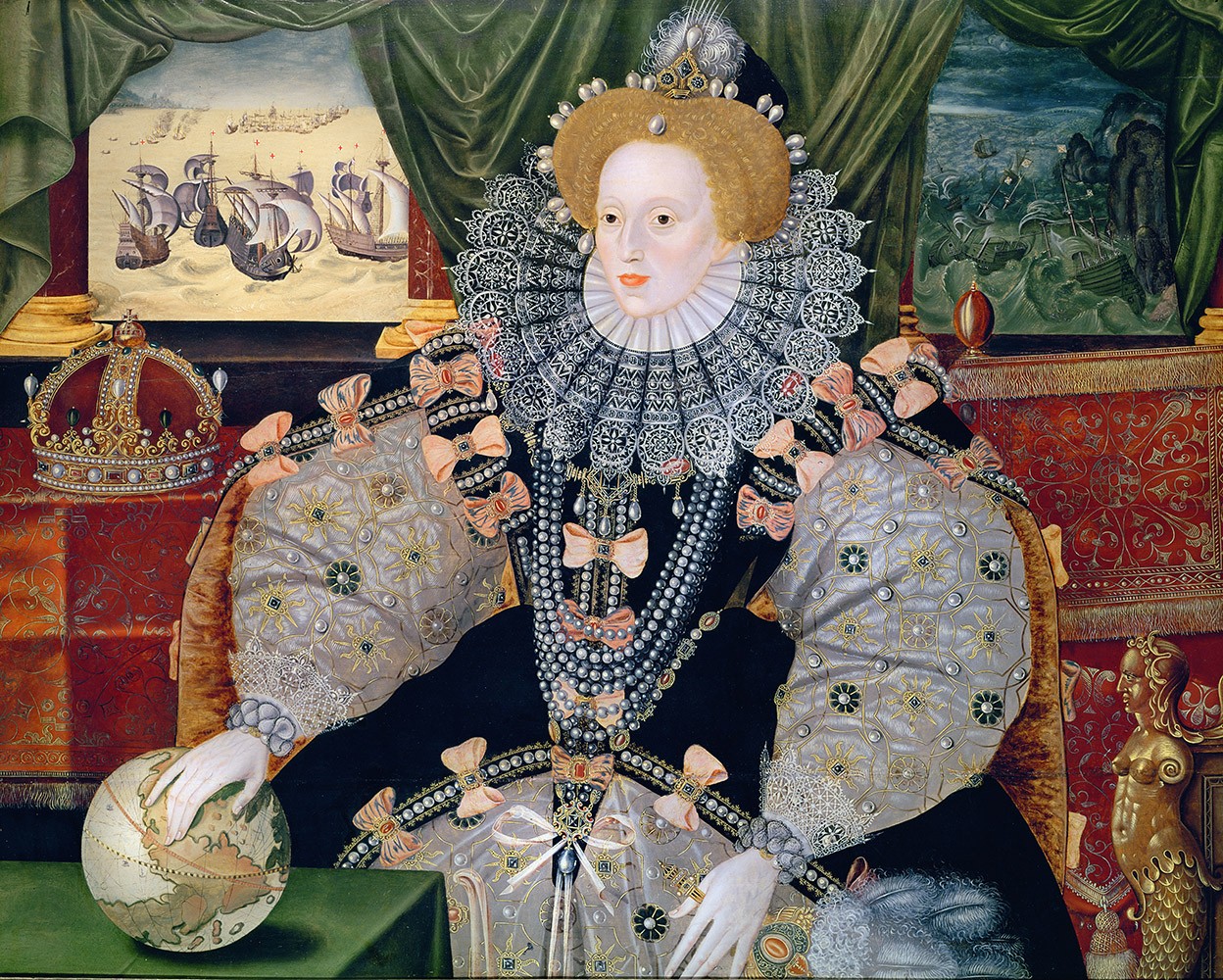
Three similar Armada portraits of Elizabeth I were painted after England defeated the Spanish Armada. They take allegory even further. The Queen is almost encased in pearls. Her gown is embroidered with them, they sit on her hair, and pearl ropes hang from her neck, all to symbolize chastity and divine protection. More explicitly, her hand rests on the globe as a symbol of empire. Her powerful warships are visible in the background behind her gem-encrusted crown, signifying divine authority.
 Armada portrait, public domain image: https://upload.wikimedia.org/wikipedia/commons/7/7b/Elizabeth_I_%28Armada_Portrait%29.jpg
In fact, Elizabeth I was rarely painted without pearls – other examples include the Darnley Portrait (c1575) and Rainbow Portrait (c1600). The pearls repeatedly symbolized the Virgin Queen’s chastity and wealth in bodily form.
The sumptuary laws
If gems and clothing signified power, then rulers needed to control who wore what. Medieval 15th-century sumptuary laws started to codify this across Europe. A 1463 English statute restricted who could wear “royal purple”, while a 1483 act restricted velvet to knights and lords and satin for gentry with a yearly income of £40.
Tudor England was an intensely hierarchical society, and so the laws were tightened further. Elizabeth’s 1574 Act of Apparel spelled out in detail who could wear what – her rules set which fabrics hats could be made of and dictated the length of swords, depending on the wearer’s standing. Check out the list here: https://midtudormanor.wordpress.com/sumptuary-laws/
Jewelry was also regulated with gold chains, heavy pearls, and precious stones reserved exclusively for the nobility.
Enforcement was patchy but real, with surviving court records showing individuals tried for breaches and fined. These laws were somewhat symbolic, though. They were a way to make hierarchy visible rather than consistently enforced. Ambitious merchants and courtiers often flaunted jewels beyond their rank, with monarchs turning a blind eye.
Fashion at court
Jewelry was inseparable from clothing at court. Goldsmiths worked hand in hand with tailors, and jewels were sewn directly into doublets and headdresses.
We know Henry VIII wore vast gold chains and pendants and even occasionally jeweled codpieces. Courtiers followed suit with jeweled hat badges, enameled rings, and ornate girdle books (these were tiny, jeweled prayer books that hung from belts). They also wore gold pearl earrings. Women sported pearls, rubies, and diamonds on top of layered dresses made from richly embroidered fabrics.
Anne Boleyn’s necklace – a large gold “B” with three drop-pearls dangling from it – is one of the period’s most famous jewels. It’s a very personal bit of jewelry that symbolized her individuality and status. (It survives only in portraits – its whereabouts after her 1536 beheading is not known).
 Anne Boleyn’s B necklace, public domain image: https://upload.wikimedia.org/wikipedia/commons/f/f2/Anne_boleyn.jpg
Global trends and treasures
The rise in the prominence of jewelry was part of a wider trend of expanding horizons – culturally, societally, geographically, and economically. Spain’s influx of New World gold and silver boosted Europe’s wealth, with England claiming its own share through figures like Sir Walter Raleigh and Sir Francis Drake.
There’s extraordinary archaeological evidence of this, not just from the images of the time but from the Cheapside Hoard, discovered in 1912 beneath a London cellar. It’s a collection of more than 400 pieces. There are emerald rings, diamond pendants, and enameled chains with gems sourced from Colombia, India, Burma, and Brazil. The treasure shows that London goldsmiths had access to a global supply of jewels long before the height of the empire.
Together with portraits, the Hoard is the richest record we have of Tudor jewelry, showing how jewels were actually made. You can read more about it here: https://www.londonmuseum.org.uk/collections/london-stories/jewels-cheapside-hoard/
Evolution of Tudor Jewelry
New fashions, new materials, and new freedoms (for some). Tudor jewelers developed new techniques to match these wider changes in society, combining medieval traditions with Renaissance artistry. Enameling reached new heights, and these techniques were carried forward into Georgian mourning jewelry and even into Victorian revival pieces.
Foil-backing was widely used in Tudor times to enhance jewels. Thin sheets of colored foil were placed behind gems like diamonds, rubies, or rock crystal to enhance their brilliance. This technique remained common until the 18th century, when more advanced diamond cutting began to produce inherent sparkle.
Gem cutting itself advanced in the Tudor period. Gemstones are rarely cut in bespoke shapes but tend to use standardized cuts designed to maximize brilliance or colour. This has been true since the Renaissance. Earlier medieval gems were typically worn as cabochons (smooth, polished domes), which enhanced colour but not brilliance. Then, from the late 15th century, jewelry began to experiment with faceting, where flat surfaces were cut at angles to reflect light, and Tudor lapidary work played a key role in the development and take-up of new techniques:
- Cabochon: The oldest approach. A smooth, rounded dome without facets. Used in the medieval period for sapphires, garnets, and emeralds.
- Point cut: This simple cut shaped a diamond into a pyramid with four sides. Mostly common in the 15th century.
- Table cut: Developed in the late 15th century, this removed the top of the pyramid to create a flat “table” facet. It meant increased brilliance and became standard in Tudor jewelry.
- Rose cut: Emerged in the 16th century as diamond saws and polishing technology improved. This had a flat base and a domed top covered in triangular facets to resemble a rosebud. The rose cut was popular until the 19th century.
- Old mine cut: An 18th-century development. It’s a squarish cut combined with a high crown, deep pavilion, and large culet. It was the forerunner of the modern brilliant cut.
You can read more about the evolution from medieval jewelry techniques here. (https://historicalbritainblog.com/the-debt-antique-jewellery-owes-to-the-middle-ages-guest-post-by-samuel-mee/)
Settings in Tudor times typically enclosed the stone with gold, but Tudor jewelers began experimenting with more open settings to admit light. It was the Stuart era that really saw the development of the claw setting for diamonds, where the gem was held with tiny metal arms to allow much more light to pass through, dramatically increasing sparkle.
Tudor trends can be seen in subsequent centuries:
- Georgian jewelers turned enamel and foil into sentimental jewelry such as portrait miniatures (also common in Tudor times) and mourning rings.
- Victorian designers enjoyed historical revival, and they often deliberately echoed Tudor styles, such as heavy Holbein-like gold chains and memento mori skulls.
- Edwardian jewelers drove a revival of Elizabethan-style pears and combined them with lace-like platinum settings.
- Art Deco designs were modernist in geometry but had a strong revivalist theme from Egyptian motifs to statement designs that matched 16th-century theatricality.
Surviving themes
Tudor jeweler was many things: regulated, global, technical, and symbolic. It was constrained by law, used as propaganda, and yet pushed at boundaries. It was part of the evolution of techniques and materials that developed over several hundred years as jeweler changed to become ever more personal. And even specific gem traditions persisted. The Tudor love of pearls was echoed in the Edwardian era. Tudor foiling foreshadowed Georgian brilliance. Tudor enameling was revived multiple times in the centuries that followed. Let’s just hope the codpiece doesn’t return.
About the Author
Sam Mee is the founder of the Antique Ring Boutique (https://www.antiqueringboutique.com/), which sells rings from the Georgian, Victorian, Edwardian, and Art Deco eras. He has several guides on his website for buying rings from different historical periods. EG, you can learn more about ring cuts and foiling in the guide to Georgian rings: https://www.antiqueringboutique.com/en-us/pages/georgian. He is a member of both Lapada (https://lapada.org/dealers/antique-ring-boutique/) and BADA (https://www.bada.org/dealer/antique-ring-boutique).

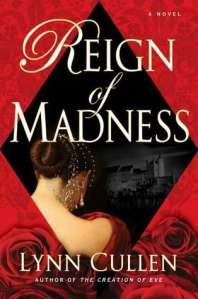 The daughters of Isabel of Castile and Ferdinand of Aragon lived very interesting lives. Of course, we know what happened to Katherine of Aragon, but her elder sister, Juana, has her own tragic tale. She was known as Juana the Mad because the rumors were that when her husband, Philip the Handsome, died, she carried her coffin around for months and would not let him be buried. Was Juana truly mad, or was it all a ruse by powerful men to steal her lands and titles? Lynn Cullen explores Juana of Castile’s life in her novel, “Reign of Madness.”
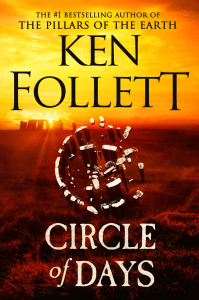 Stonehenge, a marvel of the ancient world that still stands centuries after it was built. It has been the center of mystery and wonder for all who gaze upon it. A gigantic monolithic structure, whose purpose has been a source of discussion since its origins, but that raises another quandary: who were the people who built such an impressive landmark? This single question presents a grand opportunity for historical fiction writers as we don’t have many written records for this period of time, which means authors have room to play. Ken Follett took on the daunting task of telling the tales of those who built this imposing monument in his latest novel, “Circle of Days.”
 Have you ever wondered what it might be like for a historical fiction writer during their writing process? How do they balance both their own lives and the lives of their characters? While we can read author interviews to find out what goes on in an author’s mind, why not take a fun twist of a historical fiction author writing about a historical fiction writer writing her first historical fiction novel? Meet Lucy Ellis, a new writer who is writing her first novel about the death of Amy Robsart while recovering from cancer and going through a divorce. Can Lucy finish her novel about Amy Robsart before her life and her health come crashing down? Wendy J. Dunn tells the tale of two women betrayed in her latest novel, “Shades of Yellow.”
 Blurb:
 Author Bio
 There’s nothing like a quest to keep a man going, even on the brink of death, but in the case of Uhtred of Bebbanburg, he has several quests. His main goal is to reclaim his birthright, Bebbanburg, but he also wants to help fulfill Alfred’s dream of uniting the kingdoms to create England. However, life can present even more challenges, and Uhtred knows this all too well. Uhtred not only has to save a royal heir and his daughter, but he also must find the sword that wounded him and place a woman on a throne to rule in a time when women were seen rather than heard. It’s a lot to do, but if anyone is up to the task, it is Uhtred of Bebbanburg. The question is, will he survive? Bernard Cornwell brings us another action-packed novel full of adventures in book 8 of the Saxon Stories series, “The Empty Throne.”
 The Plantagenets, one of England’s most dynamic dynasties, were always in the middle of some sort of conflict. Whether they were fighting foreign adversaries, their own people, or their own family, it felt like the Plantagenets were always getting into some sort of trouble. And there was one king who knew how to use the weaknesses of the kings of England to his advantage. He was King Philip II of France, also known as Philip Augustus. He had to deal with four different Plantagenet kings and had a strategy for each one of them. Just what were Philip II’s strategies, and how did his reign affect English/French relationships as a whole? These questions are answered in Catherine Hanley’s book, “Nemesis: Medieval England’s Greatest Enemy.”
 One would assume that, since England is an island nation, its navy has been its strength since its foundation. That, however, was not always the case. While there were naval battles during the Middle Ages, it was not a navy like we know today. The concept of the Royal Navy was founded during the time of the Tudors, especially under the reign of Henry VIII. So, how did Henry VIII turn a navy from 7 ships to over fifty ships that could stand with other European navies? Geoffrey Moorhouse examines the creation of the English navy in his book, “Great Harry’s Navy: How Henry VIII Gave England Sea Power.”
 Sixteenth-century England was a time of great change. There were religious changes as the crown passed from one member of the Tudor family to another. Wars and illnesses like the plague and the sweating sickness were rampant. However, this was also a time of an explosion of the arts, particularly of the theatre. We see men like William Shakespeare and Ben Jonson rise from obscurity to write plays that would propel them to become phenomena. There was a third playwright who should be included in this list. He was the son of a cobbler who was educated at Cambridge University. A brilliant man who wrote groundbreaking plays while he was a spy for her majesty Queen Elizabeth I, his cause of death when he was only in his twenties would remain a mystery for centuries. Christopher (Kit) Marlowe’s story is told in Stephen Greenblatt’s latest book, “Dark Renaissance: The Dangerous Times and Fatal Genius of Shakespeare’s Greatest Rival.”
 Marrying into the royal family is not all sunshine and rainbows. Of course, we tend to think about those who marry the king, the queen, the prince, or the princess. But we also need to consider the aunts and the uncles of the royals as part of the family. Take, for example, Arthur Plantagenet, the illegitimate son of Edward IV and the uncle of Henry VIII. His second wife, Honor Lisle, would help him rule Calais; however, she is best known for her letters and her devout Catholic faith during the Reformation in England. So why is Honor Lisle considered a controversial figure, and what was the cause of the fall of Honor and Arthur from the royal good graces? Amy Licence explores the life of Henry VIII’s step-aunt in the first full biography dedicated to Honor Lisle, which is entitled “Henry VIII’s Controversial Aunt, Honor Lisle: Her Life, Letters, and Influence on the Tudor Court.”
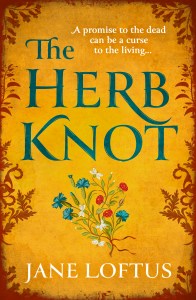
 I am pleased to welcome Jane Loftus to my blog today to share a guest post about the historical setting of her novel, “The Herb Knot.” I would like to thank The Coffee Pot Book Club and Jane Loftus for allowing me to participate in this blog tour.
  Blurb:
  Author Bio
 Adventures of a Tudor Nerd