
 The island we know as England is on the cusp of the 10th century. King Alfred is dead, and his son Edward now rules. The kingdom of Wessex is still standing strong, and it looks like the Danes are behaving themselves and keeping the peace, for now. Unfortunately, things are not going smoothly for Uhtred of Bebbanburg. He gets into a bit of mischief and becomes a target of Cnut Longsword, the Viking leader, all while trying to fight for his right to rule his beloved Bebbanburg. Can Lord Uhtred survive his latest adventure, or will his Saxon allies save him in the nick of time? This is the premise of Uhtred’s latest adventure, “The Pagan Lord,” Book 7 in the Saxon Stories series by Bernard Cornwell.
We reunite with our ruffian hero Uhtred of Bebbanburg on a dark, stormy night, when he is riding through a town with his second son Osbert and Aethelstan, the illegitimate son of Alfred. They are then accosted by a gaggle of priests, which includes his eldest son, Uhtred, soon to become a Christian priest, and Abbot Wihtred. This one encounter will alter how the Saxons will view Uhtred because not only does he disinherit his eldest son, but kills Abbot Wihtred, which makes him an outlaw in the eyes of the Saxons. Osbert is renamed Uhtred Uhtredson, and the group moves on like nothing happened, but the damage is already done.
A tired Uhtred comes home to burning buildings, dead comrades, a blind father Cuthbert, and Uhtred’s woman Sigunn kidnapped. Uhtred begins to wonder which one of his numerous enemies kidnapped Sigunn. Turns out this is revenge from Cnut Longsword, who believes that Uhtred kidnapped his children and his wife. Obviously, Uhtred knows nothing about it, but decides to work with Cnut to clear his name, at least for the time being. Uhtred’s journey to save Cnut’s family will see him in his beloved Bebbanburg and reunited with his lovers Sigunn and Lady Aetheflaed. While Uhtred is considered an outlaw to the Saxons, he still chooses to side with them at the battle of Tettenhall, where he clashes with Cnut Longsword one final time in a fight to the death.
I have been loving this series so far because of how dynamic the characters are, especially Uhtred of Bebbanburg. He gets into so many scraps, but he keeps his home, his family, and his allies in mind whenever he fights. I am always excited to read a new Saxon Stories novel, but I am also a bit sad because I know it’s one book closer to finishing this fantastic series. If you are like me and have finished the first six books in the Saxon Stories, I highly recommend that you read book seven in the series, “The Pagan Lord” by Bernard Cornwell.
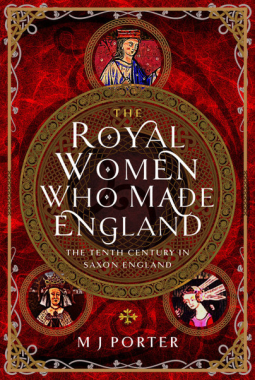 When we think about England, we often think about a unified country with an illustrious history of wars and triumphs. However, England in the 10th century was drastically different. It was barely a country as it was newly formed through politics, but it faced the risk of elimination with a carousel of kings and Viking raiders. Some of the most notable kings of this era include Alfred, Edward the Elder, Athelstan, Edward the Martyr, and Aethelred II, but the most fascinating figures of this time were the women who were hidden in the shadows of the past. M.J. Porter uses the written record from the 10th and 11th centuries to tell the tales of these remarkable women in her book, “The Royal Women Who Made England: The Tenth Century in Saxon England.”
 Adventures of a Tudor Nerd