
 Throughout history, pandemics have ravaged human populations and changed the course of history. None more so than the Bubonic Plague, also known as the Black Death. It devastated entire families and altered entire countries, primarily in Europe. Although England is an island nation, that does not mean it could not escape the pandemic’s horrors for long. In her latest book, “The Black Death in England: Journal of the Plague Years in the Fourteenth Century, “ Kathryn Warner explores the lives of the victims of the Black Death throughout England during this century.
I would like to thank Pen and Sword Books and Net Galley for sending me a copy of this book. I haven’t read many books that focus primarily on the Black Death, so I was interested to see what kind of insights Warner would provide in this book.
Warner is known for her meticulous research, which she masterfully demonstrates in this book. Unlike other books about the Black Death, Warner chooses to focus on the individual stories of the victims and the survivors from every walk of life. Now this is a lot of information, especially when you consider how many waves of the plague hit England and the number of villages that were in England during this period. However, Warner breaks it down so each region gets its special section. Primarily, Warner explores the plague outbreak of 1349-1350, but she does explore other outbreaks.
The true highlight of this book is the fact that Warner focuses on the stories of the common people, not just the nobility or royalty, which are often highlighted in medieval history books. I think it was so fascinating to see how others dealt with the plague and how it affected their families and the nation as a whole.
Overall, I think this is a solid book for those who want to dive into the archives and explore the impact of the Black Death in England. It may be a difficult read for some and it might not be for casual readers, but if you want something more academic, I would suggest “The Black Death in England: Journal of the Plague Years in the Fourteenth Century” by Kathryn Warner.
 When we think about the great female minds of the 16th century, we often think about those closest to the throne. Women of privilege who were destined to rule or to be a queen consort in a far-off land where their education would be imperative for the success or failure of their respective dynasty. However, some women did not live a life of glitz and glamor and received an equally impressive education. One such woman was the daughter of the great statesman Sir Thomas More, Margaret More Roper. Her remarkable story is told in the debut book by Aimee Fleming, “The Female Tudor Scholar and Writer: The Life and Times of Margaret More Roper.”
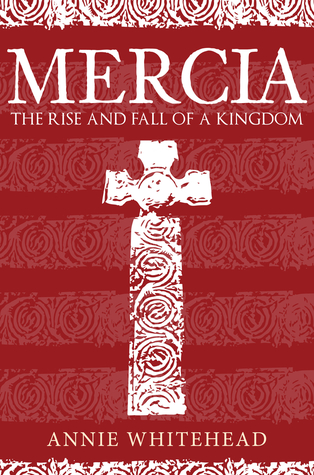 England’s history is full of daring moves and colorful characters, but it is also very ancient compared to other countries. We often considered the “start” of English history in school as the Norman Conquest in 1066. Nevertheless, this was just a stage in the massive story of the island. We have to consider those who called England their home; those who knew England, not as a unified country, but seven kingdoms known as the heptarchy. The most famous of these seven kingdoms was Wessex, the last kingdom, but their mortal enemy had a rich history of their own. Mercia was a thriving kingdom for hundreds of years, with colorful characters that many people are not familiar with. Annie Whitehead has taken the tales of this forgotten kingdom to the forefront with her book, “Mercia: The Rise and Fall of a Kingdom.”
  Adventures of a Tudor Nerd