
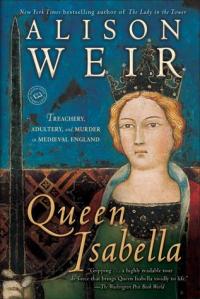
 Throughout medieval English history, there have been some famous queens who left their marks. Empress Matilda, Eleanor of Aquitaine, Eleanor of Castile, Philippa of Hainault, and Margaret of Anjou each left an impression on English history, either good or bad. However, there was one queen whose negative reputation came with the nickname “She-Wolf of France,” and her name was Queen Isabella of France. The wife of Edward II and mother of Edward III, she left her husband for Roger Mortimer and overthrew her husband in favor of her son. For centuries, she has been viewed as a horrible villainess, but is that a fair assessment of her life? Alison Weir dives into the archives to find the truth about Isabella of France, and she presents her findings in her biography, “Queen Isabella: Treachery, Adultery, and Murder in Medieval England.”
As a fan of Alison Weir, I am trying to read every book she has written so far, so when I saw this book in a used book store, I jumped at the chance to read it. I have read books that have featured Isabella of France, but I have never read a biography about her until now. I wanted to see if this book would change how I feel about her.
Isabella of France was the daughter of Philip IV, King of France, and Jeanne I, Queen of Navarre, born in 1295. As the only surviving daughter of Philip and Jeanne, she was expected to make a match that would create an alliance, which she did when she married Edward II of England. On paper, it should have been an ideal match, but Edward II had his favorites. The first was Piers Gaveston, whom Edward II knew before he married Isabella. Edward paid more attention to advancing Gaveston than governing, which led to the great men of England (known as the Ordainers) enacting the Ordinances of 1311 and Gaveston’s execution in 1312. Edward II swore revenge against those who killed Gaveston.
For a while, Edward and Isabella had a loving relationship. They had four surviving children: Edward III of England, John of Eltham, Earl of Cornwall, Eleanor Countess of Guelders, and Joan Queen of Scots. Unfortunately, Isabella’s happiness would not last long as Hugh Despenser the Younger would take the place as Edward’s new favorite. Things got so bad for Isabella that she decided to leave for France, stay there with her son Edward III, and start a relationship with Roger Mortimer. It would end with an invasion of England, the death of the Despensers, Edward II captured, and Edward III becoming King of England.
Isabella of France’s reputation may have been marred for centuries for her role in overthrowing her husband in favor of her son, and for what happened to Edward II afterward, but I think Weir does a decent job in rehabilitating her reputation. I don’t necessarily agree with her assessment of Edward II, but I felt like, when it came to Isabella herself, I appreciate her story and feel a bit sympathetic for what she had to deal with. If you want a biography about Isabella of France, I would recommend you read “Queen Isabella: Treachery, Adultery, and Murder in Medieval England” by Alison Weir.
 When we think about the more intimate moments in the medieval period of European history, a few misconceptions and myths come to mind, thanks to historical fiction and medieval movies. The idea that girls as young as twelve were married off to much older men was the norm, and there were such things as chastity belts. Everyone was filthy and smelled awful, so they only married in the spring when they would take their annual baths. And the brilliant idea that the wealthiest lords of the village were able to have their way with the bride on her wedding day. The latest book by Kathryn Warner, “Sex and Sexuality in Medieval England,” aims to eliminate these myths to reveal the truth of the intimate lives of those who lived during the medieval period.
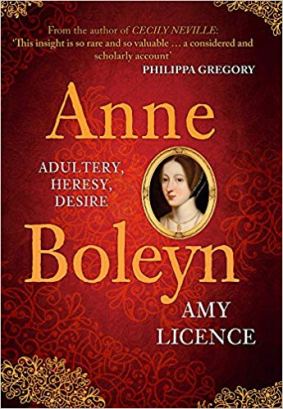 Anne Boleyn, the second wife of Henry VIII and the mother of the future Queen Elizabeth I, is one of the unique characters of the Tudor era. She was the sister of one of the king’s mistresses, Mary Boleyn, which she could have been, but Henry wanted Anne as his queen. Unfortunately, he was married to his first wife, Catherine of Aragon. It is Henry’s divorce to Catherine and his relationship with Anne, the rise and fall, is what many people look at, but there is more to Anne’s story than just her life with Henry. What was Anne’s life really like and what really caused her fall? These are just a few questions that Amy Licence tackles in her latest biography, “Anne Boleyn: Adultery, Heresy, Desire.”
 Adventures of a Tudor Nerd