
 The island we know as England is on the cusp of the 10th century. King Alfred is dead, and his son Edward now rules. The kingdom of Wessex is still standing strong, and it looks like the Danes are behaving themselves and keeping the peace, for now. Unfortunately, things are not going smoothly for Uhtred of Bebbanburg. He gets into a bit of mischief and becomes a target of Cnut Longsword, the Viking leader, all while trying to fight for his right to rule his beloved Bebbanburg. Can Lord Uhtred survive his latest adventure, or will his Saxon allies save him in the nick of time? This is the premise of Uhtred’s latest adventure, “The Pagan Lord,” Book 7 in the Saxon Stories series by Bernard Cornwell.
We reunite with our ruffian hero Uhtred of Bebbanburg on a dark, stormy night, when he is riding through a town with his second son Osbert and Aethelstan, the illegitimate son of Alfred. They are then accosted by a gaggle of priests, which includes his eldest son, Uhtred, soon to become a Christian priest, and Abbot Wihtred. This one encounter will alter how the Saxons will view Uhtred because not only does he disinherit his eldest son, but kills Abbot Wihtred, which makes him an outlaw in the eyes of the Saxons. Osbert is renamed Uhtred Uhtredson, and the group moves on like nothing happened, but the damage is already done.
A tired Uhtred comes home to burning buildings, dead comrades, a blind father Cuthbert, and Uhtred’s woman Sigunn kidnapped. Uhtred begins to wonder which one of his numerous enemies kidnapped Sigunn. Turns out this is revenge from Cnut Longsword, who believes that Uhtred kidnapped his children and his wife. Obviously, Uhtred knows nothing about it, but decides to work with Cnut to clear his name, at least for the time being. Uhtred’s journey to save Cnut’s family will see him in his beloved Bebbanburg and reunited with his lovers Sigunn and Lady Aetheflaed. While Uhtred is considered an outlaw to the Saxons, he still chooses to side with them at the battle of Tettenhall, where he clashes with Cnut Longsword one final time in a fight to the death.
I have been loving this series so far because of how dynamic the characters are, especially Uhtred of Bebbanburg. He gets into so many scraps, but he keeps his home, his family, and his allies in mind whenever he fights. I am always excited to read a new Saxon Stories novel, but I am also a bit sad because I know it’s one book closer to finishing this fantastic series. If you are like me and have finished the first six books in the Saxon Stories, I highly recommend that you read book seven in the series, “The Pagan Lord” by Bernard Cornwell.
 The ninth century is coming to a close. King Alfred is dying, and his young son Edward is untested on the battlefield. Alfred wants Uhtred to swear his loyalty to his son Edward, but Uhtred wants to be free to recapture his beloved Bebbanburg. The Danes, led by the warrior Harald Bloodhair are on the warpath—just a typical mission for our intrepid Saxon lord who was raised by Danes warrior Uhtred of Bebbanburg. However, there is always a catch, and the major obstacle in his path is a fair woman with a fiery temper named Skade. How can one woman and her plans make Uhtred of Bebbanburg quake in his boots? Book number 5 in the Saxon Stories, “The Burning Land” by Bernard Cornwell, holds all the answers in the next adventure for Uhtred and his men.
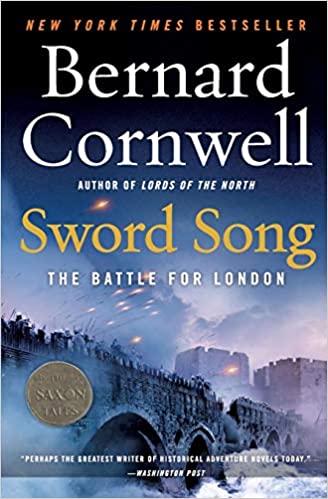 The year is 855, and the country that one day will be known as England is relatively peaceful. The Danes have their kingdom in the north, while the Saxons, under King Alfred, rule Wessex in the south. Uhtred of Bebbanburg, a Saxon man raised by Danish warriors, lives with his wife Gisela and his children in Wessex, where he is sworn to protect Alfred and his family. It is a touchy alliance, but when rumors about a dead man speaking reach Uhtred’s home, he knows that he must pick up Serpent-Breath once again and make a choice that could change the direction of England as a whole. What do the dead man and new Viking invaders have in plan for Uhtred, and how will it affect Wessex and the rule of King Alfred? Another engaging adventure for Uhtred of Bebbanburg is book four of The Saxon Tales, “Sword Song” by Bernard Cornwell.
 When we think of the phrase “middle ages,” we think of a time of bloody battles and deadly plagues, full of warriors and kings, and a more patriarchal society where women sat on the sidelines. Only the highly pious women or women who tore down barriers genuinely stood out in the history books. At least, that is what we have been told for centuries, but what does archeological research tell us? How about the newly discovered historical records? In her latest book, “Femina: A New History of the Middle Ages, Through the Women Written Out of It,” Janina Ramirez tells the story of the Middle Ages innovatively; through the stories of women who, until recently, were hidden voices from the past.
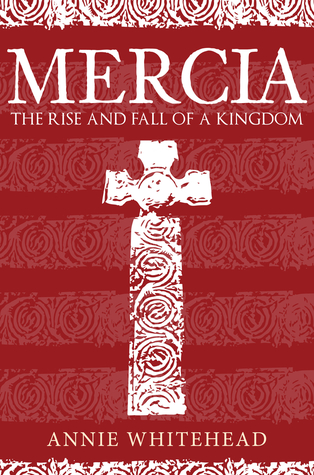 England’s history is full of daring moves and colorful characters, but it is also very ancient compared to other countries. We often considered the “start” of English history in school as the Norman Conquest in 1066. Nevertheless, this was just a stage in the massive story of the island. We have to consider those who called England their home; those who knew England, not as a unified country, but seven kingdoms known as the heptarchy. The most famous of these seven kingdoms was Wessex, the last kingdom, but their mortal enemy had a rich history of their own. Mercia was a thriving kingdom for hundreds of years, with colorful characters that many people are not familiar with. Annie Whitehead has taken the tales of this forgotten kingdom to the forefront with her book, “Mercia: The Rise and Fall of a Kingdom.”
 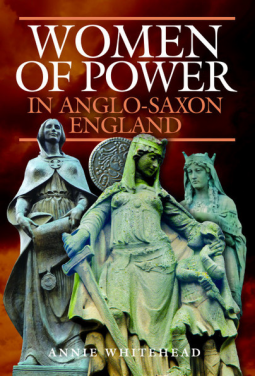 When one studies English history, many people tend to focus on the year 1066 with William the Conqueror and the Norman Conquest as a starting point. However, just like any great civilization, others formed the foundation of English history; they were known as the Anglo-Saxons. What we know about the Anglo-Saxons come from the records of the kings of the different kingdoms of England, which paints a picture of harsh and tumultuous times with power-struggles. However, every strong king and gentleman of the time knew that to succeed, they needed a woman that was equally strong with a bloodline that would make them untouchable. The stories of these women who helped define this era of Anglo-Saxon rulers in England have long been hidden, until now. In her latest book, “Women of Power in Anglo-Saxon England”, Annie Whitehead dives deep into the archives to shed some light on the stories of the formidable women who defined an era.
 Adventures of a Tudor Nerd