 Today, I am pleased to welcome Heather R. Darsie to my blog to share an excerpt from her latest book, “Children of the House of Cleves: Anna and Her Siblings.” I would like to thank Heather R. Darsie and Amberley Publishing for allowing me to be part of this blog tour. \
Anna von der Mark and her siblings, deemed by their father to be known as being “of Cleves,” his family’s territory, came from a somewhat new line of ducal power. The Duchy of Cleves existed as a county for hundreds of years before becoming a duchy. From whom the dynasty descends is a bit of a mystery, but thankfully, they have a certain mythology to explain,
“The noble Von der Mark family traces their lineage from a princess named Beatrix and her hero, the mythical Swan Knight Elias Gral… Family lore held that …[it was] the [Roman] Orsini…arrived in Cleves …. Such tales of noble heritage were common in the Medieval to Early Modern period…
A family origin tale specific to the Von der Marks involves the young, beleaguered heiress Beatrix. Beatrix, heiress of Nijmegen and Cleves, married the legendary Swan Knight after he floated down the Rhine in his boat, pulled by a swan wearing a golden collar. At the time, according to legend, Beatrix was being aggressively pursued by her suitors. The Swan Knight, named Elias Gral, came to her rescue. He agreed to be Beatrix’s husband on the condition that she never ask about his origin. The couple was happily wed for some time and had three sons together. Beatrix convinced one of her sons to ask Elias about his background. Elias sorted what was going on and instantly disappeared. Beatrix died shortly after Elias’ disappearance.
…. Elias Gral … lived in the 8th century…, and served the Frankish leader Charles Martel. … Martel was imprisoned in Cologne around 714 by his stepmother Plectrude because Martel’s father died, and Plectrude wished for her son to be heir. Gral helped free Martel from prison in Cologne. In return, Martel raised the Bailiwick of Cleves to the status of county, creating Gral the first Count of Cleves.….
The Von der Mark dynasty, thought to have arisen from servants of the Grals, was established when Margaretha [of Cleves] married Count Adolf von der Mark. Through the right of Margaretha, Adolf and Margaretha’s children became counts and countesses of the combined Duchy of Cleves and County of Mark, simply called Cleves-Mark…
Margaretha’s and Count Adolf von der Mark’s son, also named Adolf, greatly expanded the territories under Cleves-Mark’s control. Adolf of Cleves-Mark had his own son, whom he also named Adolf. This second Adolf of Cleves-Mark was the last Count of Mark and first Duke of Cleves.… Duke Adolf … married Marie of Burgundy in 1406. Marie was a daughter of John the Fearless, and sister of Philip the Good. Marie was only about thirteen years old when she married Adolf. Marie did not move to Cleves until 1415, when she was around twenty-two years old.
Duke Adolf and Marie of Burgundy had a lasting impact on the court culture in Cleves. Marie popularized the concept of the Frauenzimmer, which is directly translated as, “women’s room”, but was more like a women’s shadow court of the main masculine court. Women occupied the offices necessary to administering the Frauenzimmer. …
Marie of Burgundy and Duke Adolf of Cleves-Mark had eight children together, all of whom lived to adulthood and married well. It is through Marie’s and Adolf’s children that Mary, Queen of Scots and Louis XII of France were related to Anna of Cleves and her siblings.”
Anna’s family was known to be very supportive of the Holy Roman Emperor throughout the 15th century and on into the 16th. Unfortunately, her brother Wilhelm’s unreasonable behavior
 If this excerpt piqued your interest, consider reading Children of the House of Cleves: Anna and Her Siblings, set for release in the UK on 15 June 2023 and in the US/Internationally on 12 September 2023. Can’t wait until September? The US Kindle version is released on 15 June, too! You might also like to read Heather R. Darsie’s biography on Anna of Cleves, the first researched and written from the German perspective, Anna, Duchess of Cleves: The King’s Beloved Sister. Links below.
Amazon UK
Children of the House of Cleves, Anna and Her Siblings hardcover (15 June 2023): https://www.amazon.co.uk/Children-House-Cleves-Anna-Siblings/dp/1445699427/ref=sr_1_1?crid=19OOEUO2EX5PV&keywords=heather+darsie&qid=1686571230&sprefix=heather+darsi%2Caps%2C190&sr=8-1
Children of the House of Cleves, Anna and Her Siblings Kindle (15 June 2023): https://www.amazon.co.uk/Children-House-Cleves-Anna-Siblings-ebook/dp/B0C74VTCR3/ref=tmm_kin_swatch_0?_encoding=UTF8&qid=1686571230&sr=8-1
Amazon US
Children of the House of Cleves, Anna and Her Siblings hardcover (12 September 2023): https://www.amazon.com/Children-House-Cleves-Anna-Siblings/dp/1445699427/ref=sr_1_1?crid=5K793F0IN117&keywords=heather+darsie&qid=1686571143&sprefix=heather+darsie%2Caps%2C87&sr=8-1
Children of the House of Cleves, Anna and Her Siblings Kindle (15 June 2023): https://www.amazon.com/Children-House-Cleves-Anna-Siblings-ebook/dp/B0C74VTCR3/ref=tmm_kin_swatch_0?_encoding=UTF8&qid=1686571143&sr=8-1
 Heather R. Darsie works as an attorney in the US. Along with her Juris Doctorate, she has a BA in German, which was of great value in her research. She completed multiple graduate-level courses in Early Modern History, with her primary focus being the Holy Roman Empire under Charles V. She runs the website MaidensAndManuscripts.com and is a co-host of the Tudors Dynasty podcast.
Sources & Suggested Reading
Darsie, Heather R. Children of the House of Cleves: Anna and Her Siblings. Stroud: Amberley (2023).
Darsie, Heather R. Anna, Duchess of Cleves: The King’s Beloved Sister. Stroud: Amberley (2019).

 The Woodvilles were a family synonymous with the Wars of the Roses and the rise of King Edward IV. Some of the more notable names from this family include Jacquetta Woodville, the family’s matriarch, and Elizabeth Woodville, the controversial choice for King Edward IV’s wife. However, it was not just the women of the Woodville family who made a name for themselves. Anthony Woodville, the son of Jacquetta and brother of Elizabeth Woodville, would become famous for his unexpected execution at Pontefract Castle. Still, there was so much more to his story than his death. Who was Anthony Woodville and what is his legacy? Danielle Burton hopes to answer these questions and more in her debut biography, “Anthony Woodville: Sophisticate or Schemer?”
 Civil wars, clashes between cousins, are known to be full of battles between men on foot and horseback, with their eyes set on the throne of their desired country. Many stories of civil wars tend to leave out the women who often were left on the sidelines, ready to pick up the pieces. The story of the Anarchy is a bit different than other civil wars as one of the main figures was not a man, but Empress Matilda, the daughter of King Henry I and the rightful heiress of England facing off against the man who stole the throne from her, her cousin, King Stephen. However, it was not just Empress Matilda who defined what it meant to be a woman during the Anarchy. In her latest book, “Women of the Anarchy,” Sharon Bennett Connolly tells the stories of the mothers, sisters, and wives who defined this turbulent period that saw the end of one dynasty and the beginning of another.
 A life of luxury from birth, destined to be crowned King or Queen of England. This is what we often think life must have been like for royal heirs who reached the ultimate destination of a crown and a throne. However, the stories of those who failed to reach the throne are mired in tragedy and heartache. The question of royal succession in England is a complex issue, especially when the heir to the throne dies unexpectedly, leaving doubts on whether a dynasty will survive through blood or dissolve in conflict. How did the deaths of these potential rulers radically transform the fabric of English history as a whole and what can their lives tell us about what kind of rulers they might have been? Ashley Mantle hopes to answer all of these questions and more in his latest book, “Uncrowned: Royal Heirs Who Didn’t Take the Throne.”
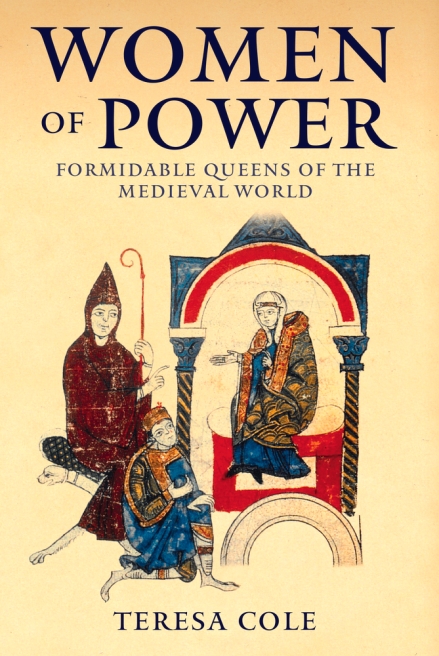 When we think about medieval women, we often think about very pious figures who relied on men, had numerous children, and would often fade into obscurity when they died. While this would be the ultimate fate for many women, it was not so for those close to thrones worldwide. In times of war and political upheaval, the daughters, the wives, and the queens picked up the pieces and patched their respective kingdoms back together. In her latest book, “Women of Power: Formidable Queens of the Medieval World,” Teresa Cole has chosen a select group of women to highlight her point about the strength of women who held power in the Middle Ages.
 When we think of the German Duchy of Cleves, our first thoughts tend to go to Anna of Cleves, King Henry VIII’s fourth wife, whom he immediately divorced due to not being attracted to her looks, at least according to English tales. We tend to leave Anna’s German life to the side and forget about her family’s story when we study the ever-changing 16th and 17th centuries, even though Germany was dealing with the Reformation. We have an inkling about how life might have been like for Anna of Cleves in England with the fabulous book, “Anna, Duchess of Cleves: The King’s Beloved Sister,” but what about Anna’s siblings, Sybylla, Wilhelm, and Amalia? Heather Darsie has decided to take up the challenge of telling the story of Anna of Cleves’ family from the German perspective in her latest book, “Children of the House of Cleves: Anna and Her Siblings.”
 When we think of the infamous queens of England, some names come to mind, but one rises to the top for the number of black myths and influence surrounding her name: Eleanor of Aquitaine. The orphaned Duchess of Aquitaine, who married the future King Louis VII of France, went on the Second Crusades with her husband, survived battles and kidnappings, and ended up divorcing her first husband because she couldn’t give a male son. So, she married the young Count of Anjou, who would become the first king of the Plantagenet dynasty, King Henry II, who had a large family and split her time between England and France. Eleanor would eventually side with her sons, rebel against Henry, and spend 15 years in prison. A fire-cracker of a queen, but how many of the stories surrounding the titular queen are true? In her latest biography, “Eleanor of Aquitaine: Queen of France and England, Mother of Empires,” Sara Cockerill dives deep into the archives to tell the true story of this much-maligned queen of England and France.
 When we think of the past, especially those close to a thousand years past our current time, we tend to think about kings and conquerors who transformed the political landscape of certain countries. However, kings and conquerors would be nothing more than mere men if it was not for advisors and allies that stood by their sides or against them. For example, for nearly a century, the men and women of the House of Godwin were at the center of Anglo-Saxon politics and helped or hindered the path of those who wished to sit on the throne of England. The House of Godwin might not be a familiar family for those who are not familiar with Anglo-Saxon England before the Norman Conquest. Still, Michael John Key takes on the challenge to tell their story in his book, “The House of Godwin: The Rise and Fall of an Anglo-Saxon Dynasty.”
 English kings are some of the most recognizable monarchs in all of European history, and when we think of Kings of England, a few names pop into our minds. Edward, George, and William tend to be popular, but you cannot study English history without Henry. Eight kings of England were Henry, and they would change the history of England forever. These eight kings give us an entire range of what kingship was like in medieval Europe. From men born to be king to opportunists who decided to take the throne as their own, from saints to warrior kings, the Henrys of English history were a colorful group of characters. Each king has had numerous biographies written about him, but there has never been a collection of biographies about the kings named Henry until now. This is “Harry of England: The History of Eight Kings, From Henry I to Henry VIII” by Teresa Cole.
 The Tudor dynasty was full of colorful characters and events that defined the era. Their lives were full of love affairs, marriages, births, wars, tragedies, and triumphs. In numerous books about these monarchs and this period in history, we have seen the significant events that defined the era, but what about lesser-known social events that these monarchs participated in. The bulk of the research into this dynasty focuses on those who ruled, from Henry VII to Elizabeth I, because their lives give us a brilliant insight into what it was like to live in the glittery Tudor court. In “The Tudor Socialite: A Social Calendar of Tudor Life,” Jan-Marie Knights gives her readers a glimpse into the social calendar of the Tudor rich and famous.
 Adventures of a Tudor Nerd