
 When one studies a specific dynasty, we tend to focus on the stories of those who rule their respective countries and explore the men who influenced the king’s decisions. A dynasty’s legacy tends to be viewed from the military and legal victories of the men, but just as important are the women who stood beside the king. Royal women tend to be considered side characters of the dynasty who were only crucial for their inheritance, who they married, and the children they could produce. But if we focused on the story of the royal women in a specific dynasty, what could we learn about the dynasty? Amy Licence took this concept to explore women’s voices and decided to tackle the Tudor dynasty in her latest book, “Tudor Roses: From Margaret Beaufort to Elizabeth I.”
I want to thank Amberley Publishing for sending me a copy of this book. I am always looking for a new perspective on the Tudor dynasty. Although there is nothing new about exploring the lives of Tudor women, the idea of analyzing the Tudor queens and their reigns in one book is so unique and vital.
Licence starts her book at the very beginning of the Tudor dynasty with the stories of Margaret Beaufort and Elizabeth Woodville. These women are often viewed as enemies on opposite sides of the Wars of the Roses. Still, closer examination shows how alike they were and how they came together to unite the warring factions with the marriage of their children, Henry VII and Elizabeth of York. The first Tudor queen, Elizabeth of York, was seen as the pinnacle of excellence and the ideal queen for those who would try to follow in her footsteps. We also get to see how Margaret and Mary Tudor influenced their family’s legacy, even though they never sat on the English throne like their brother, Henry VIII.
The next group of Tudor queens that we examine are the wives of Henry VIII; Catherine of Aragon, Anne Boleyn, Jane Seymour, Anne of Cleves, Catherine Howard, and Catherine Parr. These queens mark a different aspect of being a royal woman and helped England move forward. Finally, Licence explores the lives of the daughters of Catherine of Aragon, Frances Brandon, and Anne Boleyn, who would become queens themselves; Lady Jane Grey, Mary I, and Elizabeth I.
Licence shows how England and Europe viewed women who wielded power throughout this book. Although the Tudor dynasty only lasted 118 years, the change was significant and impactful. The Tudors queens had to navigate not only their traumas through the most public lens, but they had to balance their own beliefs with the shifting political landscape of Europe. There are also glimpses of how other European queens navigated the tumultuous 16th century and how their lives and women’s education influenced the Tudor queens.
 Medieval princes are often viewed as men who will one day be king of their homeland or another country. They are seen as wealthy men with prestige and honor who live lavish lifestyles and go to war to earn titles and estates. One of these noble medieval princes was a man who married three times, including to his most beloved mistress. He was the son of Edward III, the uncle of Richard II, and the father of the queen of Castile and King Henry IV, the first Lancastrian king. His children, grandchildren, and great-grandchildren would rule in different European countries, even though he never had the chance to wear the crown of England or Castile for himself. His name was John of Gaunt, and his story is told in Kathryn Warner’s latest biography, “ John of Gaunt: Son of One King, Father to Another.”
 As students of history, we understand that aspects of society change all of the time, and sometimes the change is rapid, and other times it is positively glacial. One of those aspects of culture that we have seen slow and gradual change pertains to women’s rights. Today, women have more rights than they did in the past, and they can have careers, but is this a novel concept? What were the lives of women like in other periods of history, like the medieval period? In Lynda Telford’s book, “Women in Medieval England,” she explores women’s lives from the Anglo-Saxons to the Tudors to give us a picture of what rights and responsibilities women had during this period.
 If you go to Fontevrault Abbey in France, you will find two rather extraordinary tombs. These tombs belong to King Henry II and Queen Eleanor of Aquitaine, the first King, Queen of the Plantagenet Dynasty, and the Angevin Empire. Their effigies tell us a lot about the couple that was buried side by side. The husband was restless; his model shows him ready to take action at any moment, with his crown upon his head and a scepter in his hand. His queen lays beside him, reading an unknown book. They seem to be prepared to watch over their kingdom and their family even beyond the grave. Those who know English history recognize their names and understand the family drama behind the scenes. We think we know the truth about Henry and Eleanor, but is there more to their story and their feuding family? In Matthew Lewis’s latest dual biography, “Henry II and Eleanor of Aquitaine: Founding an Empire,” he explores the relationship between this dynamic king and queen and how it shaped European and English history forever.
 England’s history is full of daring moves and colorful characters, but it is also very ancient compared to other countries. We often considered the “start” of English history in school as the Norman Conquest in 1066. Nevertheless, this was just a stage in the massive story of the island. We have to consider those who called England their home; those who knew England, not as a unified country, but seven kingdoms known as the heptarchy. The most famous of these seven kingdoms was Wessex, the last kingdom, but their mortal enemy had a rich history of their own. Mercia was a thriving kingdom for hundreds of years, with colorful characters that many people are not familiar with. Annie Whitehead has taken the tales of this forgotten kingdom to the forefront with her book, “Mercia: The Rise and Fall of a Kingdom.”
  Loyalty to one’s king was imperative during times of war and strife. This statement was painfully true during periods of civil war when cousins fought against cousins. The Wars of the Roses was where we see families rise and fall like the tides, depending on which side they were loyal to and who was on the throne. One family who was able to navigate this political quagmire and end up on the side that would win in the end was the Brandons. Many recognize the name Brandon because of Charles Brandon and his rise in the court of Henry VIII, but how did they reach that point? What are the origins of the Brandon family? In her latest book, “The Brandon Men: In the Shadow of Kings”, Sarah Bryson takes her readers on a ride to find out what loyalty to the crown gave this family and why their legacy lives on today.
 August 22, 1485, marked the end of the Plantagenet Dynasty with the death of King Richard III at the Battle of Bosworth Field. The man who succeeded him as King of England after his death was young Henry Tudor, whose dynasty would live in infamy in English history, thought that he was done fighting on the battlefield for his right to rule. This was only the beginning of a decades-long war against those who claimed to be lingering shadows of the past. They claimed to be the Princes in the Tower, whose disappearances in 1483 left to doubt and confusion on what happened to them and gave those who despised this new dynasty opportunity to exploit a young king’s fear of being overthrown. The young men who made this king who won his way to the throne on a battlefield quake in his boots are known today as “the Pretenders”, but who were they? In Nathen Amin’s much-anticipated book, “Henry VII and the Tudor Pretenders: Simnel, Warbeck, and Warwick”, he traces the origins of each pretender to show what type of threat that they posed to the first Tudor king.
 In 1520, two larger than life kings met each other in France for two weeks. This may not sound astounding as many kings left their respected countries to meet other rulers throughout history. It was part of European diplomacy. However, what made this particular period of time extraordinary is the sheer size and the opulence of the event. The King of England, Henry VIII, met the King of France, Francis I, for two weeks of festivities and feasting that we now call The Field of the Cloth of Gold. We often think that this event accomplished nothing because the rivalry between Henry VIII and Francis I continued afterward. Was the purpose of this event to quell the rivalry between the two kings or was there something more behind all the glitz and glam of the Field of the Cloth of Gold? What do the behind the scenes records reveal about this event? Amy Licence explores this event from every angle in her latest book, “1520: The Field of the Cloth of Gold”.
 The medieval era was one of the most turbulent times in all of English history, full of family feuds, gruesome wars, and so many twists and turns. We tend to focus on the big stories, but, it was not just about the royalty and the nobility, there were also lower classes whose lives went on in the background. What was everyday life like for both the rich and the poor? What ceremonies and recipes did they use? What were wills and court cases like? These questions and more are explored in Toni Mount’s delightful book, “A Year in the Life of Medieval England”.
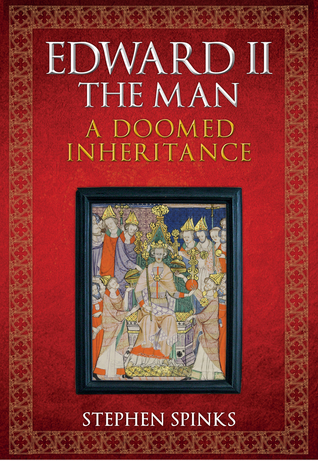 When we think of medieval kings of England, we tend to think about strong warriors who did things their own way. Men like Edward I and Edward III often come to mind. Yet, there was a king in between these two legendary warriors whose name lives on in infamy, King Edward II. He is known for his numerous favorites, his relationships with men like Piers Gaveston and Hugh Despenser the Younger, his disagreements with the barons who were trying to help him run the country, his relationship with his equally famous wife and son, Isabella of France and Edward III, and his dramatic death. But who was the man known as King Edward II? What was he really like? Stephen Spinks explores these questions in his latest biography, “Edward II the Man: A Doomed Inheritance”.
 Adventures of a Tudor Nerd