
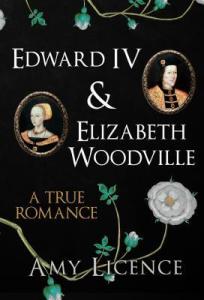
When we think of a fairy tale romance, we think about stories like Cinderella. A girl of lower status captures the heart of the handsome prince. They overcome the odds and live happily ever after. But that kind of romance only exists in books. The closest story we have to that in medieval English history might be the story of Edward IV and Elizabeth Woodville. A widow who begged the handsome and younger King of England for help, but ended up becoming his wife. It’s a story that any romance-loving history lover will swoon over, but how accurate is that story? What is the real story of Edward IV and Elizabeth Woodville? Amy Licence explores the nature of their relationship in her book, “Edward IV & Elizabeth Woodville: A True Romance.”
I have been reading books by Amy Licence for a few years now, so when I saw this title, I knew I wanted to read it. The Wars of the Roses is one of my favorite areas of history to study, but I have not read a joint biography of Edward IV and Elizabeth Woodville. When I saw this title, I knew that this was a must-read for me.
We begin in 1431 in Rouen, France, where the Maid of Orleans, who we know as Joan of Arc, is about to die on the pyre. In the same town, eleven years later, the future King Edward IV would be born to Cecily Neville and Richard, Duke of York. Edward’s future bride, Elizabeth Woodville, was born around six years after the death of Joan of Arc. Her mother, Jacquetta of Luxembourg, had married below her station after the death of her first husband, John Duke of Bedford passed away; Jacquetta would marry a knight, Sir Richard Woodville, Elizabeth’s father. Jacquetta was close to King Henry VI and Margaret of Anjou, the Lancastrian rulers of England, and Edward IV’s father, Richard, Duke of York, would fight against the Lancastrians for the right to rule England during the conflict that we know today as the Wars of the Roses. To top it all off, Elizabeth was married to Sir John Grey of Groby Old Hall, a man who fought and died for King Henry VI.
In other words, Edward and Elizabeth were on different sides of the Wars of the Roses, but somehow these two found each other after Edward IV became king. The obvious choice for Edward’s bride should have been a foreign princess to create an alliance, but there was something about Elizabeth that convinced Edward to forgo the wisdom of Warwick and marry her. Their court was based on the Burgundian court. They had a large family, but the fight for the crown with the Lancastrian cause and Edward’s own family continued. Just when the throne is secure, Edward passes away. Elizabeth had to fight for her children, fight against her brother-in-law, and join forces with her enemy Margaret Beaufort to help usher in the Tudor dynasty.
Licence was able to present the information not only about this period, but also about Edward and Elizabeth in such a comprehensive way that both novices and experts can understand. She can present theories that she either agrees with or disagrees with respectfully. I thoroughly enjoyed this joint biography as it gave me a better appreciation for the reign of Edward IV and Elizabeth Woodville. If you want to learn more about the Wars of the Roses, the first Yorkist king, and his wife, I highly recommend you read “Edward & Elizabeth Woodville: A True Romance” by Amy Licence.
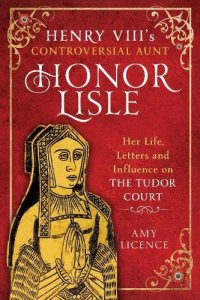 Marrying into the royal family is not all sunshine and rainbows. Of course, we tend to think about those who marry the king, the queen, the prince, or the princess. But we also need to consider the aunts and the uncles of the royals as part of the family. Take, for example, Arthur Plantagenet, the illegitimate son of Edward IV and the uncle of Henry VIII. His second wife, Honor Lisle, would help him rule Calais; however, she is best known for her letters and her devout Catholic faith during the Reformation in England. So why is Honor Lisle considered a controversial figure, and what was the cause of the fall of Honor and Arthur from the royal good graces? Amy Licence explores the life of Henry VIII’s step-aunt in the first full biography dedicated to Honor Lisle, which is entitled “Henry VIII’s Controversial Aunt, Honor Lisle: Her Life, Letters, and Influence on the Tudor Court.”
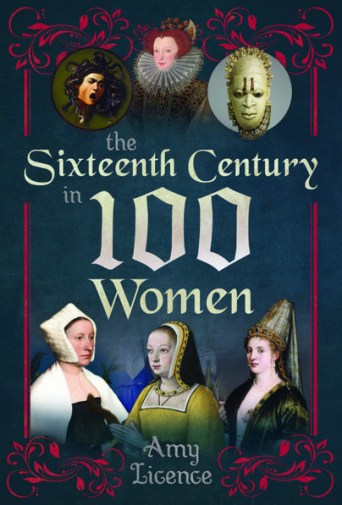 When we think of the phrase “16th-century women,” we often consider those from royal or noble houses throughout Europe. We tend to think of women like the six wives of Henry VIII, Mary I, Elizabeth I, Catherine de Medici, Mary Queen of Scots, and others associated who made an impact during the Renaissance and the Reformation. However, the 16th century did not stop at the borders of Europe; it extended all over the globe. There are many stories of women from all over the world and from different social classes that can help us understand how the world changed in the 16th century. Amy Licence took this concept and decided to write her latest book about a variety of women from around the world who lived in the 16th century, “The Sixteenth Century in 100 Women.”
 When one studies a specific dynasty, we tend to focus on the stories of those who rule their respective countries and explore the men who influenced the king’s decisions. A dynasty’s legacy tends to be viewed from the military and legal victories of the men, but just as important are the women who stood beside the king. Royal women tend to be considered side characters of the dynasty who were only crucial for their inheritance, who they married, and the children they could produce. But if we focused on the story of the royal women in a specific dynasty, what could we learn about the dynasty? Amy Licence took this concept to explore women’s voices and decided to tackle the Tudor dynasty in her latest book, “Tudor Roses: From Margaret Beaufort to Elizabeth I.”
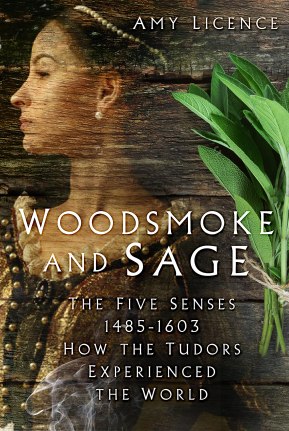 When we study history, we tend to focus on specific dates, certain people, and the stories that transformed countries forever, no matter how much of an impact they made. What is difficult about studying history is understanding how they experienced life. What did they see? How did they communicate? What did they hear during a typical day? What smells wafted through the air? How did their view on how the body worked affected what they ate and how they cured their illnesses? In her latest nonfiction book,” Woodsmoke and Sage: The Five Senses 1485-1603: How the Tudors Experienced the World”, Amy Licence has taken on the challenge of explaining the Tudor world that they knew through their senses.
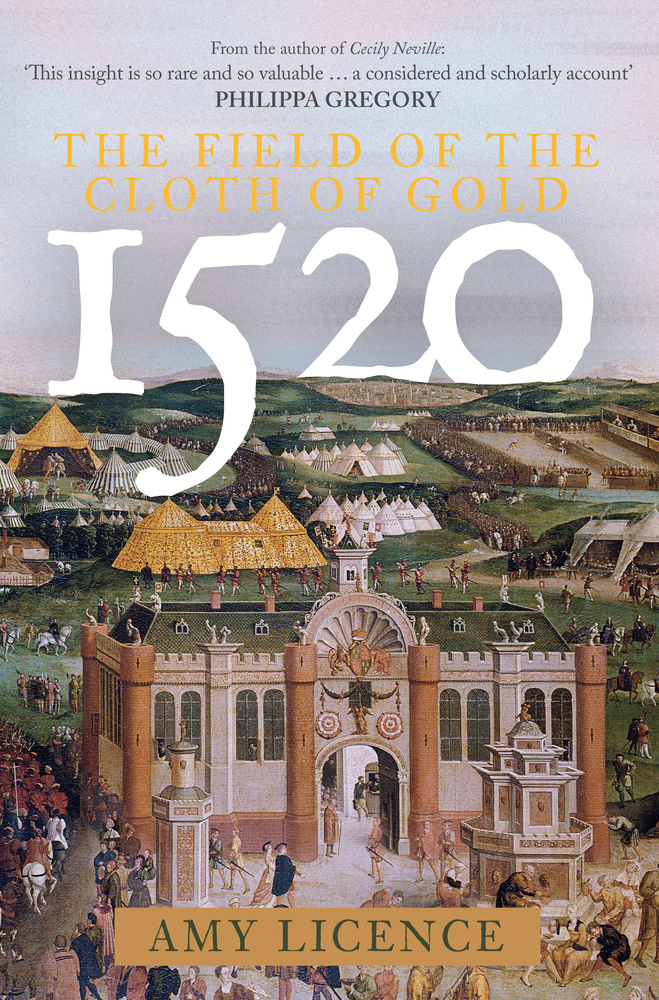 In 1520, two larger than life kings met each other in France for two weeks. This may not sound astounding as many kings left their respected countries to meet other rulers throughout history. It was part of European diplomacy. However, what made this particular period of time extraordinary is the sheer size and the opulence of the event. The King of England, Henry VIII, met the King of France, Francis I, for two weeks of festivities and feasting that we now call The Field of the Cloth of Gold. We often think that this event accomplished nothing because the rivalry between Henry VIII and Francis I continued afterward. Was the purpose of this event to quell the rivalry between the two kings or was there something more behind all the glitz and glam of the Field of the Cloth of Gold? What do the behind the scenes records reveal about this event? Amy Licence explores this event from every angle in her latest book, “1520: The Field of the Cloth of Gold”.
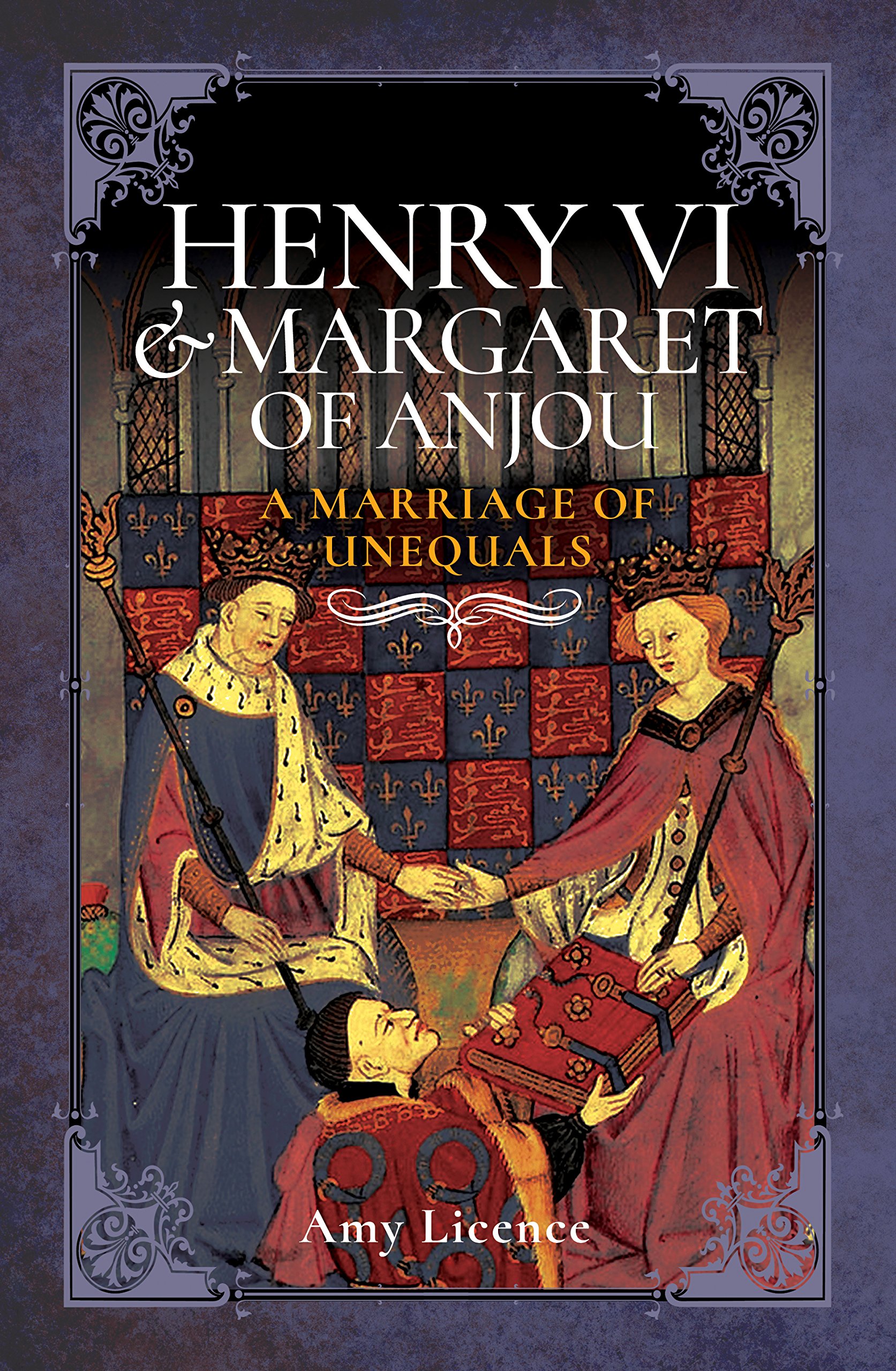 Historically, royal marriages have been viewed with such interest. A king and a queen who can come from either similar or different backgrounds in order to make their country better, or in some cases, worse. During the Wars of the Roses, there were some legendary relationships that shaped the war between the Yorks and the Lancasters. Edward IV and Elizabeth Woodville. George Duke of Clarence and Isabel Neville. Richard III and Anne Neville. Henry Tudor and Elizabeth of York. However, these relationships fail in comparison to the impact that the marriage of Henry VI and Margaret of Anjou had on England during this time. Henry VI was seen as a weak, pious ruler; Margaret was seen as too strong for a woman. They have been viewed separately for a long time, never as a couple. That is until Amy Licence wrote her latest biography, “Henry VI and Margaret of Anjou: A Marriage of Unequals”.
 Anne Boleyn, the second wife of Henry VIII and the mother of the future Queen Elizabeth I, is one of the unique characters of the Tudor era. She was the sister of one of the king’s mistresses, Mary Boleyn, which she could have been, but Henry wanted Anne as his queen. Unfortunately, he was married to his first wife, Catherine of Aragon. It is Henry’s divorce to Catherine and his relationship with Anne, the rise and fall, is what many people look at, but there is more to Anne’s story than just her life with Henry. What was Anne’s life really like and what really caused her fall? These are just a few questions that Amy Licence tackles in her latest biography, “Anne Boleyn: Adultery, Heresy, Desire.”
 Adventures of a Tudor Nerd