
 What’s better than snuggling up on a cold winter’s day and reading a murder mystery? How about an entire book about historical murders and the laws about murder and revenge? While we do have murder mysteries in every century and every walk of life, the farther back into the past we go, the more difficult it can be to discern fact from fiction. Take, for example, the stories of murder, betrayal, and revenge in Anglo-Saxon England. Annie Whitehead hopes to reveal a deeper understanding of this period through numerous murder cases in her latest book, “Murder in Anglo-Saxon England: Justice, Weregild, Revenge.”
I want to thank Amberley Publishing for sending me a copy of this book. I have read a few of Annie Whitehead’s books, including “Mercia: The Rise and Fall of a Kingdom,” and “Women of Power in Anglo-Saxon England,” so when I heard that she was writing a new book about this era, I knew I wanted to read it. Whitehead has always been able to make this era come alive, so I hoped to learn more about this period in English history.
Whitehead begins by explaining that she will cover close to a hundred cases of murder and revenge in this book from the 7th century to the 11th century. Each chapter focuses on a different kingdom: Northumbria, Mercia, East Anglia, and Wessex, as well as a different concept like laws, women killers, and Anglo-Saxon saints. It is a lot of ground to cover in a book, but she also decided to include the different law codes that defined the era and how murder was dealt with in a legal sense. Whitehead also decided to take on myths and legends of how saints and martyrs were killed, as well as the mythological killing method of the Blood Eagle employed by the “Vikings.”
There are so many colorful stories full of betrayal, political intrigue, and legal implications. These stories and myths of killings tell us more about the period of the past. Anglo-Saxon England was not a lawless society as we do see how taxes like weregild and their punishments for murder evolved. These were not just some stories written down on paper. The men, women, and children lived and ultimately died at a time when England was figuring out its identity. Although most of these incidents are isolated cases of murder and revenge, the St. Brice’s Day Massacre saw the execution of many Danish men on English soil.
I found this book extremely informative and easy to follow. Whitehead does it again and makes the world of Anglo-Saxon England come alive with her extensive research and her writing style. I may be a novice to the Anglo-Saxon period in English history, but it is books like this that make me want to continue to study this era. If you are interested in murder mysteries from the Anglo-Saxon world, I highly recommend you read “Murder in Anglo-Saxon England: Justice, Weregild, Revenge” by Annie Whitehead.
 We all know the story of William the Conqueror and the Norman Conquest. William claimed he was the heir of Edward the Confessor instead of his rival Harold Godwinson. Harold was seen as a villain throughout history thanks to the Norman sources, but what was the historical Harold Godwinson like? Was he a malicious usurper who had to die at the Battle of Hastings for the rightful King William I to take the throne or is there more to his story than his death? Paula Lofting scoured the archives to find the truth about this maligned man in her book, “Searching for the Last Anglo-Saxon King: Harold Godwinson, England’s Golden Warrior.”
 When we think about royal relationships from the past, we do not associate them with love; it is more about cementing power. Princes and kings knew how much was at stake, so they tended to have wives for politics and produce legitimate heirs that would inherit their kingdoms. For matters of love and lust, kings and princes would have mistresses, either of noble birth or lower, on the side. These women have been deemed whores and homewreckers but is that a fair assessment of their legacies? Julia A. Hickey takes a closer look at these misunderstood mistresses in her latest book, “Medieval Royal Mistresses: Mischievous Women who Slept with Kings and Princes.”
 When we think of the past, especially those close to a thousand years past our current time, we tend to think about kings and conquerors who transformed the political landscape of certain countries. However, kings and conquerors would be nothing more than mere men if it was not for advisors and allies that stood by their sides or against them. For example, for nearly a century, the men and women of the House of Godwin were at the center of Anglo-Saxon politics and helped or hindered the path of those who wished to sit on the throne of England. The House of Godwin might not be a familiar family for those who are not familiar with Anglo-Saxon England before the Norman Conquest. Still, Michael John Key takes on the challenge to tell their story in his book, “The House of Godwin: The Rise and Fall of an Anglo-Saxon Dynasty.”
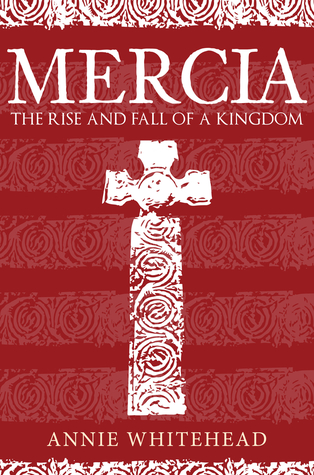 England’s history is full of daring moves and colorful characters, but it is also very ancient compared to other countries. We often considered the “start” of English history in school as the Norman Conquest in 1066. Nevertheless, this was just a stage in the massive story of the island. We have to consider those who called England their home; those who knew England, not as a unified country, but seven kingdoms known as the heptarchy. The most famous of these seven kingdoms was Wessex, the last kingdom, but their mortal enemy had a rich history of their own. Mercia was a thriving kingdom for hundreds of years, with colorful characters that many people are not familiar with. Annie Whitehead has taken the tales of this forgotten kingdom to the forefront with her book, “Mercia: The Rise and Fall of a Kingdom.”
  Adventures of a Tudor Nerd