
 Throughout history, women have been seen as pious mothers, wives, or daughters who stayed in their lane or vile manipulators who wanted power and were willing to do anything to maintain their status. While the former group of women would be an interesting study, as the saying goes, well-behaved women seldom make history. So why did certain women receive a villainess lens when we look at their lives and what do the historical records tell us about them? Samantha Morris has chosen to take the stories of these misunderstood maidens and tell them in her latest book, “The Most Maligned Women in History.”
I want to thank Pen and Sword Books and Net Galley for sending me a copy of this book. I enjoyed the previous books that I have read by Samantha Morris which covered Lucrezia and Cesare Borgia and Girolamo Savonrola When I heard that she was writing a book about maligned women in history, it caught my attention immediately as I wanted to see which women would be discussed in this book.
As Morris states in her introduction, there are numerous women who she could have chosen for this book she could make a second book, but in the end, she selected eleven women from different countries and centuries to highlight. The eleven women in this book are Cleopatra VII, Empress Wu, Joan of Arc, Lucrezia Borgia, Anne Boleyn, Elizabeth Bathory, Catherine the Great, Marie Antoinette, Lizzie Borden, Empress Dowager Cixi, and Iva Toguri the “Tokyo Rose.” Morris takes the time to tell their stories succinctly while explaining why they are considered maligned.
I do appreciate the fact that she included women from different walks of life and different centuries to show how women have been vilified throughout history. We had women who were born queens, those who were mistresses or concubines and became rulers, and average women who did extraordinary things to the ire of those in charge. While I knew some of these stories like Anne Boleyn, Marie Antoinette, Cleopatra, and Lucrezia Borgia, others were completely new to me, such as Empress Wu, Empress Dowager Cixi, and Iva Toguri. The other women in this book were names that I had heard mentioned and knew some elements of their tales, but I didn’t know their full stories.
I found this book such a fun read full of vivacious women who were not afraid to go beyond the status quo. I do hope Morris will write a sequel book and include even more women from the past who have been viewed as maligned and maybe include women from Africa, Australia, and South America to show women from even more diverse backgrounds. If you want a delightful and insightful book about women who had some bad reputations, I highly suggest you read, “The Most Maligned Women in History” by Samantha Morris.
 Marriage has been an integral part of life for centuries. It has been used to create strong alliances and cement love matches. However, once the wedding ceremony is finalized, the facade often fades and the truth about the families is revealed. Jane Parker finally marries the love of her life, George Boleyn, but she soon realizes that her new family is full of ambition, especially her new sister-in-law Anne Boleyn. As one of the greatest marriages of the 16th century is beginning to fall apart, can a new romance be waiting in the wing to rock England and all of Europe to its core and whose side will Jane join in the end? Danielle Marchant continues her exploration of Jane Parker Boleyn, Lady Rochford’s life in her novel, “The Lady Rochford Saga Part 2: Tourmens de Mariage.”
 The 16th century was filled with tales of remarkable women. Still, one of the most defining figures of the century was a woman of noble birth who the King of England fell in love with and decided that he was going to divorce his first wife of over twenty years to marry her. The Great Matter caused a great scandal across Europe, however, it was a love match that would not last long. The relationship between Henry VIII and his second wife Anne Boleyn would turn volatile and in the end, Anne and the men around her would be executed. We often blame Anne Boleyn’s death at the foot of Henry VIII’s right-hand man Thomas Cromwell, but who was behind the death of this famous queen? Caroline Angus has chosen to re-examine the case to find out who was truly responsible for the fall of this famous queen in her latest book, “Planning the Murder of Anne Boleyn.”
 The world of the 16th century was full of change and equally colorful characters. Most of the dynamic figures of this century were women, who were willing to fight in their ways for what they believed in, whether it was family, faith, or their country. They were heroines in different ways, and each had a story to tell. Each woman had to deal with her obstacles to reach their desired goal, no matter what her station was, from queens and great heiresses to nuns, and even a pirate. Sharon Bennett Connolly has decided to include a handful of these stories in her latest book, “Heroines of the Tudor World.”
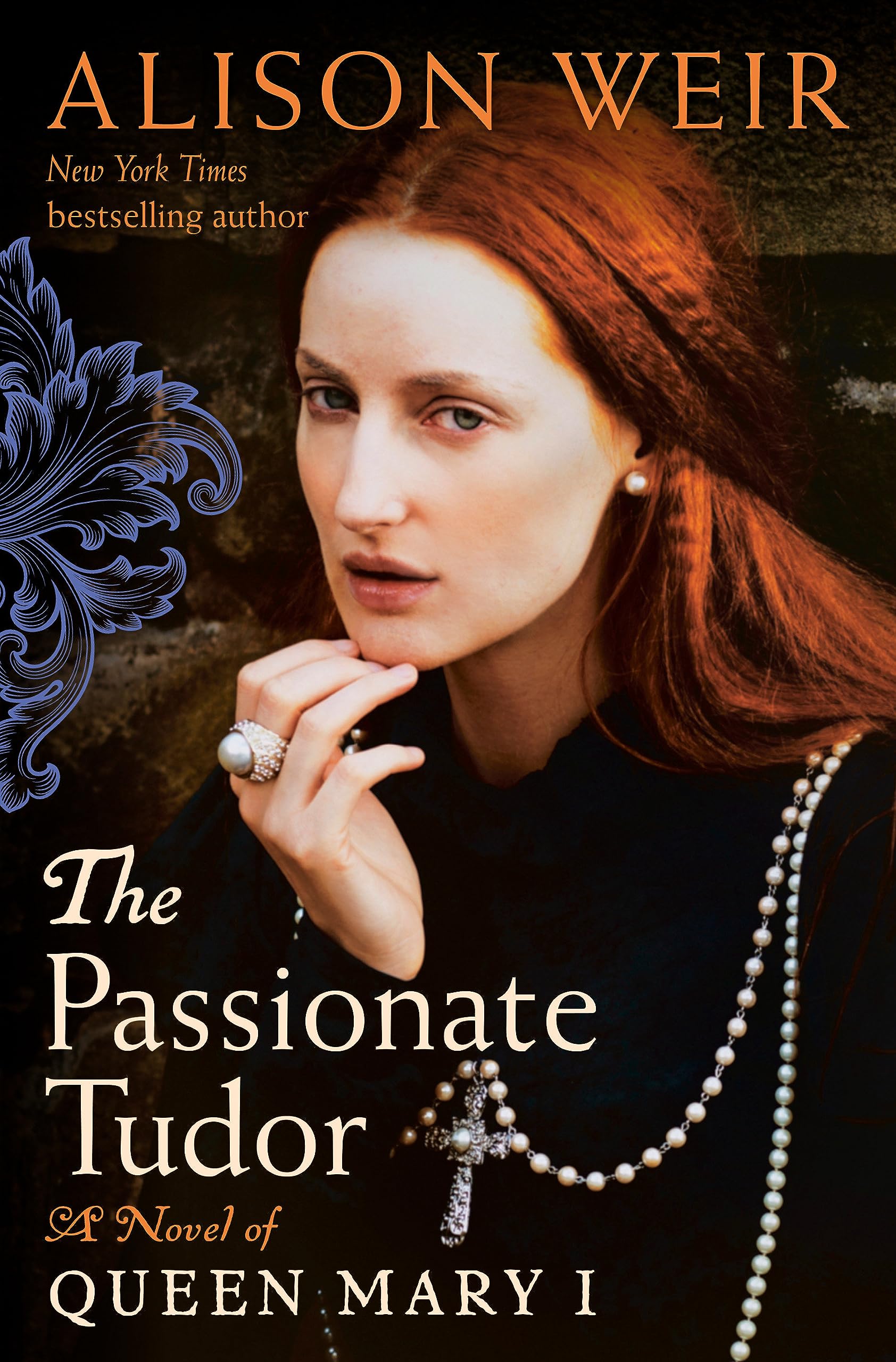 A king’s eldest child is usually the next in line to inherit the throne and become the next ruler. At least that is how the line of succession is supposed to work if the heir is male. Mary I knew this better than anyone. As the eldest daughter of King Henry VIII, she knew that once her mother Katherine of Aragon had a son, Mary would become a pawn in the marriage game. She was willing to accept this fate until her father fell in love with Anne Boleyn. Mary is declared a bastard and must fight for her inheritance and the crown of England while maintaining her Catholic faith. Alison Weir tells the tale of this remarkable woman, from her tumultuous childhood to her short reign that marked her legacy, in her latest novel, “The Passionate Tudor: A Novel of Queen Mary I.”
 Greenwich Palace is a Tudor palace full of glamour, intrigue, and murder. A musician has been found murdered in the chambers of the current wife of King Henry VIII, Anne Boleyn. Only one person can solve this crime while protecting the royal family. No, he is not a knight or a lawyer, but a fool. No, an actual fool or jester of the court of Henry VIII, Will Somers. A man who is loyal to his king Henry VIII, but can he save his second wife from the murderer lurking in the shadows? Jeri Westerson’s Will Somers follows the clues to uncover the truth to protect those who are the most important to him in book two of A King’s Fool Mystery series, “The Twilight Queen.”
 The story of the Boleyn family in the 16th century and their ultimate fall from grace has been told for centuries. However, there is a more intriguing tale hidden in the Boleyn family tree. The origins of the family and how they became such a dynamic family that revolutionized the 16th century. How did this family of peasants rise through the ranks to have one of their own become the Queen of England? It is a tale of struggle, survival, and triumph that is told in Claire Martin’s debut book, “Heirs of Ambition: The Making of the Boleyns.”
 Illegitimate royal children have been known to make an impact on history. Take Henry Fitzroy, the illegitimate son of Henry VIII, and Bessie Blount, whom Henry VIII acknowledged as his son. There were discussions about Henry Fitzroy becoming the heir apparent if Henry VIII did not have a legitimate son. But what about the illegitimate children that a king did not acknowledge? What might their lives have been like? The story of Mary Boleyn and her affair with King Henry VIII has been told many times, but the story of her daughter born during that time is lesser known. In her first full-length nonfiction book, “Henry VIII’s True Daughter: Catherine Carey, A Tudor Life,” Wendy J Dunn has taken on the task of discovering the truth of Catherine Carey’s parentage and how it impacted her life.
 The 1520s in England were a raucous time. As the years pass, King Henry VIII’s desire for a legitimate son grows and his resentment towards his wife Katherine of Aragon increases. Henry has decided to divorce his wife of over 20 years to marry a new fling, Anne Boleyn, who would surely give him the son and heir. All of Europe, especially the Pope, is horrified at the direction Henry is taking, but one man stands firmly on the side of the King. Thomas Cromwell rose through the ranks to become Henry VIII’s right-hand man, even though he had rather humble origins. Can Thomas Cromwell help the man who made him and survive the king’s wrath? Hilary Mantel explores the origins of Cromwell’s rise and The Great Matter in the first book in her Thomas Cromwell trilogy, “Wolf Hall.”
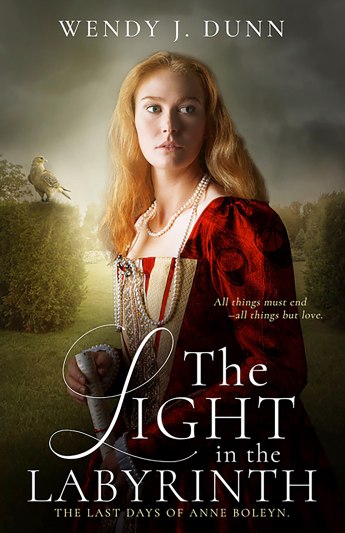 The year is 1535 and a young girl whose mother was a shining light at court, dreams of getting away from her family and joins her aunt at court. Her name is Kate Carey, the daughter of Mary (Boleyn) Carey, and her aunt is Queen Anne Boleyn. Little does Kate know that the court life she desires is full of danger and enemies around every corner. In the labyrinth of court life, Kate must navigate it successfully to come out alive, even as her aunt’s reign is coming to an end and a secret is revealed that will radically change her life forever. Wendy J. Dunn tells Kate Carey’s story in her young adult novel, “The Light in the Labyrinth: The Last Days of Anne Boleyn.”
 Adventures of a Tudor Nerd