 The year is 1547, and the infamous King Henry VIII is dead. The throne is left to his young son Edward VI while his half-sisters Mary and Elizabeth wait in the wing. Without their powerful father to look after their well-being, his children must navigate the tumultuous Tudor court with powerful men who desire to use them as mere pawns in their game to influence how England is ruled. Throw in some romantic drama and the ever-changing religious landscape with the clash between Protestants and Catholics. This is the premise of the latest Tudor drama on Starz, “Becoming Elizabeth,” which follows the titular Princess Elizabeth Tudor during the reign of the third Tudor king.
Before we begin, I want to provide a little context before I dive into this review. As many of you know, I am incredibly picky about Tudor dramas; shocker, I know. I will watch trailers for new dramas, but after Reign (which, after watching the show for five minutes, I had to turn it off because of the costume design), I have been highly wary about committing to sitting down each week to watch a new show about historical figures I know pretty well.
The story of Princess Elizabeth is what got me interested in studying history after reading The Royal Diaries book series, so when I heard about this series, I wanted to know more. When I first saw the trailer for “Becoming Elizabeth, ” I decided to take the plunge and watch the first episode, which turned into watching every episode every Sunday.
Now let’s get to my thoughts about the series “Becoming Elizabeth.” I will be discussing the plot points of this series, so if you have not watched this show before reading this review, I would highly recommend you do.
There are a few aspects that I want to touch on before we take a deeper dive into this series, which have to do with the settings, costumes, music, and other details that will delight Tudor nerds. The location of “Becoming Elizabeth” is spot on, immersing the audience in Tudor England, which includes using candles for lighting instead of torches (which was a thrilling addition). I congratulate the costume and make-up crew from this drama as they are the best replications of Tudor gowns and outfits I have ever seen in a Tudor drama. They used the Tudor portraits of the time to replicate specific dresses and jewelry used in the show (including the famous “B” necklace most associated with Anne Boleyn) was a lovely and thoughtful touch. The only exception was the lead women’s riding gowns in this series. I did not like that they rode astride and had pants under their skirts. Let them ride side saddle and wear the same dresses they do at court but in those brown and green tones.
The little touches like having servants sleeping in the rooms of the royalty/ nobility and the masques to show significant events were viewed at court were nice touches for Tudor nerds. I also appreciated the small nods in the dialogue to elements that those who know Tudor history would understand, like the Queen’s jewels and the foreshadowing of Edward VI’s dog. Finally, the music in this show was decent, but some soundtracks felt a tad too modern and took away from the whole escapism element you want in a historical drama.
Now, let’s get into the most critical points of this show: the acting, the actors, and the plot points.
 The cast of “Becoming Elizabeth” is a plethora of talented actors and actresses who remarkably bring the treacherous Tudor court to life. The titular role of Princess Elizabeth was played by Alicia von Rittberg, who portrays the young woman’s naivety and eventual strength in love and court politics. Oliver Zetterstrom is the young King Edward VI who struggles to find his identity as a reformer king while navigating the drama of his court and Lord Protectors. Finally, we have Romola Garai, who revolutionized how Princess Mary Tudor was portrayed on television. Garai gives the audience a more sympathetic and vibrant woman trying to hold her family together while defiantly standing up for her Catholic faith in a Protestant court.
A story like this would not be complete without a group of star-studded actors and actresses to help the trio of Tudor heirs shine. We have the vivacious Catherine Parr, played by Jessica Rayne, and her fourth husband, the sly Thomas Seymour, played by Tom Cullen, Thomas’ brother, and Edward VI’s first Lord Protector Edward Seymour, Duke of Somerset is played by John Heffernan. We also have the Grey family, led by Henry Grey, played by Leo Bill, and the shy and studious Lady Jane Grey, played by Bella Ramsey. Finally, we have the Dudley family with the ambitious John Dudley, played by Jamie Parker, and the youthful Robert Dudley, played by Jamie Blackley. Along with the prominent families, we have Kat Ashley, the loyal servant to Princess Elizabeth, played by Alexandra Gilbreath, and the Spanish soldier Pedro who helps guide Princess Mary, played by Ekow Quartey. The interactions between this cast are so believable and passionately performed that it feels like you have been transported into the 16th century in the reign of King Edward VI.
We begin this series with the death of King Henry VIII. Prince Edward is now King Edward VI, and he and his sisters must learn to live without their infamous father. Mary goes to her own home while Elizabeth joins the household of Catherine Parr and her new husband (the man she truly loves), Thomas Seymour. While Mary and Edward VI argue vehemently over the matters of religion, Catholics vs. Protestants, Elizabeth navigates the unusual attention that Thomas Seymour is giving the young princess as she wonders if this is true love or something more sinister.
In addition to Princess Elizabeth, Catherine Parr and Thomas Seymour welcome the daughter of Henry Grey, Lady Jane Grey, to their household. Elizabeth and Jane do not seem to get along very well, and it feels like the only ones that Elizabeth can turn to when times get rough are Kat Ashley and the caring Robert Dudley. Mary may seem alone, but Pedro, a man who was supposed to spy on the Catholic princess, becomes her friend and ally. Unfortunately for Edward, he is stuck between factions of Edward Seymour, Duke of Somerset, and John Dudley as they fight to influence the young king and the direction he wants to take his kingdom. It was a time of rebellions, betrayals, executions, and moments behind closed doors that would forever shape these three Tudor heirs, especially Elizabeth Tudor.
 While most of the storylines are engaging, and I found them rather enjoyable, one got under my skin: the intimate relationship between Princess Elizabeth and Thomas Seymour. Now I know it was the central storyline for the first half of this show, but it made my skin crawl. I know that Tom Cullen has discussed this issue with fans, and I think his portrayal of Thomas is spectacular. My problem is with Princess Elizabeth and how she goes along with the relationship to the point of no return. I feel like Princess Elizabeth was much stronger than how she was portrayed during those moments in the show, and she would have turned Thomas down, knowing the false allegations against her mother, Anne Boleyn. I do not think she slept with Thomas Seymour, but I do believe there were elements of flirting between the two, which could have been seen as them having an intimate relationship.
The creator of “Becoming Elizabeth,” Anya Reiss, has done a magnificent job telling the Tudor dynasty’s tale after Henry VIII’s death. The cast and crew are spectacular, the gowns and costumes are gorgeous, and there are so many Easter eggs that Tudor nerds will geek over. There will be moments that will make you laugh, cry, want to throw a book at your TV or laptop, and breathe a sigh of relief. I may not have seen many Tudor dramas in the past, but this is far and away one of my favorite shows about the 16th century. I hope we will get a second season of “Becoming Elizabeth,”, especially with how they closed the finale.
What are your opinions about “Becoming Elizabeth,” and who is your favorite character from this Tudor drama?
Sources for Images and Cast Information:
https://www.glamour.com/story/becoming-elizabeth-on-starz-everything-we-know-about-the-british-period-drama
https://www.imdb.com/title/tt11444366/

 The world of someone close to a king, especially someone close to King Henry VIII, was full of hazards and great triumphs. All the glist and glamor of the Tudor court could not save them from the rage of the King. This could apply to anyone who fell during the reign of this infamous King, but none more so than his second wife and queen, Anne Boleyn. Much has been written about Anne Boleyn and her dramatic fall from grace, specifically the final month of her life, but what was she doing in her last year alive? Natalie Grueninger hopes to answer this question in her latest book, “The Final Year of Anne Boleyn.”
 Two women who served Anne Boleyn must deal with the ramifications of staying on opposite sides of the queen’s downfall. One is the next bride of King Henry VIII, who must give the king the son he desires or suffer the consequences. The other is a lady in waiting who holds a dark secret and a relic of the past that could be dangerous to both women. Many of us know the story of Jane Seymour, but is there more to the queen who was able to give King Henry VIII the son he desired? What about the mysterious Margery Horsman? What role did she play in Anne Boleyn’s and Jane Seymour’s inner circles? In her third book, “Keeper of the Queen’s Jewels,” Adrienne Dillard tells the tale of these women bonded by fate to work together to survive such a tumultuous time.
 Many actors and actresses have portrayed the lives of Henry VIII and his six wives in modern films and dramas. When asking Tudor nerds which Henry VIII stood out the most, the most popular response is Keith Michell in the 1970s BBC series, “The Six Wives of King Henry VIII.” I had not heard about this series until I started “Adventures of a Tudor Nerd.” Many people have wanted me to watch the series solely for the performance of Keith Michell, so when a coworker allowed me to borrow her DVD copy of the series, I finally decided it was time to tackle this legendary series.
 When we think about those who rose through the ranks to achieve significant titles in the Tudor Court, we instantly think about Thomas Cromwell. However, we should also consider his mentor as one of these great men, Cardinal Thomas Wolsey. The son of Robert Wolsey, an Ispwich businessman, and his wife, Joan Daundy, who worked hard and ended up being the right-hand man of the young King Henry VIII. The man behind Hampton Court helped start the Great Matter and The Field of Cloth of Gold, Wolsey had numerous achievements. Who was the man behind these significant Tudor moments? This is the question Phil Roberts tries to address in his book, “Cardinal Wolsey: For King and Country.”
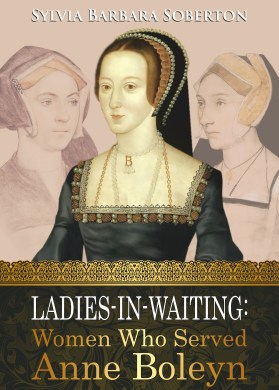
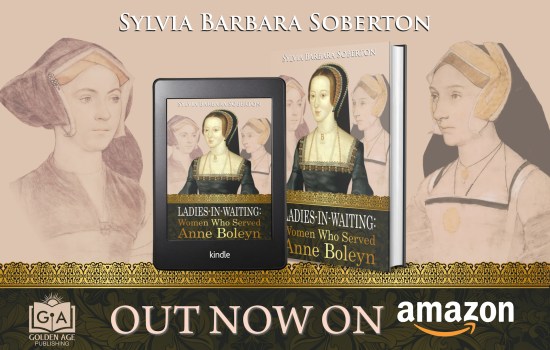 Today, I am pleased to welcome Sylvia Barbara Soberton to my blog to discuss one of the women featured in her latest book, “Ladies-in-Waiting: Women Who Served Anne Boleyn.”
 Description:
 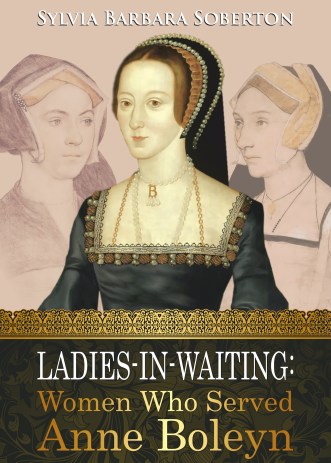 The story of Anne Boleyn and her rise and fall has been told throughout the centuries in numerous ways. With tales of this memorable monarch came rumors of what happened inside her court and the women who served her during her reign. We tend to look at her life through the lens of the men who interacted with Anne Boleyn at court, but what about the women who knew her? Stories of ladies-in-waiting selling the queen out and secret romances ran rampant throughout the centuries, but how much truth is in these tales? Sylvia Barbara Soberton explores these questions in her latest book, “Ladies-in-Waiting: Women Who Served Anne Boleyn.”
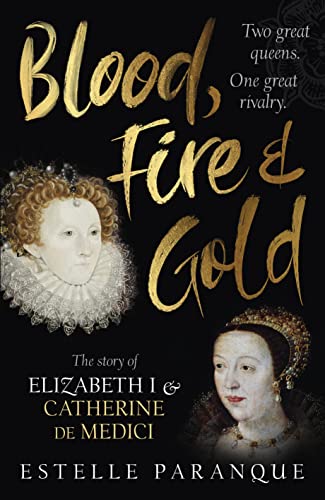 Two queens; one a wife and the mother of kings and the other a virgin who had to fight for the right to rule her country independently. Two women who found friendship and a rivalry between each other with only a sea that divided them and religious discord to drive them apart. Catherine de Medici and Elizabeth I would define what it meant to be female rulers in the 16th century for France and England, respectively. The tales of Elizabeth I and Catherine de Medici have been covered in numerous books, but a joint biography of these two powerhouses is a rarity until now. Estelle Paranque demonstrates how both queens greatly affected each other’s lives in her latest book, “Blood, Fire & Gold: The Story of Elizabeth I and Catherine de Medici.”
 When we think about the men who surrounded King Henry VIII, a few names come to mind. Cranmer, More, Wolsey, and Wroithesley are just a few, but the man who is synonymous with the infamous king’s reign is Thomas Cromwell. The man who helped Henry get his divorce from Katherine of Aragon saw both the rise and fall of Anne Boleyn. He also assisted in the dissolution of the monasteries and brought reform to England with the break from the Roman Catholic Church. To modern audiences, it feels as if we know everything that there was to know about Thomas Cromwell’s public life, but what was he like in his private life when his friends and family surrounded him? Caroline Angus gives her readers an insight into Cromwell’s personal life in her latest book, “The Private Life of Thomas Cromwell.”
 The year is 1522, and London is in a jovial mood. King Henry VIII and his wife Catherine of Aragon are to play host to the Holy Roman Emperor Charles V as he visits England. As one of King Henry VIII’s most loyal advisors, Cardinal Wolsey had the great honor of hosting a grand masque featuring King Arthur and the Black Knight for the distinguished company. Unfortunately, as preparations for the luxurious masque are in full swing, Wolsey’s historian is horrifically murdered. The only one who can solve the case is Anthony Blanke, the son of John Blanke, the trumpeter before the masque is ruined, and Henry VIII discovers the truth. The story of this case is told in Steven Veerapen’s latest novel, “Of Blood Descended.”
 Adventures of a Tudor Nerd