
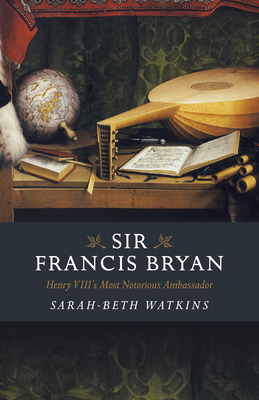
 During Henry VIII’s reign, those who were most loyal and the closest to the king did not often last long to enjoy the rewards of his friendship. However, there was one man who stayed in relatively good favor with the king throughout his reign. He was a sailor, a soldier, a diplomat, and acted as an English ambassador mostly in France. He was a cousin to a few of Henry VIII’s wives, a lover of wine, and an infamous womanizer. The name of this rather extraordinary man was Sir Francis Bryan and the story of how he survived the tumultuous reign of Henry VIII is told in Sarah-Beth Watkins’ latest biography, “Sir Francis Bryan: Henry VIII’s Most Notorious Ambassador”.
I would like to thank Sarah-Beth Watkins and Chronos Books for sending me a copy of this book. I have enjoyed Sarah- Beth Watkins’ previous books and this one sounded really interesting to me since I did not know a lot about Sir Francis Bryan before I read this book.
Unlike many of Henry’s closest allies, Sir Francis Bryan was born to help the king. His father, Sir Thomas Bryan of Ashridge, Hertfordshire, was a knight of the body to both King Henry VII and Henry VIII. His mother, Lady Margaret (Bourchier) Bryan, a lady in waiting to Katherine of Aragon and the governess to Henry VIII’s children, was related to Elizabeth Howard, which meant that Francis was related to both Anne Boleyn and Catherine Howard. It was these connections that would prove both a blessing and a curse in Bryan’s career.
Bryan’s career was mostly based abroad as an ambassador for Henry VIII. After his service to the king in Scotland, he was transferred to France where he would prove his loyalty to Henry by pushing his ideas on the French king. It was the way he handled certain situations that gained Bryan the nickname, “ the vicar of hell”. Not exactly flattering, but it helped Bryan keep his head when so many of his friends, allies, and family members did not.
Watkins’ biography on Sir Francis Bryan provides a great window into the life of such a colorful character in Henry VIII’s court who doesn’t get a whole lot of attention. But, it is one thing to tell about Bryan’s life and quite another to allow the readers to read transcribed letters that were either addressed to or about Bryan. They provide great insight into the decisions that Bryan made and his feelings about the events that were going on around him, including The Great Matter and the break from Rome.
Like Watkins’ other books, this one acts as a great introduction to the life of Sir Francis Bryan. It was extremely informative and well written for a small book, acting as a stepping stone for those who want to learn more about “the vicar of hell”. A best friend of King Henry VIII and loyal until the end to the Tudors, Sir Francis Bryan lived a remarkable life. “Sir Francis Bryan: Henry VIII’s Most Notorious Ambassador” by Sarah-Beth Watkins is a book that I highly recommend if you are a fan of Sarah-Beth Watkins or if you want to learn more about Sir Francis Bryan and how he survived the tumultuous reign of King Henry VIII.
 There have been certain events in Tudor history that have become as famous as those involved. None more so than the divorce between Henry VIII and Katherine of Aragon so Henry could marry his second wife, Anne Boleyn, also known as “The Great Matter”. We often study this time through the perspectives of the many historians and authors who have written about this topic. But, what if Katherine, Henry, and Anne had a chance to speak for themselves about the events of “The Great Matter”. Thomas Crockett decided to have the main figures of this famous divorce tell their tales in his latest work, “The Great Matter Monologues: Katherine, Henry, Anne”.
 In history, we tend to focus on the stories of the men and women who shaped the era. This is obviously important, but the locations where the events of the past happened are equally as important. Sadly, many of the buildings that the men and women from the past knew no longer exist. However, there are a few, especially from the Tudor period, that we can still visit. Suzannah Lipscomb explored over 50 of these remarkable buildings and decided to tell their tales in her book, “A Journey Through Tudor England”.
 Try Me, Good King- Immersive Classical Concert of Tudor Tales and Shakespearean Stories
 The reigns of the Tudor monarchs were full of change, not only in court and in culture, but also when it came to religion. None more so than in the reign of King Henry VIII, especially during the incident known as “The Great Matter”, when the king wanted a divorce from his first wife, Katherine of Aragon. Many people were swept into the chaos of this time, but there are two who were infamous during this time; Thomas Wolsey and Anne Boleyn. These two were adversaries, vying for the attention of the king. They both experienced extreme highs and tragic lows as they navigated the change in England that would be the start of the Reformation. Lynda Telford explores the lives of Thomas Wolsey and Anne Boleyn, as well as the lives of other people who were caught displeasing King Henry VIII during this tumultuous time in her book, “Tudor Victims of the Reformation”.
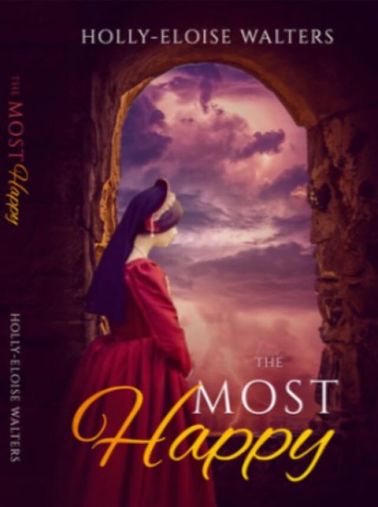 The story of Anne Boleyn is one of love, triumph, and tragedy. Her tale has been told in many different ways in the several centuries since her execution by many different people. Except by Anne Boleyn herself. We never truly understood what it might have felt like when she went to court for the first time, what it must have felt like to have fallen in love with King Henry VIII. How she might have felt when she had her daughter and experienced her numerous miscarriages. The devastation she must have felt when she found out about Henry’s abusive side, his mistresses, and her ultimate demise. That is until now. In Holly-Eloise Walters’ debut novel, “The Most Happy”, Anne Boleyn tells her personal story, giving the readers a better understanding of the legend.
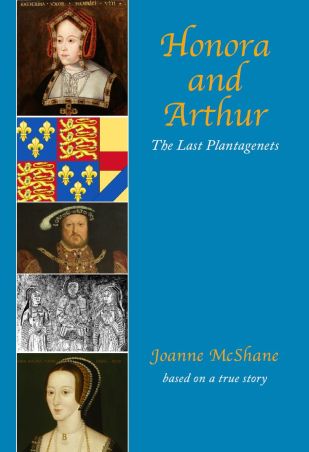 At the age of 18, Honora Grenville, daughter of a wealthy Cornish landowner, is swept off her feet by Arthur Plantagenet, the handsome, illegitimate uncle of Henry VIII. Since childhood, her dreams have been of a handsome gentleman who would whisk her away to live in far-off palaces and to wear fine clothes. Now, in Arthur Plantagenet, it seems that her dreams are about to come true.
 marrying and raising a family in Tasmania she moved to Wales in 2003 and still lives there, close to the Herefordshire border. Always a keen historian, she became fascinated by her own family history and by the lives of her ancestors – some of whom she discovered to be very colourful indeed. This led her to begin writing.
 When one thinks about women reformers during the time of the Tudors, certain women like Catherine Parr and Anne Aske come to mind. However, there was one who really should get more attention and her name is Katherine Willoughby. She was the last wife of Charles Brandon. Her mother was Maria de Salinas, a lady in waiting to Catherine of Aragon and a devout Catholic. Katherine knew all six of Henry VIII’s wives on a personal level and knew all of his children. She has often been seen as an afterthought; someone you associate with other people, but never a stand out herself. That is until now. Katherine Willoughby finally gets her time to shine in Tony Riches’ latest historical fiction novel and his conclusion to his Tudor trilogy, “Katherine-Tudor Duchess”.
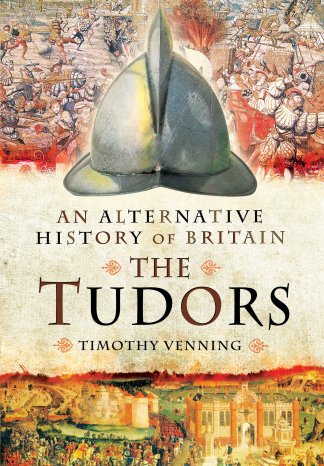 The study of history is all about asking questions about how and why events happened. We understand that history is very much a study of cause and effect; if a certain person causes something to happen, we study the effect of those actions. But what if the person changes what they do? What would happen to the course of history? These are considered the “what ifs” of history, which is something that history fans and students like to discuss with one another. These questions rarely are discussed in books, until now. Timothy Venning explores some of the “what ifs” of the Tudor Dynasty in his book, “An Alternative History of Britain: The Tudors”.
 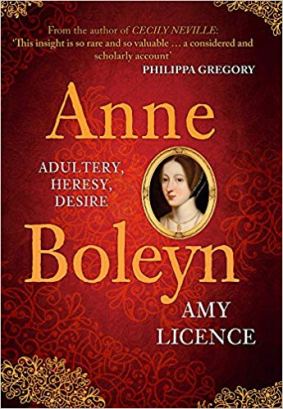 Anne Boleyn, the second wife of Henry VIII and the mother of the future Queen Elizabeth I, is one of the unique characters of the Tudor era. She was the sister of one of the king’s mistresses, Mary Boleyn, which she could have been, but Henry wanted Anne as his queen. Unfortunately, he was married to his first wife, Catherine of Aragon. It is Henry’s divorce to Catherine and his relationship with Anne, the rise and fall, is what many people look at, but there is more to Anne’s story than just her life with Henry. What was Anne’s life really like and what really caused her fall? These are just a few questions that Amy Licence tackles in her latest biography, “Anne Boleyn: Adultery, Heresy, Desire.”
 Adventures of a Tudor Nerd