
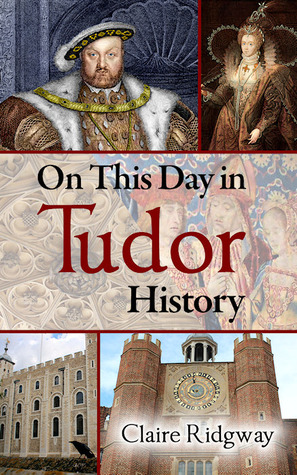
 The Tudor dynasty and the stories of those who lived during this time have drawn novices and experts alike to explore the history surrounding these events for hundreds of years. These tales can seem fictional, but the truth is often stranger than fiction, which is why it is important to understand when and why these events happened. The “when” can often be difficult to remember for any student of history because there are a lot of dates to deal with when you are dealing with a whole dynasty. That is why resources, like this particular book, can be so invaluable to have in one’s collection. Claire Ridgway has taken the time to give readers a day-by-day guide to the Tudors in her book, “On This Day in Tudor History”.
Ridgway has taken the concept of history books that explore what life was like in a year for a typical person in a certain time and she has expanded to cover an entire dynasty. Like these books, this one is divided by each month of the year and then by chronological order of the year. She covers all of the Tudor dynasty, with some dates before and after, to show how this one era truly impacted European and world history. Of course, she covers the big names of the dynasty; like Elizabeth I, Henry VIII, Anne Boleyn (which is a given since Ridgway is known for her other project, the Anne Boleyn Files), Mary I, and numerous courtiers and diplomats who made this time so fascinating for many of us to study.
What caught my interest in this book was the numerous figures that many might not know a lot about. There are the monarchs from all around Europe whose stories are often looked over for their English counterparts. And then there are the English scholars, explorers, martyrs, and playwrights that are often forgotten for more colorful figures. Their births, deaths, trials, tribulations, and triumphs are just as important as those who make the headlines. I did not know about so many of their stories and it made me want to learn more, to dive even deeper into the study of the Tudor dynasty.
Although I did enjoy reading this book, it is one that you need to take your time to read. It is a book that should be used as a resource for research into this time period. I did notice that with a few of the dates, some of the years were out of chronological order (which did bug me a bit since I like chronological order), but it is a minor issue. There are also some grammatical and spacing mistakes, but they do not take away from the context of this book. Ridgway does use some typical stories that have been debunked by recent biographies, but the dates are relatively accurate. I did wish that Ridgway included the major holidays and festivals into the actual book, instead of being at the beginning of the book, so that we could get a sense of what was going on during these significant events.
Overall, I found this book informative and fun. Claire Ridgway combined the trivia of Tudor dates with an easy to understand writing style. It is a massive tome, but a labor of love. If you want a book full of terrific Tudor trivia, I would recommend you read, “On This Day in Tudor History” by Claire Ridgway. It is a great addition to any Tudor collection.
 A foreign princess who travels to England to marry the king to establish a strong political alliance. To those who study history, this is a story that has been told numerous times, but what makes this particular story unique is the people involved. The bridegroom was the recently-widowed Henry VIII, the shadow of his former self and notorious throughout Europe for having his second wife Anne Boleyn executed. His new bride to be is the German princess Anna of Kleve. To say that they did not see eye to eye would be an understatement as the marriage did not last long. Her story is often swept under the rug. Anna is often viewed as the “lucky” wife of Henry VIII, but was she? What was Anna’s story and what was her marriage with Henry really like? Alison Weir has taken up the challenge to give her readers a taste of what Anna’s life might have been like in this novel, “Six Tudor Queens: Anna of Kleve, Queen of Secrets”.
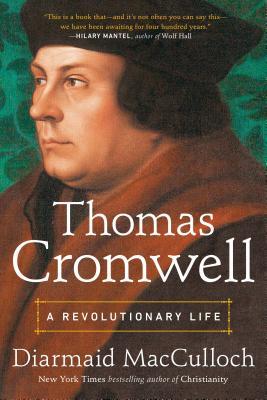 The stories of King Henry VIII and the men around him have fascinated generations of historians, but there was one man who has received a negative reputation for his actions. He was the supposed son of a butcher who rose to be Henry VIII’s right-hand man, until his dramatic fall in July 1540. Thomas Cromwell was credited for helping Henry with his Great Matter, the fall of Anne Boleyn, the establishment of the Church of England, and the disastrous marriage between Henry and Anna of Cleves. Diarmaid MacCulloch has taken on the challenge to figure out who Thomas Cromwell really was by sifting through all remaining archival records that we have from this extraordinary man. It is in this book, “Thomas Cromwell: A Revolutionary Life” that MacCulloch masterfully explores the story of this man who changed English and European history forever.
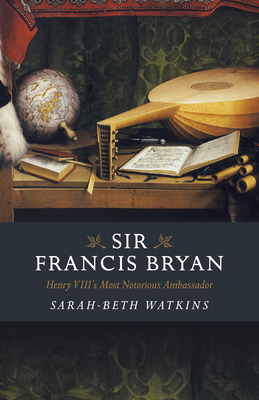 During Henry VIII’s reign, those who were most loyal and the closest to the king did not often last long to enjoy the rewards of his friendship. However, there was one man who stayed in relatively good favor with the king throughout his reign. He was a sailor, a soldier, a diplomat, and acted as an English ambassador mostly in France. He was a cousin to a few of Henry VIII’s wives, a lover of wine, and an infamous womanizer. The name of this rather extraordinary man was Sir Francis Bryan and the story of how he survived the tumultuous reign of Henry VIII is told in Sarah-Beth Watkins’ latest biography, “Sir Francis Bryan: Henry VIII’s Most Notorious Ambassador”.
 There have been certain events in Tudor history that have become as famous as those involved. None more so than the divorce between Henry VIII and Katherine of Aragon so Henry could marry his second wife, Anne Boleyn, also known as “The Great Matter”. We often study this time through the perspectives of the many historians and authors who have written about this topic. But, what if Katherine, Henry, and Anne had a chance to speak for themselves about the events of “The Great Matter”. Thomas Crockett decided to have the main figures of this famous divorce tell their tales in his latest work, “The Great Matter Monologues: Katherine, Henry, Anne”.
 In history, we tend to focus on the stories of the men and women who shaped the era. This is obviously important, but the locations where the events of the past happened are equally as important. Sadly, many of the buildings that the men and women from the past knew no longer exist. However, there are a few, especially from the Tudor period, that we can still visit. Suzannah Lipscomb explored over 50 of these remarkable buildings and decided to tell their tales in her book, “A Journey Through Tudor England”.
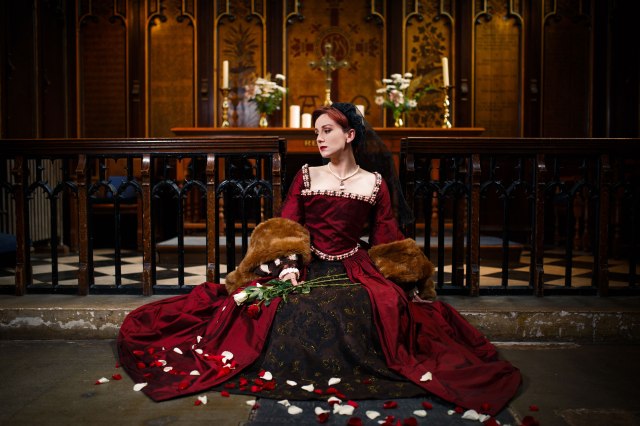 Try Me, Good King- Immersive Classical Concert of Tudor Tales and Shakespearean Stories
 The reigns of the Tudor monarchs were full of change, not only in court and in culture, but also when it came to religion. None more so than in the reign of King Henry VIII, especially during the incident known as “The Great Matter”, when the king wanted a divorce from his first wife, Katherine of Aragon. Many people were swept into the chaos of this time, but there are two who were infamous during this time; Thomas Wolsey and Anne Boleyn. These two were adversaries, vying for the attention of the king. They both experienced extreme highs and tragic lows as they navigated the change in England that would be the start of the Reformation. Lynda Telford explores the lives of Thomas Wolsey and Anne Boleyn, as well as the lives of other people who were caught displeasing King Henry VIII during this tumultuous time in her book, “Tudor Victims of the Reformation”.
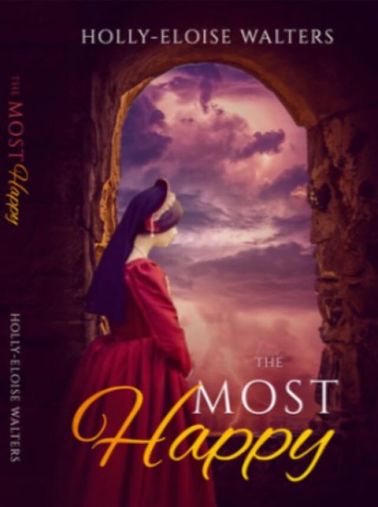 The story of Anne Boleyn is one of love, triumph, and tragedy. Her tale has been told in many different ways in the several centuries since her execution by many different people. Except by Anne Boleyn herself. We never truly understood what it might have felt like when she went to court for the first time, what it must have felt like to have fallen in love with King Henry VIII. How she might have felt when she had her daughter and experienced her numerous miscarriages. The devastation she must have felt when she found out about Henry’s abusive side, his mistresses, and her ultimate demise. That is until now. In Holly-Eloise Walters’ debut novel, “The Most Happy”, Anne Boleyn tells her personal story, giving the readers a better understanding of the legend.
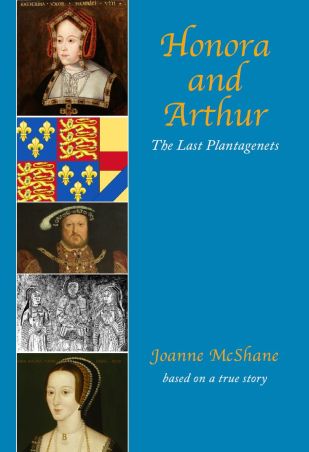 At the age of 18, Honora Grenville, daughter of a wealthy Cornish landowner, is swept off her feet by Arthur Plantagenet, the handsome, illegitimate uncle of Henry VIII. Since childhood, her dreams have been of a handsome gentleman who would whisk her away to live in far-off palaces and to wear fine clothes. Now, in Arthur Plantagenet, it seems that her dreams are about to come true.
 marrying and raising a family in Tasmania she moved to Wales in 2003 and still lives there, close to the Herefordshire border. Always a keen historian, she became fascinated by her own family history and by the lives of her ancestors – some of whom she discovered to be very colourful indeed. This led her to begin writing.
 Adventures of a Tudor Nerd