Book Review: “Queens at War: England’s Medieval Queens” by Alison Weir

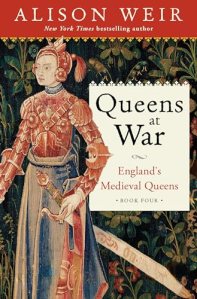
The fifteenth century in England was a time of war. Between a usurper king, fighting with France, and fighting amongst themselves, an English king must be prepared to go into battle at any moment, and his queen must be ready to support him in any way. During this period, there were five kings and queens, and while the kings get a lot of attention, it is the queens who should get their flowers for what they did in times of distress. Alison Weir explores the lives of the final five Plantagenet queens in her final book in the England’s Medieval Queens series, entitled “Queens at War.”

I would like to thank Ballantine Books and NetGalley for providing me with a copy of this book. I am a big fan of Weir’s books, and I have thoroughly enjoyed her England’s Medieval Queens series. I wanted to see which queens Weir would focus on in this book and how she would approach their lives.

The years covered in this last book are 1399-1485, covering the reigns of Henry IV, Henry V, Henry VI, Edward IV, and Richard III. The queens featured in this book are Joan of Navarre, Katherine of Valois, Margaret of Anjou, Elizabeth Woodville (spelled Widville in this book), and Anne Neville. While I am familiar with the stories of Katherine, Margaret, Elizabeth, and Anne, Joan is a less well-known figure to me. Weir gives her readers a bit of background information about how Joan of Navarre was Henry IV’s second wife after his first wife, Mary de Bohun, died. Joan was married previously as well, to John IV de Montfort, Duke of Brittany. While she did have children with John, she never had royal children with Henry IV. Weir shows how Joan was treated as the stepmother to King Henry V after he married Katherine of Valois.

Weir explores Katherine of Valois’ relationships with both Henry V, the warrior king, and Owen Tudor, the man she fell in love with after the death of Henry V. We get to see how Katherine’s son, Henry VI, and his wife, Margaret of Anjou, dealt with the rising Yorkist faction. With her husband taking ill, it was Margaret of Anjou who was the figurehead for the Lancastrian cause in a conflict that would be known as the Wars of the Roses. Eventually, a young man named Edward IV would become King of England, and he shook the English court by marrying an English woman, Elizabeth Widville (Woodville). Finally, Weir explores the downfall of the Plantagenet dynasty and the end of the young Yorkist regime with Richard III and his wife Anne Neville.

Overall, I found this an informative and easy-to-follow book. It was a bit of a review for me as I am familiar with this period, but I found myself learning new information in this book, which was exciting. I think if you want to learn about 15th-century queens or if you are a fan of England’s Medieval Queens series, I recommend you read “Queens at War” by Alison Weir.

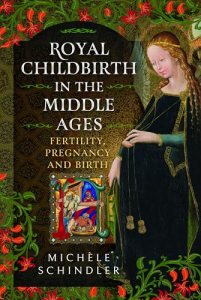
Book Review: “Royal Childbirth in the Middle Ages: Fertility, Pregnancy and Birth” by Michele Schindler

Throughout history, many aspects of life have changed drastically, but one thing has remained the same: the different stages of life—birth, youth, adolescence, adulthood, old age, and death. It is the first stage of life, birth, that tends to get the least amount of attention when it comes to historical research. In recent years, it has been gaining more and more attention, especially when it comes to royal births, which have the most amount of written records. Michele Schindler has chosen to focus on the aspects of medieval childbirth in her latest book, “Royal Childbirth in the Middle Ages: Fertility, Pregnancy and Birth.”

I would like to thank Pen and Sword Books and Net Galley for sending me a copy of this book. I have enjoyed the previous book that I have read by Michele Schindler, and so when I saw that she had a new book about the medieval period out, I was excited to read it. I have read a few books that featured childbirth, primarily in the Tudor period, but never when it comes to the medieval period, so I wanted to learn more.

Schindler has decided to divide her book into sections, each part focusing on a different stage of childbirth: conception, pregnancy, birth, baptism, infant care, and how society as a whole understood childbirth as part of a woman’s life. Each section has sub-sections that explore aspects like miscarriages, twins, confinement, stillbirths, wet nurses, and deaths during infancy. These are very heavy topics, but they are discussed in a respectful manner.

To give context to the topics discussed, Schindler uses examples from multiple centuries to show how royal and noblewomen dealt with childbirth and its struggles. Some of the women featured in this book include Margaret Beaufort, Margaret of Anjou, Eleanor Cobham, Isabella of Castile, Alice Chaucer, Anne Neville, and Elizabeth of York. She also compared these lives and how they experienced childbirth to the common people to show the difference in status and the importance of ceremonies like confinement to the nobility.

Overall, I found this book to be really well researched, as well as being pretty easy to follow along with. I found a deeper appreciation for medieval women and what they had to go through to have a child. If you want to learn more about medieval childbirth practices pertaining to the higher echelons of society, I would recommend you read “Royal Childbirth in the Middle Ages: Fertility, Pregnancy and Birth” by Michele Schindler.

Book Review: “The Queen and the Countess” by Anne O’Brien

Medieval wars were not just fought on the battlefield. They also fought in court through marriage alliances and politics. While we often think about wars and men, we should also consider the women who played their parts either in exile or glistening palaces. We often think about medieval queens like Margaret of Anjou as these strong women who fought in their ways, but we have to consider the wife of Richard Neville Earl of Warwick, known as the Kingmaker; her name was Anne Beauchamp Countess of Warwick. The relationship between Margaret of Anjou and Anne Beauchamp has not been discussed much until now. Anne O’Brien tells the stories of these two women and the wars that bound them together in her latest novel, “The Queen and the Countess.”

I want to thank Orion Publishing and Net Galley for sending me a copy of this novel. What attracted me to this novel was the cover at first and then the description. I love reading novels about the Wars of the Roses, so when I saw it was a novel featuring both Margaret of Anjou and Anne Beauchamp Countess of Warwick, it was a must read for me.

We begin in the year 1480 as both Margaret and Anne reflect on their lives while they are in exile. Then, we get a flashback to the famous Love Day “celebration” of 1458, when members of the Lancaster and York families joined hands as a way to try to mend the rift that was bound to tear the country apart. It is the idea of King Henry VI that his wife, Margaret of Anjou, joins hands with the Duke of York. It is a complete and utter failure as the Wars of the Roses kick off in full force. Since the King is very weak, it is Margaret who must take the reigns of government to protect the Lancaster family and the throne for not only her husband but also for their only son, Prince Edward.

On the other side of the conflict is Anne Beauchamp Countess of Warwick, the wife of Richard Neville, Earl of Warwick, also known as the King Maker. She is the mother of two daughters, Isabel and Anne, but she desires a son. Being on the rebellious Yorkist side means that Anne is directly an enemy of Margaret of Anjou, but something remarkable happens: the two women form a thorny friendship. For over twenty years, the relationship between Anne and Margaret ebbs and flows as the crown passes from Henry VI to Edward IV like a ping-pong ball. Both Anne and Margaret understand what it means to lose their husbands and children whom they love; they know the glory of victory, the terror of defeat, and the uncertainty of being in exile.

I enjoyed this novel very much. It gave more depth and heart to the conflict as a whole, as well as a better understanding of both women. Anne O’Brien was able to create such dynamic characters and a thrilling novel that any fan of medieval novels will enjoy. If you are a fan of novels set during the Wars of the Roses featuring strong women, I highly suggest you read, “The Queen and the Countess” by Anne O’Brien.

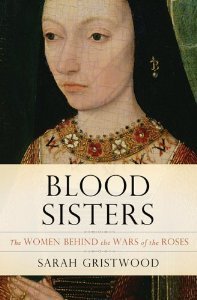
Book Review: “Blood Sisters: The Women Behind the Wars of the Roses” by Sarah Gristwood

Blood SistersWhen it comes to studying wars from the past, we often focus on the men who fought during the battles the strategies that were implemented to win and the plans that backfired spectacularly. So frequently in the study of wars, we forget about the women left behind, but in fact, they had bigger roles to play than sitting on the sidelines. For example, the royal women who lived in England during the conflict known as the Wars of the Roses played an essential role in how the wars concluded. These women are slowly coming into the spotlight in biographies and historical fiction novels, but it is rare to read a book about the Wars of the Roses where the central figures are the women, until now. Sarah Gristwood has taken seven women from this age and weaved their stories into her book, “Blood Sisters: The Women Behind the Wars of the Roses.”

I have been interested in the Wars of the Roses and the women who lived during that period for years. I heard about this book when I started studying this period, but I have never had a chance to read it, until now.

There were so many strong women from this period, but Gristwood narrowed her choices down to seven remarkable women to focus on; Margaret of Anjou, Margaret Beaufort, Elizabeth Woodville, Elizabeth of York, Cecily Neville, Anne Neville, and Margaret of Burgundy. By choosing these women, Gristwood is presenting a story of a conflict that spanned multiple generations, both York and Lancaster, and showing how both the English and Burgundian nobility dealt with the changes that were happening when the Tudors took control.

Gristwood begins with the marriage of Margaret of Anjou and Henry VI. Though she was French by birth, her loyalty was always going to be with her husband’s Lancasterian family. That meant she would eventually become enemies with the proud Cecily Neville, the wife of Richard Duke of York and mother of King Edward IV and King Richard III, but Margaret was allied with Margaret Beaufort, the tenacious mother of King Henry VII, the founder of the Tudor dynasty. The conflict passed onto the daughters of these women, like Anne Neville and Margaret Burgundy, as well as the daughter of Jacquetta of Luxembourg, Elizabeth Woodville. These women would continue the conflict and help seal the fate of the Lancastrians, see the rise and fall of the Yorkists, and the beginning of the Tudor dynasty through the marriage of Elizabeth of York, the daughter of Elizabeth Woodville, and Henry Tudor. This book spans decades and includes events like the disappearance of the Princes in the Tower, well into the Tudor dynasty such as the pretenders, the marriage of Prince Arthur and Catherine of Aragon, the death of Prince Arthur, and the rise of Henry VIII.

This was a delightful look into the Wars of the Roses through the eyes of the women who lived through this period. They were mothers, daughters, wives, queens, fighters, and survivors. They showed that without their tenacity and determination to fight for what they believed was right and for their families. If you are a fan of the women who defined the Wars of the Roses, I highly suggest you read, “Blood Sisters: The Women Behind the Wars of the Roses” by Sarah Gristwood.

Book Review: “The Sunne in Splendour” by Sharon Kay Penman

1321064._SY475_A banner decorated with three suns flaps in the wind on the field of battle. The young man behind this emblem is Edward, Earl of March, whose father Richard Duke of York and brother Edmund Earl of Rutland were tragically slain at the Battle of Wakefield. His younger brothers, George Duke of Clarence and Richard Duke of Gloucester, will help Edward carry their father’s cause for the family of York to rule England. When loyalty is questioned even among family members, only one man would truly stand behind Edward until the bitter end. That man would be Richard Duke of Gloucester, or as we know him today, the much-maligned King Richard III. He is often viewed as a treacherous child-killer who coveted the throne after Edward IV’s death, but is that accurately portraying the last Plantagenet king? Who was the real King Richard III? In her magnum opus, “The Sunne in Splendour,” Sharon Kay Penman presents her case for Richard III as a man betrayed, both in life and after his death.

I want to thank everyone who has recommended this book to me in the past. I know that Sharon Kay Penman recently passed away, and I felt that the only way to celebrate the anniversary of the Battle of Bosworth Field this year was to read this novel. I knew that it was well beloved in the Ricardian and the Wars of the Roses communities, so I wanted to see what made this novel so memorable.

Penman chooses to tell this story through multiple points of view, which, contrary to popular belief, works cohesively and allows each character to have their voice. We are introduced to Richard as a young boy before his father and Edmund die in battle. He is a timid child who witnesses death and destruction all around him and is trying to process everything. We see him grow from a scared child to a warrior duke and later into a king who had to deal with betrayal and heartache around every corner.

What Penman does brilliantly is how she writes her characters to make them so realistic that you forget that you are reading a novel. She fleshes out the conflicts exceptionally well, like the struggle between the brother Richard, George Duke of Clarence, and Edward IV. The love between Richard and his bride Anne Neville is pure and wholesome. The loyalty between Richard and Edward IV and towards Edward’s children, especially the princes in the tower is undeniable. Then there is the tension between the brothers and their cousin Richard Earl of Warwick trying to establish this new York dynasty. And what would a series of wars be without those fighting to keep their rule, which was the Lancastrians led by the ferocious Margaret of Anjou. It felt like I was being introduced to a new side of the Yorkist cause when I read this novel.

The action scenes are intense, and the betrayals hit harder than what you usually read in nonfiction books about the Wars of the Roses. This novel is truly a love letter to this period and a brilliant work of literature. I am not sure why I waited so long to read this masterpiece, but I am glad I finally read it. If you want an exceptional novel about the Wars of the Roses and Richard III, “The Sunne in Splendour” by Sharon Kay Penman is a must-read.

Book Review: “The Rise and Fall of a Medieval Family: The Despensers” by Kathryn Warner

55182670._SY475_In the times of medieval kings, the power of the crown was dependent on the support that they maintained with noble families. One of the most notorious noble families in England was the baronial family known as the Despensers. Between the 13th and the 15th centuries, the Despensers were at the heart of royal politics and some of the biggest power plays during the reign of the Plantagenets. We know about the few members who truly made waves during this time, especially Hugh Despenser the Elder and Hugh Despenser the Younger, but this family’s story is much more than a few members. In Kathryn Warner’s latest book, “The Rise and Fall of a Medieval Family: The Despensers”, she takes on the challenge of explaining the entire family story of this infamous baron clan.

I would like to thank Pen and Sword Books and Net Galley for sending me a copy of this book. I have enjoyed Kathryn Warner’s writing style in the past and when I heard about this book, I was intrigued. I will be honest and say that I only knew about Hugh the Elder and Hugh the Younger when they were mentioned in other history books that I had read in the past. I was excited to learn more about this family.

To understand this book, it should be noted that this is unlike any other modern medieval history book. It is a bit different than what Kathryn Warner has written in the past. In truth, this book feels like a modern-day chronicle of the Despenser family. Warner begins with the reign of King Henry III in 1265 with the execution of the Despenser’s patriarch, Hugh the justiciar, and concludes with Isabella Despenser, who was the grandmother of Anne Neville, the wife of King Richard III. Warner includes the more scandalous tales of love and betrayal that encapsulate the fascination that historians have had with this family for centuries.

What was compelling to me about this book is the stories of those who were in the background of the more sensationalized figures. The tales of triumph and sorrow that the family had to endure are remarkable. For the family to survive, they needed to make waves in the medieval marriage market, which they did spectacularly. It is these marriages and their impacts that Warner focuses heavily on to show that even in disgrace, the Despensers continued to rise from the ashes.

If I did have a problem with this book, there were points where it was a tad dry to read. This book is very academic and is directed towards those who know the history of the Despensers. Warner takes her readers on a deeper dive into this infamous family. You can tell from Warner’s dedication to this task that she truly enjoyed studying about the Despensers. As someone who was not familiar with this family and its numerous family members named “Hugh”, I found myself going back to try and figure out who was who.

If you want to tackle this book, my advice would be to take your time to truly understand this complex family. This book is exceptionally well researched and a true chronological treat for those who love to dive into the intricacies of medieval families. If this sounds like you, check out, “The Rise and Fall of a Medieval Family: The Despensers” by Kathryn Warner.

Biography: Elizabeth of York

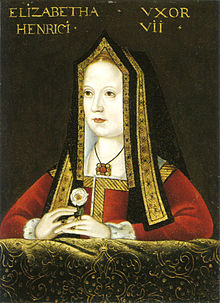
220px-Elizabeth_of_York_from_Kings_and_Queens_of_England(Born February 11, 1466- Died February 11, 1503). Daughter of King Edward IV and Elizabeth Woodville. Married to King Henry VII. Mother of Arthur, Prince of Wales, Margaret, Queen of Scots, Henry VIII, King of England and Mary, Queen of France.
Elizabeth of York was the daughter, niece, sister, wife and mother of kings. It was through her marriage with Henry VII that helped create the Tudor Dynasty.

Elizabeth of York was the eldest child of Edward IV and Elizabeth Woodville. She was born at the Palace of Westminster on February 11, 1466. She was christened at Westminster Abbey; her godparents were Jacquetta of Luxembourg, Duchess of Bedford, Cecily Neville, Duchess of York, and Richard Neville 16th Earl of Warwick. When she was three years old in 1469, she was briefly betrothed to George Neville, the nephew of Richard Neville, but it did not go far since his uncle would die two years later. In 1475, Louis XI agreed to arrange a marriage between nine year old Elizabeth of York to his son, Charles, the Dauphin of France; in 1482, Louis decided not to go along with the promised wedding.

Elizabeth’s world drastically changed forever when her father, Edward IV, suddenly died on April 9, 1483. Her young brother Edward V was proclaimed king and her uncle Richard Duke of Gloucester was named Lord Protector. On April 29, as previously agreed, Richard and his cousin, the Duke of Buckingham, met Queen Elizabeth’s brother, Anthony Woodville, 2nd Earl Rivers, at Northampton. The young king himself had been sent to Stony Stratford. Richard had Earl Rivers, his nephew Richard Grey and his associate, Thomas Vaughan, arrested. They were taken to Pontefract Castle, where they were executed on June 25 on the charge of treason against the Lord Protector after appearing before a tribuna. Richard took the young king under his protection, escorted him to London, and placed him in the Tower for his protection. After hearing about what had happened, Elizabeth Woodville took her children, including Elizabeth of York, her other daughters, her youngest son Richard Duke of York, and fled to sanctuary in Westminster Abbey. Elizabeth Woodville tried to keep her son Richard Duke of York away from Richard Duke of Gloucester, but she eventually did give up her son. We do not know how Elizabeth of York reacted to these events.

In early June of 1483, the marriage between Elizabeth’s parents, Edward IV and Elizabeth Woodville, was declared invalid because it is said that Edward IV had entered into a pre-contract marriage with Lady Eleanor Butler before he married Elizabeth Woodville. This meant that any children of Edward IV and Elizabeth Woodville were considered illegitimate, including Edward V, Richard Duke of York and Elizabeth of York. Since the children of George Duke of Clarence were barred from succession because of their father’s treason and execution, the next in line to the throne was Richard Duke of Gloucester. Richard was crowned King Richard III on July 6, 1483 and Elizabeth’s brothers disappeared. Some say that they were murdered, others say they escaped, but at this point we do not know what happened to Edward V and Richard Duke of York.

Elizabeth’s mother Elizabeth Woodville was now known as Elizabeth Grey and she decided to side with the Duke of Buckingham and Margaret Beaufort to put Margaret’s son Henry Tudor on the throne. Henry Tudor was the closest male Lancastrian heir and in order to cement this new alliance, Elizabeth Woodville and Margaret arranged that Henry would marry Elizabeth of York. Buckingham’s rebellion against Richard would fail and he would be killed on November 2, 1483. In December 1483, Henry Tudor made an oath in Rennes, France that he would marry Elizabeth of York when he became King of England. In January 1484, the act known as Titulus Regius was passed by Parliament, which confirmed under law that the marriage between Edward IV and Elizabeth Woodville was invalid.

On March 1, 1484, Elizabeth Woodville and her daughters left sanctuary after Richard III promised not to harm them and to arrange marriages for all of Elizabeth’s daughters. There were rumors that after Anne Neville in March 1485, Richard III’s wife, died that he was seeking to marry Elizabeth of York, but there is no evidence to support this claim. Soon after Anne Neville’s death, Richard III sent Elizabeth away from court to the castle of Sheriff Hutton and opened negotiations with King John II of Portugal to marry his sister, Joan, Princess of Portugal, and to have Elizabeth marry their cousin, the future King Manuel I of Portugal.

These marriage arrangements did not come to fruition. Elizabeth of York stayed at Sheriff Hutton during August 1485, when Henry Tudor invaded England and on August 22, 1485 when Richard III fell at the Battle of Bosworth Field and Henry Tudor became King. Henry did keep his promise and married Elizabeth of York on January 18, 1486. The couple’s first child, Arthur, was born on September 20, 1486.

During 1487, a young man named Lambert Simnel, claimed that he was the earl of Warwick, Elizabeth’s cousin, so Henry VII had the real earl of Warwick taken from the Tower and paraded through London. It was at the last battle of the Wars of the Roses, the Battle of Stoke Field on June 16, 1487 that Lambert Simnel was defeated. Henry decided to let the boy live and gave him a job at the castle. Elizabeth was crowned on November 25, 1487 and she would have seven children total, four survived into adulthood; Arthur, Henry, Margaret and Mary. Although Elizabeth had a strong claim to the throne, she did not seek to become queen regnant.
In the early 1490s, another threat to the peace emerged with the contention that Elizabeth’s younger brother, Richard, Duke of York, was still alive. Her aunt, Margaret of York, Dowager Duchess of Burgundy and James IV of Scotland, were sponsoring a young man, later revealed to be a youth named Perkin Warbeck. Warbeck received wide-spread support from amongst Yorkists, who did not like Henry VII. Ultimately, however, Warbeck could not command enough support at home or abroad, to mount a successful challenge and in 1497, he was captured.

Warbeck’s wife Lady Catherine Gordon was made one of the ladies-in-waiting for Queen Elizabeth of York. In June 1498, Warbeck was forced to make two public appearances at Westminster and Cheapside, where he admitted that he was not Richard Duke of York and that Margaret of Burgundy was to blame for the entire scheme. Henry VII was kind to Warbeck at the beginning, allowing him to live at court, but Warbeck tried to escape and it landed him in the Tower of London, close to Edward Plantagenet, 17th Earl of Warwick, son of the late George, Duke of Clarence. Warbeck and Warwick plotted to escape the Tower, but the plan was uncovered and both men were charged with treason. Perkin Warbeck was hanged at Tyburn on November 23, 1499. We don’t know if Elizabeth of York ever met Warbeck.

Elizabeth was a very pious woman and was very dedicated to her children’s wellbeing. Elizabeth was very involved in the marriage negotiations for her two eldest children, Arthur and Margaret, Arthur to Katherine of Aragon, daughter of Isabella I of Castile and Ferdinand II of Aragon, and Margaret to James IV of Scotland. Elizabeth helped convince Katherine’s parents that she would be well taken care of and with Margaret’s marriage, Elizabeth was concerned that she was getting married at such a young age.

In November 1501, Katherine of Aragon arrived in England and Elizabeth was part of the celebrations of the marriage. The following year, tragedy hit hard as Arthur died on April 2, 1502. This was a tragic loss for Henry and Elizabeth because this meant that there was only one heir to save the Tudor Dynasty, the young Henry Tudor. While Henry was grieving, it is said that Elizabeth comforted him and told her husband that they were still young enough to have more children. Later, Elizabeth would break down and it was Henry who consoled his wife. Elizabeth would have one more child, a girl named Katherine, on February 2, 1503, but the baby would not live long. Elizabeth of York would die on her 37th birthday, on February 11, 1503.

Biography: Elizabeth Woodville

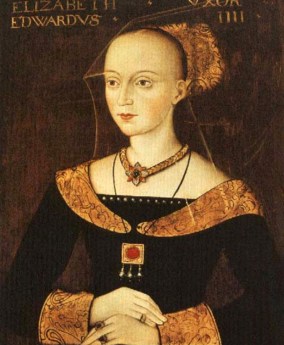
(Born around 1437- Died June 8, 1492). Daughter of Jacquetta of Luxembourg and ElizabethWoodvilleRichard Woodville. Married to Sir John Grey and King Edward IV of England. Mother of Thomas Grey, Marquess of Dorset, Richard Grey, Elizabeth, Queen of England, Mary of York, Cecily, Viscountess Welles, Edward V, King of England, Margaret of York, Richard, Duke of York, Anne, Lady Howard, George, Duke of Bedford, Catherine, Countess of Devon and Bridget of York. Elizabeth Woodville was the woman who Edward IV fell in love with and married, much to the chagrin of Warwick. Elizabeth was the mother of the Princes in the Tower and Elizabeth of York, the mother of the Tudor Dynasty.

Elizabeth Woodville was the eldest child of Richard Woodville and Jacquetta of Luxembourg, born around 1437 at Grafton Regis, Northamptonshire. Her parents marriage was controversial because they married for love and without King Henry VI’s permission. Jacquetta was previously married to the brother of King Henry V and, although the Woodvilles were wealthy landowners, they were still considered genteel rather than nobles. Jacquetta was considered the second lady at court, next to the Queen Margaret of Anjou and Elizabeth was able to become one of the maids of honor for Queen Margaret of Anjou. With her high position at court, Elizabeth was able to marry well with her first marriage. She married Sir John Grey of Groby in 1452 and during this time, Elizabeth became one of the four ladies of the bedchamber to Margaret of Anjou. In 1461, Sir John Grey would die at the Second Battle of St. Albans, fighting for the Lancastrian cause, leaving Elizabeth a widow with two infant sons, Thomas and Richard Woodville.

Elizabeth Woodville’s sons, Thomas and Richard, did not receive the Bradgate inheritance that they deserved. Elizabeth went into mourning for two years at her family home at Grafton Regis in Northamptonshire. After the Yorkist victory a few weeks later at Towton, Edward IV, the new king, stopped by at Grafton Regis for a couple of days, where it is said he fell in love with Elizabeth Woodville. It is said that he saw her under an oak tree, waiting for him to arrive and to plead her case to get her sons’ inheritance, but there is no evidence that this actually happened. The couple married in secret sometime in May 1464.

At this time, Richard Neville “The Kingmaker” Earl of Warwick, was working on a marriage alliance with France. When Warwick and the Council found out about the marriage, they were rightfully upset. Not only did the King marry a woman who was a widow and not a princess, but now her relations were able to capitalize in the marriage market. Three of Elizabeth’s sister married sons of earls and her brother John, who was in his 20s at the time married Katherine Duchess of Norfolk, who was widowed three times and was in her 60s, causing quite a scandal. On May 16, 1465, Elizabeth was crowned queen consort and the following year, she gave birth to the couple’s first child, Elizabeth of York. Elizabeth of York’s godparents were her grandmother Jacquetta of Luxembourg and Warwick.

In 1469, Warwick decided to rebel against Edward IV and join the Lancastrian cause to put Henry VI back on the throne. After the Battle of Edgecote Moor, Elizabeth’s father Richard and her brother John were arrested and executed on August 12 at Kenilworth. Elizabeth’s mother Jacquetta was arrested by Warwick on the charges of witchcraft. These charges were dropped in February 1470.

In September 1470, Warwick invaded England and placed Henry VI back on the throne, forcing Edward IV to flee and Elizabeth and her children sought sanctuary at Westminster Abbey. During this time, Elizabeth gave birth to her first son, the future Edward V. In total, Elizabeth and Edward would have 10 children, including Richard Duke of York. Edward IV returned and defeated Warwick at the Battle of Barnet in April 1471. When Margaret of Anjou returned, she formed an army to march against Edward IV, which forced Elizabeth to seek shelter at the Tower of London. After the Battle of Tewkesbury, Elizabeth exited the Tower and Margaret of Anjou and Henry VI entered it; Henry VI would later die in the Tower. Elizabeth’s mother Jacquetta would die on May 30, 1472.

Life returned to a normal pace for Elizabeth Woodville and her family. In January 1477, she watched as her young son Richard Duke of York was married to Anne Mowbray; both the bride and groom were not over the age of 5 when the wedding happened. Another marriage, arranged between Elizabeth’s daughter Elizabeth of York and the Dauphin of France, fell through. Shortly afterward, Elizabeth’s world changed forever when her husband Edward IV died April 9, 1483 and Elizabeth was made queen dowager.

Elizabeth’s son was named Edward V and his uncle Richard Duke of Gloucester was named Lord Protector. On April 29, as previously agreed, Richard and his cousin, the Duke of Buckingham, met Queen Elizabeth’s brother, Anthony Woodville, 2nd Earl Rivers, at Northampton. At the queen’s request, Earl Rivers was escorting the young king to London with an armed escort of 2000 men, while Richard and Buckingham’s joint escort was 600 men. The young king himself had been sent to Stony Stratford. Richard had Earl Rivers, his nephew Richard Grey and his associate, Thomas Vaughan, arrested. They were taken to Pontefract Castle, where they were executed on June 25 on the charge of treason against the Lord Protector after appearing before a tribunal led by Henry Percy, 4th Earl of Northumberland. Richard took the young king under his protection, escorted him to London, and placed him in the Tower for his protection. After hearing about what had happened, Elizabeth Woodville took her children, including her daughters and her youngest son Richard Duke of York, and fled to sanctuary in Westminster Abbey.

Gloucester wanted Elizabeth to hand over her son Richard Duke of York. Elizabeth was very reluctant to hand over her son to his uncle, but eventually she did. Richard was said to have been informed with information that Edward V was illegitimate because Edward IV had entered into a previous marriage contract. On June 25, Parliament agreed that Edward V was illegitimate and the following day, June 26, Richard was proclaimed king. His joint coronation with his wife Anne Neville would occur on July 6, 1483, and his title was confirmed in an act of Parliament called the Titulus Regius, which was passed in January 1484.

We do not know what happened to the Princes in the Tower, Edward V and Richard Duke of York. They disappeared from sight after the summer of 1483, which has led many to speculate that Richard III had them murdered. At this point we cannot confirm or deny this theory. We don’t even know if they were murdered at all. It still remains one of the biggest unsolved mysteries in history.

Elizabeth Woodville was now known as Elizabeth Grey and she decided to side with the Duke of Buckingham and Margaret Beaufort to put Margaret’s son Henry Tudor on the throne. Henry Tudor was the closest male Lancastrian heir and in order to cement this new alliance, Elizabeth and Margaret arranged that Henry would marry Elizabeth of York. Buckingham’s rebellion against Richard would fail and he would be killed on November 2, 1483. In December 1483, Henry made an oath at a cathedral in Rennes, France to marry Elizabeth of York. At Richard III’s first Parliament in January 1484, he stripped Elizabeth Woodville of all of her lands that were granted to her during the reign of Edward IV. On March 1, 1484, Elizabeth and her daughters left sanctuary after Richard III promised not to harm them and to arrange marriages for all of Elizabeth Woodville’s daughters. There were rumors that after Anne Neville in March 1485, Richard III’s wife, died that he was seeking to marry Elizabeth of York, but there is no evidence to support this claim.

Later in August 1485, Henry Tudor invaded England and was able to defeat Richard III at the Battle of Bosworth on August 22, Henry became King Henry VII of England. Henry would marry Elizabeth of York, revoke the Titulus Regius and restore Elizabeth Woodville’s title and honors of queen dowager. The last five years of Elizabeth Woodville’s life she spent at Bermondsey Abbey. She was present for the birth of her grandchildren including Margaret Tudor and Henry Tudor, the future Henry VIII. Elizabeth of York and her sister Cecily Woodville would often visit their mother. Elizabeth Woodville died at the Abbey on June 8, 1492 and she was buried with her husband King Edward IV in St George’s Chapel in Windsor Castle.

Biography: King Richard III

mw05304(Born October 2, 1452- Died August 22, 1485). Son of Richard 3rd Duke of York and Cecily Neville. Married to Anne Neville. Father of Edward of Middleham, Prince of Wales.
Richard III is one of the most controversial kings in English history. His death at the Battle of Bosworth Field led to the beginning of the Tudor Dynasty.

Richard III was born to Richard 3rd Duke of York and Cecily Neville on October 2, 1452 at Fotheringhay Castle in Northamptonshire. Many believed that it was a difficult birth. What we do know from historical records is that he might have been breeched born, which means that he was born upside down, which might have led to his physical deformities. From what we do know from examining his skeleton is that he had scoliosis, a sideways curvature of the spine.

Richard’s father was one of the most important men in all of England. He was a loyal follower to King Henry VI and when Henry VI had his bouts of mental illness, it was Richard Duke of York who would become the Lord Protector. York’s enemy was Edmund Beaufort Duke of Somerset, who was an ally of Margaret of Anjou; York had Somerset arrested during his protectorate but when the king recovered, Somerset was released and all of York’s reforms were reversed. York decided to face off against Somerset at the First Battle of St. Albans in 1455, where Somerset was killed. This was the first major battle in The Wars of the Roses. Margaret of Anjou never trusted York, especially when the king decided to name York and his sons the next heir to the throne, dismissing his son Edward of Westminster. Margaret of Anjou formed the Lancastrian army to face off against York and his ally Richard Neville Earl of Warwick.

It would be on December 30, 1460 when Richard’s life would radically change. This was the day when his father and eldest brother Edmund Earl of Rutland both died at the Battle of Wakefield. As the next Duke of York, Richard’s brother Edward was left the task of avenging their father’s death, with the help of Richard Neville, Earl of Warwick. Edward did so at the Battle of Towton on March 29, 1461. This battle would ultimately lead to Edward being crowned king on June 28, 1461. Around the same time, Richard was declared Duke of Gloucester and made a Knight of the Garter and Knight of the Bath.

With this new title and his brother being King of England, Richard’s home life changed greatly. He moved to the castle of Middleham, home of Richard Neville Earl of Warwick, where he continued his education for at least four years. This was where he became friends with Francis Lovell and Robert Percy, two of his closest allied; he would also meet his future wife, Anne Neville, the daughter of the Earl of Warwick, here. Richard would leave Warwick’s household in 1468.
Warwick and Richard’s brother Edward IV were close since Warwick helped Edward become king. That was until Warwick found out that Edward had married Elizabeth Woodville instead of marrying the French princess that Warwick had in mind in order to create an English- French alliance. This was seen as an act of betrayal by not only Warwick, but the other lords of the court since it meant that Elizabeth’s family members would have a chance to marry well, thus allowing her family to move up in society. Around this time, Warwick was trying to arrange marriages for his daughters Anne and Isabel to George Duke of Clarence and Richard Duke of Gloucester, the brothers of the king. Edward did not approve of this idea at all.

Warwick decided to marry his daughter Isabel to George Duke of Clarence in July 1469, and Warwick tried to put George on the throne instead of Edward, which angered Edward IV and Parliament. Warwick took his family and his son-in-law George to France where Warwick reconciled with Margaret of Anjou. In order to cement their new alliance in order to get Henry VI back on the throne, Warwick had Anne marry Edward of Westminster, Prince of Wales, on December 13, 1470, making Anne Neville Princess of Wales. Their marriage would not last long.

During this time, Richard stayed loyal to his brother Edward and when Warwick came back in October 1470, Richard and Edward fled to Burgundy. They came back in March 1471. On April 14, 1471 at the Battle of Barnet, Warwick was killed. A few weeks later, on May 4, 1471 at the battle of Tewkesbury, Edward of Westminster, Prince of Wales, was killed and Henry VI was placed in the Tower. On May 21, 1471, King Henry VI was murdered. It is unknown who killed him, but many suspect that it was under the orders of King Edward IV. Some believe that Richard may have had a hand in this murder, but there is no evidence to either support or deny this claim.

Anne Neville was now a very powerful widow and there were again talks about her marrying Richard Duke of Gloucester. This made George Duke of Clarence nervous since he didn’t want to share the Warwick inheritance with his brother. George treated Anne like she was his ward and opposed her getting married. The story goes that George made Anne dress as a maid and hid her in a London shop, but Richard found her and escorted her to sanctuary at the Church of St Martin’s le Grand. George and Richard would feud about the lands that belonged to Anne and Isabel’s mother Anne Beauchamp. Edward resolved the matter by splitting the inheritance between the two sisters. This paved the way for Anne and Richard to be married, probably in the spring of 1472.

George would cause more trouble for Edward. Isabel died on December 22, 1476. Though it is believed that Isabel died of either consumption or childbed fever , George was convinced she had been poisoned by one of her ladies-in-waiting, Ankarette Twynyho, whom, as a consequence, he had judicially murdered in April 1477 right after her trial. The same year, George was eligible for Mary Duchess of Burgundy’s hand, but when Edward refused the marriage suit, George left court.

Edward was convinced that George was aiming at his throne after three of George’s men were tried for treason and were executed. George was thrown into prison, and in January 1478 the king unfolded the charges against his brother to the parliament. He had slandered the king; had received oaths of allegiance to himself and his heirs and had prepared for a new rebellion. Both Houses of Parliament passed the bill of attainder, and the sentence of death was announced. It is said that Edward gave his brother a choice on how he would die and George said that he would like to be drowned in a butt of Malmsey wine. What we do know is that George Duke of Clarence was executed in private in February 1478.

After George’s execution, Richard left court to take care of things in northern England. He conducted a few campaigns against James III of Scotland in 1482, which resulted in England regaining possession of Berwick, as well as the English advancing into Edinburgh. Richard was seen by his peers as a wise and strong general who ruled northern England and was granted palatine powers in the west in March 1483. Two months later, Richard’s world would change forever.

On April 9, 1483 Edward IV died and his son Edward V became king, Richard was named Lord Protector. On April 29, as previously agreed, Richard and his cousin, the Duke of Buckingham, met Queen Elizabeth’s brother, Anthony Woodville, 2nd Earl Rivers, at Northampton. At the queen’s request, Earl Rivers was escorting the young king to London with an armed escort of 2000 men, while Richard and Buckingham’s joint escort was 600 men. The young king himself had been sent to Stony Stratford. Richard had Earl Rivers, his nephew Richard Grey and his associate, Thomas Vaughan, arrested. They were taken to Pontefract Castle, where they were executed on June 25 on the charge of treason against the Lord Protector after appearing before a tribunal led by Henry Percy, 4th Earl of Northumberland. Richard took the young king under his protection, escorted him to London, and placed him in the Tower for his protection. After hearing about what had happened, the dowager queen Elizabeth Woodville took her children, including her daughters and her youngest son Richard Duke of York, and fled to sanctuary in Westminster Abbey.

At a council meeting on June 13 at the Tower of London, Richard accused William Hastings and others of having conspired against him with the Woodvilles. Hastings, once a loyal supporter of Richard and a staunch opponent of the Woodvilles, was executed without trial. On June 16, the dowager queen agreed to hand over the Duke of York to the Archbishop of Canterbury so that he might attend his brother Edward’s coronation. Richard was said to have been informed with information that Edward V was illegitimate because Edward IV had entered into a previous marriage contract. On June 22nd, the day which was supposed to be Edward V’s coronation, Dr. Ralph Shaa gave a sermon at Old St. Paul’s Cathedral declaring that Edward IV’s children, the young king, his brother and sisters, were illegitimate. On June 25, Parliament agreed that Edward V was illegitimate and the following day, June 26, Richard was proclaimed king. His joint coronation with his wife Anne Neville would occur on July 6, 1483, and his title was confirmed in an act of Parliament called the Titulus Regius, which was passed in January 1484.

We do not know what happened to the Princes in the Tower, Edward V and Richard Duke of York. They disappeared from sight after the summer of 1483, which has led many to speculate that Richard III had them murdered. At this point we cannot confirm or deny this theory. We don’t even know if they were murdered at all. It still remains one of the biggest unsolved mysteries in history.

Although secure on the throne, Richard had to deal with some rebellions. The main rebellion came from his once loyal supporter Henry Stafford, duke of Buckingham. Buckingham decided to support the Woodvilles, Henry Tudor and his mother Margaret Beaufort to have Henry Tudor replace Richard III as king of England.

A widespread plot was soon formed, but Richard had early warning, and on October 15, 1483, he issued a proclamation against Buckingham. Buckingham, as arranged, prepared to enter England with a large force of Welshmen. Buckingham’s troops were stopped by a massive flood on the Severn and he himself took refuge with a follower, Ralph Bannister, at Lacon Hall. Bannister betrayed him for a large reward, and on the November 1, 1483, Buckingham was brought to the king at Salisbury. Buckingham never saw Richard III and right after his trial on November 2, 1483, a Sunday, he was beheaded in the courtyard between the Blue Boar Inn and the Sarcen’s Head Inn near the marketplace at Salisbury.

Richard was actual a very good ruler. He treated his subjects fairly and was highly regarded as a monarch by the English and his European counterparts. He was a pious man and was a staunch supporter of the church. In April 1484, Richard’s only legitimate son, Edward of Middleham, died, leaving Richard and Anne devastated. On March 16, 1485, Anne Neville died of possibly tuberculosis. There were rumors that Richard was trying to marry his niece Elizabeth of York and he had poisoned Anne to do so, but there is no evidence to prove these rumors.

Henry Tudor was able to make it to England in August 1485. Richard faced off against Henry Tudor at the Battle of Bosworth Field, on August 22, 1485. Richard’s army outnumbered Henry’s by quite a bit. Richard divided his army, which outnumbered Henry’s, into three groups. One was assigned to the Duke of Norfolk and another to the Earl of Northumberland. Henry kept most of his force together and placed it under the command of the experienced Earl of Oxford. Richard’s vanguard, commanded by Norfolk, attacked but struggled against Oxford’s men, and some of Norfolk’s troops fled the field. Northumberland took no action when signaled to assist his king, so Richard gambled everything on a charge across the battlefield to kill Henry and end the fight. Seeing the King’s knights separated from his army, the Stanleys intervened; Sir William Stanley led his men to Henry’s aid, surrounding and killing Richard. Richard’s body was stripped naked and it was carried on a pack horse to the Greyfriars Church in Leicester. His remains were found in 2012 under a parking lot in Leicester and he was reburied at Leicester Cathedral on March 26, 2015.

Biography: Anne Neville

Anne_Neville_portrait(Born June 11, 1456- Died March 16, 1485). Daughter of Richard Neville, 16th Earl of Warwick and Anne Beauchamp, 16th Countess of Warwick. Married to Edward of Westminster, Prince of Wales and  King Richard III. Mother of Edward of Middleham, Prince of Wales. Anne Neville was the daughter of “the Kingmaker”. She was part of the powerful Neville family and she was married to two very important people in the houses of Lancaster and York respectfully. She played a critical role in the Wars of the Roses.

Anne Neville was born at Warwick Castle on June 11, 1456 to Richard Neville, 16th Earl of Warwick and Anne Beauchamp, 16th Countess of Warwick. Her father’s aunt was Cecily Neville, the wife of Richard Duke of York and the mother of Edward IV, George Duke of Clarence and Richard Duke of Gloucester (later Richard III). Richard Neville did not have any sons so he made sure that his daughters were educated very well so that they could make advantageous marriages. Anne and her older sister Isabel spent most of their childhood at Middleham Castle, where they met their future husbands, George Duke of Clarence and Richard Duke of Gloucester. On December 30, 1460, Richard Duke of York was killed at the battle of Wakefield and in March 1461, Warwick helped Edward IV become king. It is possible that during this time that the idea of Richard marrying Anne and George marrying Isabel was being considered.

Warwick and Edward IV were close, or that’s what Warwick thought. After Edward IV became king, Warwick worked on making an alliance with France by marrying Edward IV to Bona of Savoy. That was the plan, but Edward IV had other ideas. In 1464, Edward married Elizabeth Woodville, which made Warwick rather upset. Warwick decided to marry his daughter Isabel to George Duke of Clarence and Warwick tried to put George on the throne instead of Edward, which angered Edward IV and Parliament. Warwick took his family and his son-in-law George to France where Warwick reconciled with Margaret of Anjou. In order to cement their new alliance in order to get Henry VI back on the throne, Warwick had Anne marry Edward of Westminster, Prince of Wales, on December 13, 1470, making Anne Neville Princess of Wales. Their marriage would not last long.

In 1470, Warwick was able to restore Henry VI to the throne, but Edward IV would come back with a vengeance in 1471. On April 14, 1471 at the Battle of Barnet, Warwick was killed. A few weeks later, on May 4, 1471 at the battle of Tewkesbury, Edward of Westminster, Prince of Wales, was killed, leaving Anne a widow and Edward IV securely on the throne. Anne was taken prisoner first to Coventry and then to the house of her brother-in-law the Duke of Clarence in London, while her mother Anne Beauchamp, sought sanctuary in Beaulieu Abbey.

Anne Neville was now a very powerful widow and there were again talks about her marrying Richard Duke of Gloucester. This made George Duke of Clarence nervous since he didn’t want to share the Warwick inheritance with his brother. George treated Anne like she was his ward and opposed her getting married. The story goes that George made Anne dress as a maid and hid her in a London shop, but Richard found her and escorted her to sanctuary at the Church of St Martin’s le Grand. In order to secure his marriage with Anne, Richard denounced all of the Warwick lands as well as the earldom of Warwick and Salisbury and the office of Great Chamberlain of England to George.

Anne and Richard were married probably in the spring of 1472 and Anne was made Duchess of Gloucester. The couple’s only son Edward of Middleham was born in 1473, the year Anne’s mother joined their household. In 1478, Anne Neville gained the Lordship of Glamorgan, which was initially her sister’s but it went to Isabel’s husband George. When George was executed for treason, the title was passed onto Anne, but since Anne was a woman, she could not inherit the title so her husband Richard became Lord of Glamorgan.

On April 9. 1483, Edward IV died and his eldest son became King Edward V. Richard became Edward V’s Lord Protector, but on June 25, 1483, Edward V and his siblings were declared illegitimate, making Richard the next king. King Richard III. Anne was crowned Queen of England in a joint coronation with Richard on July 6, 1483; Margaret Beaufort, Countess of Richmond and mother of Henry Tudor, would carry Anne’s train at her coronation. Edward of Middleham was created Prince of Wales on September 8, 1483. Things seemed to be going well for Anne and her family, but their happiness would not last long.

Edward of Middleham would die in April 1484 in Sheriff Hutton. His death hit Anne and Richard extremely hard; Anne would fall gravely ill from the grief. Anne Neville effectively adopted Edward, Earl of Warwick, her and Richard III ‘s mutual nephew. Richard III made the boy his heir presumptive to comply with Anne’s wishes. On March 16, 1485, Anne Neville died of possibly tuberculosis. Richard is said to have cried at Anne’s funeral and he would die a few months later at the Battle of Bosworth Field on August 22, 1485.