
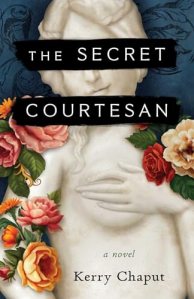
 A statue several centuries old has been discovered in Italy. The leading male art expert believes that it was created by a sculptor named Lucca Armani. He has asked Dr. Mia Harding to support his research, but Dr. Mia feels that something is amiss. Sofia Rossi is a courtesan living in Renaissance Venice who aspires to a life devoted to creating art. Sofia and Mia may be separated by centuries, but their lives and reputations are tied to this mysterious statue. Can Dr. Mia figure out the truth of the statue before her time runs out? Kerry Chaput tells the tale of these two remarkable women in her novel, “The Secret Courtesan.”
I would like to thank She Writes Press and Net Galley for sending me a copy of this novel. I have been reading a lot more dual timeline novels and novels set in Renaissance Italy, so when I saw the description of this book, I knew I wanted to give it a try.
Chaput begins in the modern day with Dr. Mia Harding, a struggling woman art historian, who is trying to build her own reputation in the field. She has been asked by Dr. Byron, an expert on the art by Lucca Armani to verify his research on the statue entitled The Estasi. The problem is that Dr. Mia believes that the statue was created by someone else, perhaps a woman. No one else believes her except for a stranger named Dr. Noah Beckett, who wants to help bring down Dr. Byron. They decide to research a different lead on the statue, the idea that a woman created the piece of art. This single theory will send Mia and Noah on a wild goose chase to Venice, where they find the truth about a courtesan at the risk of being arrested and chased by the mafia.
We also get to see how the statue was created in Venice in the year 1608. Sofia Rossi is a courtesan for Lord Marco, but all she wants to do is create art and sell her pieces as a woman artist, which would be an uphill battle. Her life changes when Lord Marco tells her that she has been sold to Lucca Armani. She believes that she will finally be able to live her dream, but it turns out to be a nightmare. Lucca’s wife, Caterina, is the one truly in control, and she manipulates every aspect of Sofia’s life. Sofia does find some solace in her art and in an art dealer, Antonio Bruni, but her life and her dreams come to a tragic end.
This was a gripping novel that shows what it might have been like for a female artist to prove her worth in a world of male artists in Renaissance Italy. We also get a taste of what it might feel like to be a female art historian in the modern day. Chaput made these characters so believable that there were a few times that I had to make sure that the Renaissance figures were, in fact, fictional because they were written so well. If you want a thrilling dual timeline novel about Renaissance art, I recommend you read “The Secret Courtesan” by Kerry Chaput.
 The Italian Renaissance was a time of great artwork, eccentric artists, and patrons who created these masterpieces. While the art tells a story, the artist and patron want the audience to understand, but sometimes the story of how the art came to be can be just as fascinating. One of the most famous pieces of art from the early 16th century was the ceiling of the Sistine Chapel. A stunning piece created by an artist who primarily created sculptures, and his patron was a pope who was more like a warrior. The story of how Michelangelo and Pope Julius II created an unlikely team to create this remarkable masterpiece is told in Ross King’s book, “Michelangelo and the Pope’s Ceiling.”
 Do you have a favorite painting? One that grabs your attention whenever you look at it and discover something new. Most paintings are from da Vinci, van Gogh, Rembrandt, Picasso, or Michelangelo, just to name a few. However, there is one artist that I feel doesn’t get a whole lot of attention unless you study the 16th century: Hans Holbein the Younger. While Holbein is known for his single portraits, his double portrait, known as The Ambassadors, is stunning to look at and is filled with symbolism. Tracy Borman, in collaboration with the National Gallery, has written a short book about this remarkable painting entitled “Holbein: The Ambassadors.”
 “I’ll show you what a woman can do.”
 Two independent women separated by time but united over two compelling portraits and the secrets hidden behind the paint. Mira (Miramonde) is a nun from a Renaissance convent in the Pyrenees who believes she is an orphan who wants to escape her small community and explore the world. Five hundred years later, Zari, an art scholar, begins the journey to discover who Mira is by using the clues she left behind in her works of art that will take her on a journey that will change her life forever. These two tales are woven together in the first book of the Miramonde series, “The Girl From Oto” by Amy Maroney.
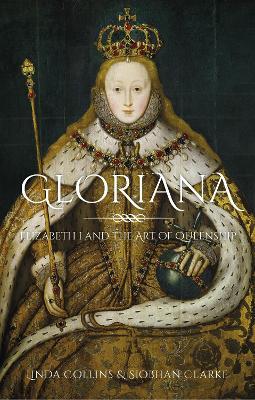 A queen locked in a struggle of being a single woman and the sole ruler of her kingdom must create the image that would help lead her divided country to a golden age. This image must comfort her people while showing strength and perseverance to her enemies who would try to take the throne from her. Elizabeth I worked hard with artists, poets, playwrights, and musicians to create the almost mythological image of “Gloriana,” the virgin goddess. Linda Collins and Siobhan Clarke explore how this image was created throughout Elizabeth’s reign in their latest book, “Gloriana: Elizabeth I and the Art of Queenship.”
 When we think of famous artists in the 15th and 16th centuries, we focus on the great European masters. Michelangelo, Leonardo da Vinci, and Albrecht Durer tend to come immediately to mind. However, one man from Augsburg, Germany, revolutionized how we viewed the Tudor dynasty through portraiture: Hans Holbein the Younger. Many are familiar with his famous works of art and how they influenced how the Tudors have been perceived for centuries, but the man behind the masterpieces has been overlooked. His story and how art was understood in the 16th century is told in Franny Moyle’s latest biography, “The King’s Painter: The Life of Hans Holbein.”
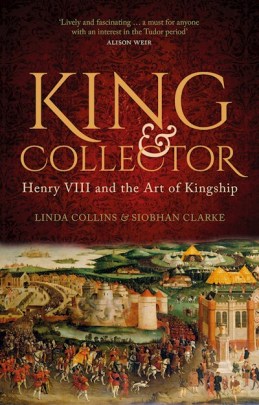 When we think of the legacy of King Henry VIII, a few descriptions come to mind—married six times, father of three children who would be the king and queens of England one day. We often see him as a man conflicted with religious changes and someone who could be tyrannical when dispatching his enemies and those closest to him. We don’t usually associate Henry VIII with a collector and patron of fine art, but his collection would help bring the Royal Collection to life. The artwork that Henry VIII commissioned and collected tells how he wanted to be viewed by the world. In “King and Collector: Henry VIII and the Art of Kingship,” Linda Collins and Siobhan Clarke peel back the layers of Tudor propaganda to show the truth about King Henry VIII and the artists who made his ideal image.
 A man ahead of his time who never finished the tasks that he was given as his mind was constantly racing, thinking of new ideas. This is what we consider a genius or a Renaissance Man today, but during Leonardo da Vinci’s time, it was just considered odd. Leonardo da Vinci was an enigma. He could make the impossible possible. His art seemed to leap off the canvas with its realism. However, there are still so many mysteries surrounding his life and his works. What made this one artist/inventor so fascinating for centuries? In her book, “The Real Leonardo da Vinci” Rose Sgueglia opens the curtain to reveal Leonardo da Vinci’s truth and inner circle.
 Adventures of a Tudor Nerd