
 Have you ever read about a historical figure and used what they went through to help you get through difficult times? It is as if you read about their life at the perfect time in your life to help you get through your own struggles. Growing up, for me, it was reading about young Elizabeth I. For Ana Garriga and Carmen Urbita, it was reading about 16th and 17th-century nuns, the ones that they were researching for their PhDs. What lessons did Garriga and Urbita find when they were researching two centuries and the nuns who lived during this period? They share the lessons that they learned from the past in their book, “Convent Wisdom: How Sixteenth-Century Nuns Could Save Your Twenty-First Century Life.”
I would like to thank Avid Reader Press/ Simon & Schuster and Net Galley for sending me a copy of this book. I am a novice when it comes to nun research, especially when it comes to those outside of England, so when I saw the title of this book, it was intriguing to me. I wanted to see how they could blend the past with the present day.
Garriga and Urbita met while working on their PhDs at Brown University, and this book follows their journeys as graduate students. They choose to pair their life experiences with those of nuns like Saint Teresa, Maria de San Jose, Catherine of Siena, Veronica Giuliani, and Sor Juana Inés de la Cruz. We get to see these nuns deal with everything from extreme diets, feats of levitation, relationships with other nuns, and entrepreneurship to keep their convents and their own legacies going.
While I appreciate what they were attempting to do, I felt like the modern portions did take away from the stories of the nuns and were a tad distracting for me. I enjoyed learning about the different types of Catholic orders of nuns and fun facts about the nuns. I also enjoyed learning about the authors experiences as graduate students. When the separate elements were put together, it did not work as well as I had hoped in this book.
Overall, this was a decent book. A bit too modern for my taste when it comes to a historical nonfiction book, but that is just a personal preference. I do want to check out their podcast, Las hijas de Felipe, and I want to learn more about some of the nuns mentioned in this book. If you want a self-help book with advice from the past that has a modern twist, I recommend you read “Convent Wisdom: How Sixteenth-Century Nuns Could Save Your Twenty-First Century Life” by Ana Garriga and Carmen Urbita.
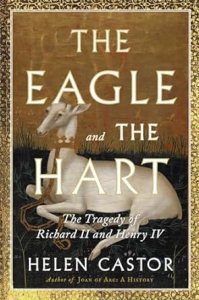 The story of the Plantagenets is filled with high triumphs and devastating tragedies. It is a story of families torn apart for a crown and the desire to either rule with an iron fist for the glory of England or live a life of luxury at the expense of their citizens. The story explored in this particular book is the tale of two cousins born months apart, Richard of Bordeaux and Henry Bolingbroke. Richard and Henry were not born to become King of England, but Fortune’s Wheel had a different plan for the cousins. So how did these cousins become kings and how did their tale turn to tragedy not only for their relationship but for all of England? Helen Castor tells the tale of these two Plantagenet kings in her latest book, “The Eagle and the Hart: The Tragedy of Richard II and Henry IV.”
 Adventures of a Tudor Nerd