 Also known as Richard Plantagenet. (Born September 21, 1411- Died December 30, 1460). Son of Richard Earl of Cambridge and Anne Mortimer. Married to Cecily Neville. Father of Anne, Duchess of Exeter, Edward IV, King of England, Edmund, Earl of Rutland, Elizabeth, Duchess of Suffolk, Margaret, Duchess of Burgundy, George, Duke of Clarence, and Richard III, King of England. Richard Duke of York was the one who became Lord Protector to Henry VI, but when he didn’t get the respect he thought he deserved, challenged the king and claimed that he should be king, and started the Wars of the Roses.
Richard of York was born on 21 September 1411. He was the son of Richard, 3rd Earl of Cambridge, by his wife Anne de Mortimer, the daughter of Roger Mortimer, 4th Earl of March. Anne Mortimer was the great-granddaughter of Lionel, Duke of Clarence, the second surviving son of King Edward III. After the death in 1425 of Anne’s brother Edmund, the 5th Earl of March, this supplied Richard, of the House of York, with a claim to the English throne that was, under English law, arguably superior to that of the reigning House of Lancaster, descended from John of Gaunt, the third son of King Edward III. On his father’s side, Richard had a claim to the throne in a direct male line of descent from his grandfather Edmund, 1st Duke of York, fourth surviving son of King Edward III and founder of the House of York. Richard’s claim through his mother made him more eligible to be king than Henry VI, thus he adopted the last name “Plantagenet” in 1448 to mark his claim to the throne.
Richard’s mother is said to have died giving birth to him and his father was executed in 1415 for his part in the Southampton plot that tried to remove Henry V from the throne and replace him with Edmund Mortimer. His father’s titles were forfeited, but not attainted, which meant that Richard at 4 years old, became his father’s heir. A few months later, Richard’s uncle Edward of Norwich, 2nd Duke of York, was slain at the Battle of Agincourt on October 25, 1415. Henry V decided to give the lands of the Duchy of York to Richard.
Richard was an orphan and he was considered property of the crown. His wardship was a very valued gift of the crown and it was granted to Ralph Neville, 1st Earl of Westmorland. Ralph Neville had a large family, 20 children who survived infancy, with many daughters who needed husbands, so in 1424, Neville betrothed Richard to his daughter Cecily Neville. On February 2, 1425, Richard was created Duke of York, after his uncle Edmund Mortimer died. In October 1425, Ralph Neville died and his widow Joan Beaufort was given the wardship of Richard, which was even more valuable since Richard was now the Duke of York. On May 19, 1426 he was knighted at St Mary de Castro in Leicester by John, Duke of Bedford, the younger brother of King Henry V. In October 1429 or earlier, Richard and Cecily were married. York was there for Henry VI’s coronation on November 6, 1430 and he was also at Henry VI’s coronation in France when he became king of France on December 16, 1431. Finally, on May 12, 1432, York was finally given full control over his estates.
York was loyal to Henry VI and the Lancasters in the beginning. He worked with John Duke of Bedford, who was the English regent in France. Bedford died in 1435 and York took on the responsibility of being governor of France and Normandy from 1436 to 1437 and 1440 to 1445. At this time, York was neutral in politics, but he seemed to have sided with Humphrey Duke of Gloucester in the idea of continuing the war with France. York wanted to apart of Henry VI’s council, but he was not allowed. On his return to England in 1450 York was seen as the opponent of the Duke of Somerset. He was as popular as Somerset was not and York had powerful allies in the Nevilles. In 1451, there was a claim in Parliament that York should be the next heir to the throne because the king did not have a son. This claim was not taken seriously and the one who proposed this was imprisoned.
In 1452, York declared that he wanted to be the next heir to the throne so he summoned an army to march on London. It didn’t go well and York was placed on house arrest for two weeks and then he was forced to give an oath of allegiance to the king and promised that if he did want to pursue his claim, he would do it in a legal manner.
In the summer of 1453, York had lost all hope of becoming king and changing the government for the better as Margaret of Anjou became pregnant and the king’s half brother Edmund Tudor married Margaret Beaufort. Then in August of 1453, Henry VI had his first bout with mental illness reared its ugly head. He heard about the Battle of Castillon in Gascony, which ended the English hopes of winning the Hundred Years’ War, sending him into an unresponsive state. The Council decided to elect York as Lord Protector and one of the first things he did was to have Somerset arrested and placed in the Tower. In October of the same year, the son of Henry VI and Margaret of Anjou, Edward of Westminster Prince of Wales, was born dashing York’s chances of becoming the heir by peaceful means. York remained Lord Protector until 1455 when Henry VI recovered. Henry VI released Somerset and basically reversed every decision that York had made while he was Protector. This was the last straw for York.
York and his Neville allies, including Richard Neville, Duke of Warwick, marched to St. Albans where they faced off against Somerset and the Lancastrian forces that supported the king. Somerset was killed during the First Battle of St Albans on May 22, 1455, and shortly after, the king had another bout of mental illness. York was declared Lord Protector yet again, but was removed from his post when the king recovered in 1456, but the king had accepted York and the Nevilles as an important part of the government. This reconciliation would not last long.
It was then that Margaret of Anjou took up her husband’s cause. She encouraged the new duke of Somerset Henry Beaufort to fight against York. The battlelines were being drawn. The Yorkists were led by Richard duke of York, Richard Neville earl of Salisbury and his son Richard Neville earl of Warwick. The Lancastrians were under Henry VI, but led by Margaret of Anjou, Somerset, and Henry Percy, third earl of Northumberland. In 1459, at the battle of Ludlow, the Lancastrians won and sent the Yorkists into hiding; however the Yorkists came back with a vengeance at the battle of Northampton.
In 1460 York officially declared his claim to the throne. After much discussion, it was agreed that after the king died, York and his sons would be the heirs to the throne, removing Edward of Westminster from the line of succession. Henry VI seemed to have been okay with this arrangement, but Margaret was beyond upset. She led the Lancastrian forces to face off against York at the battle of Wakefield on December 30, 1460. York and his son Edmund, Earl of Rutland, were killed in the battle. York was beheaded, his head was put on a spike wearing a paper crown and was displayed over Micklegate Bar at York.

 English history is filled with kings who had to fight for their crown, both at home and away in foreign lands. Men like William the Conqueror, Henry II, Henry IV, Edward IV, and Henry VII can be considered warrior kings, but one stands above them all. He only ruled for a little over nine years, but he proved his worth time and time again, especially against his French adversaries, and secured the crown of France for his young son. He was the son of Henry Bolingbroke, King Henry IV, and the grandson of John of Gaunt. He was Henry V and his story is one of the most remarkable tales in English medieval history, told masterfully in Dan Jones’ latest book, “Henry V: The Astonishing Triumph of England’s Greatest Warrior King.”
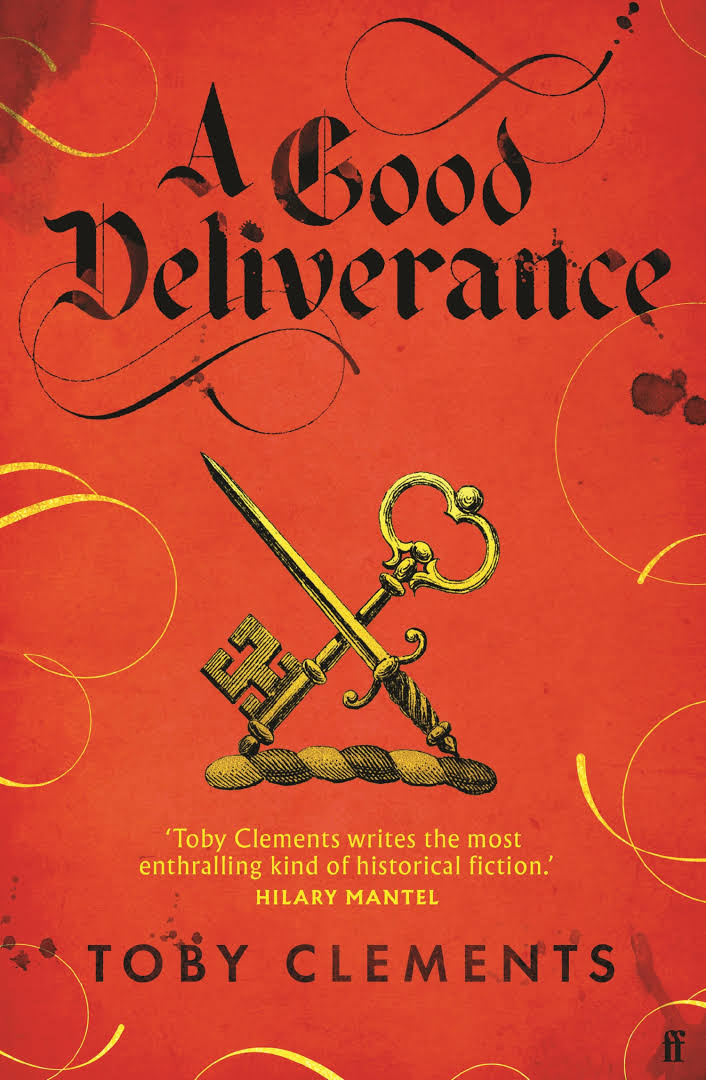 The world of King Arthur and his Knights of the Round Table is filled with stories of adventures and romance. Many authors have tried to tell these tales in a way that will allow their books to live for centuries, but none were more successful than Sir Thomas Malory and his book Le Morte Darthur. King Arthur, Lady Guinevere, Sir Lancelot, Merlin, and Sir Gawain embark on numerous adventures including the Lady of the Lake, Camelot, the sword Excalibur, and the Quest for the Holy Grail. These tales were the epitome of chivalry and valiant knights in shining armor, but the author behind them was anything but perfect. Sir Thomas Malory has had his fair share of time in a prison cell. Who was Sir Thomas Malory and why did his book about King Arthur and the Knights of the Round Table still resonate with readers centuries after it was written? In his latest novel, “A Good Deliverance,” Toby Clements hopes to reveal the truth of this famous author whose story has been overshadowed by the myths he wrote down in his legendary tome.
 There is a new film that has been getting a lot of hype lately and that is based on the story of King Henry V and the Battle of Agincourt. Starring Timothee Chalamet as the main protagonist King Henry V, “The King” on Netflix is the latest historical drama movie that has come out this year. From the trailers and the information that we learned about the film before it was released, I was really intrigued, so I decided to watch it this weekend. Since there were a lot of things I wanted to discuss, I have decided to write a sort of movie review for “The King”.
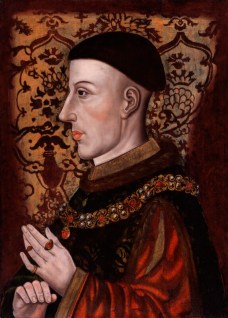 (Born September 16, 1387- Died August 31, 1422).
  Adventures of a Tudor Nerd