Book Review: “Searching for the Last Anglo-Saxon King: Harold Godwinson, England’s Golden Warrior” by Paula Lofting

We all know the story of William the Conqueror and the Norman Conquest. William claimed he was the heir of Edward the Confessor instead of his rival Harold Godwinson. Harold was seen as a villain throughout history thanks to the Norman sources, but what was the historical Harold Godwinson like? Was he a malicious usurper who had to die at the Battle of Hastings for the rightful King William I to take the throne or is there more to his story than his death? Paula Lofting scoured the archives to find the truth about this maligned man in her book, “Searching for the Last Anglo-Saxon King: Harold Godwinson, England’s Golden Warrior.”

I want to thank Paula Lofting and Pen and Sword Books for sending me a copy of this book. I will be honest I am not super familiar with the life of Harold Godwinson other than his role in the Battle of Hastings and from the book “The House of Godwin” by Michael John Key. It’s been a while since I dived into the story of the Godwin family and the Norman Conquest, so I was hoping to learn something new about Harold Godwinson.

Harold Godwinson was King of England for only nine months and nine days, but he left quite an impact. What makes him an interesting character is how he rose to the position of power to become a king. It all had to do with his family connections. Lofting lays out the origins of the Godwins, especially Harold’s father Earl Godwin. What makes the Godwin family is that Harold’s father Godwin and his brother Tostig would end up in exile or an enemy to the crown numerous times and yet it was Harold, his brother-in-law, who Edward chose to succeed him due to his loyalty and his strengths.

Then, in walks William Duke of Normandy, the illegitimate son of Robert Duke of Normandy, who not only became the new Duke of Normandy but desired the crown of England. Well, the only thing Harold could do was defend England from this invasion. Lofting goes into great detail about the multiple battles that were fought the most famous one, the Battle of Hastings, where King Harold died. She also goes into detail about the theories about where Harold Godwinson might have been buried after the battle.

As someone who is a relative novice to this subject, I found myself getting lost while reading the first half of this book which detailed the origins of the family and the drama that led Harold to the throne. It was very detailed and a real challenge for me to follow along. Once we hit the introduction of Duke William and Harold’s path to the throne, it became a better read for me. I think if you are interested in the Anglo-Saxon world, the Godwins, and the Battle of Hastings, I would recommend you read, “Searching for the Last Anglo-Saxon King: Harold Godwinson, England’s Golden Warrior” by Paula Lofting.

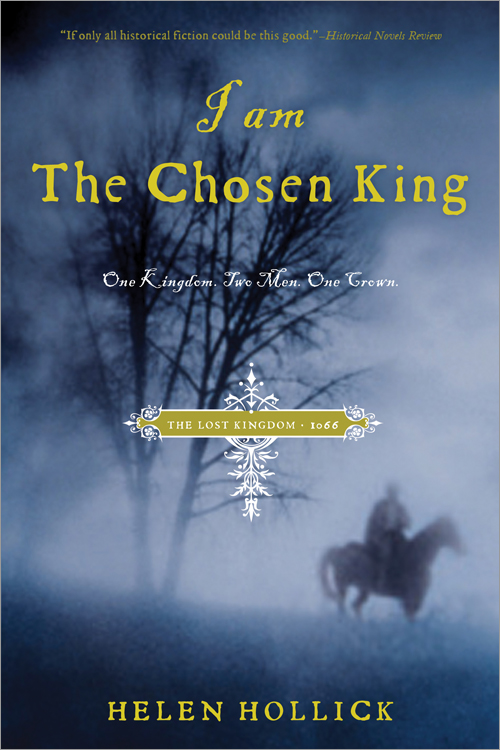
Guest Post: “Book Blast for ‘Harold the King/ I am the Chosen King’ by Helen Hollick

January Harold25YearsI am pleased to welcome Helen Hollick to share the blurb for her book, “Harold the King/ I am the Chosen King,” celebrating its 25th Publication Anniversary. I want to thank The Coffee Pot Book Club and Helen Hollick for allowing me to be part of this special blog tour.

Cover Harold The King UKBlurb: 

First published in 2000 – Celebrating a Silver Anniversary! 

The events that led to the Battle of Hastings and the Norman Conquest of England in 1066 – told from the English point of view. 

Two men. One crown. 

England, 1044. Harold Godwinesson, a young, respected earl, falls in love with an ordinary but beautiful woman. In Normandy, William, the bastard son of a duke, falls in love with power. 

In 1066 England falls vulnerable to the fate of these two men: one, chosen to be a king, the other, determined to take, by force, what he desires. Risking his life to defend his kingdom from foreign invasion, Harold II led his army into the great Battle of Hastings in October 1066 with all the honor and dignity that history remembers of its fallen heroes. 

In this beautifully crafted tale, USA Today bestselling author Helen Hollick sets aside the propaganda of the Norman Conquest and brings to life the English version of the story of the man who was the last Anglo-Saxon king, revealing his tender love, determination, and proud loyalty, all to be shattered by the desire for a crown – by one who had no right to wear it. 

Cover I Am The Chosen King USPraise for Helen Hollick:

“Helen Hollick has it all! She tells a great story, gets her history right, and writes consistently readable books” 

~ Bernard Cornwell 

“A novel of enormous emotional power” 

~ Elizabeth Chadwick 

“Thanks to Hollick’s masterful storytelling, Harold’s nobility and heroism enthrall to the point of engendering hope for a different ending…Joggles a cast of characters and a bloody, tangled plot with great skill” 

~ Publisher’s Weekly 

“Don’t miss Helen Hollick’s colorful recreation of the events leading up to the Norman Conquest.” 

~ Daily Mail 

“An epic re-telling of the Norman Conquest” 

~ The Lady 

“If only all historical fiction could be this good” 

~ Historical Novel Society Review 

Buy Links: 

Universal eBook Link, Harold The King: https://books2read.com/u/4jOdYj  

Harold the King (UK): https://viewbook.at/HaroldTheKing 

I Am the Chosen King (US): https://viewBook.at/ChosenKing 

This title is available on #KindleUnlimited, excerpt in US & Canada.

Helen Hollick (edited)Author Bio: 

First accepted for traditional publication in 1993, Helen became a USA Today Bestseller with her historical novel, The Forever Queen (titled A Hollow Crown in the UK) with the sequel, Harold the King (US: I Am The Chosen King) being novels that explore the events that led to the Battle of Hastings in 1066. Her Pendragon’s Banner Trilogy is a fifth-century version of the Arthurian legend, and she writes a nautical adventure/supernatural series, The Sea Witch Voyages. She has also branched out into the quick read novella, ‘Cosy Mystery’ genre with her Jan Christopher Mysteries, set in the 1970s, with the first in the series, A Mirror Murder incorporating her, often hilarious, memories of working as a library assistant. The fifth in the series, A Memory Of Murder, was published in May 2024. 

Her nonfiction books are Pirates: Truth and Tales and Life of a Smuggler. She is currently writing about the ghosts of North Devon and Jamaica Gold for her Sea Witch Voyages.  

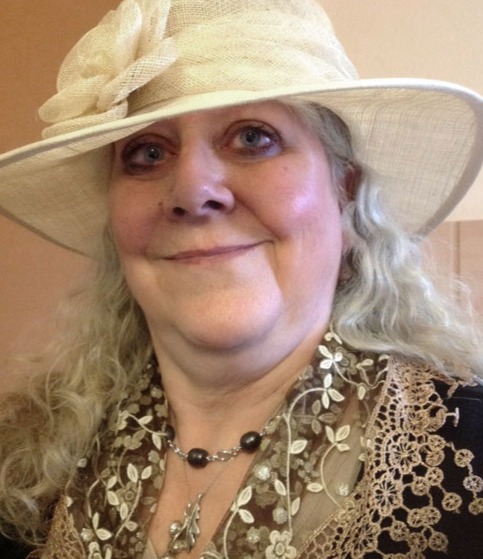
Recognized by her stylish hats, Helen tries to attend book-related events as a chance to meet her readers and social-media followers, but her ‘wonky eyesight’ as she describes her condition of Glaucoma, and severe arthritis is now a little prohibitive for travel. 

She lives with her family in an eighteenth-century farmhouse in North Devon, with their dogs and cats. On the farm, there are showjumper horses, fat Exmoor ponies, an elderly Welsh pony, geese, ducks, and hens, as well as several resident ghosts.

Author Links: 

Website: https://helenhollick.net/ 

Amazon Author Page: https://viewauthor.at/HelenHollick 

Facebook: https://www.facebook.com/helen.hollick 

Blog, supporting authors & their books: https://ofhistoryandkings.blogspot.com/ 

Bluesky: https://bsky.app/profile/helenhollick.bsky.social  

Twitter / X: https://x.com/HelenHollick 

Monthly newsletter: Thoughts from a Devonshire Farmhouse: 

Start Here: January 2024 https://ofhistoryandkings.blogspot.com/2024/01/thoughts-from-devonshire-farmhouse.html (posted on her blog)

Book Review: “Matilda: Wife of the Conqueror, First Queen of England” by Tracy Borman

MatildaOne of the most critical years in English history was 1066, when William Duke of Normandy invaded England in the Norman Conquest. Known as William the Conqueror, his strength and ruthlessness made him a legend, but William would not have been the Duke or King of England without his equally formidable wife. Matilda of Flanders stood her ground, became the Duchess of Normandy, had a large family with William, and would become the first crowned Queen of England. Although much has been written about William the Conqueror and the Norman Conquest, Matilda of Flanders has not received the same attention until now. Tracy Borman has written the first biography dedicated to this remarkable woman entitled, “Matilda: Wife of the Conqueror, First Queen of England.”

I enjoyed reading her previous book about Henry VIII and the men who made him, and I wanted to read more books by Tracy Borman. When I heard about this book, it drew me in because I did not know much about Matilda of Flanders and her time, so I wanted to learn more.

Matilda of Flanders, the daughter of Count Baldwin V of Flanders and his wife, Adela, was one of the prominent women in 9th-century Europe. Borman shows how Flanders grew from a lawless society to a significant court that drew the attention of the dukedom of Normandy. Normandy was the home of William, the illegitimate son of Duke Robert I and his mistress Herleva. William shocked Europe when he became his father’s heir as Duke of Normandy and chose Matilda as his wife. To say they had a rocky start was an understatement, but Matilda and William had a large family and solidified Normandy as a powerhouse of Europe.

With the death of Edward the Confessor, William and Matilda saw their opportunity to take a bigger prize, the crown of England. While William had the military know-how to win the crown, it was Matilda who was able to help William with his conquest financially and took care of Normandy while he was taking care of his new kingdom. In return, William had Matilda crowned Queen of England.

However, not everything was perfect for William and Matilda. When their eldest son, Robert Curthose, was fed up with not getting the chance to become the Duke of Normandy as was his birthright, he rebelled, and Matilda decided to support her son over her husband. Matilda was not afraid to speak her mind, even if it felt like she was going beyond what was expected of a woman during that time. Matilda’s death in 1083 impacted the rest of William’s reign as King of England as the king mourned for the woman who could stand toe to toe with the great conqueror.

Borman has taken on the arduous task of telling the tale of Matilda of Flanders, and she absolutely smashes it. This biography is engaging and thought-provoking, revealing who Matilda was when you remove the myths surrounding her life. If you want a delightful biography about the first crowned Queen of England, I highly suggest reading “Matilda: Wife of the Conqueror, First Queen of England” by Tracy Borman.

Book Review: “The House of Godwin: The Rise and Fall of an Anglo-Saxon Dynasty” by Michael John Key

52652202When we think of the past, especially those close to a thousand years past our current time, we tend to think about kings and conquerors who transformed the political landscape of certain countries. However, kings and conquerors would be nothing more than mere men if it was not for advisors and allies that stood by their sides or against them. For example, for nearly a century, the men and women of the House of Godwin were at the center of Anglo-Saxon politics and helped or hindered the path of those who wished to sit on the throne of England. The House of Godwin might not be a familiar family for those who are not familiar with Anglo-Saxon England before the Norman Conquest. Still, Michael John Key takes on the challenge to tell their story in his book, “The House of Godwin: The Rise and Fall of an Anglo-Saxon Dynasty.”
I want to thank Amberley Publishing for sending me a copy of this book. I have heard of the House of Godwin, but I only knew about some family members, like Earl Godwin and Harold Godwinson, who would become King Harold II. I wanted to learn more about this family and what kind of influence they held before and after the Norman Conquest.

Key begins by showing his readers how Godwin became Earl Godwin through the reigns of Swein Forkbeard, Edmund the Confessor, and King Cnut. Godwin married a Danish noblewoman named Gytha, and they would go on to have at least eight children, the eldest being a son named Swegn; Swegn was seen as the black sheep of the family and caused quite a few headaches for his father. When Cnut died, Earl Godwin helped navigate the succession squabble to get Harold Harefoot to the throne to become King Harold I.

After Harold I’s death, Godwin decided to take matters into his own hands as he proposed a marriage between Edward the Confessor and his daughter Edith. Under Edward’s reign, we see the rise of the eldest sons of Godwin, Harold, and Tostig, but we also see the Godwinson family in exile. Godwin would win his earldom back, but when news reached him that his eldest son Swegn died, he died soon afterward. Harold would become the head of the family, the chief advisor to Edward the Confessor, and eventually the king’s heir.

Since the events of Edward’s succession and Harold’s reign were the catalyst for the Norman invasion, Key spends a few chapters looking into the events that led to the monumental year of 1066. He also looks at critical battles, especially the Battle of Hastings and how they allowed William the Conqueror to become King of England. Key also examines the relationship between Harold and Tostig, which would help bring the Godwinsons crashing down.

I think Key does a decent job of diving deep into the archives as he tries to find the truth of the 11th century. There were points where it was a bit dry for me, but I did appreciate the charts and maps that he included to help illustrate the wealth and land holdings of the Godwinsons. Overall, I think it was a solid yet complex introduction to the Godwinsons and their legacy. Suppose you want to learn more about Anglo-Saxon England and one of the most influential families of that period in history. In that case, I recommend you read “The House of Godwin: The Rise and Fall of an Anglo-Saxon Dynasty” by Michael John Key.

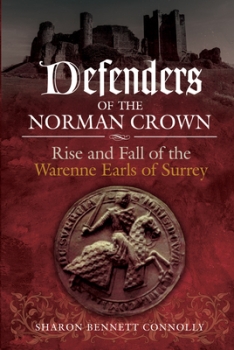
Book Review: “Defenders of the Norman Crown: The Rise and Fall of the Warenne Earls of Surrey” by Sharon Bennett Connolly

Pen & Sword Book Cover / Jacket artwork

To survive during the reigns of the Norman and Plantagenet Kings of England, one must understand where their loyalty and trust lied. Did they follow the crown or did they take a risk and follow those who opposed the person who wore the crown? For one family, there was no question who they were loyal to, which was the crown. The Warenne Earls of Surrey served the Kings of England from William the Conqueror to Edward III, gaining titles, prestige, and marriages that would cement their names in history books. They survived some of the most turbulent times in English history even if they did have a few scandals in their illustrious history. In Sharon Bennett Connolly’s latest non-fiction adventure, “Defenders of the Norman Crown: The Rise and Fall of the Warenne Earls of Surrey ”, she explores this family’s history that spanned over three centuries.

I would like to thank Pen and Sword Books and NetGalley for sending me a copy of this book. I have been a fan of Sharon Bennett Connolly’s books for a while now, so when I heard about this title, I knew I wanted to read it. I was going in a bit blind since I have never heard of the Warenne Earls of Surrey, but that is part of the fun of studying a new aspect of history.

The first Earl of Surrey, William de Warenne began this family’s tradition of royal loyalty as he joined William the Conqueror on his journey to England and fought alongside him to establish Norman rule at the Battle of Hastings. William’s descendants would be involved in some of the most important events of the time, from the crusades to the 1st and 2nd Baron’s Wars and the sealing of the Magna Carta. At some points, the earls would briefly switch sides if they thought the king was not in the best interest of the country, but they remained at the heart of English politics and worked hard to help guide the king and the country to become stronger.

What made the Warennes a tour de force when it came to noble families was their ability to marry well, except for the final earl and his scandalous relationships. The second earl desired to marry into the royal family, which did not happen, but his daughter, Ada de Warenne would marry William the Lion, King of Scotland. One of the daughters of Hamlin and Isabel de Warenne would be the mistress of King John and would give birth to his illegitimate son Richard of Chilham. The only woman of the family who inherited the earldom of Surrey, Isabel de Warenne, was married twice and so both of her husbands, William of Blois and Hamelin of Anjou, are considered the 4th earl of Surrey.

Connolly does a wonderful job explaining each story in de Warenne’s long history, including the minor branches of the family. I was able to understand the difference between family members who shared the same first name, (like William, John, and Isabel) but I know that others might have struggled with this aspect. I think it would have been helpful if Connolly had included either a family tree or a list of family members of the de Warennes at the beginning of this book to help readers who did struggle.

I found this particular title fascinating. The de Warennes were a family that proved loyalty to the crown and good marriages went a long way to cement one’s legacy in medieval England. Connolly proved that she has a passion for bringing obscure noble families to the spotlight through her impeccable research. If you want a nonfiction book of a noble family full of loyalty, love, and action, you should check out “Defenders of the Norman Crown: The Rise and Fall of the Warenne Earls of Surrey” by Sharon Bennett Connolly.