
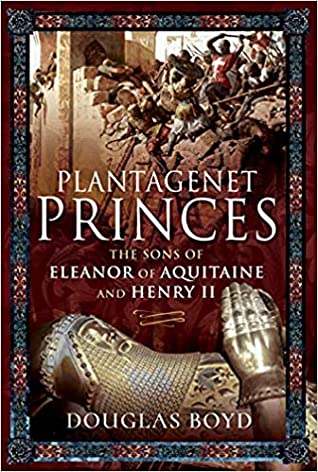
 One of the most infamous families in the history of England lasted for over three hundred years and it was filled with numerous princes that fought for their right to rule, much to the chagrin of the Tudor dynasty. The Plantagenet Dynasty was full of scandals and bloodshed, testing the core values of what it meant to be a family and rulers of an emerging country like England. This dynastic clash for power that came to define this dynasty began with Henry II and his sons by his wife Eleanor of Aquitaine. When their father refused to give the boys any true power, which was to be excepted with all princes, his sons waged war against Henry II and their brothers. The stories of these bonds and what ultimately tore them asunder are told in Douglas Boyd’s latest collection of biographies aptly titled, “Plantagenet Princes: The Sons of Eleanor of Aquitaine and Henry II”.
I would like to thank Net Galley and Pen and Sword Books for sending me a copy of this book. When I read the description of this one, I was drawn in. I am always looking for more information about this fractured family, so I decided to give this book a try.
Boyd begins by describing the lifestyles of a knight and how they went into battle, which was essential for a medieval prince. He also dived into the complicated relationship between Eleanor of Aquitaine, her first husband Louis VII of France, and her second husband Henry II. Since Eleanor did not have any make children with Louis VII, she decided to divorce him to marry the soon-to-be King Henry II of England. It is Eleanor’s children with Henry II that are remembered for their feuds. Their sons; Henry the Young King, Richard I, Geoffrey Duke of Brittany, and King John fought against one another and their father to some extent for the throne of England. I found the chapters about the sons engaging albeit short.
The big problem that I had with this particular title is that it only spent a portion of the book on the actual princes of Eleanor of Aquitaine and Henry II. I was craving more depth, more information out of these chapters, but Boyd decided to go all the way through until the crowning of Henry IV. Once he started to go onto the descendants, I will be honest that I started to find the writing a bit dry.
It is fine as an overview, but I was hoping for a bit more. Boyd also used a lot of research that has been used numerous times. He did not present any new information and reused some myths about these figures. I wanted to hear Boyd’s voice and his opinions about these figures, but it felt lost in this book.
Overall, this book is just okay. I was looking for a bit more depth with the research that focused on the sons of Eleanor of Aquitaine and Henry II, not their descendants. Boyd knows a lot about the Plantagenet dynasty, but it just fell flat for me. If you want a book that gives an overview of the Plantagenets until the coronation of Henry IV, check out “Plantagenet Princes: The Sons of Eleanor of Aquitaine and Henry II” by Douglas Boyd.
 The life of a medieval princess was not a life of luxury that we often see in fantasy films. It can be filled with lovely gowns and castles, but it can change in an instance. Take, for example, the lives of the daughters of King Edward IV and Elizabeth Woodville. One minute their father was King of England and life was comfortable; the next minute, they were in the sanctuary, hoping and praying that they would be able to be reunited with their father one day. Their lives were planned out for them when their father was alive, but when Edward IV died unexpectedly in April 1483, the princesses found their world taking another turn. We know what happened with the eldest daughter, Elizabeth of York, as she married Henry VII and became the first Tudor queen, but what about her sisters? In her second book, “The York Princesses: The Daughters of Edward IV and Elizabeth Woodville”, Sarah J. Hodder explores what happened to Elizabeth of York and her sisters once the House of York fell and the Tudors became the new dynasty.
 One of the most prominent royal families of English history was the Plantagenets, who reigned for over three hundred years. In the first one hundred years of this family’s infamous history, five kings ruled (the first two are considered kings of the Angevin dynasty): Henry II, Richard I, John, Henry III, and Edward I. These five kings saw England change drastically, but they also participated in the international political landscape of the day, which involved the series of wars that today we simply refer to as the Crusades. The early Plantagenet kings saw much bloodshed and war, but they were not alone in their struggle to keep the dynasty going. These men would not have gotten as far as they did without their wives who stood by their sides. In Alison Weir’s latest installment of England’s Medieval Queens series, “Queens of the Crusades”, she takes a deep dive into the lives of the first five Plantagenet queens to show how remarkable these women truly were to stand beside their husbands during the times of the Crusades in Europe.
 Today, I am pleased to host the final stop in the “Cesare and Lucrezia Borgia” book blog tour. I would like to thank Pen and Sword Books and Samantha Morris for allowing me to finish this delightful tour with a Q and A discussion with Samantha Morris.
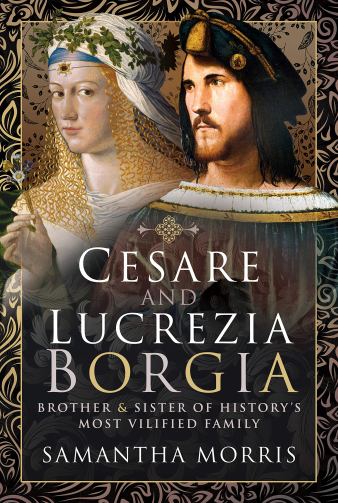 A family mired in myths and rumors of incest, murder, and intrigue for centuries. A brother and sister caught in the middle, attracting the attention of gossips and historians alike. No, I am not referring to a royal family in England. In fact, this story starts in Spain with Alonso de Borja, who moved to Italy and helped create the infamous Borgia family. Caught in the middle were the son and daughter of Rodrigo Borgia, Alonso’s nephew, and his mistress Vanozza Cattanei; Cesare and Lucrezia Borgia. How close were these famous siblings? What were their lives really like? In Samantha Morris’ latest biography, “Cesare and Lucrezia Borgia: Brother and Sister of History’s Vilified Family”, she dives deep into the archives to find out the truth about the legendary Borgia family.
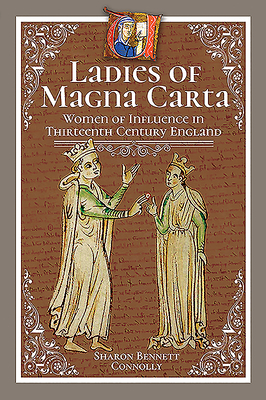 The year of 1215 marked a turning point in English history with the sealing of a rather unique document; the Charter of Liberties, or as we know it today, the Magna Carta. It was a charter from the people to a king demanding the rights that they believed that they deserved. Those who sealed it were rebel barons who were tired of the way King John was running the country, yet instead of asking for his removal, they wanted reform. The clauses mostly concerned the problems of the men who made the charter, however, three clauses dealt with women specifically. In her latest book, “Ladies of Magna Carta: Women of Influence in Thirteenth Century England”, Sharon Bennett Connolly explores the lives of the women who were directly impacted by this document.
 Adventures of a Tudor Nerd