
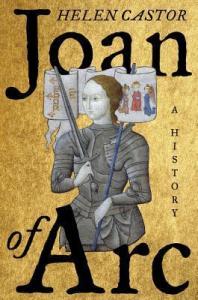
 We all believe we know the story of Joan of Arc, one of the patron Saints of France. A young peasant woman who God called to lead the dauphin to the altar to be crowned King Charles VII of France in a time of civil war between the Armagnacs and the Burgundians, as well as the continuation of the war between England and France. It was a political quagmire, but somehow, as the story goes, Joan of Arc resolved the civil war and gave France a fighting chance against the English. But what did Joan of Arc actually accomplish during her short life? Helen Castor examines the life of this extraordinary young woman in her book “Joan of Arc: A History.”
I have been following Helen Castor for a few years now, and I have heard about this book, but I have not read it until now. Since I have started studying medieval history, I have read a few accounts of Joan of Arc, but I have never read a full biography about the Maid herself, so I was excited to learn more.
To understand the reason why a single young woman who donned armor and led an army to victory, we must go back to the beginning of the conflict between the Armagnacs and the Burgundians, as well as how the English had the advantage over the French at this time in the Hundred Years’ War. France had a relatively weak King Charles VI, who suffered from mental illness. Two potential leaders emerged from the chaos: the king’s son, the dauphin, Charles VII, for the Armagnacs, and John the Fearless, Duke of Burgundy, for the Burgundians. The Burgundians were a commanding force; the Armagnacs needed a miracle, or in this case, a maiden sent by God.
Joan was seen as just a peasant girl from Domremy who heard voices. This may not seem extremely extraordinary in an age where many men and women claimed to have heard voices from God. However, what separated Joan from others before her was the fact that she donned armor and led the Armagnac army during the Orleans campaign. She was victorious and was able to have the dauphin crowned King Charles VII of France. However, her luck shortly ran out when she was captured by the English, placed on trial, and declared guilty of heresy before she was burned at the stake. Finally, Castor examines the trial to redeem Joan’s legacy and how a mere girl became a patron saint of an entire country.
I found this a very engaging and informative biography about Joan of Arc. Castor not only tells her audience the story of a girl who became an icon, but also the story of how France was broken and became whole again. If you are a fan of medieval history, you will enjoy “Joan of Arc: A History” by Helen Castor.
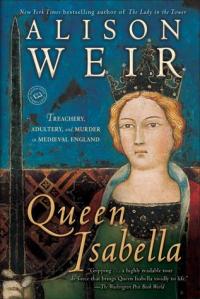 Throughout medieval English history, there have been some famous queens who left their marks. Empress Matilda, Eleanor of Aquitaine, Eleanor of Castile, Philippa of Hainault, and Margaret of Anjou each left an impression on English history, either good or bad. However, there was one queen whose negative reputation came with the nickname “She-Wolf of France,” and her name was Queen Isabella of France. The wife of Edward II and mother of Edward III, she left her husband for Roger Mortimer and overthrew her husband in favor of her son. For centuries, she has been viewed as a horrible villainess, but is that a fair assessment of her life? Alison Weir dives into the archives to find the truth about Isabella of France, and she presents her findings in her biography, “Queen Isabella: Treachery, Adultery, and Murder in Medieval England.”
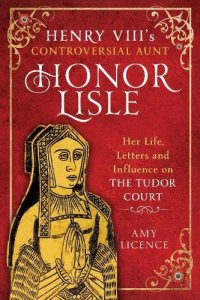 Marrying into the royal family is not all sunshine and rainbows. Of course, we tend to think about those who marry the king, the queen, the prince, or the princess. But we also need to consider the aunts and the uncles of the royals as part of the family. Take, for example, Arthur Plantagenet, the illegitimate son of Edward IV and the uncle of Henry VIII. His second wife, Honor Lisle, would help him rule Calais; however, she is best known for her letters and her devout Catholic faith during the Reformation in England. So why is Honor Lisle considered a controversial figure, and what was the cause of the fall of Honor and Arthur from the royal good graces? Amy Licence explores the life of Henry VIII’s step-aunt in the first full biography dedicated to Honor Lisle, which is entitled “Henry VIII’s Controversial Aunt, Honor Lisle: Her Life, Letters, and Influence on the Tudor Court.”
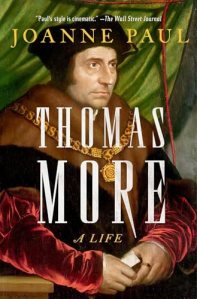 The year is 1535, and an educated scholar, father, writer, and the former Chancellor of England marches to his demise. His crime was staying silent on an issue that the King deemed extremely important: the idea that the King of England should be the Supreme Head of the Church of England, not the Pope. As a Catholic, Sir Thomas More does not agree with this decree and must die. How did one of the most prominent Tudor scholars of his age fall so quickly? Joanne Paul explores the rise and dramatic fall of this infamous Tudor figure in her latest biography, “Thomas More: A Life.”
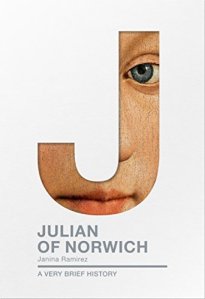 When we think about the most impactful women authors, we often think about writers like Agatha Christie, Mary Shelley, and Jane Austen. However, when it comes to religious texts, we have to go back in time centuries. We think about nuns like Bridget of Sweden and a mother of 14 children named Margery Kempe. Yet, we must include an anchorite who stayed in her cell for almost thirty years. Her book, Revelations of Divine Love, is considered the first great work of English prose, but many people are not familiar with the author until now. Janina Ramirez tells the story of Julian of Norwich and how impactful her book was in her book, “Julian of Norwich: A Very Brief History.”
 We all know the story of the last Tudor monarch, Queen Elizabeth I, who often viewed herself as a female king and who remained a virgin for her entire life. With her death, the Tudor dynasty ended, and a brand new dynasty made its mark on English history. It was a dynasty in England that the son of Elizabeth started I’s rival, Mary Queen of Scots, King James VI of Scotland. King James was not just a king, but a man in love with numerous lovers, and when he fell in love, he fell hard. Gareth Russell explores the life of King James VI/I, who ruled two nations while searching for true love in his latest book, “Queen James: A New History About the Life and Loves of Britain’s First King, James Stuart.”
 In an age when most women of power did not have much power outside their own countries, one stood higher than most. She was not even supposed to become queen, but fate had a bigger mission for the young woman: rescue Christianity from dying out. As a ruler, this seems like a monumental task to complete especially when their enemies were the Ottoman Empire and the Turks at the height of the power. There was one woman who was up to the challenge while fighting to reclaim Spain for the Christians, exploring the new world, and dealing with her family drama. Isabella of Castile is either viewed as a saintly queen or a horrible woman ruler, but what do the archives tell us about her reign? Kirstin Downey tells the story of this revolutionary queen in her biography, “Isabella: The Warrior Queen.”
 English history is filled with kings who had to fight for their crown, both at home and away in foreign lands. Men like William the Conqueror, Henry II, Henry IV, Edward IV, and Henry VII can be considered warrior kings, but one stands above them all. He only ruled for a little over nine years, but he proved his worth time and time again, especially against his French adversaries, and secured the crown of France for his young son. He was the son of Henry Bolingbroke, King Henry IV, and the grandson of John of Gaunt. He was Henry V and his story is one of the most remarkable tales in English medieval history, told masterfully in Dan Jones’ latest book, “Henry V: The Astonishing Triumph of England’s Greatest Warrior King.”
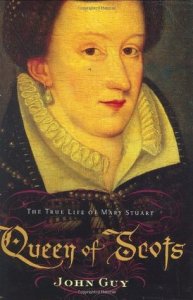 Women rulers in the past have either been praised or pushed down. They are either seen as ideal women or power-hungry villains. One such figure who suffered the worst from having her image raked through the mud for centuries was Mary Stuart, known throughout history as Mary, Queen of Scots. The Queen of Scotland who was married three times, was once the Queen of France, the mother of the future King of both England and Scotland, accused of having a hand in her second husband’s murder, plotted to overthrow Elizabeth I, and was executed for treason. Her story is well known, but what does the archival information tell us about Mary Stuart? John Guy scoured the archives to find the truth about this queen and presented his research in his biography, “Queen of Scots: The True Life of Mary Stuart.”
 Adventures of a Tudor Nerd