Guest Post: “Excerpt from ‘The Will of God’ by Julian de la Motte”

I am pleased to welcome Julian de la Motte to my blog to share an excerpt from his novel, “The Will of God.” I would like to thank The Coffee Pot Book Club and Julian de la Motte for allowing me to be part of this blog tour.

Excerpt:

And so there had been, far more than a ‘little something’ in fact. Grandesmil was carrying in his panniers documents that entitled him to vast swathes of new lands in the Cotentin, and he was carrying in his head visions of the likely reaction to William’s death of certain of his more immediate family. And thus, to Robert, his eldest son: The boy had been with the King of France for four years now. Kept on a short leash and harboured by William’s greatest enemy, a boy caught in rebellion and open defiance of his father. To Robert, then, full pardon and restitution and the bestowing of the Duchy of Normandy for himself, but no Crown of England.

And thus, to Odo, his half-brother. A man so steeped in sin and villainy and treachery that he could no longer personally enjoy his former high estate. While he languished under close but comfortable confinement for his unchurchly crimes, the bounty of Kent, his bishopric of Bayeux, and a score of other properties and estates had gone, untasted by him and savoured by others. To Odo, then, forgiveness and a return of all his former glories and previous estate. To his problematic and scandalous second son William, called Rufus for his red hair and high complexion, the great prize of the Kingdom of England itself and all that it brought, good and bad. To Henry, his youngest and avaricious son, the sum of the weight of five thousand pounds of silver, to make of it what he would.

It was ever the fate of younger sons to make of themselves what they could. That, after all, was what the wild lands of Spain, of Italy, and Sicily and the possessions of the Byzantines were for, so that determined men with horses and swords could take and make of them what they could. But the strange and cold and calculating boy would not embark upon the world empty-handed.

Blurb: 

“Deus Lo Vult!” 

Gilles is the natural son of the Earl Waltheof, executed by William the Conqueror for supposed treachery. Raised in Normandy by Queen Matilda of England, Gilles is a young servant of Robert, Duke of Normandy, when the first call for a Holy War against the infidel and the liberation of Jerusalem is raised in Christendom. Along with thousands of others, inspired by a variety of motives, intense piety mixed with a sense of adventure and the prospects of richness, Gilles becomes a key and respected follower of the Duke of Normandy and travels through France and into Italy to the point of embarkation for Constantinople and the land of the Greeks. 

In this epic first phase of a long and gruelling journey, Gilles begins to discover a sense of his strengths and weaknesses, encounters for the first time the full might and strength of the Norman war machine and achieves his much coveted aim of knighthood, as well as a sense of responsibility to the men that he must now lead into battle. 

The Will of God is the literal translation of the Latin phrase “Deus Lo Vult,” a ubiquitous war cry and a commonly offered explanation of all the horrors and iniquities unleashed by the First Crusade of 1096 to 1099, when thousands of Europeans made the dangerous and terrifying journey to the Holy Land and the liberation of Jerusalem. It is the first of two books on the subject. 

Praise for The Will of God: 

“De la Motte has superpowers as a writer of historical fiction; he’s a warhorse of a writer bred to stun and trample the literary senses. You won’t stop turning the pages of The Will of God.”  

~ Charles McNair, Pulitzer Prize nominee and author of Land O’Goshen 

Buy Link: 

Universal Buy Link:  https://geni.us/uXe6u  

Author Bio

Julian de la Motte is a Londoner. He graduated from the University of Wales with a degree in Medieval History. He was further awarded a Master of Arts qualification in Medieval English Art from the University of York.  


He studied and taught in Italy for nearly four years before returning to the U.K. and a career as a teacher, teacher trainer, and materials designer before taking up a new role as the Director of Foreign Languages and of English as a Foreign Language. 


Married and with two grown-up children, He is now extensively involved in review writing and historical research, primarily on medieval history. 


The Will of God” [the first of two books on the subject of the First Crusade] is his third novel. 

Author Links

Website: www.historiumpress.com/julian-de-la-motte  

Facebook: https://www.facebook.com/julian.delamotteharrison.3  

Amazon Author Page: https://www.amazon.com/stores/author/B08XWMRPYK  

Goodreads: https://www.goodreads.com/author/list/20873400.julian_de_la_Motte  


Book Review: “Marguerite: Hell Hath No Fury” by Judith Arnopp

I would like to thank The Coffee Pot Book Club and Judith Arnopp for sending me a copy of this novel. I have enjoyed her novels about Margaret Beaufort, so when I heard that she was writing a novel about Margaret of Anjou, I was intrigued to see what she could add to her story.

Arnopp begins with Marguerite on the verge of leaving her beloved France to become the new Queen of England. She is to be the bride of the son of King Henry V, King Henry VI. She imagines that her new husband will be similar to his father, a warrior, and that Marguerite will be able to stop the Hundred Years’ War between France and England. Instead, she is married to Henry VI, a man who is extremely devout to his faith, and lives in an England that hates Marguerite. It’s not the picture-perfect situation, but Marguerite tries to make the best of it, including falling in love not only with her husband but also with Somerset and Exeter, men loyal to her husband.

In time, Marguerite does indeed become a mother to Prince Edward, the Lancastrian heir, but it is then that her life truly begins to fall apart. A few months before, King Henry VI fell ill and remained that way for the rest of his life. Marguerite tried to become the Protector of the Realm, but the position went to Richard, Duke of York. Rivalries would turn deadly, and the Lancastrians would face the Yorkists on the battlefield. With the king incapacitated, Marguerite must be a mother, wife, queen, and general to make sure that the Lancastrian cause survives and her family can live to fight for the crown that is rightfully theirs.

This was a very good novel about a woman who was trying to keep her family and her country together while finding love. Arnopp does a great job exploring what life must have been like for Marguerite in a turbulent time. If you want a novel that explores what life was like for the Lancastrian queen during the Wars of the Roses, I recommend you read “Marguerite: Hell Hath No Fury” by Judith Arnopp. 

Blurb: 

Marguerite: Queen of England 

From the moment Henry VI’s new queen, Marguerite of Anjou, sets foot on English soil, she is despised by the English as a foreigner and blamed for the failures of the Hundred Years’ War in France. 

 Her enemies impede her role as the king’s consort, and when Henry sinks into apparent madness, her bid to become regent is rejected. Marguerite must fight, not only for her position but to maintain Henry’s possession of the crown.  

The ambitious Duke, Richard of York, seizes control of the country, thrusting Marguerite aside and inflating the mutual hatred between the houses of York and Lancaster. But the queen refuses to relinquish power and fights determinedly for the rights of her son, Edward of Lancaster. 

The long and bitter civil conflict, which come to be known as the War of the Roses, commences. 

Buy Link: 

Universal Buy Link: https://mybook.to/mhhnf  

This title is available to read on #KindleUnlimited. 
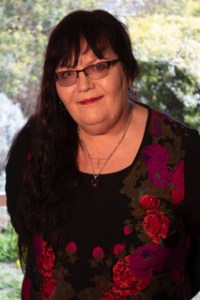
Author Bio

A lifelong history enthusiast and avid reader, Judith holds a BA in English / Creative Writing and a Master’s in Medieval Studies. She lives on the coast of West Wales, where she writes both fiction and non-fiction. She is best known for her novels set in the Medieval and Tudor period, focusing on the perspective of historical women, but recently she has written a trilogy from the perspective of Henry VIII himself. 

Judith is also a founder member of a re-enactment group called The Fyne Companye of Cambria, which is where and why she began to experiment with sewing historical garments. She now makes clothes and accessories both for the group and others. She is not a professionally trained sewer but, through trial, error, and determination, has learned how to make authentic-looking, if not strictly historically accurate, clothing. A non-fiction book about Tudor clothing, How to Dress like a Tudor, was published in 2023 by Pen and Sword. 

She runs a small seaside holiday let in Aberporth and when she has time for fun, likes to garden and restore antique doll’s houses. You can find her on most social media platforms. 

Her novels include: 

A Song of Sixpence: The Story of Elizabeth of York 

The Beaufort Chronicle: the life of Lady Margaret Beaufort (three-book series) 

The Henrician Chronicle: comprising: 

A Matter of Conscience: Henry VIII, the Aragon Years (Book One of The Henrician Chronicle) 

A Matter of Faith: Henry VIII, the Days of the Phoenix (Book Two of The Henrician Chronicle) 

A Matter of Time: Henry VIII, the Dying of the Light (Book Three of The Henrician Chronicle) 

The Kiss of the Concubine: A Story of Anne Boleyn 

The Winchester Goose: at the court of Henry VIII 

Intractable Heart: The Story of Katheryn Parr 

Sisters of Arden: on the Pilgrimage of Grace 

The Heretic Wind: The Life of Mary Tudor, Queen of England 

Peaceweaver 

The Forest Dwellers 

The Song of Heledd 

The Book of Thornhold 

A Daughter of Warwick: The Story of Anne Neville, Queen of Richard III 

Marguerite: Hell Hath no Fury! 

Author Links

Website: http://www.judithmarnopp.com/ 

Blog: http://www.juditharnoppnovelist.blogspot.co.uk/  

Twitter / X: https://twitter.com/JudithArnopp  

Facebook: https://www.facebook.com/thetudorworldofjuditharnopp  

Instagram: https://www.instagram.com/tudor_juditharnopp/  

Threads: https://www.threads.net/@tudor_juditharnopp  

Bluesky: https://bsky.app/profile/jarnopp.bsky.social  

Pinterest: https://www.pinterest.co.uk/jarnopp/  

Book Bub: https://www.bookbub.com/profile/judith-arnopp  

Amazon Author Page: http://author.to/juditharnoppbooks  

Goodreads: https://www.goodreads.com/author/show/4088659.Judith_Arnopp  

Guest Post: “Spotlight for ‘A Shape on the Air’ by Julia Ibbotson”

Today, I am pleased to welcome Julia Ibbotson back to my blog to share a blurb for her novel, “A Shape on the Air.” I would like to thank The Coffee Pot Book Club and Julia Ibbotson for allowing me to participate in this blog tour. 
Blurb: 

Can echoes of the past threaten the present? They are 1500 years apart, but can they reach out to each other across the centuries? One woman faces a traumatic truth in the present day. The other is forced to marry the man she hates as the ‘dark ages’ unfold.

How can Dr Viv DuLac, medievalist and academic, unlock the secrets of the past?  

Traumatised by betrayal, she slips into 499 AD and into the body of Lady Vivianne, who is also battling treachery. Viv must uncover the mystery of the key that she unwittingly brings back with her to the present day, as echoes of the past resonate through time. But little does Viv realise just how much both their lives across the centuries will become so intertwined. And in the end, how can they help each other across the ages without changing the course of history? For fans of Barbara Erskine, Pamela Hartshorne, Susanna Kearsley, and Christina Courtenay. 

Buy Link:  

Universal Buy Link: https://myBook.to/ASOTA 

This title is available to read on #KindleUnlimited. 

Author Bio

Julia Ibbotson is fascinated by the medieval world and the concept of time. She is the author of historical mysteries with a frisson of romance. Her books are evocative of time and place, well-researched and uplifting page-turners. Her current series focuses on early medieval time-slip/dual-time mysteries.  

Julia read English at Keele University, England, specialising in medieval language/literature/history, and has a PhD in socio-linguistics. After a turbulent time in Ghana, West Africa, she became a school teacher, then a university academic and researcher. Her break as an author came soon after she joined the RNA’s New Writers’ Scheme in 2015, with a three-book deal from Lume Books for a trilogy (Drumbeats) set in Ghana in the 1960s. 

She has published five other books, including A Shape on the Air, an Anglo-Saxon timeslip mystery, and its two sequels, The Dragon Tree and The Rune Stone. Her latest novel is the first of a new series of Anglo-Saxon dual-time mysteries, Daughter of Mercia, where echoes of the past resonate across the centuries.  

Her books will appeal to fans of Barbara Erskine, Pamela Hartshorne, Susanna Kearsley, and Christina Courtenay. Her readers say: ‘Julia’s books captured my imagination’, ‘beautiful storytelling’, ‘evocative and well-paced storylines’, ‘brilliant and fascinating’, and ‘I just couldn’t put it down’. 

Author Links

Website: https://juliaibbotsonauthor.com 

Twitter / X: https://twitter.com/@juliaibbotson 

Facebook: https://www.facebook.com/JuliaIbbotsonauthor 

Instagram: https://www.instagram.com/julia.ibbotson 

Bluesky:  https://bsky.app/profile/juliaibbotson.bsky.social 

Pinterest: https://www.pinterest.co.uk/juliai1 

Amazon Author Page: https://Author.to/JuliaIbbotsonauthor 

Goodreads: https://goodreads.com/juliaibbotson 


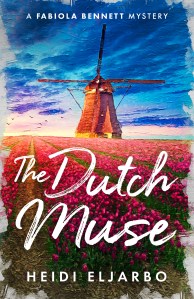
Guest Post: “Spotlight for ‘The Dutch Muse’ by Heidi Eljarbo”

I am pleased to welcome Heidi Eljarbo to my blog today to share the blurb for her novel, “The Dutch Muse.” I would like to thank The Coffee Pot Book Club and Heidi Eljarbo for allowing me to participate in this blog tour. 

Blurb: 

 A ruthless thief leaves a private Dutch gallery with a coveted seventeenth-century painting. The owner lies unconscious on the floor. Art historian Fabiola Bennett, on vacation in Holland, takes on the case. 

 Amsterdam, 1973.
It’s late summer, and Fabiola and Pippa join their friend, Cary, for a few days of sightseeing, museums, and riding bikes around the beautiful city. 

 For the first time in her life, Fabiola feels a pang of jealousy, and rude comments from a gallerist make her doubt her abilities

Then, unexpectedly, Cary’s Dutch client, Lennard van de Hoek, is brutally struck down, and a baroque portrait by Ferdinand Bol is stolen. Fabiola pushes aside her problems and jumps into danger without hesitation. The list of suspects is long, and with a cold-blooded criminal at large, they must constantly be on the alert. 

Amsterdam, 1641.
Ferdinand Bol has completed his five-year training with Master Rembrandt van Rijn and is ready to set up his own studio. The future looks bright, and Ferdinand sets a goal to become a widely sought-after and, hopefully, prosperous master portraitist. 

 
Just when Ferdinand’s career starts to flourish—and patrons and customers discover his exceptional talent—one of his models confesses she’s in deep trouble, and he drops everything to help her. 


This is a fast-paced and captivating who-done-it set in the Netherlands—the fourth installment and a spin-off from the Soli Hansen Mysteries. 


Buy Link:  

Universal Buy Link: https://books2read.com/u/brLY5k  

This title is available to read on #KindleUnlimited. 

Forfatter Heidi Morell Andersen (61) selger sine norske romaner på amerikanske Amazon.

Author Bio:  

HEIDI ELJARBO grew up in a home full of books, artwork, and happy creativity. She is the author of historical novels filled with courage, hope, mystery, adventure, and sweet romance during challenging times. She’s been named a master of dual timelines and often writes about strong-willed women of past centuries. 


After living in Canada, six US states, Japan, Switzerland, and Austria, Heidi now calls Norway home. She lives with her husband on a charming island and enjoys walking in any kind of weather, hugging her grandchildren, and has a passion for art and history.  


Her family’s chosen retreat is a mountain cabin, where they hike in the summer and ski the vast white terrain during winter. 


Heidi’s favorites are her family, God’s beautiful nature, and the word whimsical. 


Author Links: 


Website: https://www.heidieljarbo.com/ 

Twitter: https://x.com/HeidiEljarbo  

Facebook: https://www.facebook.com/authorheidieljarbo/ 

Instagram: https://www.instagram.com/authorheidieljarbo/ 

Pinterest: https://no.pinterest.com/heidieljarbo/ 

Book Bub: https://www.bookbub.com/profile/heidi-eljarbo 

Amazon Author Page: https://amazon.com/author/heidieljarbo 

Goodreads: https://www.goodreads.com/author/show/16984270.Heidi_Eljarbo 

Newsletter: https://www.heidieljarbo.com/newsletter 

Guest Post: “Spotlight for ‘Bess-Tudor Gentlewoman’ by Tony Riches

I am pleased to welcome Tony Riches to my blog to share a blurb for his latest novel, “Bess-Tudor Gentlewoman.” I would like to thank Tony Riches and The Coffee Pot Book Club for allowing me to participate in this blog tour. 

Blurb: 

Bess Throckmorton defies her notorious background and lack of education to become Queen Elizabeth’s Gentlewoman and trusted confidante. 

Forced to choose between loyalty and love, duty and desire, will she risk her queen’s anger by marrying adventurer Sir Walter Raleigh without permission? 

Entangled in a web of intrigue, from the glittering Palace of Whitehall to the cells of the Tower of London, Bess endures tragedy and injustice, becoming a resilient, determined woman who takes nothing for granted. 

Can she outwit her enemies, protect her family, and claim her destiny in a world where women are pawns and survival is a game of deadly consequences? 

This is the true story of the last of the Elizabethans, which ends the story of the Tudor dynasty – and introduces their successors, the Stuarts. 

Buy Link: 

Universal Buy Link: https://mybook.to/BESS  

This title is available to read on #KindleUnlimited. 

Author Bio: 

Tony Riches is a full-time UK author of Tudor historical fiction. He lives with his wife in Pembrokeshire, West Wales, and is a specialist in the lives of the early Tudors. 

As well as his Elizabethan series, Tony’s historical fiction novels include the best-selling Tudor trilogy and his Brandon trilogy (about Charles Brandon and his wives). 

For more information about Tony’s books, please visit his website, and his blog, The Writing Desk, and find him on social media. 

Author Links

Website: https://www.tonyriches.com/  

Blog: http://tonyriches.blogspot.co.uk/  

Twitter / X: https://twitter.com/tonyriches  

Facebook: https://www.facebook.com/tonyriches.author/  

Instagram: https://www.instagram.com/tonyriches.author/  

Bluesky: https://bsky.app/profile/tonyriches.bsky.social  

Amazon Author Page: https://www.amazon.co.uk/stores/Tony-Riches/author/B006UZWOXA  

Goodreads: https://www.goodreads.com/author/show/5604088.Tony_Riches  


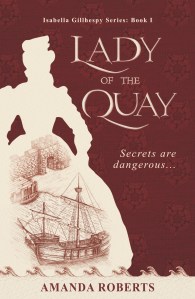
Guest Post: “Snippet from ‘Lady of the Quay’ by Amanda Roberts”

Eating alone at the vast table, which could seat a dozen people with ease, did nothing to improve my attitude or my mood, and I vowed that unless I was entertaining, I would take my meals in my closet from now on. Yes, I had to try to think of it as my closet now. I retired there after I had eaten, and although I relished the silence, I was not yet comfortable with the void that my father’s absence left in the space. With the shutters closed to deny the outside world, I settled by the fire and tried to cocoon myself in memories of him, but I could no longer trust my own mind. To keep secrets had not been in his nature, and yet that is what he had done. And these were not just any old secrets; they were big, black, ugly ones. How was I supposed to reconcile the man I thought I had known so well with the person I was now discovering? He had been the pivot of my existence for most of my life, my moral and spiritual guide, and a person respected by all who knew him, but who was he really? 

Blurb: 

Knowing she is innocent is easy … proving it is hard. 

1560, Berwick-upon-Tweed, northern England 

Following the unexpected death of her father, a series of startling discoveries about the business she inherits forces Isabella Gillhespy to re-evaluate everything she understands about her past and expects from her future. 

Facing financial ruin, let down by people on whom she thought she could rely, and suspected of crimes that threaten her freedom, Isabella struggles to prove her innocence. 

But the stakes are even higher than she realises. In a town where tension between England and her Scottish neighbours is never far from the surface, it isn’t long before developments attract the interest of the highest authority in the land, Sir William Cecil, and soon Isabella is fighting, not just for her freedom, but her life. She must use her wits and trust her own instincts to survive. 

Lady of the Quay introduces an enticing new heroine who refuses to be beaten, even as it becomes clear that her life will never be the same again. 

From the author of the award-winning ‘The Woman in the Painting’. 

Buy Link: 

Universal Buy Link: https://books2read.com/u/317rQa  

This title is available to read on #KindleUnlimited. 

Author Bio: 

Amanda Roberts has worked as an Editor in business-to-business magazines for over 30 years, specialising in out-of-home coffee, vending and foodservice/catering, including Editor of the global gastronomy title: ‘Revue internationale de la Chaîne des Rôtisseurs’. 

She currently freelances, editing UK-based healthcare titles – HEFMA Pulse, Hospital Food + Service and Hospital Caterer. She is a member of the Society of Authors, the Historical Novel Society and West Oxfordshire Writers. She also volunteers for Tea Books (part of Age UK) to run a book club/reading group for elderly people in the community. 


Author Links: 


Website: https://amandarobertsauthor.co.uk/  

Facebook: https://www.facebook.com/profile.php?id=100095191090333  

Instagram: https://www.instagram.com/amanda_roberts_author/  

Book Bub: https://www.bookbub.com/books/lady-of-the-quay-isabella-gillhespy-series-book-1-by-amanda-roberts  

Amazon Author Page: https://www.amazon.com/stores/Amanda-Roberts/author/B00N0RQBAI   

Goodreads: https://www.goodreads.com/book/show/231816264-lady-of-the-quay  

Guest Post: “Elizabeth I as a Femme Sole” by Janet Wertman

Today, I am pleased to welcome Janet Wertman to my blog as part of the blog tour for her latest novel, Nothing Proved. I would like to thank The Coffee Pot Book Club and Janet Wertman for allowing me to be part of this blog tour.

In Nothing Proved, I had the opportunity to explore the origin stories of many of Elizabeth Tudor’s attitudes and beliefs. I was especially interested in showing the experiences that made her suspicious of marriage, and there were (of course!) many, some of which she observed and some of which she actually experienced. The specter of a mate for whom she had no attraction (or for whom attraction had passed), the imputation of guilt from a husband’s treason, the shame of infidelity and indifference, these were all giants. But there was another important factor: the inevitable loss of autonomy and personal agency.  


It might have been different had she never experienced control herself, but in 1549, she was given the rare opportunity to run her household as a femme sole, an unmarried woman answerable to no one but the monarch. She was able to experience a level of leadership that women could achieve only as widows pursuing their deceased husbands’ business. Unlike widows, Elizabeth had to face the added challenge of building her fief from scratch. And found she excelled. 


This gave Elizabeth a bit of a “test run” of her reign. She learned how to arrange business and finances, how to hire and manage the people around her. She learned about different trades, she spoke to a wide variety of people with a full range of stations and religious beliefs. She had the chance to be sole arbiter, and it is hard to give up such power. 


This obviously will come up in the second book in the series, What Love E’er Meant, which will focus on her marital choices. And while that will be a standalone story, I jumped at the chance to show in real time the experiences that would influence her later actions. 

Blurb: 

Danger lined her path, but destiny led her to glory…  

 Elizabeth Tudor learned resilience young. Declared illegitimate after the execution of her mother Anne Boleyn, she bore her precarious position with unshakable grace. But upon the death of her father, King Henry VIII, the vulnerable fourteen-year-old must learn to navigate a world of shifting loyalties, power plays, and betrayal.  

 After narrowly escaping entanglement in Thomas Seymour’s treason, Elizabeth rebuilds her reputation as the perfect Protestant princess – which puts her in mortal danger when her half-sister Mary becomes Queen and imposes Catholicism on a reluctant land. Elizabeth escapes execution, clawing her way from a Tower cell to exoneration. But even a semblance of favor comes with attempts to exclude her from the throne or steal her rights to it through a forced marriage.   

Elizabeth must outwit her enemies time and again to prove herself worthy of power. The making of one of history’s most iconic monarchs is a gripping tale of survival, fortune, and triumph. 

Buy Links: 

Universal Buy Link: https://books2read.com/u/bM8Vrk  

Additional Buy Links: 

Barnes & Noble: 

https://www.barnesandnoble.com/w/nothing-proved-janet-wertman/1146831389 

Kobo: 

https://www.kobo.com/us/en/ebook/nothing-proved 

Apple: 

https://books.apple.com/us/book/nothing-proved/id6740549129 

Author Bio

By day, Janet Wertman is a freelance grantwriter for impactful nonprofits. By night, she writes critically acclaimed, character-driven historical fiction – indulging a passion for the Tudor era she had harbored since she was eight years old and her parents let her stay up late to watch The Six Wives of Henry VIII and Elizabeth R.  

Her Seymour Saga trilogy (Jane the Quene, The Path to Somerset, The Boy King) took her deep into one of the era’s central families – and now her follow-up Regina series explores Elizabeth’s journey from bastard to icon. 

Janet also runs a blog (www.janetwertman.com) where she posts interesting takes on the Tudors and what it’s like to write about them. 

Author Links

Website:

https://janetwertman.com 

Facebook:

https://www.facebook.com/janetwertmanauthor/

LinkedIn:

https://www.linkedin.com/in/janet-ambrosi-wertman-b5531aa/

Instagram:

https://www.instagram.com/janetwertman/

Bluesky:

https://bsky.app/profile/janetwertman.bsky.social


Pinterest:

https://www.pinterest.com/janetwertman


Book Bub:

https://www.bookbub.com/profile/janet-wertman


Amazon Author Page:

https://www.amazon.com/stores/Janet-Wertman/author/B01CUSMWFA


Goodreads:

https://www.goodreads.com/author/show/2028387.Janet_Ambrosi_Wertman


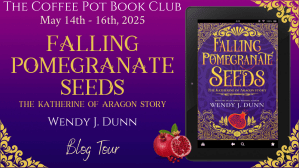
Guest Post: “Snippet from ‘The Duty of Daughters’ by Wendy J. Dunn

I am pleased to welcome Wendy J. Dunn to my blog today to share a snippet from her novel “The Duty of Daughters” as part of the blog tour for her omnibus “Falling Pomegranate Seeds Duology.” I would like to thank Wendy J. Dunn and The Coffee Pot Book Club for allowing me to be part of this blog tour.

Snippet:

“Josefa, you mistake my meaning.” Beatriz stared at the coverlet of Josefa’s bed. “All of us must walk our own roads, but ’tis wrong to prevent women from walking so many roads just because we’re women. Even Plato said, ‘Nothing can be more absurd than the practice of men and women not following the same pursuits with all their strengths and with one mind, for thus, the state instead of being whole is reduced to half.’ I so agree. Our world cuts off its nose to spite its own face by insisting the only purpose for women is to bear children and perpetuate the human race, as also said Plato. Surely ’tis far too hard a view to forever blame women for Eve’s sin.”

Blurb: 

In the Falling Pomegranate Seeds Duology, readers are transported to the rich historical tapestry of 15th and 16th-century Europe, where the lives of remarkable women unfold against the backdrop of political upheaval and personal struggles.  

In the first book, beginning in 1490, Castile, Doña Beatriz Galindo, a passionate and respected scholar, serves as an advisor to Queen Isabel of Castile. Beatriz yearns for a life beyond the constraints imposed on women, desiring to control her own destiny. As she witnesses the Holy War led by Queen Isabel and her husband, King Ferdinand of Aragon, Beatriz dedicates herself to guiding Queen Isabel’s youngest child, Catalina of Aragon, on her own path. Beatriz’s role as a tutor and advisor becomes instrumental in shaping Catalina’s future as she prepares to become England’s queen.  

Fast forward to the winter of 1539 in the second book, where María de Salinas, a dear friend and cousin of Catalina (now known as Katherine of Aragon), pens a heartfelt letter to her daughter, the Duchess of Suffolk. Unable to make the journey from her London home due to illness, María shares her life story, intricately woven with her experiences alongside Catalina. Their friendship has endured through exile and tumultuous times. María seeks to shed light for her daughter on the choices she has made in a story exploring themes of friendship, betrayal, hatred, and forgiveness. Through María’s narrative, the eternal question Will love ultimately triumph? 

Buy Link: 

Universal Buy Link: https://books2read.com/u/bax5n6  

Author Bio: 

Wendy J. Dunn is an award-winning Australian writer fascinated by Tudor history – so much so, she was not surprised to discover a family connection to the Tudors, not long after the publication of her first Anne Boleyn novel, which narrated the Anne Boleyn story through the eyes of Sir Thomas Wyatt, the elder.  

Her family tree reveals the intriguing fact that one of her ancestral families – possibly over three generations – had purchased land from both the Boleyn and Wyatt families to build up their own holdings. It seems very likely Wendy’s ancestors knew the Wyatts and Boleyns personally. 

Author Links

Website: www.wendyjdunn.com  

Facebook: https://www.facebook.com/authorwendyjdunn 

Instagram: https://www.instagram.com/wendyjdunnauthor/  

Threads: https://www.threads.net/@wendyjdunnauthor  

Book Bub: https://www.bookbub.com/profile/wendy-j-dunn  

Amazon Author Page: https://www.amazon.com/stores/author/B004FRTZFA  

Goodreads: https://www.goodreads.com/author/show/197156.Wendy_J_Dunn

Guest Post: “What was Life Like in ‘Northwick Priory’” by Carolyn Hughes

I am pleased to welcome Carolyn Hughes to my blog to share a guest post about her latest novel, Sister Rosa’s Rebellion. I would like to thank Carolyn Hughes and The Coffee Pot Book Club for allowing me to participate in this blog tour. 
The principal location for Sister Rosa’s Rebellion, the latest novel in my Meonbridge Chronicles series, set in medieval Hampshire, is a priory of nuns, although important plot threads in the novel are also, of course, still set in the community of fictional Meonbridge itself.  

However, the central focus of the storyline is the young woman who left Meonbridge at the end of the First Meonbridge Chronicle, Fortune’s Wheel, to become a nun in Northwick Priory. That young woman was Johanna de Bohun, the daughter of the lord and lady of Meonbridge, Sir Richard and Lady Margaret. The shameful motivation behind Johanna’s decision to sequester herself in the priory as Sister Rosa is the primary thread in the story of Sister Rosa’s Rebellion. For when, after fifteen years of contentment, Rosa’s life in the priory is turned upside down, the reason she became a nun is threatened to be revealed. 


In this post, I thought I’d share something of the background I’ve drawn upon to paint the picture of life for Sister Rosa and her sister nuns, discussing how I came up with my vision of Northwick Priory, and something of the daily pattern of life inside it. 


Northwick Priory is fictional, but, in my mind, it’s sited more or less where the real monastery of Southwick once stood, about nine miles from “Meonbridge” and six miles north of Portsmouth. In medieval times, Southwick Priory was reasonably well-endowed, with many manors, and was also a place of pilgrimage, until it was closed during Henry VIII’s Dissolution of the monasteries. But “Northwick” is relatively poor. Not struggling, as long as the prioress and treasuress can keep on top of their finances, but sufficiently close to the edge that a profligate prioress could easily bring the place to ruin… 


Not knowing already how a medieval priory might be laid out, I searched for examples online and found Cleeve Abbey, a ruin in Somerset, destroyed in the Dissolution, that is managed by English Heritage. Cleeve was a monastery, not a nunnery, but, in principle, the layout for both would, or could, be similar. Luckily for me, there’s a plan of the abbey on its web page, which I’ve used very loosely as the model for Northwick. 


As at Cleeve, Northwick has two floors, with the more private chambers upstairs and the “day” rooms downstairs. The dorter (the dormitory) is upstairs, with a flight of night stairs leading directly down to the chapel, making it easier for the nuns to access the chapnighttime night time offices. All the sisters, including the prioress, were supposed to sleep in the dorter, although, in Sister Rosa’s Rebellion, the fact that the prioress doesn’t is a matter for great concern! 


I imagine the dorter essentially as a long chamber furnished with rows of beds. Privacy wasn’t usual in any medieval environment, even in the grand homes of the gentry. Nonetheless, I’ve introduced a design aspect to Northwick’s dorter that was almost certainly not common in nunneries or monasteries: the inclusion of “cells” within the dorter chamber. I’ve read that, occasionally, the dorter might be partitioned into cells or cubicles, and it suited my purpose for the story of Sister Rosa’s Rebellion to allow this arrangement in Northwick. However, I’ve imagined Northwick’s cubicles as being separated by the flimsiest of partitions, so all the snuffling and snoring noises of the night-time dormitory would still intrude, even if each nun did enjoy a modicum of privacy. It was apparently really rare for a priory to have cells, in the sense of separate chambers, for monks or nuns to sleep in. 

 ,

At Northwick, I have other chambers upstairs, including the prioress’s own – where, in Sister Rosa’s Rebellion, she sleeps and eats, and also entertains both her favourites and visitors, quite contrary to the Rules of the Benedictine order. 


The ground floor of Northwick Priory is laid out more or less as at Cleeve. In the centre is the cloister, the great internal courtyard around which the nuns would take their exercise each day, with the chapel to the north of it and the frater (the refectory or dining hall, where all sisters were expected to eat) to the south. Off the sides of the cloister were various chambers, including the Chapter house, where the nuns met daily to hear readings from the order’s Rule, discuss any day-to-day decisions. 


Close to the frater would of course be the kitchens, either within the priory buildings, or perhaps in a separate building, for safety.  


Sited close to the chapel’s entrance was the sacristy, the room where the priest prepared for services, and where items used in services were,e kept and was therefore also the “office” of the sacrist. 


Outside the priory buildings, I’ve given Northwick a gatehouse much like the one at Cleeve, with upper floors. The infirmary was often sited away from the main buildings, presumably to keep infection confined. And there would be other domestic buildings, such as a bakehouse, a brewhouse, and a laundry, and of course, storehouses for various purposes. 


I hope you now have a feel for the layout of Northwick Priory, but what of life inside it? 


A nun’s day was very structured, arranged around the holy offices, the chapel services (also called the divine offices or the liturgy of the hours) that they were required to attend. The services, which consisted primarily of psalms, hymns, readings, and prayers, were held at fixed times. These canonical hours were not only the specified times for prayer, but also marked the times of day.  


Depending upon the time of year, they were broadly as follows:  


  • Matins: Midnight or sometime during the night  
  • Lauds: Dawn or 3 a.m. 
  • Prime: The first hour, about 6 a.m. 
  • Terce: The third hour, about 9 a.m. 
  • Sext: The sixth hour, about noon 
  • Nones: The ninth hour, about 3 p.m. 
  • Vespers: The “lighting of the lamps”, about 6 p.m. 
  • Compline: The last hour, just before retiring, around 9 p.m. 


After Prime, the nuns would usually hold their chapter meeting (mentioned above). Otherwise, between the services, they took their meals (breakfast, dinner, and supper), carried out their work, and in theory spent some time in reading and private study. 


I imagine meals were generally modest affairs for most (although, in Sister Rosa’s Rebellion, the prioress decides she can no longer stomach “modest” meals and demands more exotic food for herself). That’s not to say the ordinary nuns’ food was necessarily meagre or unappetizing. They had the resources of the home farm to call upon, and if it was well-managed, there was no reason why they shouldn’t have a varied and nourishing diet. In principle, according to the Benedictine Rule to which Northwick’s nuns adhere, meals were taken in silence or near silence, save for the nun who was reading from the Bible. However, it again suited my “authorly” purposes to relax the rule a little, so “quiet” is required in Northwick’s dorter rather than silence. 


As I said, in theory, time was set aside for reading scripture and private study. However, I understand that, by the fourteenth century, reading was no longer widespread – I’m not clear why – and even work occupied less time than it once had, as servants tended to do it.  


In a small nunnery like Northwick, most of the nuns would probably have a defined role. Although some of the nuns’ work might be menial, say, working in the kitchen, laundry, or garden, I believe it was more commonplace for servants to carry out these tasks, whilst the nuns themselves undertook administrative tasks. If you’d like to know more about the work of medieval nuns, look out for a post of mine called The working lives of medieval nuns, shared by other hosts on this blog tour. 

Blurb: 

How can you rescue what you hold most dear, when to do so you must break your vows?

1363. When Mother Angelica, the old prioress at Northwick Priory, dies, many of the nuns presume Sister Rosa, formerly Johanna de Bohun, of Meonbridge, will take her place. But Sister Evangelina, Angelica’s niece, believes the position is hers by right, and one way or another, she will ensure it is.

Rosa stands aside to avoid unseemly conflict, but is devastated when she sees how the new prioress is changing Northwick: from a place of humility and peace to one of indulgence and amusement, if only for the prioress and her favoured few. Rosa is terrified her beloved priory will be brought to ruin under Evangelina’s profligate and rapacious rule, but her vows of obedience make it impossible to rebel.

Meanwhile, in Meonbridge, John atte Wode, the bailiff, is also distraught by the happenings at Northwick. After years of advising the former prioress and Rosa on the management of their estates, Evangelina dismissed him, banning him from visiting Northwick again.

Yet, only months ago, he met Anabella, a young widow who fled to Northwick to escape her in-laws’ demands and threats, but is a reluctant novice nun. The attraction between John and Anabella was immediate, and he hoped to encourage her to give up the priory and become his wife. But how can he possibly do that now?

Can John rescue his beloved Anabella from a future he is certain she no longer wants? And can Rosa overcome her scruples, rebel against Evangelina’s hateful regime, and return Northwick to the haven it once was? 

Buy Links: 

Universal Buy Link: https://books2read.com/u/bWaYM0  

This title is available to read on #KindleUnlimited. 

Author Bio

CAROLYN HUGHES has lived much of her life in Hampshire. With a first degree in Classics and English, she started working life as a computer programmer, then a very new profession. But it was technical authoring that later proved her vocation, word-smithing for many different clients, including banks, an international hotel group, and medical instruments manufacturers. 

Although she wrote creatively on and off for most of her adult life, it was not until her children flew the nest that writing historical fiction took centre stage. But why historical fiction? Serendipity! 

Seeking inspiration for what to write for her Creative Writing Masters, she discovered the handwritten draft, begun in her twenties, of a novel, set in 14th-century rural England… Intrigued by the period and setting, she realised that, by writing a novel set in the period, she could learn more about the medieval past and interpret it, which seemed like a thrilling thing to do. A few days later, the first Meonbridge Chronicle, Fortune’s Wheel, was underway. 

Seven published books later (with more to come), Carolyn does now think of herself as a Historical Novelist. And she wouldn’t have it any other way… 

Author Links

Website: https://carolynhughesauthor.com  

Twitter: www.x.com/writingcalliope  

Facebook: www.facebook.com/CarolynHughesAuthor  

Bluesky: https://bsky.app/profile/carolynhughes.bsky.social  

Book Bub: https://www.bookbub.com/authors/carolyn-hughes  

Amazon Author Page: https://www.amazon.co.uk/stores/Carolyn-Hughes/author/B01MG5TWH1  

Goodreads: https://www.goodreads.com/author/show/16048212.Carolyn_Hughes 

Guest Post: “Spotlight for ‘Oscar’s Tale’ by Chris Bishop”

I am pleased to welcome Chris Bishop to my blog today to share a spotlight for his novel, “Oscar’s Tale.” I want to thank Chris Bishop and The Coffee Pot Book Club for allowing me to participate in this blog tour.
Blurb: 

Oscar’s Tale is that of a Saxon boy who sets out to find and rescue his father who has been taken by Viking slavers.  

The story begins in 877, just prior to the Viking attack on Chippenham in which King Alfred was routed. Against this backdrop, Oscar is obliged to set out on his all but impossible quest and quickly becomes embroiled in all that’s going on in Wessex at this turbulent time, culminating in him playing a small but important part in the battle at Edington. 

But this is not just a story about blood thirsty battles and fearsome warriors, it’s about a boy struggling to live up to his father’s reputation as a warrior and trying to find his place in a dangerous and uncertain world. For that, he is forced to confront many dangers and earn the respect of others who are far above his station. Along the way he also finds love – albeit at a cost far higher than most would have been willing to pay. 


‘For is it not the wish of every man that his son will achieve more in life than he did?’ 

Buy Link:

Universal Buy Link: https://books2read.com/u/bwQQ99  

Author Bio 

Chris was born in London in 1951. After a successful career as a Chartered Surveyor, he retired to concentrate on writing, combining this with his lifelong interest in Anglo Saxon history. 

His first novel, Blood and Destiny, was published in 2017 and his second, The Warrior with the Pierced Heart, in 2018 followed by The Final Reckoning in 2019 and Bloodlines in 2020.  Together they form a series entitled The Shadow of the Raven, the fifth and final part of which – The Prodigal Son was published in 2023. 


Chris has published numerous blogs about various aspects of Anglo Saxon history and is a member of the Historical Writers’ Association. 


Author Links


Website:

www.chrisbishopauthor.com  

Twitter:

https://x.com/CBishop_author  

Goodreads:

https://www.goodreads.com/author/show/207271.Chris_Bishop